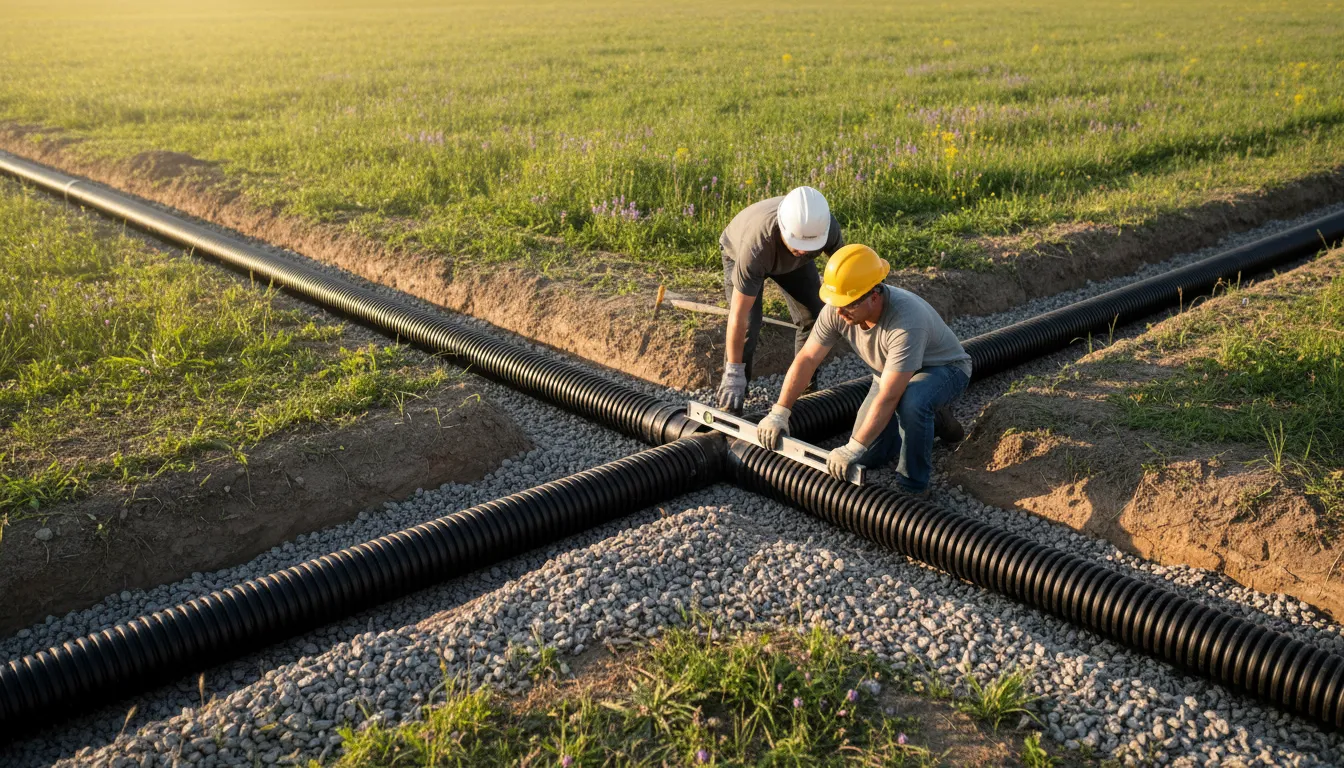
Find the Best Drain Field Repair Companies for Your Business
No obligation • Fast responses • Nationwide coverage

Why you can trust Septic Spot
Septic Spot is a leading United States resource for understanding and comparing septic services. Our editors review providers using consistent criteria and verify key business details. Listings and scores are independent, and companies cannot pay to influence our content.
Search providers near you
Top Drain Field Repair Companies in Fort Wayne, Indiana Ranked
When your home's septic system shows signs of failure-like soggy ground over the drain field, slow drains, or unpleasant odors-the problem often lies in the absorption area, also known as the leach field. This critical component is responsible for safely dispersing treated wastewater into the soil. In Fort Wayne, addressing a failing drain field involves navigating specific local regulations, soil conditions, and permitting processes. This guide explains what homeowners need to know about septic drain field repair and replacement, from recognizing failure signs to completing a compliant installation with the Allen County Health Department.
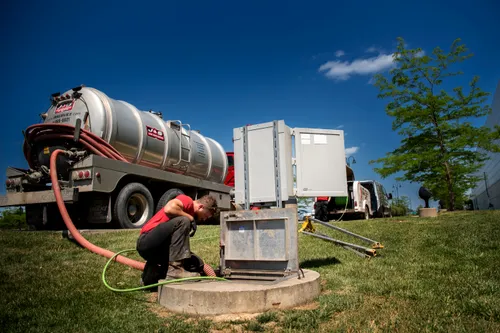
J & S Liquid Waste Services Inc.
4030 Option Pass Unit A, Fort Wayne, IN 46818
J & S Liquid Waste Services Inc. is a septic and sewer service provider based in Fort Wayne, IN. They offer a range of services including septic tank pumping, grease trap cleaning, oil water separator cleaning, and bypass pumping for residential, commercial, and industrial clients. The company also handles lift station and pump repairs, as well as drain line clogs using jetting and augering techniques. They are equipped to manage complex excavation projects such as broken pipes, septic system repairs, and distribution box replacements. J & S Liquid Waste Services provides emergency response services during evenings and weekends, ensuring support beyond regular business hours.
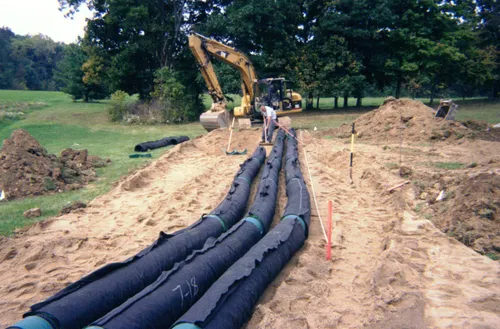
Zimmerman Septic Services
7305 Lewis Rd, Fort Wayne, IN 46818
Zimmerman Septic Services is a septic tank inspection, repair, and installation company based in Fort Wayne, IN. They provide a range of septic system services including installation of various systems such as shallow trench, mound, and discharge systems, as well as drain field repair and septic pump replacement. The company is capable of septic system recovery through jetting, cleaning, and adding bacteria to rejuvenate systems. Zimmerman Septic Services has been a member of IOWPA for over 20 years, indicating extensive experience in the field.
Understanding Your Septic System's Drainage Area
A conventional septic system has two main parts: the tank and the drain field (or leach field). Solids settle and decompose in the tank, while the liquid effluent flows out into a network of perforated pipes buried in trenches filled with gravel. This area, the soil absorption field, performs the final treatment by filtering the effluent through the soil. Over time, these systems can fail due to age, compaction, soil clogging (biomat formation), or hydraulic overload. In Fort Wayne's varied soil conditions, especially areas with high clay content, drainage issues can accelerate this failure.
Signs You Need Drain Field Repair or Replacement
Recognizing early warning signs can prevent a complete system failure and environmental contamination. Key indicators include:
- Sewage Odors: Smells of sewage in your yard or home, particularly near the drain field area.
- Wet, Spongy Ground: Persistent soggy spots or standing water over the leach field, even during dry weather.
- Slow Drains & Backups: Gurgling pipes, slow-draining sinks and toilets, or sewage backups into the home.
- Unusually Green Grass: Lush, fast-growing grass specifically over the drain field lines.
- Failed Inspection: A routine septic inspection or a dye test ordered for a real estate transaction confirms drain field failure.
If you notice any of these signs, it's crucial to contact a licensed septic professional for an evaluation. Continuing to use a failing system can lead to property damage, health hazards, and violations of local codes.
The Fort Wayne & Allen County Regulatory Process
All work on septic systems in Allen County, including Fort Wayne, is governed by the Indiana State Department of Health's Rule 410 IAC 6-8.3. You cannot begin any repair or replacement without following the proper steps.
1. Initial Site and Soil Evaluation The first technical step is a certified soil evaluation. A licensed soil scientist must assess your property's soil texture, structure, and seasonal high-water table depth. This typically involves digging at least three test borings in the proposed absorption field area to a depth of 5-6 feet 1 2. This evaluation determines the soil's ability to absorb and treat wastewater and is the foundation for all subsequent design. In areas with poor drainage or a high-water table, the design may need to be adjusted, often leading to more complex (and costly) engineered systems.
2. System Design and Permit Application Using the soil report, a licensed installer or designer will create a system plan that meets code requirements for size, setbacks from wells and property lines, and construction specifications 3. You or your contractor must then submit this design, along with the soil scientist's report and the required fee, to the Allen County Health Department for a construction permit. A permit is mandatory for repairing, altering, or replacing any septic system component 4 5.
3. Installation and Inspections Once the permit is issued, installation can begin. The Health Department must be notified to inspect the tank placement, the drain field trenches, and the entire system before it is backfilled 6. This critical step ensures the installation matches the approved design. After passing inspection and being covered, the system may require a final approval from the health department before being put into full use.
4. Abandoning the Old System Indiana law requires that old, abandoned septic tanks be properly decommissioned to prevent collapse and safety hazards. They must be either removed entirely or filled with a solid material like gravel, sand, or concrete. Your installer should handle this as part of the replacement project.
Find the perfect drain field repair companies for your needs
Get personalized recommendations and expert advice
Factors Influencing Repair vs. Replacement and Cost
The solution for a failing drain field depends on the extent of the problem. A repair might involve replacing a clogged section of pipe or rejuvenating the field with specialized treatments. A full replacement is necessary when the entire soil absorption area has failed.
Costs in Fort Wayne vary widely based on several key factors 7:
- System Type & Soil Conditions: A conventional trench system for suitable soil may cost between $3,500 and $8,500. However, Fort Wayne's clay-heavy soils often require alternative systems. Mound systems or other engineered solutions, which involve building an elevated sand and gravel bed, can range from $4,000 to $15,000 or more. Poor soil can increase costs by 30-50%.
- Design and Permit Fees: The required soil evaluation and engineering design fees typically add $500 to $3,000 to the total project cost 8.
- Site Challenges: Limited yard space, the presence of large trees (whose roots can interfere with lines), steep slopes, and the need for heavy equipment access can all complicate installation and increase labor costs.
- Tank Condition: If the existing septic tank is also failing (e.g., cracked or not watertight), it must be replaced per Indiana code, which requires new tanks to be watertight (concrete, fiberglass, or polyethylene) and include an outlet filter 9 10.
The Fort Wayne Septic Elimination Program (SEP) Alternative
For some homeowners, connecting to the municipal sewer system may be a viable and financially advantageous alternative to replacing a septic system. Fort Wayne City Utilities offers a Septic Elimination Program (SEP). If your property is within a designated area and you choose to connect to the city sewer, the program may provide a cost-share contribution of up to $3,200 11. This contribution can be applied toward the cost of installing the sewer lateral or other assessments. Connecting to city sewer eliminates future septic maintenance responsibilities and can be a valuable long-term solution. Homeowners should contact Fort Wayne City Utilities directly to see if their property qualifies for the SEP.
Choosing a Licensed Professional in Fort Wayne
This is not a DIY project. Selecting the right contractor is essential for a compliant, long-lasting installation.
- Verify Licenses: Ensure the contractor is licensed by the state of Indiana for septic system installation and holds any required local registrations.
- Check References: Ask for references from recent projects in Allen County and follow up on them.
- Get Detailed Quotes: Obtain written, itemized estimates that include soil evaluation, design, permitting, installation, inspection fees, and old tank abandonment.
- Understand the Process: A reputable professional will clearly explain the permit process with the Allen County Health Department and manage the necessary inspections.
Frequently asked questions
Sources
Footnotes
-
Indiana Septic System Installation and Permit Procedure Guide - https://www.septicdesign.com/homeowners/the-septic-system-installation-processs-for-indiana/ ↩
-
NEW HOME CONSTRUCTION OR SYSTEM REPLACEMENT - IN.gov - https://www.in.gov/localhealth/marshallcounty/files/guidance-residential-onsite-sewage-procedures.pdf ↩
-
§ 51.052 CONSTRUCTION REQUIREMENTS OF PRIVATE SEWAGE DISPOSAL SYSTEMS. - https://codelibrary.amlegal.com/codes/ftwayne/latest/ftwayne_in/0-0-0-46077 ↩
-
410 26-64 | IARP - Indiana Administrative Code - https://iar.iga.in.gov/register/20260311-IR-410260064FNA ↩
-
RESIDENTIAL ONSITE SEPTIC PERMIT PROCESS - https://rushcounty.in.gov/wp-content/uploads/2021/07/RESIDENTIAL-ONSITE-SEPTIC-PERMIT-PROCESS-1.pdf ↩
-
Untitled - https://www.in.gov/counties/cass/files/Health-Septic.pdf ↩
-
How much does it cost for a new septic and drain field? Just an ... - https://www.facebook.com/groups/204486930758046/posts/1461789831694410/ ↩
-
Septic Drain Field Replacement Cost - https://dillonseptic.com/septic-drain-field-replacement-cost/ ↩
-
RESIDENTIAL ON-SITE SEWAGE SYSTEMS RULE 410 IAC 6 ... - https://www.in.gov/health/files/410_IAC_6-8_3.pdf ↩
-
Indiana Septic Tank Requirements | On-Site Sewage Systems - https://www.ntotank.com/blog/indiana-septic-tank-requirements ↩
-
CITY OF FORT WAYNE CITY UTILITIES (SEP) Septic ... - https://utilities.cityoffortwayne.org/resources/pdfs/Webpage_Program_Summary_-_Septic_Elimination_Program.pdf ↩