Find the Best Drain Field Repair Companies for Your Business
No obligation • Fast responses • Nationwide coverage

Why you can trust Septic Spot
Septic Spot is a leading United States resource for understanding and comparing septic services. Our editors review providers using consistent criteria and verify key business details. Listings and scores are independent, and companies cannot pay to influence our content.
Search providers near you
Top Drain Field Repair Companies in Olathe, Kansas Ranked
A failing drain field, also known as a leach field or absorption field, is a serious issue for any Olathe home with a septic system. This critical component is responsible for safely filtering and dispersing treated wastewater into the soil. When it fails, you may notice soggy ground, sewage odors, or slow-draining fixtures. This guide explains the local process, regulations, and costs for drain field restoration in Johnson County. You can use the information here to understand your options, prepare for the project, and connect with qualified local professionals who specialize in septic system repair and installation.
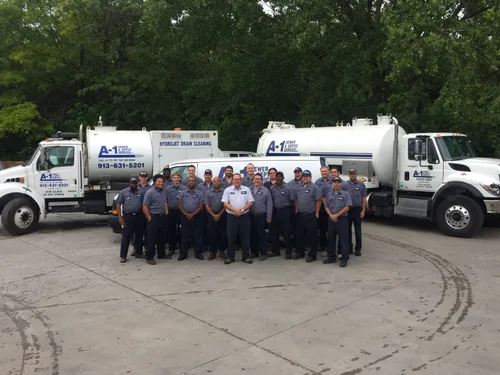
A-1 Sewer & Septic
1891 Merriam Ln, Kansas City, KS 66106
A-1 Sewer & Septic provides plumbing and septic system services in Kansas City, MO. They offer septic tank pumping, septic system repair, drain field repair, and comprehensive drain cleaning services including hydro jetting. Serving residential, commercial, and industrial clients, A-1 Sewer & Septic has been operating since 1968. The company offers same-day emergency and weekend services to address urgent plumbing and septic issues promptly.

KCS, LLC
Kansas City, MO
KCS, LLC is a licensed and insured septic tank installation and drain field repair contractor serving Kansas City, MO, and surrounding areas. With over 25 years of experience, they provide comprehensive septic and wastewater solutions including tank replacement, lateral field installation, full system installs, septic engineering design, and septic to sewer conversion. Their expertise extends to water and sewer line installations and repairs, ensuring efficient and compliant septic system performance tailored to local soil and environmental conditions. KCS, LLC is recognized for its specialized knowledge and has been featured on FOX4KC's "KC Experts."
Residential Sewage Treatment
12800 2nd St, Grandview, MO 64030
Residential Sewage Treatment is a family-owned septic service provider based in Kansas City, MO, serving Clay County and surrounding areas. Established in 1972, the company offers a range of residential and commercial septic services including installation, repair, maintenance, and inspection of septic tanks and drain fields. They specialize in installing Aerobic Treatment Units certified by the National Sanitation Foundation, which are suitable for properties not compatible with traditional septic systems. Their certified technicians also handle lift station maintenance and drip irrigation system repairs to support proper wastewater management.
Understanding Drain Field Failure in Olathe
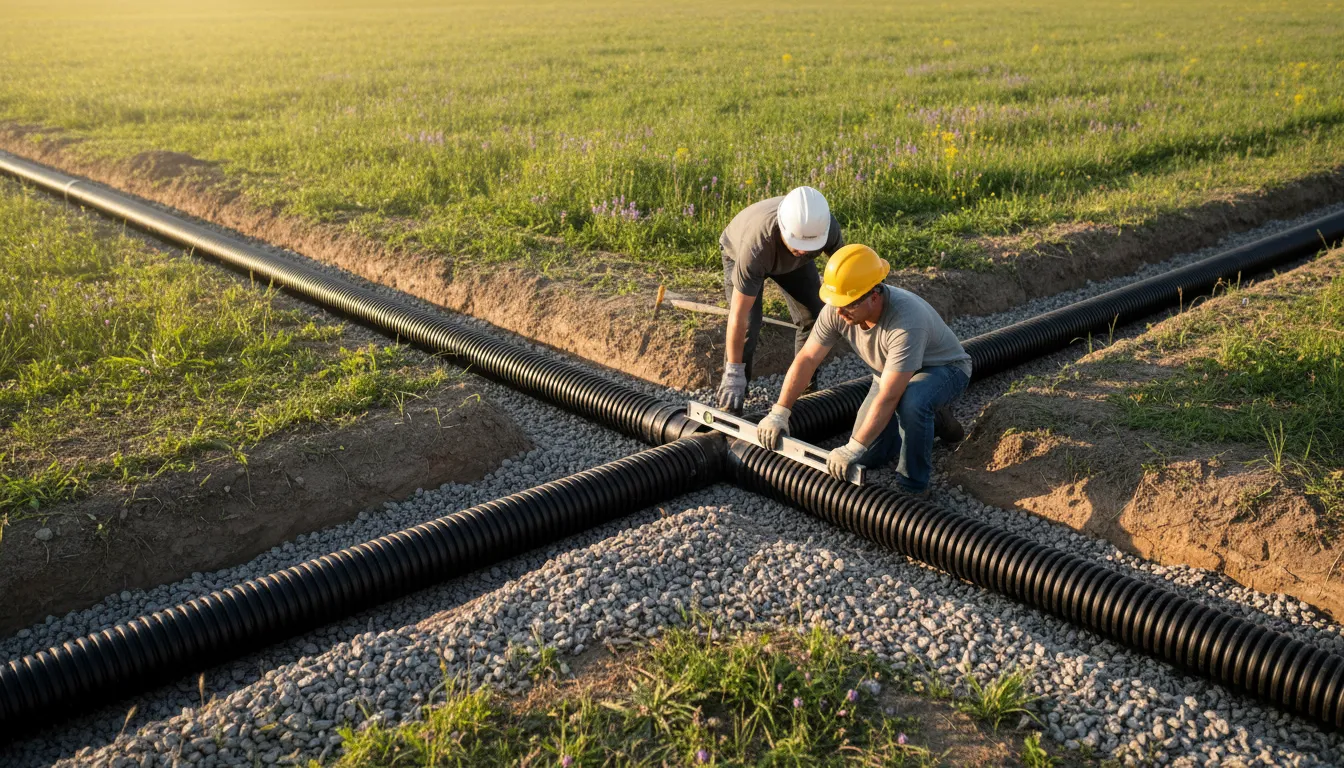
A drain field operates as the final stage of your onsite wastewater system. After solids settle in the septic tank, the liquid effluent flows through pipes into a network of perforated lines buried in trenches filled with gravel. The soil beneath and around these lines provides the final treatment, removing harmful bacteria and nutrients before the water recharges the groundwater.
Failure occurs when the soil can no longer absorb the effluent. In Olathe and much of Johnson County, the primary culprit is often the native soil composition. The region is known for its dense, high-clay-content soils. Clay particles are very fine and tightly packed, which severely limits the rate at which water can percolate, or "perc," through it. Over time, even in a properly functioning system, a biomat-a layer of organic material-forms at the soil interface. In clay soils, this layer can become too impermeable, causing wastewater to back up and surface.
Other common signs of a failing leach field include:
- Persistently wet, spongy, or bright green grass over the field area.
- Sewage smells near the tank or drain field, especially after rain.
- Gurgling sounds in household plumbing.
- Backups in drains or toilets.
Johnson County Regulations and Permit Requirements
Any repair, alteration, or replacement of a septic system component in Olathe requires a permit from the Johnson County Department of Health and Environment (JCDHE). The county has strict regulations designed to protect public health and groundwater quality, which is especially important in residential areas.
Key regulations you must follow include:
- Mandatory Permits: No work can begin without an approved permit from JCDHE. This applies to both full replacements and partial repairs.
- Pre-Cover Inspection: A JCDHE inspector must examine the newly installed or repaired system before it is buried. This is a critical step to ensure compliance with the approved design.
- Setback Requirements: Systems must be located a minimum distance from various features. Typical setbacks are at least 50 feet from water wells or streams and 10 feet from building foundations. Installation in a 100-year floodplain is generally prohibited.
- Public Sewer Mandate: If a public sewer line is available within a specified distance of your property (often 200 feet), the county will usually require you to connect to it instead of repairing your private septic system.
The Critical Role of Soil Analysis
Before any new lateral field or absorption system can be designed, a detailed soil profile analysis is mandatory in Johnson County. This isn't a simple percolation test; it's a deep analysis of your property's soil conditions.
A licensed soil evaluator or an Environmental Health Specialist from JCDHE will perform auger borings, typically to a depth of five feet or more, within a 150-foot radius of the proposed system area 1. The site must be cleared of underbrush and accessible for this equipment. They are evaluating:
- Soil Texture: Identifying the layers of sand, silt, and clay.
- Depth to Seasonal High Groundwater: Determining how close water saturates the soil at its yearly peak.
- Depth to Bedrock: Checking for limiting layers like rock or hardpan.
This analysis directly determines what type of system your property can support. A traditional trench-style drain field may only be approved if suitable soil depth and texture are found. For many Olathe properties with heavy clay or high groundwater, a conventional system is not an option.
System Options for Olathe Properties
Based on the soil analysis, a system will be designed to meet your home's needs and local code. The main options include:
1. Conventional Trenches or Beds: This is the standard gravel-filled trench system. It is only approved if the soil profile shows adequate depth and suitable texture (like loam) above any limiting conditions. Due to Olathe's clay soils, this is less common than many homeowners expect.
2. Mound Systems: A very common solution for properties with shallow suitable soil, high clay content, or high groundwater. A mound system is an engineered sand filter built above the natural grade. Effluent is pumped to the mound, treated through the sand, and then disperses into the native soil. It requires more space and has a higher installation cost.
3. Advanced Treatment Units (ATUs): Also known as aerobic treatment units, these systems introduce oxygen into the treatment process, breaking down waste more efficiently and producing a higher-quality effluent. This treated effluent can then be dispersed in shallower or denser soils, sometimes in pressurized drip irrigation fields. ATUs are often paired with other technologies for difficult sites 2.
Find the perfect drain field repair companies for your needs
Get personalized recommendations and expert advice
The Step-by-Step Process for Repair or Replacement
Navigating a drain field project involves a series of coordinated steps between you, your contractor, and the county.
- Initial Evaluation & Contractor Consultation: Contact a licensed septic system installer in Johnson County. They will inspect your current system, diagnose the problem, and discuss preliminary options. They can also pull the existing system records from JCDHE.
- Soil Profile Application: Your contractor will typically submit the application and fee for the mandatory soil profile analysis to JCDHE on your behalf 3.
- Site Evaluation & System Design: A JCDHE specialist performs the soil borings. Based on the results, your contractor designs a system that complies with county regulations and the site's limitations. This design is submitted for permit approval.
- Permit Approval & Scheduling: Once JCDHE issues the permit, work can be scheduled. All excavation and installation must be performed by a licensed installer.
- Installation & Final Inspection: The old field may be abandoned, and the new system is installed according to the approved plans. Crucially, you or your contractor must call JCDHE for a pre-cover inspection before backfilling the trenches or mound 4. Only after this inspection passes can the system be buried and put into service.
Cost Considerations for Drain Field Work in Olathe
Costs for septic work are highly variable, depending on system type, soil conditions, and property accessibility. The figures below are estimates to help with planning.
- Complete Drain Field Replacement: For a full replacement of the lateral field, costs in the Olathe area often start around $7,000 or more 5. This is typically for a conventional-style field on a suitable site.
- Partial Repairs: If only a section of the field has failed (e.g., one or two lines), repairs will be less expensive than a full replacement. Costs depend on the extent of the problem.
- Mound or Advanced System Installation: Engineered solutions like mound systems or systems with ATUs are more complex and carry a higher price tag. A complete new septic system (tank and advanced drain field) for a 3-bedroom home in the region can often range from $7,264 to $15,000 or more 6 7.
- Additional Costs: Remember to factor in county fees for soil analysis, permits, and inspections, which are separate from your contractor's bill.
Maintaining Your New or Repaired System
Protecting your investment is key. Proper maintenance can significantly extend the life of your drain field.
- Regular Pumping: The single most important task is to have your septic tank pumped every 3 to 5 years by a licensed pumper. This prevents solids from escaping into and clogging the drain field 8.
- Water Conservation: Spread out water use. Fix leaks, use high-efficiency fixtures, and avoid doing multiple loads of laundry in one day.
- Mind What You Flush: Only human waste and toilet paper should go down the toilet. Never flush chemicals, grease, wipes (even "flushable" ones), or feminine hygiene products.
- Protect the Area: Never drive or park vehicles over the drain field. Keep roof drains, sump pumps, and other surface water away from the area. Plant only grass over the field; tree and shrub roots can cause damage.
Failure to maintain your system or address known problems can lead to county enforcement actions, including penalties and restrictions on selling your property until the system is brought into compliance 9.
Frequently asked questions
Sources
Footnotes
-
How to properly prepare a site for evaluation of a septic system - https://www.youtube.com/watch?v=1rXH1uYUjsY&t=1 ↩
-
What is the best septic system if your land fails a perc test? - https://www.premiertechaqua.com/en-us/blog/best-septic-system-failed-perc-test ↩
-
Residential Systems | Johnson County Kansas - https://www.jocogov.org/department/environment/septic-systems/residential-systems ↩
-
Kansas Septic Tank Requirements | Guide to Installation and ... - https://www.ntotank.com/blog/kansas-septic-tank-requirements ↩
-
Cost to Replace Septic Tank and Drain Field [2026 Data] | Angi - https://www.angi.com/articles/how-much-new-drain-fields-foot.htm ↩
-
How Much Does A Septic System Cost? - https://uniquedrainseptic.com/blogs/resources/how-much-does-a-septic-system-cost ↩
-
Olathe Septic Systems Costs & Prices - ProMatcher Cost Report - https://septic-systems.promatcher.com/cost/olathe-ks-septic-systems-costs-prices.aspx ↩
-
New Septic System Regulations in Kansas/Missouri - https://www.honey-wagonkc.com/blog/posts/new-septic-system-regulations.html ↩
-
Septic Systems | Johnson County Kansas - https://www.jocogov.org/department/environment/septic-systems ↩