
Find the Best Drain Field Repair Companies for Your Business
No obligation • Fast responses • Nationwide coverage

Why you can trust Septic Spot
Septic Spot is a leading United States resource for understanding and comparing septic services. Our editors review providers using consistent criteria and verify key business details. Listings and scores are independent, and companies cannot pay to influence our content.
Search providers near you
Top Drain Field Repair Companies in Topeka, Kansas Ranked
A failing drain field, also known as a leach field or absorption field, is a serious issue for any home with a septic system. This critical component is responsible for safely dispersing and filtering treated wastewater into the soil. When it fails, it can lead to sewage backups, soggy yards, and environmental contamination. In Topeka, navigating drain field repair or replacement involves specific local regulations, soil evaluations, and professional expertise. This guide explains the process, costs, and key considerations to help you find qualified local specialists for your septic system needs.
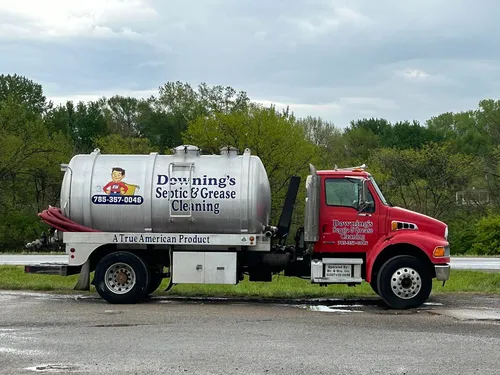
Understanding Your Drain Field in Shawnee County
The drain field is the final stage of your onsite wastewater system. After solids settle in the septic tank, liquid effluent flows out into a network of perforated pipes or chambers buried in trenches. This effluent then percolates through the soil, where natural processes remove harmful bacteria and nutrients before the water rejoins the groundwater table.
In Topeka and Shawnee County, the design and installation of all septic system components, including leach fields, are governed by Kansas Department of Health and Environment (KDHE) regulations and enforced by the Shawnee County Health Department. A key rule is that there must be a minimum of four feet of unsaturated, aerated soil beneath the drain field trenches and above any bedrock or high groundwater table 1. This vertical separation is crucial for proper treatment and prevents groundwater pollution.
Signs You May Need Drain Field Repair or Replacement
Recognizing early warning signs can prevent a complete system failure and more expensive repairs. Look for these indicators in your yard and home:
- Soggy Ground or Standing Water: Puddles or persistently wet, spongy soil over the drain field area, especially when it hasn't rained.
- Sewage Odors: Unpleasant smells emanating from the yard near the septic tank or drain field.
- Slow Drains and Backups: Gurgling pipes, slow-draining sinks and toilets, or sewage backing up into household drains.
- Unusually Green Grass: Patches of grass over the drain field that are much lusher and grow faster than the rest of the lawn, indicating a nutrient surge from effluent.
- Failed Inspections: A professional inspection or a county compliance check may reveal issues like tank leaks, cracked pipes, or a drain field that no longer accepts effluent during a flow test 2 3.
If you notice any of these signs, it's time to contact a licensed septic professional in Topeka for a diagnosis.
The Topeka Permit and Planning Process
Any significant repair or full replacement of a septic drain field in Shawnee County requires permits and approvals. You cannot simply hire a contractor to dig a new field. The process is designed to protect public health and the environment.
-
Site Evaluation and Soil Testing: This is the mandatory first step. A licensed installer or soil evaluator must perform a percolation (perc) test and deep soil analysis on your property. This test determines the soil's absorption rate and identifies the depth to bedrock or seasonal high water table. In Topeka, this evaluation typically costs around $1,300. The results dictate what type of system your property can support.
-
Obtaining Permits: Your septic professional will use the soil evaluation data to design a system that complies with KDHE Bulletin 4-2 standards 4 5. They will then submit the design and apply for the necessary construction permit from the Shawnee County Health Department 6. Permit fees can range from $450 to $2,000, depending on the project's complexity.
-
Health Department Oversight: County officials will review the design and likely conduct a site assessment to verify setback distances from buildings, property lines, and water sources 7. Once installation begins, a final inspection is required before the new drain field can be covered with soil 8 9.
Find the perfect drain field repair companies for your needs
Get personalized recommendations and expert advice
What to Expect During Installation or Repair
Once permits are secured, the physical work begins. For a full drain field replacement, the process generally follows these steps:
- Locating and Decommissioning the Old System: The contractor will locate the existing tank and drain field. The old tank may be pumped, cleaned, and either removed or properly filled in. The old drain field lines are excavated and removed.
- Excavation: New trenches are dug according to the approved design. The depth and length are based on the soil test results and household wastewater flow requirements.
- Installation: New perforated pipes or plastic chambers are placed in the trenches on a bed of gravel. A network of distribution pipes connects them to the septic tank.
- Final Inspection and Covering: After the health department inspector approves the installation, the trenches are covered with more gravel and soil, and the area is graded and seeded.
For repairs, the process might be less invasive, such as spot-replacing a clogged section of pipe or using techniques like jetting to clear biomat buildup. However, many repairs in older systems are temporary fixes, and a full replacement is often the most reliable long-term solution.
Cost Factors for Drain Field Work in Topeka
The total cost for drain field repair or replacement in Topeka varies widely based on system size, soil conditions, and the extent of work needed. It's important to get detailed, site-specific estimates from multiple licensed contractors.
- Full Drain Field Replacement: This is a major project. Total costs typically range from $5,000 to over $20,000, with an average often falling between $7,000 and $10,000.
- Septic Tank Replacement (if needed): If the tank is also damaged or outdated, adding a new tank can cost an additional $3,000 to $10,000.
- Permitting and Testing: Budget approximately $1,300 for the soil/percolation test and $450 to $2,000 for county permits 10 11.
- Alternative Systems: If your soil has a high water table or shallow bedrock (a common issue in parts of Kansas), a standard trench system won't work. You may need an engineered alternative like a mound system, which can significantly increase the project cost.
A critical note on pricing: Be wary of the lowest bid. As noted by local experts, the lowest price often correlates with lower-quality materials, shortcuts, or a lack of understanding of local codes, which can lead to system failure and more expense down the road. Choose a contractor who provides a transparent, detailed estimate and has a strong reputation for compliance and quality work in Shawnee County.
Choosing a Licensed Professional in Topeka
This is not a DIY project. Kansas law requires that septic systems be installed by licensed contractors. When searching for a provider:
- Verify they hold a current KDHE Installer License.
- Ask for proof of insurance and references from recent projects in Topeka.
- Ensure they handle the entire process-soil testing, design, permitting, installation, and scheduling inspections.
- Look for companies with experience dealing with the specific soil challenges in the Topeka area.
A qualified professional will guide you through every step, ensuring your new leach field or absorption area is built to last and meets all local and state health standards.
Frequently asked questions
Sources
Footnotes
-
MF2645 Site and Soil Evaluation for Onsite Wastewater Systems - https://www.douglas.k-state.edu/program-areas/natural-resources/docs-resources/MF2645%20Site%20Soil%20Eval-OSW%20Final%20KDHE%20BOW%20updated_202201271401373820.pdf ↩
-
Preparing for Septic Tank Inspection: 7 Key Steps - https://septic911.com/preparing-for-septic-tank-inspection/ ↩
-
Septic System Inspections in Topeka, KS | SewerMan - https://sewerman.com/topeka-ks/services/oil-to-gas-conversions/ ↩
-
SEPTIC TANKS - KDHE - https://www.kdhe.ks.gov/DocumentCenter/View/8966/Septic-Tanks-PDF ↩
-
MF2214 Minimum Standards for Design and Construction of Onsite ... - https://www.renocountyks.gov/media/Document%20Center/Departments/Health/Environmental%20Health/Water%20Wells%20&%20Waste%20Water/Bulletin4-2_201310011222492845.pdf ↩
-
Environmental Health · Health Department (Shawnee County, Kansas) - https://www.snco.gov/hd/environmental_health.php ↩
-
Septic Systems Reports, Regulations, Guidance, and Manuals - https://www.epa.gov/septic/septic-systems-reports-regulations-guidance-and-manuals ↩
-
The Ultimate Guide to Replacing a Septic Drain Field - https://www.rciseptic.com/the-ultimate-guide-to-replacing-a-septic-drain-field ↩
-
Septic Drain Field Replacement Cost - https://dillonseptic.com/septic-drain-field-replacement-cost/ ↩
-
Septic Drain Field Replacement Cost - https://dillonseptic.com/septic-drain-field-replacement-cost/ ↩
-
Cost to Replace Septic Tank and Drain Field [2026 Data] | Angi - https://www.angi.com/articles/how-much-new-drain-fields-foot.htm ↩