Find the Best Drain Field Repair Companies for Your Business
No obligation • Fast responses • Nationwide coverage

Why you can trust Septic Spot
Septic Spot is a leading United States resource for understanding and comparing septic services. Our editors review providers using consistent criteria and verify key business details. Listings and scores are independent, and companies cannot pay to influence our content.
Search providers near you
Top Drain Field Repair Companies in Shawnee, Kansas Ranked
A failing drain field is a serious issue for any Shawnee homeowner with a septic system. This critical component, also known as a leach field or absorption field, is responsible for safely filtering and dispersing treated wastewater into the soil. When it fails, it can lead to soggy yards, foul odors, and even sewage backups into your home. Understanding the local requirements and process for septic drain field repair or replacement is essential. This guide provides the information you need to navigate the project, from diagnosis and permitting to installation and cost considerations, helping you connect with qualified local professionals.
Understanding Drain Field Failure in Shawnee
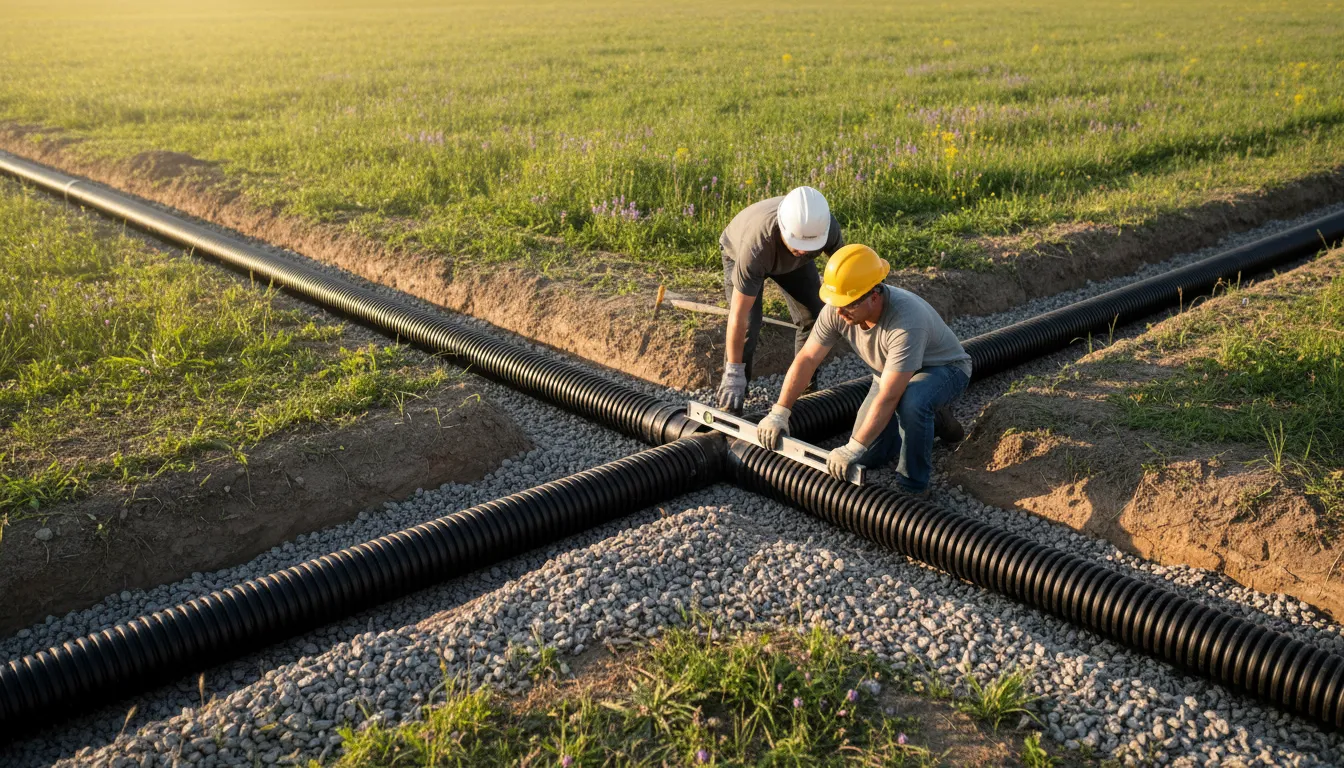
A septic system's drain field is a network of perforated pipes buried in trenches filled with gravel. After solids settle in the septic tank, the liquid effluent flows into these pipes and slowly seeps into the surrounding soil, where natural processes provide final treatment. Failure occurs when the soil can no longer absorb the water. Common signs in Shawnee include:
- Sewage odors in the yard or home.
- Persistently soggy or spongy ground over the drain field area, even in dry weather.
- Slow-draining sinks, toilets, and tubs.
- Lush, green grass over the field while the rest of the lawn is brown.
- Standing water or sewage surfacing in the yard.
These symptoms indicate that the soil is saturated, often due to clogging from solids that escaped the tank, compaction, root intrusion, or a high groundwater table. Once a drain field fails, repair or full replacement is almost always necessary to restore proper function and protect public health 1 2.
Johnson County Regulations and Permits
All work on septic systems in Shawnee falls under the jurisdiction of Johnson County Environmental Health. You cannot legally begin any repair or replacement without following their specific codes and obtaining the proper permits 3.
Key Regulatory Steps:
- Professional Diagnosis: A licensed septic professional must first confirm drain field failure and assess the entire system.
- Soil Profile Analysis (SPA): This is a mandatory first step. A county environmental health specialist will visit your property to dig a deep observation pit and analyze the soil texture, structure, and depth to bedrock or water table. The SPA determines the soil's absorption capacity and dictates the type of system that can be installed.
- System Design: A state-certified designer must create a repair plan based on the SPA results. The design must comply with Kansas Department of Health and Environment (KDHE) standards, ensuring a minimum of 4 feet of suitable, aerated soil below the trench bottom for treatment.
- Permit Application: The design, along with the SPA report and site plan, is submitted to Johnson County for a construction permit. Strict setback distances (e.g., 10 feet from buildings, 100 feet from wells) must be met.
- Final Inspection: After installation by a licensed contractor, a county official must inspect the work before the trenches are backfilled and the system is put into use.
Site and Soil Evaluation: The Foundation of Your Project
The success of a new drain field hinges entirely on the site conditions. Johnson County's soil evaluation is not a suggestion-it's a requirement. The specialist will assess:
- Soil Texture and Structure: Sandy soils drain quickly, while clay soils drain slowly. The SPA determines if a conventional trench system is suitable or if an alternative (engineered) system is needed.
- Depth to Limiting Conditions: The inspector measures the depth to seasonal high groundwater and bedrock. Kansas regulations require at least 4 feet of unsaturated soil between the bottom of the drain field trenches and these barriers to ensure proper wastewater treatment 4.
- Site Layout and Topography: The property must have enough suitable space away from wells, property lines, slopes, and drainage ways. If the original field failed due to space constraints, the new system may need to be located in a different part of the yard 5.
Find the perfect drain field repair companies for your needs
Get personalized recommendations and expert advice
The Repair and Replacement Process
Once a failure is confirmed and the site is evaluated, the project follows a structured path.
Step 1: Design and Permitting Based on the official Soil Profile Analysis, a certified designer drafts the system plans. For many homes in Shawnee, this will be a conventional gravel trench system. However, if soil conditions are poor (e.g., heavy clay or high water table), the design may require a more complex alternative system like a low-pressure pipe (LPP) system or a raised sand mound. These engineered systems distribute effluent more evenly and provide additional treatment, but they are more expensive to install 6 7. The approved design and permit are your blueprint for the contractor.
Step 2: Excavation and Installation A licensed excavation contractor will:
- Locate and safely abandon the old, failed drain field lines.
- Excavate new trenches according to the permitted design's exact depth, width, and spacing.
- Place a bed of clean gravel and lay the new perforated distribution pipes.
- Cover the pipes with more gravel and a protective geotextile fabric before backfilling with soil.
- Install any necessary components for alternative systems, like dosing tanks or sand filters.
This physical work typically takes a professional crew 3 to 7 days, depending on system size and weather 8.
Step 3: Final Inspection and Restoration Before the trenches are fully backfilled, the county inspector will visit to verify the installation matches the permitted design. Once approved, the contractor can complete the backfill, grade the yard, and restore the landscape with topsoil and sod or seed. This final restoration is crucial for proper surface drainage away from the new field 9.
Cost Considerations for Shawnee Homeowners
Drain field repair or replacement is a significant investment. In Shawnee, total project costs are highly variable but typically fall within a $5,000 to $20,000+ range 10. Several factors influence the final price:
- System Type and Size: A conventional system for a standard 3-bedroom home is on the lower end. Alternative engineered systems (mounds, LPP) are more complex and can exceed $15,000 11.
- Site Conditions: Difficult access, rocky soil, or the need for extensive tree/root removal adds to labor costs.
- Septic Tank Condition: If the tank is also old, damaged, or undersized, it may need to be replaced concurrently, adding $1,000 to $1,500 or more to the project 12.
- Landscaping Restoration: Final grading and sodding a disturbed yard can cost an additional $1,000 to $3,300 13.
- Professional Fees: The costs for the required Soil Profile Analysis, system design, and county permits are separate from the installation contract.
Getting multiple detailed quotes from licensed local contractors is the best way to understand the specific cost for your property. Be sure each quote includes all components: excavation, materials, labor, permitting fees, and final site restoration.
Maintaining Your New Drain Field
Protecting your investment is key. Proper maintenance can extend the life of your new drain field for decades:
- Pump the Septic Tank Regularly: Every 3-5 years, depending on household size. This prevents solids from washing out and clogging the new field.
- Conserve Water: Use water-efficient fixtures and spread out laundry loads to avoid hydraulically overloading the system.
- Divert Surface Water: Ensure roof drains, sump pumps, and yard grading direct water away from the drain field area.
- Avoid Planting Trees Nearby: Keep deep-rooted plants and trees at least 30 feet away from the field.
- Never Drive or Park on the drain field, as compaction destroys the soil's absorption ability.
Frequently asked questions
Sources
Footnotes
-
New Septic System Regulations in Kansas/Missouri - https://www.honey-wagonkc.com/blog/posts/new-septic-system-regulations.html ↩
-
Guidance for the Inspection of On-site Sewage Disposal Systems - https://www.mass.gov/guides/guidance-for-the-inspection-of-on-site-sewage-disposal-systems ↩
-
Environmental Health · Health Department (Shawnee County, Kansas) - https://www.snco.gov/hd/environmental_health.php ↩
-
MF2214 Minimum Standards for Design and Construction of ... - https://www.kdhe.ks.gov/DocumentCenter/View/8770/Bulletin-4-2-Minimum-Standards-for-Design-and-Construction-of-Onsite-Wastewater-Systems-PDF ↩
-
SEPTIC TANKS - KDHE - https://www.kdhe.ks.gov/DocumentCenter/View/8966/Septic-Tanks-PDF ↩
-
MF2645 Site and Soil Evaluation for Onsite Wastewater Systems - https://www.salinecountyks.gov/media/environmental-health/septic/mf2645.pdf?v=gn2G5KFsctseaJyxUZ4zhFIL8GZj1bZd9xsRoMZLwQc ↩
-
Kansas Septic Tank Requirements | Guide to Installation and ... - https://www.ntotank.com/blog/kansas-septic-tank-requirements ↩
-
Septic System Services - https://www.leducusa.com/services/septic-system-services/ ↩
-
Residential Systems | Johnson County Kansas - https://www.jocogov.org/department/environment/septic-systems/residential-systems ↩
-
Septic Drain Field Replacement Cost - https://dillonseptic.com/septic-drain-field-replacement-cost/ ↩
-
Cost of new septic tank drain field? - https://www.facebook.com/groups/1533882813595886/posts/4208092629508211/ ↩
-
Septic System Design and Installation in Shawnee, KS | SewerMan - https://sewerman.com/shawnee-ks/services/septic-system-services/ ↩
-
Cost to Replace Septic Tank and Drain Field [2026 Data] | Angi - https://www.angi.com/articles/how-much-new-drain-fields-foot.htm ↩