Find the Best Drain Field Repair Companies for Your Business
No obligation • Fast responses • Nationwide coverage

Why you can trust Septic Spot
Septic Spot is a leading United States resource for understanding and comparing septic services. Our editors review providers using consistent criteria and verify key business details. Listings and scores are independent, and companies cannot pay to influence our content.
Search providers near you
Top Drain Field Repair Companies in Lafayette, Louisiana Ranked
A failing drain field, also known as a leach field or absorption area, is a serious issue for any home with a septic system. It's the final and most critical stage where treated wastewater is safely returned to the soil. When this component fails, it can lead to sewage backups, soggy yards, and environmental contamination. In Lafayette, where unique soil and water conditions are common, understanding the repair and replacement process is essential. This guide explains what you need to know about diagnosing problems, navigating local regulations, and finding qualified professionals to restore your system's function.
Understanding Your Drain Field in Lafayette's Environment
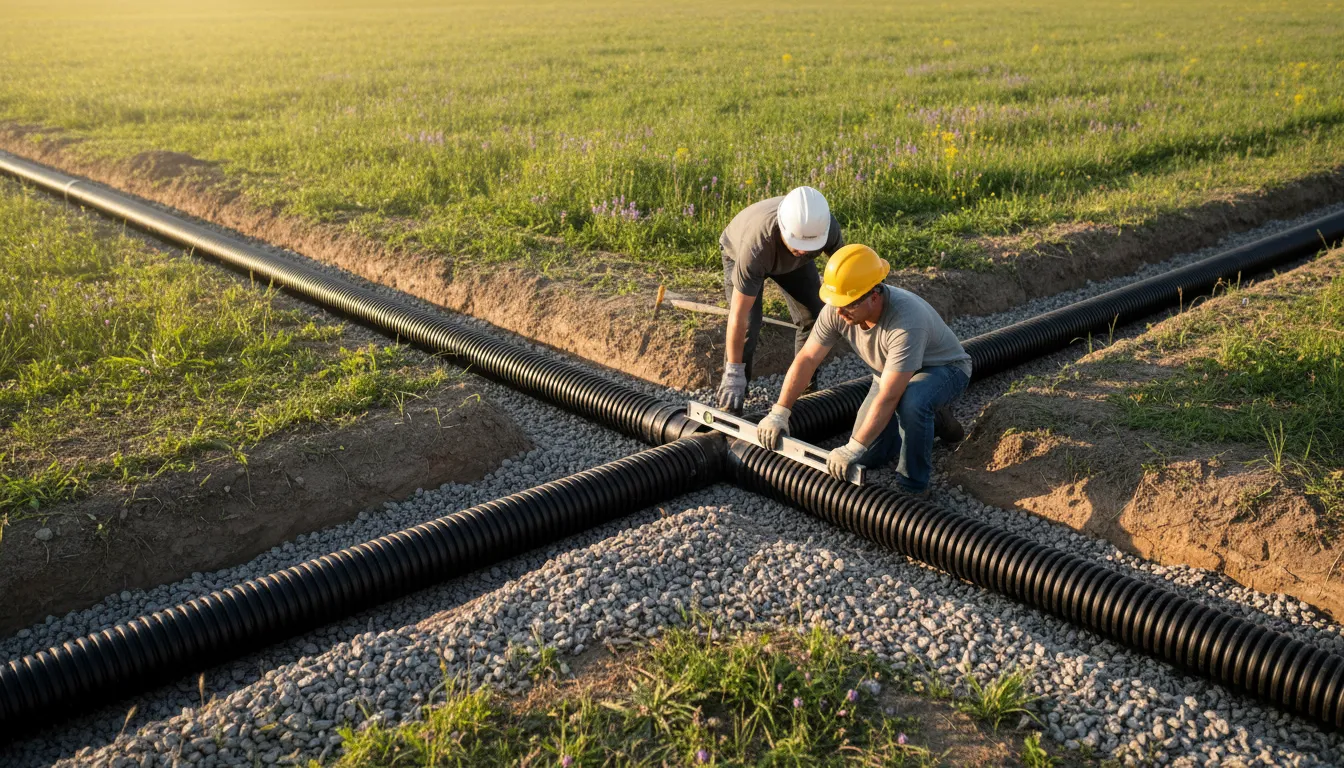
The drain field is a network of perforated pipes or chambers buried in trenches filled with gravel or other aggregate. Its job is to distribute the liquid effluent (pre-treated in the septic tank) into the soil for final purification. In Lafayette, two primary environmental factors heavily influence drain field design and performance: soil composition and the water table.
Lafayette's soils are varied, ranging from sandy loams near waterways to dense, clay-heavy soils prevalent in many areas 1. Clay soils have very slow percolation rates, meaning water absorbs poorly. Furthermore, the region experiences a seasonally high water table 1. These conditions mean a standard drain field may not work. Specialized designs, such as mound systems (where the drain field is built above the natural grade) or gravel-less chamber systems, are often required to ensure proper effluent absorption and treatment.
Signs You Need Drain Field Repair or Replacement
Catching problems early can mean the difference between a relatively minor repair and a costly full replacement. Be alert for these warning signs:
- Soggy Ground or Surfacing Effluent: Puddles or consistently wet, spongy soil over the drain field area, especially when it hasn't rained, is a primary indicator.
- Sewage Odors: Foul smells emanating from your yard, particularly near the drain field, suggest untreated wastewater is not being properly absorbed.
- Slow Drains and Backups: If toilets, showers, and sinks drain slowly or back up throughout the house, it could point to a saturated drain field that can't accept more liquid.
- Unusually Lush Vegetation: Grass or plants over the drain field that are greener and grow faster than the rest of the yard are feeding on nutrient-rich effluent.
- Failed Inspection: A routine septic inspection that reveals high sludge/scum levels, broken pipes, or saturated soil in the absorption area will flag the need for action 2.
The Diagnostic and Permitting Process
Before any work begins, a proper diagnosis and permitting process is mandatory in Lafayette Parish.
1. Professional Inspection and Evaluation: A licensed installer or inspector will first locate all system components. They will measure sludge and scum levels in the tank and conduct a visual check of the drain field for saturation, odors, and surfacing effluent 3 4. For systems with an Aerobic Treatment Unit (ATU), the aerator's function will also be checked 4.
2. Soil Evaluation (Percolation Test): If a full replacement is likely, a soil percolation test is required 5. This test determines the rate at which water drains through your soil, which dictates the size and type of drain field needed. Due to local clay soils, these tests are critical for designing a system that will work long-term.
3. Obtaining a Permit: All drain field repairs or replacements that alter the system's capacity, layout, or effluent quality require a permit from the Louisiana Department of Health's Office of Public Health (OPH) 6. The licensed professional you hire typically handles this process, which includes submitting a site evaluation, system design, and proof of licensure. Homeowners may apply for a special exception to install their own non-mechanical system, but this is uncommon for complex drain field work 7.
4. Abandoning the Old System: State regulations require that an abandoned septic tank be properly pumped out and then either removed or filled with soil to natural grade before a new system can be approved 8. This is a crucial safety step to prevent collapse.
Find the perfect drain field repair companies for your needs
Get personalized recommendations and expert advice
Common Drain Field Solutions for Lafayette Homes
The repair strategy depends on the extent of the failure.
Minor Repairs: If the problem is isolated-such as a crushed pipe from vehicle traffic, a clogged distribution box, or a damaged effluent filter-a targeted repair may suffice. This involves excavating the specific area, replacing the damaged component, and restoring the landscape. Costs for such repairs can range from $100 to over $400 9.
Drain Field Replacement: When the soil is permanently clogged (a condition called biomat overload) or the entire field has failed, a full replacement is necessary. This is a major project. The old field is abandoned, and a new one is constructed based on the soil percolation results. Given Lafayette's challenging conditions, common replacement systems include:
- Gravel-Less Chamber Systems: These plastic arches create an underground void for effluent distribution, often requiring less gravel and being easier to install in poor soils.
- Mound Systems: A raised bed of sand and gravel is constructed above the natural soil, used when the water table is high or soil percolation is very slow 10.
- Alternative Media: In some cases, materials like clam or oyster shells may be approved as a substitute for gravel in the drain field trenches.
Installation standards are strict. For instance, distribution pipes must be installed on a precise slope (typically 1/8 to 1/4 inch per foot) to ensure even effluent flow and prevent backups 11. Drain field beds in areas with high water tables are often installed no deeper than 14 inches to function effectively 12.
Cost Considerations for Repair and Replacement
Costs in Lafayette can vary widely based on soil conditions, system type, and property size.
- Drain Field Repair: As mentioned, minor fixes start in the hundreds of dollars.
- Drain Field Replacement: This is a significant investment. A full septic system (tank and drain field) replacement typically ranges from $2,000 to over $15,000 13. The drain field portion alone for a residential property often falls between $5,000 and $12,000 13. Mound systems and other advanced designs for difficult sites are generally at the higher end of this scale due to the extra materials and labor required.
Maintaining Your New or Repaired Drain Field
Protecting your investment is key. Proper maintenance can extend the life of your drain field by decades.
- Pump Regularly: Have your septic tank pumped every 3 to 5 years to prevent solids from washing out and clogging the drain field 14.
- Conserve Water: Spread out laundry loads and fix leaky fixtures to avoid hydraulically overloading the system.
- Mind What You Flush: Only human waste and toilet paper should go down the drain. Avoid chemicals, grease, wipes, and feminine products.
- Protect the Area: Never drive or park vehicles, heavy equipment, or build structures (like sheds) over the drain field. The weight can crush pipes and compact the soil.
- Landscape Carefully: Avoid planting trees or deep-rooted shrubs near the drain field. Roots are a major cause of pipe damage and clogging. Grass is the best cover 15.
- Divert Water: Ensure roof drains, sump pumps, and surface runoff are directed away from the drain field to keep it from becoming saturated.
Frequently asked questions
Sources
Footnotes
-
What to Expect from Septic Tank Pumping in Lafayette - https://www.sandssewersystemsla.com/what-to-expect-from-septic-tank-pumping-in-lafayette ↩ ↩2
-
WASTEWATER TREATMENT SYSTEMS - https://www.lafayettela.gov/docs/default-source/pw-documents/eq-documents/hsts-system-care-maintenance.pdf?sfvrsn=e799620b_1 ↩
-
What to Expect from Septic Tank Pumping in Lafayette - https://www.sandssewersystemsla.com/what-to-expect-from-septic-tank-pumping-in-lafayette ↩
-
Preparing for Septic Tank Inspection: 7 Key Steps - https://septic911.com/preparing-for-septic-tank-inspection/ ↩ ↩2
-
The Complete Guide to Soil Testing for Septic System Design: Ensuring Regulatory Compliance and System Longevity - https://www.mapengineering.net/the-complete-guide-to-soil-testing-for-septic-system-design/ ↩
-
51 PUBLIC HEALTH―SANITARY CODE Part XIII. Sewage ... - https://ldh.la.gov/assets/oph/Center-EH/sanitarian/onsitewastewater/StudyMaterialOSWWInstWk.pdf ↩
-
Onsite Wastewater Program - Louisiana Department of Health - https://ldh.la.gov/bureau-of-sanitarian-services/wastewater ↩
-
Onsite Sewage Treatment System Maintenance, Health and ... - https://www.deq.louisiana.gov/assets/docs/Enviroschool/EnviroschoolOnsiteSewage-web.pdf ↩
-
Home Sewage Treatment Systems - https://www.lafayettela.gov/public-works/home-sewer-treatment-systems ↩
-
Home Sewage Treatment Systems - https://www.lafayettela.gov/public-works/home-sewer-treatment-systems ↩
-
Louisiana Administrative Code Title 51 Part XIII. Sewage Disposal ... - https://ldh.la.gov/assets/oph/center-eh/sanitarian/onsitewastewater/7056.pdf ↩
-
Louisiana Administrative Code - https://ldh.la.gov/assets/oph/Center-EH/sanitarian/onsitewastewater/8145.pdf ↩
-
Cost to Replace Septic Tank and Drain Field [2026 Data] | Angi - https://www.angi.com/articles/how-much-new-drain-fields-foot.htm ↩ ↩2
-
Home Septic System Education | Lafayette Consolidated ... - https://www.lafayettela.gov/docs/default-source/stormwater-documents/home-septic-system-education.pdf?sfvrsn=b54e01f_2 ↩
-
Septic Systemwork? - LSU AgCenter - https://www.lsuagcenter.com/~/media/system/e/2/7/d/e27d736591f42d2ed5ec420c254b0785/pub2794h.pdf ↩