Find the Best Drain Field Repair Companies for Your Business
No obligation • Fast responses • Nationwide coverage

Why you can trust Septic Spot
Septic Spot is a leading United States resource for understanding and comparing septic services. Our editors review providers using consistent criteria and verify key business details. Listings and scores are independent, and companies cannot pay to influence our content.
Search providers near you
Top Drain Field Repair Companies in New Orleans, Louisiana Ranked
A failing septic drain field is a serious issue that can lead to sewage backups, soggy yards, and environmental contamination. In New Orleans, where high groundwater and dense clay soils are common, addressing drain field problems requires specialized knowledge and strict adherence to local regulations. This guide explains the process, costs, and key considerations for leach field repair and replacement, helping you connect with qualified local professionals who understand the unique challenges of our area.

Understanding Your Septic System's Drain Field
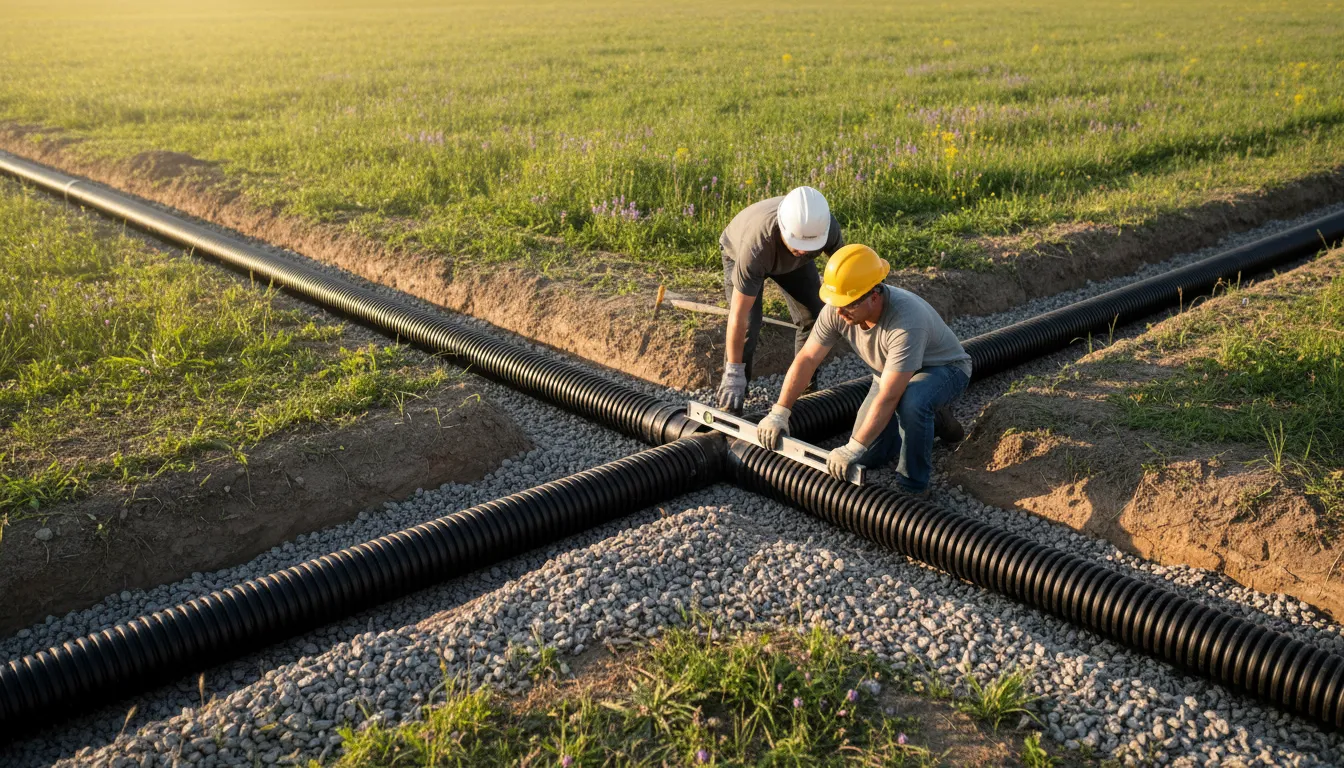
The drain field, also known as a leach field or absorption field, is the final and most critical stage of a septic system. After solids settle in the tank, liquid effluent flows into a network of perforated pipes buried in trenches filled with gravel. This effluent slowly percolates through the soil, where natural processes provide final treatment before it rejoins the groundwater. When this area fails, the entire system stops working properly. Common signs of failure include soggy ground or standing water over the field, sewage odors, unusually lush grass over the area, and slow-draining or backing-up household fixtures.
Why New Orleans Presents Unique Challenges
The environmental conditions in Southeast Louisiana make septic system design and repair particularly complex. Two primary factors dictate the approach professionals must take.
High Water Table: New Orleans is famously below sea level, which means the groundwater table is often very close to the surface. A functional drain field requires a specified vertical separation between the bottom of the trenches and the seasonal high-water table. When groundwater is too high, it prevents effluent from properly percolating and can cause a system to hydraulicly fail, pushing untreated sewage to the surface. This frequently necessitates engineered solutions like elevated mound systems or aerobic treatment units (ATUs) that treat effluent to a higher standard before dispersal 1.
Soil Composition: The native soils in much of the New Orleans area are heavy clays. Clay has very small pores, resulting in extremely slow percolation rates. For a septic system, this means the soil cannot absorb effluent quickly enough, leading to ponding and failure. A mandatory site evaluation, including soil testing (like a percolation or "perc" test), is required to determine the soil's absorption capacity and dictate the size and type of system needed 2.
The Regulatory Landscape: Permits and Professionals
All work on a septic system in New Orleans is tightly regulated to protect public health and groundwater.
Licensing Requirements: In Louisiana, the design and installation of onsite wastewater systems must be performed or supervised by a licensed professional. This is typically a licensed master plumber or a professional engineer. They are responsible for ensuring the system meets all state and local codes.
Permitting Process: Before any repair or replacement begins, a plumbing permit must be obtained. In New Orleans, this permit is filed by the licensed master plumber with the Sewerage & Water Board of New Orleans. The application will include the site evaluation report and the proposed system design. The Louisiana Department of Health (LDH) provides the overarching regulations that all systems must follow, known as the Louisiana Criteria for Sewage Treatment 3.
System Types: While conventional gravel trench systems are used where conditions allow, the challenging local conditions often require alternative systems. These can include:
- Aerobic Treatment Units (ATUs): These mechanical systems inject oxygen into the treatment process, breaking down waste more efficiently and producing a high-quality effluent suitable for spray irrigation or dispersal in problematic soils.
- Mound Systems: An engineered sand mound is constructed above the natural grade to provide the necessary separation from the high water table.
- Low-Pressure Dose (LPD) Systems: These use a pump to distribute effluent evenly across the drain field, improving performance in marginal soils.
Find the perfect drain field repair companies for your needs
Get personalized recommendations and expert advice
The Step-by-Step Process for Repair or Replacement
When a drain field fails, a full replacement is often the only permanent solution. Here's what the process typically entails:
- Site Evaluation and Diagnosis: A licensed professional will inspect the entire septic system to confirm the drain field is the source of the problem. They will then conduct a new site evaluation, which involves digging test pits to observe soil layers and groundwater levels and performing soil percolation tests. This data is foundational for the next step 4 5.
- System Design and Permitting: Using the site evaluation data, the professional will design a system that complies with LDH regulations for your specific property. This design is submitted as part of the permit application to the Sewerage & Water Board of New Orleans 6.
- Removal and Installation: Once permitted, the crew will excavate and properly abandon the old, failing drain field. The new system is then installed according to the approved design. This may involve importing sand, constructing a mound, installing an ATU tank and pump, or laying new network of distribution pipes 7.
- Final Inspection and Approval: After installation, a final inspection is conducted by the health department or local authority to ensure the work matches the permitted plans and meets all codes. Only after passing this inspection is the system authorized for use.
Understanding the Costs Involved
Drain field replacement is a significant investment, with costs in New Orleans heavily influenced by site-specific challenges.
- Drain Field Replacement Range: For the drain field component alone, homeowners can expect costs ranging from $3,000 to over $15,000. The wide range accounts for the type of system required; a conventional replacement in a favorable spot is on the lower end, while an engineered mound or ATU system drives costs toward the higher end.
- Full System Installation Average: Looking at a broader average for Louisiana, the installation of a complete new conventional septic system (tank and drain field) can average around $7,282. Again, alternative systems will be more expensive.
- Additional and Ancillary Costs: The project budget must also include permit fees (typically $100-$250), costs for abandoning the old tank and field, and any necessary landscaping restoration. Sod replacement can cost $1-$2 per square foot, and regrading a disturbed yard may add $1,000-$3,300 to the total project cost 8 9.
Maintaining Your New System
Protecting your investment is crucial. For any septic system, the tank should be inspected every 3-5 years and pumped as needed, typically every 3-8 years, to prevent solids from escaping into and clogging the new drain field 10 11. For homeowners with an Aerobic Treatment Unit (ATU), state regulations often require a maintenance contract with a licensed service provider. Many ATU installers include the first two years of service visits in the purchase price to ensure proper operation during the critical break-in period 12 13. Proper maintenance is the best way to maximize the lifespan of your new leach field.
Frequently asked questions
Sources
Footnotes
-
The Key Soil Differences in New Orleans & the Northshore - https://wckfoundationrepair.com/foundtion-repair-key-soil-differences-new-orleans-north-shore/ ↩
-
Pearland Clay Soil vs Septic Systems | 40% Failure Rate - https://accurateplumbingtx.com/pearland-clay-soil-septic-system-failure/ ↩
-
Plumbing Information - Sewerage & Water Board of New Orleans - https://www.swbno.org/CustomerService/PlumbingInfo ↩
-
The Ultimate Guide to Replacing a Septic Drain Field - https://www.rciseptic.com/the-ultimate-guide-to-replacing-a-septic-drain-field ↩
-
The Complete Guide to Soil Testing for Septic System Design: Ensuring Regulatory Compliance and System Longevity - https://www.mapengineering.net/the-complete-guide-to-soil-testing-for-septic-system-design/ ↩
-
Septic System Services - https://www.leducusa.com/services/septic-system-services/ ↩
-
Septic Drain Field Replacement Cost - https://dillonseptic.com/septic-drain-field-replacement-cost/ ↩
-
Cost to Replace Septic Tank and Drain Field [2026 Data] | Angi - https://www.angi.com/articles/how-much-new-drain-fields-foot.htm ↩
-
Louisiana Septic Systems Costs & Prices - ProMatcher Cost Report - https://septic-systems.promatcher.com/cost/louisiana.aspx ↩
-
Onsite Wastewater Program | Louisiana Department of Health - https://ldh.la.gov/bureau-of-sanitarian-services/wastewater ↩
-
Septic Systems 101 - Provided by Town & Parish Realty - https://townandparish.com/baton-rouge-home-buyer/septic-systems-101/ ↩
-
Louisiana Administrative Code - https://ldh.la.gov/assets/oph/Center-EH/sanitarian/onsitewastewater/8145.pdf ↩
-
Onsite Sewage Treatment System Maintenance, Health and ... - https://www.deq.louisiana.gov/assets/docs/Enviroschool/EnviroschoolOnsiteSewage-web.pdf ↩