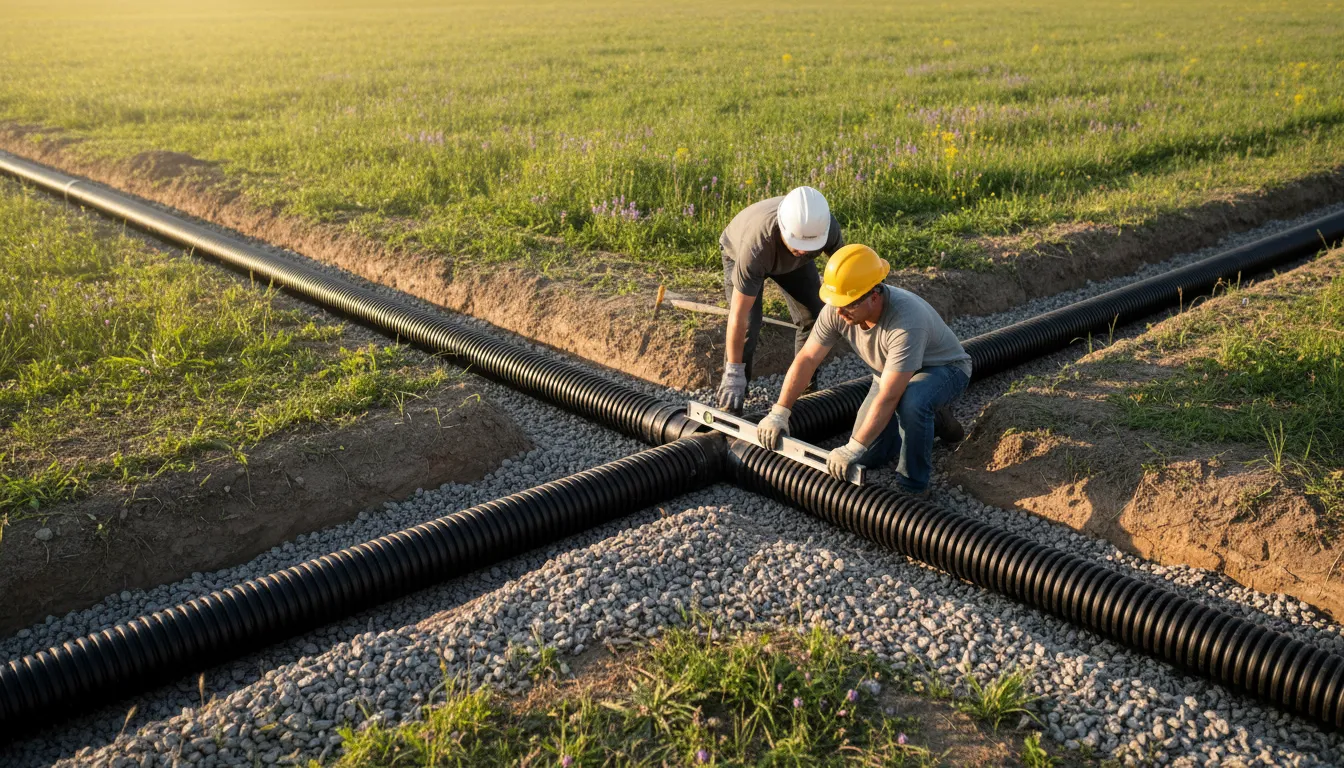
Find the Best Drain Field Repair Companies for Your Business
No obligation • Fast responses • Nationwide coverage

Why you can trust Septic Spot
Septic Spot is a leading United States resource for understanding and comparing septic services. Our editors review providers using consistent criteria and verify key business details. Listings and scores are independent, and companies cannot pay to influence our content.
Search providers near you
Top Drain Field Repair Companies in Clinton, Michigan Ranked
A properly functioning drain field is the unsung hero of your septic system, safely dispersing and filtering treated wastewater into the soil. When this critical component fails, it can lead to soggy yards, foul odors, and serious environmental and health risks. For homeowners in Clinton, Michigan, navigating drain field issues means understanding local regulations, soil conditions, and repair options. This guide provides essential information to help you identify problems, understand the repair and replacement process, and connect with qualified local professionals to restore your system's health.
Ball Septic Tank Service
Lansing, MI
Ball Septic Tank Service provides residential and commercial septic system services in Lansing, MI, including septic tank pumping, installation, repair, and drain field replacement. Serving the Greater Lansing area and nearby communities such as Charlotte, Grand Ledge, and Mason, the company focuses on safety and clear communication. Their team offers reliable scheduling and well-equipped trucks to complete most jobs in one visit, along with maintenance guidance to help prevent future issues.
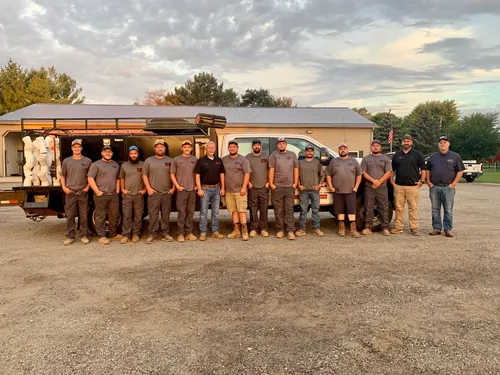
G A Hunt Excavating and Septic Services
1220 E Taft Rd, St Johns, MI 48879
G A Hunt Excavating and Septic Services is a septic system company serving Lansing, MI, and surrounding mid-Michigan areas. They provide septic tank installation, pumping, inspection, maintenance, and repair services, including drain field repair and trenchless excavation technology to minimize property disruption. With over 30 years of experience, the company offers 24/7 emergency septic and sewer services to address urgent issues promptly and efficiently.
Understanding Your Drain Field's Role
Often called a leach field or absorption field, the drain field is the final stage of your onsite wastewater treatment system. After solids settle in the septic tank, the liquid effluent flows into a network of perforated pipes buried in trenches filled with gravel. This effluent slowly percolates through the soil, where natural processes provide final treatment by removing harmful bacteria, viruses, and nutrients before the water reaches groundwater. A failing drain field cannot absorb this liquid, causing it to surface or back up into your home. In Clinton, protecting local groundwater is a primary concern, making functional drain fields a community health priority.
Signs of Drain Field Failure in Clinton
Recognizing early warning signs can prevent a full system collapse and more costly repairs. Be alert for these common indicators:
- Soggy Ground or Surfacing Effluent: Puddles, spongy grass, or sewage odors in your yard, especially over the drain field area, are the most direct signs.
- Slow Drains and Backups: Gurgling pipes, toilets that drain slowly, or sewage backing up into household drains can signal that the drain field is saturated and not accepting water.
- Unusually Green Grass: Patches of grass over the drain field that are much lusher and greener than the rest of the lawn may indicate a nutrient-rich leak.
- Nitrate Contamination: While not visible, testing your well water is crucial. Failed systems are a leading source of nitrate contamination in groundwater, a serious health risk 1.
Local Regulations: The Mid-Michigan District Health Department
All drain field repair and replacement work in Clinton is regulated to protect public health and the environment. The governing authority is typically the Mid-Michigan District Health Department (MMDHD) or Lenawee County, depending on your precise location.
Key regulations you must follow include:
- Permit Required: You must obtain a permit from the local health officer before constructing, altering, or extending any on-site sewage disposal system.
- System Design Standards: Any replacement system must be designed to meet current code and handle your home's daily wastewater flow. A typical three-bedroom home in Michigan generally requires a drain field area between 450 and 900 square feet 2.
- Replacement Area: Michigan codes often require that a designated area for a future replacement drain field be maintained on your property, typically at least 1.5 times the size of the original system 3.
- Time of Transfer Inspections: While not state-mandated, many local health departments, including those in the region, are adopting Time of Sale/Transfer (TOST) ordinances. This means an inspection may be required when you sell your home, which can uncover needed repairs 4 5.
The Site Evaluation: Soil and Setbacks
The feasibility and design of your new drain field depend entirely on a professional site evaluation. A licensed sanitarian or professional engineer will assess several critical factors:
- Soil Composition: This is the most important variable. Sandy soils in Michigan allow for faster absorption, while heavy clay soils drain very slowly and require a larger system area or special engineering 6 7. The evaluator will perform soil borings and percolation ("perc") tests to determine the soil's absorption rate.
- Water Table and Bedrock: A high seasonal groundwater table or shallow bedrock can limit where a conventional drain field can be placed. In these cases, an engineered solution like a raised mound system may be necessary 8.
- Setback Distances: Local regulations enforce minimum distances your new drain field must be from wells, property lines, streams, lakes, and buildings. These setbacks are non-negotiable for safety.
Find the perfect drain field repair companies for your needs
Get personalized recommendations and expert advice
The Repair and Replacement Process: A Step-by-Step Guide
Once you've identified a problem and consulted with a professional, the process generally follows these steps:
- Professional Assessment & System Pumping: A qualified contractor will inspect the entire system. The septic tank should be pumped first to allow for a thorough inspection of the tank and drain field lines.
- Site Evaluation & Design: If replacement is needed, a site evaluator will visit to conduct soil tests and design a system that complies with all health department regulations for your specific property 9.
- Permit Application: Your contractor or evaluator will submit the system design and a plot plan to the MMDHD for permit approval 10.
- Installation: An authorized installer will excavate and install the new drain field according to the permitted design. This involves laying new perforated pipes in gravel-filled trenches.
- Health Department Inspection: Before the new drain field is covered with soil, a health department inspector must visit the site to approve the installation.
- Final Restoration: Once approved, the trenches are backfilled, and the area is graded and seeded.
Repair vs. Replacement: Understanding Your Options and Costs
Not all failing drain fields require a complete replacement. Your professional may discuss these options:
- Drain Field Rehabilitation ("Kickstart"): For some systems, a specialized process that cleans the biomat (the clogged layer at the soil interface) can restore function. This is often a fraction of the cost of full replacement but depends heavily on soil conditions and the extent of failure 11.
- Partial Repair: If only a section of the field is damaged, spot repairs may be possible.
- Full Drain Field Replacement: This is the most comprehensive and often most expensive solution. In Clinton and surrounding areas, the cost for a full residential system replacement typically ranges from $5,000 to $20,000, depending on system size, soil conditions, and the type of technology required 12.
Financing Help: The high cost of replacement can be a burden. Michigan Saves offers low-interest home energy loans that can also be used for septic system replacements, with loan amounts ranging from $1,000 to $50,000 13.
Protecting Your Investment: Post-Repair Maintenance
After investing in a repair or new drain field, proper maintenance is key to its longevity.
- Regular Inspections and Pumping: Have your septic tank inspected every 1-3 years and pumped every 3-5 years to prevent solids from escaping into the new drain field 14 15.
- Mind Your Drain Field: Never drive, park, or build heavy structures over the drain field. The pressure can crush pipes and compact the soil.
- Manage Water and Landscaping: Direct roof gutters, sump pumps, and surface drainage away from the field. Plant only grass over the area; deep-rooted trees and shrubs can damage pipes 16.
- Conserve Water: Spread out laundry loads and fix leaks to avoid hydraulically overloading the system.
Frequently asked questions
Sources
Footnotes
-
Failing Septic Systems in Mid-Michigan: - https://www.mmdhd.org/wp-content/uploads/2018/11/Failing-Septic-Systems-in-Mid-Michigan-An-Unseen-Threat-to-Public-Health.pdf ↩
-
Understanding Residential Water Wells & Septic Systems - https://support.explorekeyrealty.com/s/article/Understanding-Residential-Water-Wells-Septic-Systems ↩
-
Septic System Ordinances | Michigan Lakes and Streams ... - https://mymlsa.org/government-and-legal-issues/ordinances/septic-system-ordinances/ ↩
-
02_20_26Chapter2InghamCoSa... - https://health.ingham.org/02_20_26Chapter2InghamCoSanCode_REVISED.docx?t=202602201543030 ↩
-
Perc Test for Septic System: A Complete Guide - https://landperc.com/perc-test-for-septic-system/ ↩
-
Drainfield Assessment FAQs, What Homeowners in Michigan ... - https://michigandrainfield.com/resources/drainfield-assessment-faq/ ↩
-
Pearland Septic Systems Guide | New Texas Homeowners - https://accurateplumbingtx.com/pearland-septic-systems-new-homeowner-guide/ ↩
-
Navigating Local Septic Regulations: A Homeowner's Guide - https://www.norwayseptic.com/navigating-local-septic-regulations-a-homeowners-guide/ ↩
-
Environmental Health Regulations - https://www.mmdhd.org/sites/default/files/agency/eh/Documents/EH%20reg%20booklet.pdf ↩
-
Onsite Sewage Disposal - https://www.co.monroe.mi.us/482/Onsite-Sewage-Disposal ↩
-
Drainfield Kickstart Process - https://michigandrainfield.com/services/drainfield-kickstart-process/ ↩
-
Septic Systems - Michigan Water Stewardship Program - https://miwaterstewardship.org/septic-systems/ ↩
-
Navigating your home septic system replacement - Michigan Saves - https://michigansaves.org/news/navigating-your-home-septic-system-replacement/ ↩
-
Managing Your Septic System - https://www.canr.msu.edu/septic_system_education/uploads/E-3350%20Managing%20Septic.pdf ↩
-
SepticSmart - Mid-Michigan District Health Department - https://www.mmdhd.org/environmental-services/septic/septic-smart/ ↩
-
Proper Septic System Maintenance: - https://watershedcouncil.org/wp-content/uploads/2023/09/2022-Proper-Septic-Maintenance-For-Homeowners.pdf ↩