Find the Best Drain Field Repair Companies for Your Business
No obligation • Fast responses • Nationwide coverage

Why you can trust Septic Spot
Septic Spot is a leading United States resource for understanding and comparing septic services. Our editors review providers using consistent criteria and verify key business details. Listings and scores are independent, and companies cannot pay to influence our content.
Search providers near you
Top Drain Field Repair Companies in Grand Rapids, Michigan Ranked
A failing septic drain field can lead to soggy yards, foul odors, and serious environmental contamination. Drain field repair and replacement is a critical service for homeowners in Grand Rapids to restore their property's wastewater treatment system and protect local groundwater. This guide explains the process, local regulations, and costs to help you understand your options and connect with qualified local specialists for your leach field or absorption field needs.

Understanding Your Grand Rapids Drain Field
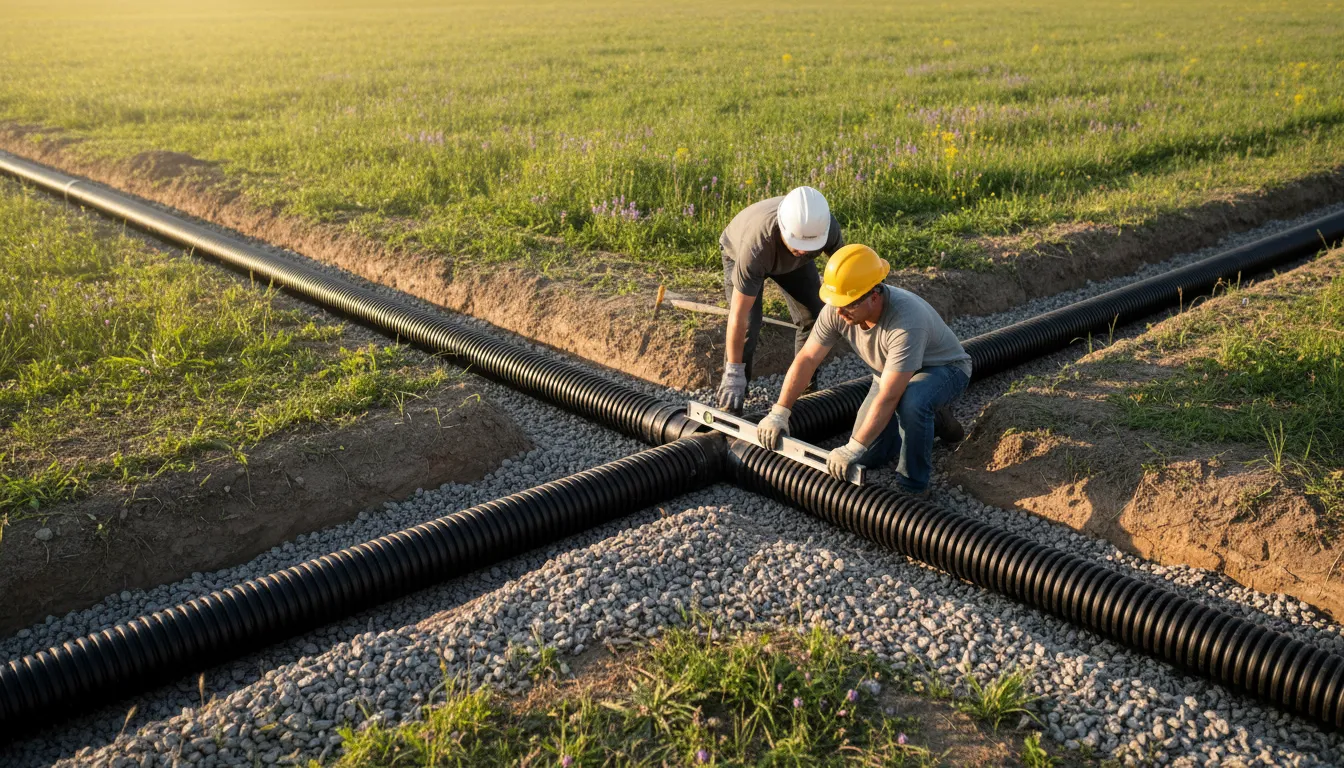
The drain field, also known as a leach field or absorption field, is the final and most crucial stage of your onsite wastewater system. After solids settle in the septic tank, liquid effluent flows into a network of perforated pipes buried in trenches filled with gravel. This effluent slowly percolates into the soil, where natural processes provide final treatment. When this system fails, wastewater can surface or back up, creating health hazards and violating state codes.
In Grand Rapids and Kent County, soil conditions vary greatly, heavily influencing drain field design and performance. Much of the area has clay-heavy soils, which absorb water very slowly. Other areas may have sandy soils or high water tables. These local conditions mean a standard system isn't always possible, and specialized solutions like mound systems are often required.
Signs You Need Drain Field Service
Recognizing early warning signs can save you from a complete system failure and more expensive repairs. Common indicators include:
- Soggy Ground or Surfacing Wastewater: Puddles or spongy, wet soil over the drain field area, especially when it hasn't rained.
- Sewage Odors: Unpleasant smells emanating from your yard or even inside the house.
- Slow Drains & Backups: Gurgling pipes, toilets that drain slowly, or sewage backing up into household drains.
- Unusually Green Grass: Patches of grass over the drain field that are much lusher and greener than the rest of the lawn.
- Failed Dye Test or Inspection: A professional inspection or dye test confirms that effluent is not being properly absorbed by the soil.
If you notice any of these signs, it's time to contact a professional for a diagnostic assessment before the problem worsens.
The Local Regulatory Process: Permits and Inspections
All septic system work in Kent County is strictly regulated. You cannot begin any repair or replacement without proper authorization. The Kent County Health Department is the permitting and inspecting authority, enforcing Michigan's minimum standards for onsite wastewater systems.
The process typically starts with a site evaluation. A county sanitarian or a licensed designer/evaluator will visit your property to assess the failure and determine the necessary corrective action. This almost always involves a new soil evaluation, commonly called a perc test (percolation test), to measure the soil's absorption rate. The results, along with site constraints like distance to wells, property lines, and foundations, dictate the design and size of your new or repaired leach field 1 2.
Once a plan is approved, the Health Department will issue the required permits. It is illegal for a contractor to begin excavation without these permits in hand. Finally, a county inspector must approve the installation before the system is covered with soil.
Repair vs. Replacement: Understanding Your Options
Not all drain field problems require a full, costly replacement. A professional assessment will determine the best course of action.
Potential Repair Solutions:
- Tank Pumping: Sometimes, a simple pumping of the septic tank can alleviate hydraulic overload on the drain field.
- High-Pressure Jetting: This technique uses pressurized water to clear biological matting and minor blockages from the pipes.
- Terralift (Soil Fracturing): A process that uses compressed air to create fissures in compacted soil around the trenches, restoring permeability.
- Component Repair: Fixing or replacing damaged distribution boxes, pipes, or tank baffles.
When Replacement is Necessary: Replacement is required when the soil is permanently clogged (a condition called biomat failure), the pipes have collapsed, or the site conditions no longer support the original system. A full leach field replacement involves:
- System Location & Excavation: The old field is carefully excavated.
- New Field Installation: New perforated pipes are laid in clean gravel-filled trenches according to the approved design. For difficult sites, a raised mound system may be installed.
- Final Connection & Inspection: The new field is connected to the septic tank and inspected by the county before being covered with topsoil 3 4.
Find the perfect drain field repair companies for your needs
Get personalized recommendations and expert advice
Cost Factors for Grand Rapids Homeowners
The cost for drain field work in Grand Rapids varies widely based on the solution. Minor repairs or rejuvenation techniques like jetting are less expensive, while a full system replacement is a significant investment.
For a complete drain field replacement, homeowners can expect costs to range from $5,000 to over $20,0005. The final price depends on:
- System Size & Type: A larger conventional field for a 4-bedroom home costs more than a smaller one. Specialized systems like mounds are more expensive due to added materials and labor.
- Site Accessibility & Complexity: Steep slopes, rocky soil, or limited access for machinery increase costs.
- Permitting & Design Fees: Fees for soil evaluations, permits, and professional design services add to the total.
Financial assistance is available. The Michigan Saves Septic Replacement Loan Program offers low-interest loans (typically between $1,000 and $50,000) specifically for homeowners facing a failed system, helping to manage this unexpected expense 6 7.
Maintaining Your New or Repaired System
Protecting your investment is key. Once your drain field is functioning again, follow these essential maintenance tips to extend its lifespan:
- Pump Regularly: Have your septic tank pumped every 3 to 5 years by a licensed professional to prevent solids from escaping into the drain field.
- Conserve Water: Spread out laundry loads and fix leaky fixtures to avoid hydraulically overloading the system.
- Mind What You Flush: Only human waste and toilet paper should go down the drain. Avoid chemicals, grease, wipes, and feminine hygiene products.
- Protect the Area: Never drive or park vehicles, build structures, or plant trees and shrubs over the drain field. Keep roof drains and sump pumps directed away from it 8 9.
Frequently asked questions
Sources
Footnotes
-
Drainfield Assessment FAQs, What Homeowners in Michigan ... - https://michigandrainfield.com/resources/drainfield-assessment-faq/ ↩
-
Septic Repair or Replacement: Minimum Standards - https://www.michigan.gov/egle/-/media/Project/Websites/egle/Documents/Programs/WRD/NPS/General/Septic-System-Minimum-Standards.pdf ↩
-
Grand Rapids, MI Septic Tank & Drain Field Installation | Walnut Grove Excavating - https://walnutgroveexcavating.com/grand-rapids-mi-septic-tank-drain-field-installation/ ↩
-
Diagnose Septic Problems Before You Replace - Michigan Drainfield - https://michigandrainfield.com/services/drainfield-assessment/ ↩
-
Septic Systems - MI Water Stewardship - https://miwaterstewardship.org/septic-systems/ ↩
-
Septic Field Restoration | A Comprehensive Guide - https://michigandrainfield.com/blog/septic-field-restoration-a-comprehensive-guide/ ↩
-
Navigating your home septic system replacement - https://michigansaves.org/news/navigating-your-home-septic-system-replacement/ ↩
-
Managing Your Septic System - https://www.canr.msu.edu/septic_system_education/uploads/E-3350%20Managing%20Septic.pdf ↩
-
Septic System Owner's Guidebook - https://www.gvsu.edu/cms4/asset/E1327343-09F0-03FF-AA9032F47AD1EB9C/septic_guidebook.pdf ↩