Find the Best Drain Field Repair Companies for Your Business
No obligation • Fast responses • Nationwide coverage

Why you can trust Septic Spot
Septic Spot is a leading United States resource for understanding and comparing septic services. Our editors review providers using consistent criteria and verify key business details. Listings and scores are independent, and companies cannot pay to influence our content.
Search providers near you
Top Drain Field Repair Companies in Dearborn, Michigan Ranked
A failing septic drain field is a serious issue that can lead to sewage backups, soggy yards, and environmental contamination. In Dearborn, where local soil conditions and regulations are specific, addressing drain field problems requires a clear understanding of the repair and replacement process. This guide explains what homeowners need to know about septic leach field restoration, from recognizing failure signs to navigating Wayne County permits and understanding costs, so you can make informed decisions about your property's wastewater system.

Understanding Your Septic Drain Field
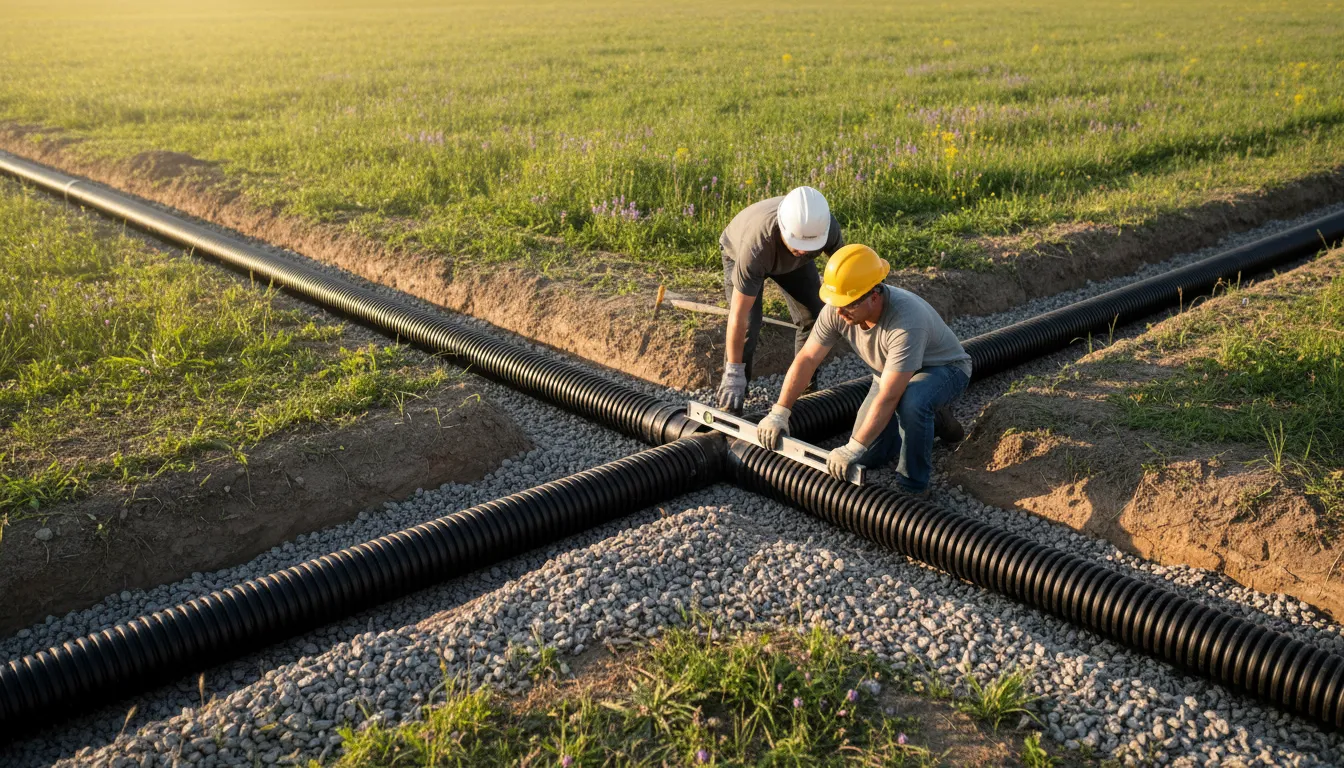
Often called a leach field or absorption field, the drain field is the final and most critical stage of a septic system. After solids settle in the tank, liquid effluent flows into a network of perforated pipes buried in trenches filled with gravel. This effluent slowly percolates into the soil, where natural processes filter and treat it before it rejoins the groundwater. A properly functioning drain field is essential for protecting both your home's plumbing and the local environment.
In Dearborn and across southeastern Michigan, soil composition plays a major role in system design and longevity. The ideal soil is sandy and well-draining. However, many areas in Wayne County have clay-heavy soils, which absorb water very slowly. This can lead to premature system failure and often requires larger drain fields or specially engineered systems to handle the wastewater load effectively.
Signs Your Dearborn Drain Field Needs Attention
Catching problems early can mean the difference between a minor repair and a full, costly replacement. Be on the lookout for these warning signs of a failing leach field:
- Soggy Ground or Ponding: Persistent wet spots, lush green grass, or standing water over the drain field area, especially when it hasn't rained.
- Slow Drains and Sewage Backups: Gurgling pipes, slow-draining sinks and toilets, or sewage backing up into household drains.
- Unpleasant Odors: Foul smells of sewage in the yard or near the drain field.
- Nitrate Contamination: High levels of nitrates in well water, which can indicate that untreated effluent is leaching into the groundwater.
If you notice any of these issues, it's crucial to contact a licensed septic professional for an assessment immediately. Ignoring them can lead to more extensive damage, environmental health hazards, and potential violations of local codes.
The Regulatory Landscape: Wayne County Permits and Codes
Before any shovel hits the ground, understanding local regulations is mandatory. Michigan does not have a uniform statewide septic code; instead, authority is delegated to county health departments. In Dearborn, this means the Wayne County Environmental Health Division governs all septic system work, including drain field repairs and replacements.
A valid permit from Wayne County is required for any significant repair or full replacement of your leach field. The permit process typically involves:
- A site evaluation by a licensed contractor or evaluator.
- Submission of a detailed site plan, including the property survey and the proposed repair/replacement design.
- Payment of applicable fees.
Furthermore, many municipalities in Michigan are adopting "time-of-sale" inspection ordinances 1. If you are buying or selling a home with a septic system in Dearborn, you may be required to have the system inspected and any failures repaired before the sale can be finalized.
The Drain Field Repair and Replacement Process
Once a professional has confirmed a failure, the process for restoration follows a structured path.
1. Professional Site Evaluation: A licensed excavating or septic contractor will perform a thorough assessment. This goes beyond diagnosing the symptom; it involves evaluating soil percolation rates, checking for high groundwater tables, and determining the exact cause of failure. This evaluation is critical for designing a solution that will last.
2. System Design and Sizing: Based on the site evaluation, a new drain field will be designed. Sizing is based on the home's bedroom count (a proxy for daily wastewater flow) and the soil's absorption capacity. For example, a standard three-bedroom home typically requires a drain field between 450 and 900 square feet, but poor soil can significantly increase this requirement 2 3.
3. Permit Acquisition: Your contractor will usually handle submitting the site plan and application to the Wayne County Environmental Health Division for permit approval.
4. Installation or Repair Work: This is the physical construction phase. For a full replacement, the old drain field is excavated, and new trenches, gravel, and perforated piping are installed according to the approved plan.
5. Final Inspection: After installation but before the trenches are backfilled, a final inspection by the county is required to ensure the work complies with the permit and sanitary codes 4.
Find the perfect drain field repair companies for your needs
Get personalized recommendations and expert advice
Cost Considerations for Drain Field Work in Dearborn
The cost to fix a septic drain field in Dearborn varies widely based on the scope of work, soil conditions, and system type. Here's a general breakdown based on available data:
- Minor Repairs: Fixing a clogged pipe or a damaged baffle might cost between $300 and $900.
- Drain Field Replacement: Completely replacing a conventional leach field typically ranges from $5,000 to $12,0005 6. This is often the core cost when the absorption field has failed.
- Total System Replacement: If both the septic tank and drain field need to be replaced, homeowners can expect costs between $6,000 and $20,000+7 8.
- Engineered Systems: For properties with poor soil, high groundwater, or small lots, an engineered system like a mound or sand filter may be necessary. These are more complex and costly, generally ranging from $12,000 to $35,000 or more9.
Financing Help: The significant cost of a replacement can be a burden. Michigan Saves, a nonprofit green bank, offers low-interest home improvement loans specifically for septic system replacements, providing a valuable resource for eligible homeowners 10.
Maintaining Your New or Repaired Drain Field
Protecting your investment is key. Proper maintenance can extend the life of your drain field by decades.
- Regular Pumping: Have your septic tank pumped every 3 to 5 years by a licensed hauler to prevent solids from flowing into and clogging the drain field 11.
- Annual Inspections: Consider having the entire system inspected every 1 to 3 years to catch small issues early.
- Mind What You Flush: Only human waste and toilet paper should go down the drain. Avoid chemicals, grease, wipes, and feminine hygiene products.
- Protect the Area: Never park vehicles, build structures, or plant trees and deep-rooted shrubs on or near your drain field. The weight can compact the soil and crush pipes, while roots can infiltrate and block them 12 13.
- Divert Water: Ensure roof gutters, sump pumps, and yard drainage are directed away from the drain field to prevent saturation.
Frequently asked questions
Sources
Footnotes
-
Septic System Ordinances | Michigan Lakes and Streams ... - https://mymlsa.org/government-and-legal-issues/ordinances/septic-system-ordinances/ ↩
-
DON'T BUY A HOUSE WITH A SEPTIC IN MICHIGAN! - https://livinginmichigan.com/don-t-buy-a-house-with-a-septic-in-michigan/ ↩
-
Drainfield Assessment FAQs, What Homeowners in Michigan ... - https://michigandrainfield.com/resources/drainfield-assessment-faq/ ↩
-
Septic/Onsite Sewage - Wayne County, Michigan - https://www.waynecountymi.gov/Government/Departments/Health-Human-Veterans-Services/Public-Health/Environmental-Health/Environmental-Safety/SepticOnsite-Sewage ↩
-
Septic Systems - MI Water Stewardship - https://miwaterstewardship.org/septic-systems/ ↩
-
How Much Does It Cost To Install a Septic System in Detroit, MI? | Angi - https://www.angi.com/articles/what-does-it-cost-install-septic-system/mi/detroit ↩
-
Cost to Replace Septic Tank and Drain Field [2026 Data] | Angi - https://www.angi.com/articles/how-much-new-drain-fields-foot.htm ↩
-
How Much Does It Cost to Replace a Septic System in Livingston ... - https://www.septicserviceshowell.com/post/how-much-does-it-cost-to-replace-a-septic-system-in-livingston-county-mi ↩
-
Engineered Septic Systems in Michigan: Costs, Maintenance ... - https://www.michiganseptic.com/post/engineered-septic-systems-in-michigan-costs-maintenance-a-2026-guide ↩
-
Navigating your home septic system replacement - https://michigansaves.org/news/navigating-your-home-septic-system-replacement/ ↩
-
Septic Systems: - Mid-Michigan District Health Department - https://www.mmdhd.org/wp-content/uploads/2018/09/Septic-Systems.pdf ↩
-
Managing Your Septic System - https://www.canr.msu.edu/septic_system_education/uploads/E-3350%20Managing%20Septic.pdf ↩
-
402--475--2462 - http://www.southwickliquidwaste.com/wp-content/uploads/2014/11/SEPTIC_SYSTEM_manual.pdf ↩