Find the Best Drain Field Repair Companies for Your Business
No obligation • Fast responses • Nationwide coverage

Why you can trust Septic Spot
Septic Spot is a leading United States resource for understanding and comparing septic services. Our editors review providers using consistent criteria and verify key business details. Listings and scores are independent, and companies cannot pay to influence our content.
Search providers near you
Top Drain Field Repair Companies in Detroit, Michigan Ranked
A failing drain field is a serious issue for any home with a septic system, leading to backups, foul odors, and environmental contamination. Drain field repair and replacement involves diagnosing and fixing the soil absorption area, which is critical for safely dispersing and treating household wastewater. This guide explains the local process, costs, and regulations to help you understand your options and connect with qualified professionals in the Detroit area for your leach field or soil absorption system needs.
Understanding Your Drain Field in Southeast Michigan
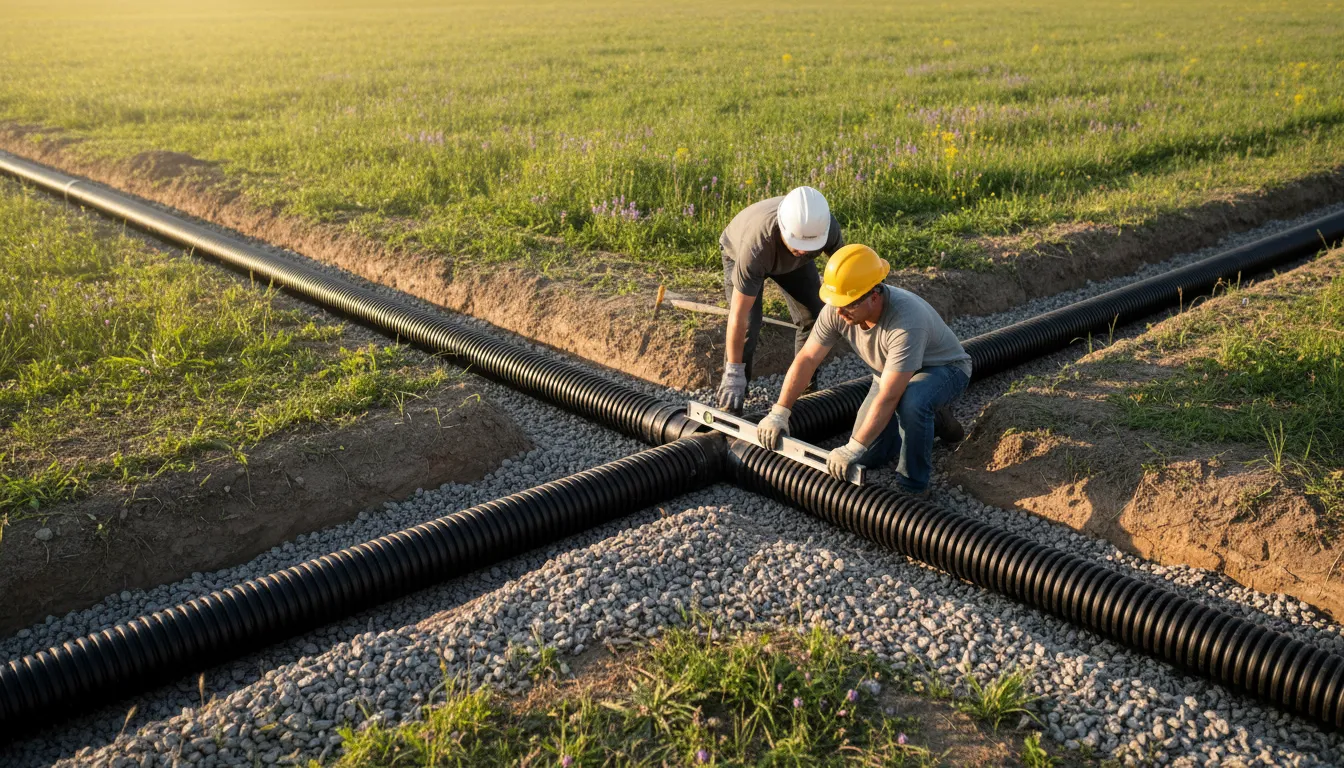
The drain field, also known as a leach field or absorption field, is the final and most crucial stage of your onsite wastewater system. After solids settle in the septic tank, liquid effluent flows into a network of perforated pipes buried in trenches filled with gravel. This effluent slowly percolates into the soil, where natural processes provide final treatment. In Metro Detroit, local soil conditions heavily influence system design and performance. Heavy clay soils, common in parts of the region, have very slow percolation rates, which can challenge standard systems and often necessitate larger or specially engineered drain fields.
Regular maintenance is the best defense against premature failure. This includes pumping your septic tank every 3-5 years to prevent solids from washing out and clogging the drain field 1. Avoiding excessive water use and not planting trees or large shrubs near the field are also key preventative measures, as roots are a common cause of pipe damage and clogging 1.
Signs You Need Drain Field Repair or Replacement
Recognizing early warning signs can save you from a complete system failure and more costly repairs. Be alert to the following indicators around your property's drain field area:
- Surface Wetness: Spongy ground, standing water, or persistent soggy spots, especially when it hasn't rained, are classic signs of a saturated leach field.
- Unpleasant Odors: The smell of sewage in your yard or near the drain field area is a clear signal of a problem.
- Lush Vegetation: Grass or plants over the drain field that are noticeably greener, thicker, and grow faster than the rest of the lawn may be feeding on nutrient-rich effluent.
- Slow Drains & Backups: If sinks, showers, and toilets drain slowly or back up, particularly after heavy rain or water use, it could indicate the drain field is no longer absorbing liquid.
- Sewage Surfacing: In severe cases, untreated sewage may bubble up to the surface of your yard, creating a serious health hazard.
If you notice any of these signs, the next step is a professional inspection to determine the exact cause and extent of the problem.
The Professional Inspection and Diagnosis Process
A thorough inspection by a licensed contractor is essential before any repair or replacement work begins. This process typically involves:
- Visual Assessment & History: The professional will walk the property, note the signs mentioned above, and discuss the system's age and maintenance history with you.
- Tank Pumping & Inspection: The septic tank must be pumped to allow for a full inspection of the tank's integrity, inlet/outlet baffles, and the effluent filter (if present). This rules out tank issues causing the drain field problem 2.
- Distribution Box Check: Inspectors will check the distribution box (D-box) to ensure effluent is flowing evenly to all sections of the drain field and that there are no clogs in the connecting pipes.
- Soil and Percolation Testing: A critical step for any new design. A licensed professional will perform soil tests, including percolation tests, to determine the soil's ability to absorb water. This data is required for permit applications and dictates the size and type of system needed 3.
Find the perfect drain field repair companies for your needs
Get personalized recommendations and expert advice
Wayne County Regulations and Permit Requirements
All substantial drain field repairs and any new installations in Detroit and Wayne County require permits and oversight from the Wayne County Department of Public Health, Environmental Health Division. Navigating these regulations is a non-negotiable part of the process.
- Permit is Mandatory: You must obtain a valid permit before work begins. Your licensed contractor will usually handle the application process 4.
- Site Evaluation: A formal site evaluation by a licensed contractor or designer is required. This evaluation produces the specifications for the system based on soil tests, property size, and household water usage.
- Required Documentation: Applications typically require a detailed plot plan showing the proposed system location, a legal description of the property, and the parcel ID number.
- Key Design Regulations: Systems must adhere to strict isolation distances, including being at least 50 feet from a private well. The property must also have enough space not only for the primary drain field but also for a designated 100% replacement area, reserved for future use if the first field fails 5.
- Final Inspection: County officials will inspect the newly installed or repaired system before the trenches are backfilled and covered. Passing this inspection is required for final approval 6.
Repair vs. Replacement: Options and Costs
The solution depends on the diagnosis. Costs in the Detroit area can vary widely based on soil conditions, system size, and the extent of the problem.
Drain Field Repair (Restoration): Sometimes, a full replacement isn't immediately necessary. Techniques like cleaning clogged pipes, repairing a damaged distribution box, or using technologies to break up biomat (a clogging layer) can restore function. This is often called "drain field restoration" and can be a more affordable, short-to-medium term solution, though it may not be permanent. Costs for these targeted repairs are generally lower but can still range significantly.
Complete Drain Field Replacement: This is necessary when the soil is permanently saturated or the entire absorption area has failed. It involves excavating a new set of trenches in the designated replacement area. In difficult soils, an engineered system-such as a mound, sand filter, or aerobic treatment unit (ATU)-may be required. These systems provide advanced treatment and are designed for challenging sites but come at a higher cost 7.
Cost Ranges:
- Full Conventional Replacement: $5,000 - $20,000+ 8.
- Engineered System (if needed): Can add $10,000 - $15,000+ to the cost of a conventional system 9 10.
- Permit & Design Fees: Typically range from $100 to $250 for county fees, excluding the contractor's cost for soil testing and design work 11 12.
Maintaining Your New or Repaired Drain Field
Protecting your investment is crucial. After a repair or replacement, adhere to a strict maintenance regimen:
- Pump Regularly: Schedule septic tank pumping every 3-5 years without fail. This is the single most important thing you can do to protect your new leach field 13 14.
- Conserve Water: Spread out laundry loads, fix leaky fixtures, and consider water-efficient appliances to avoid hydraulically overloading the system.
- Mind What You Flush: Only human waste and toilet paper should go down the drain. Avoid chemicals, grease, wipes, and feminine hygiene products.
- Protect the Area: Never drive or park vehicles over the drain field. Keep the area landscaped only with grass. Avoid installing patios, sheds, or pools over it.
Frequently asked questions
Sources
Footnotes
-
Managing Your Septic System - https://www.canr.msu.edu/septic_system_education/uploads/E-3350%20Managing%20Septic.pdf ↩ ↩2
-
Septic Inspections in Southeast Michigan - Universal Septic Services - https://www.universalsepticservices.com/services/inspections/ ↩
-
The Complete Guide to Soil Testing for Septic System Design: Ensuring Regulatory Compliance and System Longevity - https://www.mapengineering.net/the-complete-guide-to-soil-testing-for-septic-system-design/ ↩
-
Install A Septic System for the First Time: What Is A Drain Filed? - Advanced Pump & Well Service - https://advancedpumpandwell.com/2025/03/install-a-septic-system-for-the-first-time-what-is-a-drain-filed/ ↩
-
Septic Drainfield Design 101: A Complete Guide - https://landperc.com/septic-drainfield-design-guide/ ↩
-
Septic/Onsite Sewage - Wayne County, Michigan - https://www.waynecountymi.gov/Government/Departments/Health-Human-Veterans-Services/Public-Health/Environmental-Health/Environmental-Safety/SepticOnsite-Sewage ↩
-
Engineered Septic Systems in Michigan: Costs, Maintenance ... - https://www.michiganseptic.com/post/engineered-septic-systems-in-michigan-costs-maintenance-a-2026-guide ↩
-
Septic Systems - Michigan Water Stewardship Program - https://miwaterstewardship.org/septic-systems/ ↩
-
DON'T BUY A HOUSE WITH A SEPTIC IN MICHIGAN! - https://livinginmichigan.com/don-t-buy-a-house-with-a-septic-in-michigan/ ↩
-
Drainfield Kickstart Process - https://michigandrainfield.com/services/drainfield-kickstart-process/ ↩
-
Septic Field Restoration | A Comprehensive Guide - https://michigandrainfield.com/blog/septic-field-restoration-a-comprehensive-guide/ ↩
-
Cost to Replace Septic Tank and Drain Field [2026 Data] | Angi - https://www.angi.com/articles/how-much-new-drain-fields-foot.htm ↩
-
FAQ: Septic systems - https://www.michigan.gov/egle/faqs/drinking-water/septic-systems ↩
-
Septic Systems: - Mid-Michigan District Health Department - https://www.mmdhd.org/wp-content/uploads/2018/09/Septic-Systems.pdf ↩