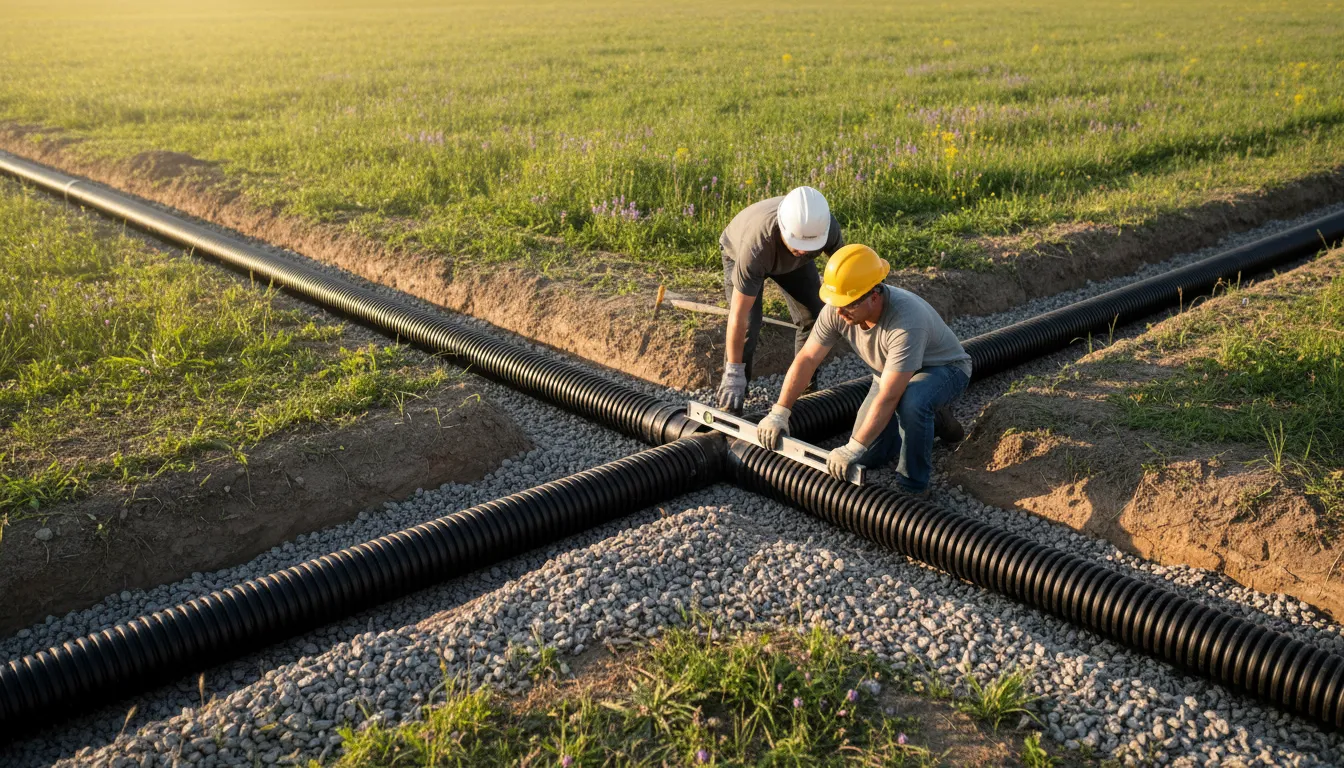
Find the Best Drain Field Repair Companies for Your Business
No obligation • Fast responses • Nationwide coverage

Why you can trust Septic Spot
Septic Spot is a leading United States resource for understanding and comparing septic services. Our editors review providers using consistent criteria and verify key business details. Listings and scores are independent, and companies cannot pay to influence our content.
Search providers near you
Top Drain Field Repair Companies in Georgetown, Michigan Ranked
A failing drain field is a serious issue for any Michigan homeowner with a septic system. This critical component, also known as a leach field or absorption field, is responsible for safely filtering and dispersing treated wastewater into the soil. When it malfunctions, it can lead to sewage backups, environmental contamination, and significant property damage. Understanding the repair and replacement process, including Michigan's specific regulations and costs, is essential for protecting your home, health, and investment. This guide provides the practical information you need to navigate finding qualified local professionals for this specialized work.
Patrick Esper Septic
Lansing, MI
Patrick Esper Septic is a septic service provider located in Lansing, MI. They offer a range of services including septic tank pumping, system repairs, and installation of septic tanks and drain fields. Their capabilities include effluent pump repair and drain field replacement, as well as engineered septic services and community system installation. The company also provides excavation, grading, and land clearing services related to septic system projects.
Howell Sanitary Co
5205 Pinckney Rd, Howell, MI 48843
Howell Sanitary Co provides a range of septic system services in Lansing, MI. Their offerings include septic tank pumping, inspections, repairs, and new installations, as well as septic field repairs and replacements. They also handle septic tank riser installation, effluent filter cleaning, and various types of septic fields such as conventional, elevated, and trench systems. Additional services include excavating, driveway grading, and land clearing.
Ball Septic Tank Service
Lansing, MI
Ball Septic Tank Service provides residential and commercial septic system services in Lansing, MI, including septic tank pumping, installation, repair, and drain field replacement. Serving the Greater Lansing area and nearby communities such as Charlotte, Grand Ledge, and Mason, the company focuses on safety and clear communication. Their team offers reliable scheduling and well-equipped trucks to complete most jobs in one visit, along with maintenance guidance to help prevent future issues.
Bowman Excavating Inc
920 W Marr Rd, Howell, MI 48855
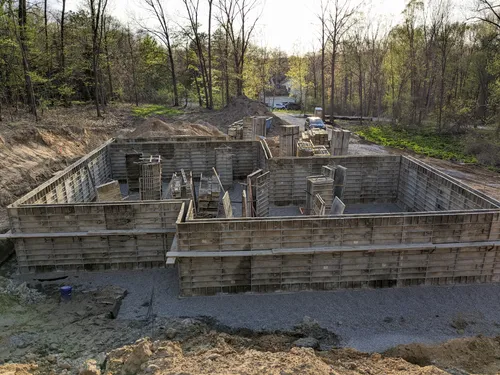
Bowman Excavating Inc is a family-owned excavation and septic system company serving Lansing, MI, and surrounding counties. With over 45 years of experience, they specialize in septic system installation and repair, including certified Advantex septic systems, engineered drain fields, and pressure systems. Their expertise extends to full-service excavation work such as basement excavation, grading, land clearing, and site development. Bowman Excavating applies detailed knowledge of soil structure and environmental codes to ensure precise and compliant septic solutions.
G A Hunt Excavating and Septic Services
1220 E Taft Rd, St Johns, MI 48879
G A Hunt Excavating and Septic Services is a septic system company serving Lansing, MI, and surrounding mid-Michigan areas. They provide septic tank installation, pumping, inspection, maintenance, and repair services, including drain field repair and trenchless excavation technology to minimize property disruption. With over 30 years of experience, the company offers 24/7 emergency septic and sewer services to address urgent issues promptly and efficiently.
Understanding Your Septic Drain Field
The drain field is the final stage of your on-site wastewater treatment system. After solids settle in the septic tank, the liquid effluent flows into a network of perforated pipes buried in trenches filled with gravel. This effluent slowly percolates through the soil, where natural processes remove harmful bacteria, viruses, and nutrients before the water rejoins the groundwater.
A properly functioning drain field is invisible and odorless. In Michigan, a conventional septic system with a drain field can last 25 to 40 years with proper care. However, several factors can lead to premature failure, necessitating repair or a full replacement.
Signs of Drain Field Failure in Michigan
Recognizing the early warning signs can help you address problems before they become catastrophic and more expensive. Key indicators include:
- Soggy Ground or Standing Water: Puddles or persistently wet, spongy soil over the drain field area, especially when it hasn't rained.
- Sewage Odors: Unpleasant smells emanating from the yard near the drain field or even inside the home.
- Slow Drains & Backups: Gurgling pipes, toilets that drain slowly, or sewage backing up into household drains.
- Unusually Lush Vegetation: Patches of grass over the drain field that are noticeably greener, thicker, and grow faster than the rest of the lawn.
- Algae Blooms in Nearby Ponds or Ditches: This can indicate nutrient-rich effluent is surfacing and running off.
If you notice any of these signs, it's crucial to contact a licensed septic professional immediately for an inspection. Ignoring them can lead to groundwater contamination, which is a public health hazard.
The Michigan Regulatory Process: Permits and Inspections
Any significant repair, alteration, or complete replacement of a septic system in Michigan requires adherence to state and local health codes. The process is managed by your local county health department.
- Permit Requirement: A permit is mandatory before any work begins. You or your contractor must submit an application to your local health department (e.g., District Health Department #10, Oakland County, Washtenaw County).
- Site Evaluation (Perc Test): A critical part of the permit process is a new site evaluation. A sanitarian will assess your property's soil composition, depth to groundwater (water table), slope, and overall suitability for a drain field. This often includes a percolation ("perc") test to measure the soil's absorption rate 1. Plan for potential delays, as permit review and site evaluation can take 30 days or more.
- Isolation Distances: Michigan code mandates minimum separation distances. Most notably, a septic system must be at least 50 feet from a private water well, though greater distance is strongly recommended for safety.
- Final Inspection: Once installation is complete, a final inspection by a local health department sanitarian is required before the system can be covered or backfilled 2 3. Never backfill without this approval.
Repair vs. Complete Replacement
A professional assessment will determine the best course of action.
- Limited Repairs: Sometimes, issues are isolated. A repair might involve replacing a clogged or crushed section of distribution pipe, cleaning a blocked outlet baffle, or addressing surface water diversion problems. These are less invasive and costly but are only viable if the overall soil and system are still sound.
- Full Drain Field Replacement: This is necessary when the soil absorption area has become permanently clogged (a condition called "biomat" failure), the water table is too high, or the original system was improperly designed. Replacement typically involves constructing an entirely new drain field in a different location on your property, following the new site evaluation.
Find the perfect drain field repair companies for your needs
Get personalized recommendations and expert advice
Cost of Drain Field Repair & Replacement in Michigan
Costs vary widely based on system size, soil conditions, property layout, and local labor rates. The figures below are estimates to help you budget.
- Total System Replacement Cost: Replacing an entire septic system, including tank and drain field, is a major investment. In Michigan, total costs typically range from $15,000 to over $35,000 4.
- Cost Breakdown:
- Materials (Tank & Drain Field Components): $5,000 - $10,000+
- Engineering & System Design: $1,500 - $3,000
- Excavation & Installation Labor: $8,000 - $15,000
- Financing Assistance: Michigan homeowners should explore the Michigan Saves program, which offers low-interest loans specifically for septic system replacements, with amounts ranging from $1,000 to $30,000 5.
Choosing a Licensed Professional in Michigan
This is not a DIY project. Michigan law requires that septic system installation be performed by a state-licensed installer or, in some jurisdictions, by the homeowner if specifically permitted by the local health authority 6. For reliability and compliance, hiring a licensed professional is strongly advised.
- Verify License: Always ask for and confirm the contractor's Michigan septic installer license number.
- Check References & Reviews: Look for local companies with strong reputations and ask for references from past clients with similar projects.
- Get Multiple Quotes: Obtain detailed, written estimates from at least three licensed contractors. Ensure quotes include permit acquisition, site evaluation, materials, labor, and the final health department inspection.
- Ask About Experience: Inquire about their experience with the specific soil types and challenges common in your region of Michigan.
- Confirm Insurance: The contractor should carry liability insurance and workers' compensation coverage.
Protecting Your New Drain Field
After investing in a repair or replacement, proper maintenance is key to maximizing its lifespan.
- Regular Pumping: Have your septic tank pumped by a professional every 3 to 5 years to prevent solids from washing out and clogging the new drain field 7.
- Annual Inspections: Consider having the entire system inspected every 1-2 years to catch minor issues early 8.
- Practice Water Conservation: Spread out laundry loads, fix leaky faucets, and use water-efficient fixtures to avoid hydraulically overloading the system.
- Mind What You Flush: Only human waste and toilet paper should go down the drain. Avoid chemicals, grease, wipes (even "flushable" ones), and feminine hygiene products.
- Protect the Area:
- Never drive or park vehicles, heavy equipment, or place sheds on the drain field.
- Avoid planting trees or deep-rooted shrubs near the field, as roots can invade and damage pipes.
- Divert roof drains, sump pumps, and surface runoff away from the drain field area 9.
Critical Safety Step: Before any digging for evaluation or installation, you must call MISS DIG 811 at least three business days in advance. This free service will mark the location of underground utility lines to prevent dangerous and costly strikes 10 11.
Frequently asked questions
Sources
Footnotes
-
On-Site Septic Systems | Grand Traverse County, MI - https://www.gtcountymi.gov/822/On-Site-Septic-Systems ↩
-
Onsite Sewage Disposal System (Septic) | Oakland County, MI - https://www.oakgov.com/community/health/public-health-services/environmental-health/onsite-sewage-disposal-system-septic ↩
-
Sewage Systems | CMDHD - https://www.cmdhd.org/septicsystems ↩
-
Engineered Septic Systems in Michigan: Costs, Maintenance ... - https://www.michiganseptic.com/post/engineered-septic-systems-in-michigan-costs-maintenance-a-2026-guide ↩
-
Septic Systems | Washtenaw County, MI - Official Website - https://www.washtenaw.org/1617/Septic-Systems ↩
-
Residential Well & Septic - District Health Department #10 - https://www.dhd10.org/environmental-health/well-septic/residential/ ↩
-
FAQ: Septic systems - https://www.michigan.gov/egle/faqs/drinking-water/septic-systems ↩
-
SEPTIC TANK CARE - Monroe County, MI - https://www.co.monroe.mi.us/DocumentCenter/View/733/Homeowners-Guide-to-Construction-of-a-Sewage-Disposal-System-PDF ↩
-
Septic Systems: - Mid-Michigan District Health Department - https://www.mmdhd.org/wp-content/uploads/2018/09/Septic-Systems.pdf ↩
-
Septic Services - Livingston County, MI - https://milivcounty.gov/environmental-health/septic/ ↩
-
Septic Drain Field Replacement Costs Vs. Long-Term Savings - Septic Tank Man - https://www.theseptictankman.com/blog/septic-drain-field-replacement-costs-vs-long-term-savings ↩