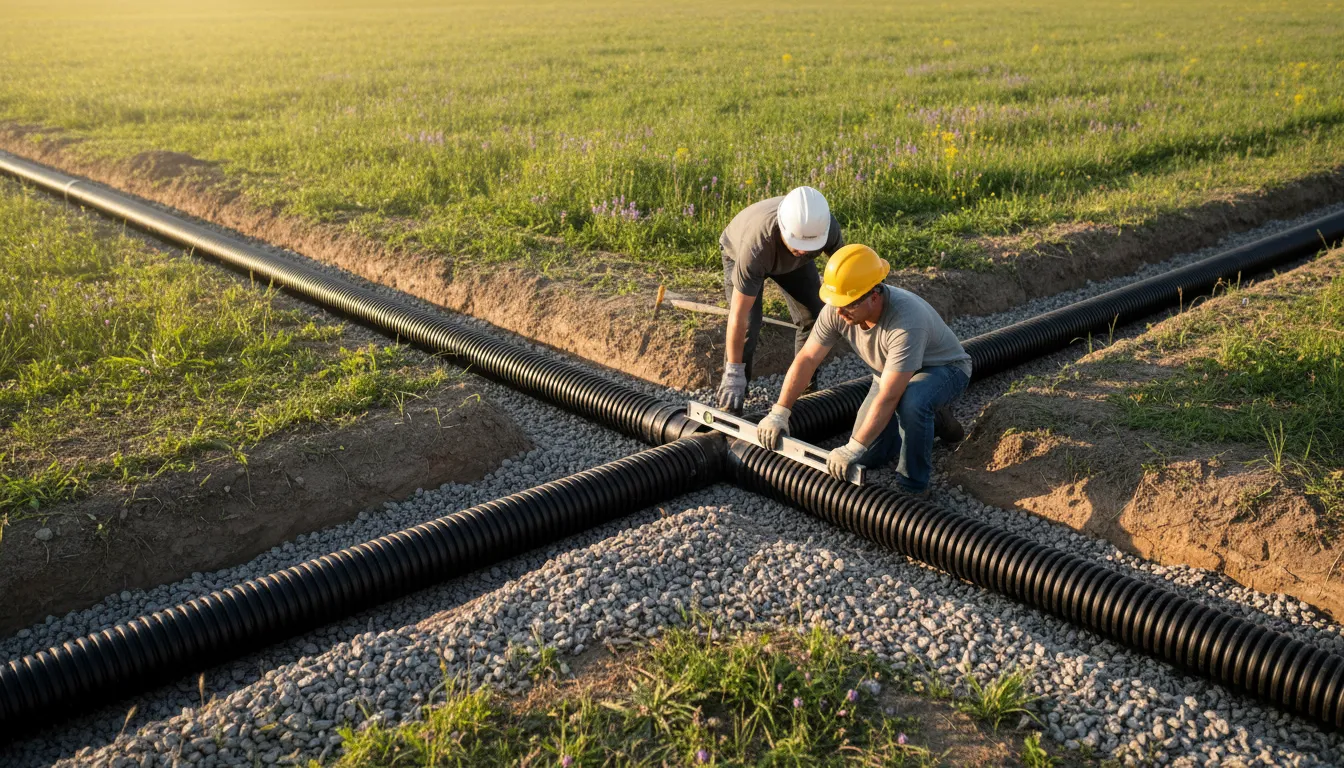
Find the Best Drain Field Repair Companies for Your Business
No obligation • Fast responses • Nationwide coverage

Why you can trust Septic Spot
Septic Spot is a leading United States resource for understanding and comparing septic services. Our editors review providers using consistent criteria and verify key business details. Listings and scores are independent, and companies cannot pay to influence our content.
Search providers near you
Top Drain Field Repair Companies in Livonia, Michigan Ranked
A failing septic system drain field is a serious issue that can threaten your home's plumbing, your property's value, and public health. In Livonia, where many homes rely on onsite wastewater treatment, understanding the repair and replacement process is essential. This guide explains what a drain field does, the signs of failure, and the local regulations you must follow. It also provides a way to connect with qualified local professionals who can assess your system and navigate the necessary permits and inspections.
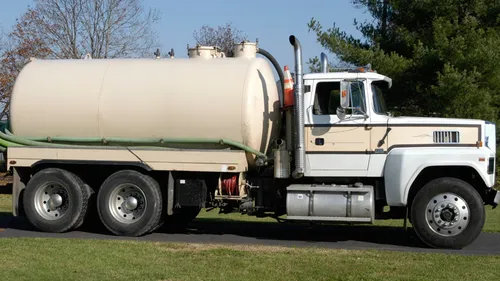
Howell Sanitary Co. II
Lansing, MI
Howell Sanitary Co. II provides a range of septic system services in Lansing, MI. Their offerings include septic tank pumping, inspections, repairs, and new installations. They also handle septic field repairs and replacements, with expertise in various field types such as conventional, elevated, dry wells, bed, and trench systems. Additional capabilities include septic tank riser installation, effluent filter cleaning, excavating, driveway grading, and land clearing.
Al Pearson & Son Septic Tank Cleaning
46885 Ford Rd, Canton Township, MI 48187
Al Pearson & Son Septic Tank Cleaning is a family-owned business serving Ann Arbor, MI, and the surrounding Southeast Michigan area. They offer a full range of septic services including tank pumping, cleaning, system repairs, new installations, soil evaluations, and excavation. With over 70 years of experience since 1953, the company is licensed and certified to handle advanced septic system work for both residential and commercial clients. They emphasize clear communication and honest recommendations to ensure septic systems operate reliably. Emergency septic services are also available with often same-day pumping.
Understanding Your Septic System's Drain Field
Often called a leach field or absorption field, the drain field is the final, critical stage of your septic system. After solids settle in the tank, the clarified liquid effluent flows into a network of perforated pipes buried in trenches filled with gravel or stone. This effluent slowly percolates down through the soil, where natural biological processes remove harmful pathogens and nutrients before the water rejoins the groundwater. When this soil absorption area fails, untreated wastewater can surface, creating health hazards and environmental contamination.
Signs of Drain Field Failure in Livonia
Recognizing the early warnings of a failing leach field can save you from more extensive and costly repairs. Common indicators include:
- Soggy Ground or Surfacing Wastewater: The most obvious sign is standing water or spongy, bright green grass over the drain field area, especially when it hasn't rained.
- Slow Drains and Sewage Backups: If toilets, showers, and sinks drain very slowly or back up into the home, it could indicate that the drain field is saturated and not accepting water.
- Foul Odors: Unpleasant sewage smells in your yard or near the drain field are a clear red flag.
- Nitrate Contamination: While not visible, a failed system can leach nitrates into groundwater, which is a serious concern for drinking water wells.
If you notice any of these signs, it's crucial to contact a professional for a diagnostic assessment before the problem worsens.
The Diagnostic Process: What's Wrong with Your Field?
A thorough evaluation is the first step before any repair or replacement. Local specialists use several methods to diagnose leach field problems:
- Locating System Components: The first task is to accurately locate the septic tank, distribution box, and drain field lines, which may not be obvious after years of landscaping.
- Septic Tank Inspection: The tank itself is checked for sludge and scum levels. An overfull tank can send solids into the drain field, causing premature clogging. The tank's structural integrity and baffles are also assessed.
- Soil Absorption Testing: A "perc" test or other flow test may be performed to measure the soil's current ability to absorb water, which is critical for designing a repair or new system 1.
- Camera Inspection: A specialized camera can be snaked through the drain field pipes to visually identify root intrusion, pipe collapse, or other physical blockages 2.
This diagnostic work determines whether a repair is possible or if a full replacement is necessary.
Livonia and Wayne County Regulations You Must Know
All work on septic system drain fields in Livonia is regulated by the Wayne County Environmental Health Division. Ignoring these rules can result in fines and work stoppages.
- Permit Required: You must obtain a "Permit to Install or Alter" from the county before any excavation or work begins. This permit ensures the proposed system meets state and local health codes 3.
- Who Can Do the Work: Installation can only be performed by a state-registered septic installer. Homeowners may perform work on their primary residence, but they are still subject to all permit and inspection requirements.
- Mandatory Inspections: The county requires multiple inspections during a replacement project:
- Excavation Inspection: Before any sand or stone is placed, an environmental health specialist must inspect the open trenches to verify soil conditions, depth to groundwater, and system sizing.
- Sand Backfill Inspection: This confirms the quality and proper placement of the sand layer in the trenches.
- Final Inspection: After the pipes and stone are placed and covered, a final inspection ensures the installation matches the approved design and that proper grading directs surface water away from the field 4.
- Notice for City Inspectors: The City of Livonia also requires a 48-hour notice to schedule its own inspector for relevant site work 5.
Find the perfect drain field repair companies for your needs
Get personalized recommendations and expert advice
Soil Challenges and System Types for Livonia Properties
The local soil conditions heavily influence the repair or replacement solution. Much of Livonia has clay-heavy soil, which drains slowly and can limit the effectiveness of a conventional drain field 6. Key site factors include:
- High Water Table: Michigan law requires a specific vertical separation between the bottom of the drain field and the seasonal high groundwater level. This is verified during the excavation inspection 7.
- Setback Requirements: New or replacement drain fields must be located at least 50 feet from any water well and on ground that slopes away from water supplies 8.
- Reserve Area: It is highly recommended (and sometimes required) to have a designated "reserve" area on your property suitable for a future drain field. This provides a long-term solution if the primary field eventually fails 9.
Due to these challenges, conventional gravel trench systems may not always be feasible. Alternatives include:
- Engineered Systems: These may use pressure dosing to distribute effluent more evenly across the field.
- Mound Systems: For sites with high water tables or poor soil, a raised mound system using imported sand is a common solution, though it is more expensive.
- Advanced Treatment Systems: Some systems include additional treatment stages to improve effluent quality before it reaches the drain field.
Cost of Drain Field Repair and Replacement
Costs can vary widely based on the extent of the failure, soil conditions, system type, and property accessibility. The following estimates are based on regional data and should be used as a general guide 10 11 12.
- Minor Repairs: Addressing a clogged line, replacing a damaged pipe, or repairing a baffle may range from $1,000 to $5,000.
- Full Drain Field Replacement: Replacing the entire absorption field for an existing home typically costs between $5,000 and $15,000+.
- Complete Septic System Replacement: If both the tank and drain field need to be replaced, homeowners should budget $10,000 to $25,000.
- Engineered or Mound Systems: Due to the extra materials and engineering required, these systems can cost $15,000 to $30,000 or more.
- Permit and Design Fees: Don't forget to factor in county permit fees, which can range from $450 to $2,000, and any costs for soil evaluation and system design by a professional engineer 13 14.
Maintaining Your New or Repaired Drain Field
Protecting your investment is key. Follow these best practices to extend the life of your septic system:
- Pump Regularly: Have your septic tank pumped by a licensed professional every 3-5 years to prevent solids from escaping into the drain field 15 16.
- Conserve Water: Spread out laundry loads and fix leaky fixtures to avoid hydraulically overloading the field.
- Mind What You Flush: Only human waste and toilet paper should go down the toilet. Avoid chemicals, grease, wipes, and feminine hygiene products.
- Protect the Area: Never drive, park, or build structures (like sheds) on your drain field. The weight can compact the soil and crush pipes.
- Landscape Carefully: Do not plant trees or deep-rooted shrubs on or near the drain field. Roots are a primary cause of pipe damage. Grass is the best cover.
- Divert Water: Ensure roof gutters, sump pumps, and yard drainage are directed away from the drain field area to keep it from becoming saturated 17.
Frequently asked questions
Sources
Footnotes
-
Diagnose Septic Problems Before You Replace - Michigan Drainfield - https://michigandrainfield.com/services/drainfield-assessment/ ↩
-
Protecting Homeowners and Our Waters: Septic Systems of ... - https://www.mitcrpc.org/post/protecting-homeowners-and-our-waters-septic-systems-of-mid-michigan ↩
-
Sewage Treatment Systems | Wayne County Health Department - https://www.wayne-health.org/sewage-treatment-systems ↩
-
Septic System Ordinances | Michigan Lakes and Streams ... - https://mymlsa.org/government-and-legal-issues/ordinances/septic-system-ordinances/ ↩
-
SITE PLAN DESIGN STANDARDS - Livonia.gov - https://livonia.gov/DocumentCenter/View/5420/Site-Plan-Design-Standards---2021-PDF ↩
-
How much does it cost for a new septic and drain field? Just an ... - https://www.facebook.com/groups/204486930758046/posts/1461789831694410/ ↩
-
Mich. Admin. Code R. 325.423 - Minimum standards for septic tank ... - https://www.law.cornell.edu/regulations/michigan/Mich-Admin-Code-R-325-423 ↩
-
Septic/Onsite Sewage - Wayne County, Michigan - https://www.waynecountymi.gov/Government/Departments/Health-Human-Veterans-Services/Public-Health/Environmental-Health/Environmental-Safety/SepticOnsite-Sewage ↩
-
Drainfield Kickstart Process - https://michigandrainfield.com/services/drainfield-kickstart-process/ ↩
-
Cost to Replace Septic Tank and Drain Field [2026 Data] | Angi - https://www.angi.com/articles/how-much-new-drain-fields-foot.htm ↩
-
Replacing septic drain field costs? - https://www.facebook.com/groups/896340857400861/posts/2696645740703688/ ↩
-
Septic Drain Field Replacement Cost - https://dillonseptic.com/septic-drain-field-replacement-cost/ ↩
-
How Much Does Failed Septic System Cost? - https://www.septicconnection.com/how-much-does-failed-septic-system-cost ↩
-
How much does a leach or drain field replacement cost? - https://homeguide.com/costs/drain-leach-field-replacement-cost ↩
-
Septic Systems - Michigan Water Stewardship Program - https://miwaterstewardship.org/septic-systems/ ↩
-
Septic Tank Maintenance Information - https://cms4files1.revize.com/southlyonschoolsmi/departments/griswold_operations_center/storm_water_management_resources/docs/SWM_Septic.pdf ↩
-
Protecting Homeowners and Our Waters: Septic Systems of Mid- ... - https://www.mitcrpc.org/post/protecting-homeowners-and-our-waters-septic-systems-of-mid-michigan ↩