Find the Best Drain Field Repair Companies for Your Business
No obligation • Fast responses • Nationwide coverage

Why you can trust Septic Spot
Septic Spot is a leading United States resource for understanding and comparing septic services. Our editors review providers using consistent criteria and verify key business details. Listings and scores are independent, and companies cannot pay to influence our content.
Search providers near you
Top Drain Field Repair Companies in Redford, Michigan Ranked
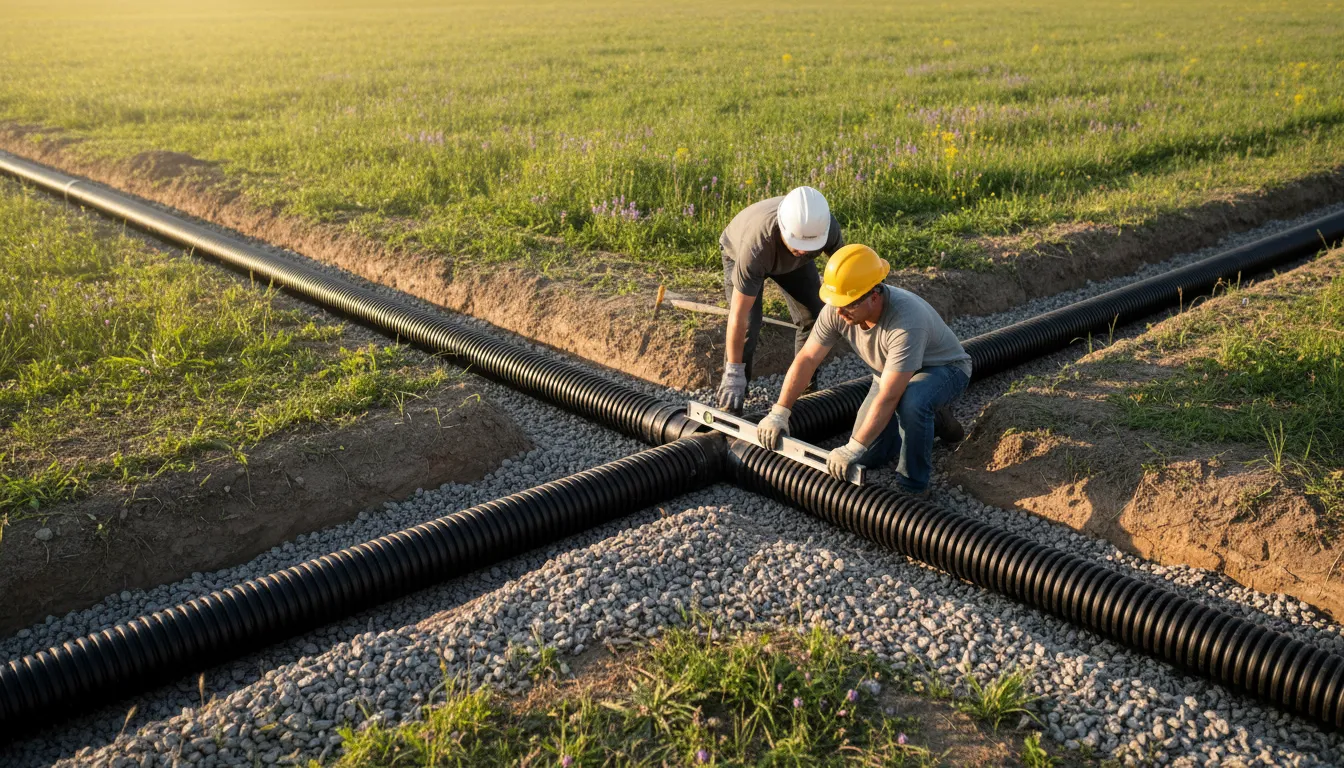
A failing septic system drain field is a serious issue that can lead to sewage backups, environmental contamination, and costly property damage. Drain field repair and replacement involves diagnosing and fixing the underground network of perforated pipes and soil that treats and disperses wastewater from your home. In Redford, this work is strictly regulated by local health codes to protect groundwater and public health. This guide explains the local process, costs, and regulations to help you understand your options and connect with qualified professionals for your leach field or soil absorption system needs.
Howell Sanitary Co. II
Lansing, MI
Howell Sanitary Co. II provides a range of septic system services in Lansing, MI. Their offerings include septic tank pumping, inspections, repairs, and new installations. They also handle septic field repairs and replacements, with expertise in various field types such as conventional, elevated, dry wells, bed, and trench systems. Additional capabilities include septic tank riser installation, effluent filter cleaning, excavating, driveway grading, and land clearing.

Al Pearson & Son Septic Tank Cleaning
46885 Ford Rd, Canton Township, MI 48187
Al Pearson & Son Septic Tank Cleaning is a family-owned business serving Ann Arbor, MI, and the surrounding Southeast Michigan area. They offer a full range of septic services including tank pumping, cleaning, system repairs, new installations, soil evaluations, and excavation. With over 70 years of experience since 1953, the company is licensed and certified to handle advanced septic system work for both residential and commercial clients. They emphasize clear communication and honest recommendations to ensure septic systems operate reliably. Emergency septic services are also available with often same-day pumping.
Understanding Your Drain Field and Common Failure Signs
The drain field, also known as a leach field or absorption field, is the final and most critical stage of a septic system. After solids settle in the tank, liquid effluent flows into a distribution box and out through a series of perforated pipes buried in trenches. This effluent slowly percolates through the soil, where natural processes remove harmful bacteria, viruses, and nutrients.
A system fails when the soil can no longer absorb the water. Key warning signs include:
- Sewage backups in household drains or toilets.
- Slow draining sinks, showers, and tubs.
- Standing water or soggy, bright green grass over the drain field area.
- Foul odors near the tank, drain field, or inside the home.
- Gurgling sounds in your plumbing.
If you notice any of these signs, it's crucial to act quickly to prevent a health hazard and further damage to your property and the system itself.
Wayne County and Redford Township Regulations You Must Follow
In Michigan, septic system regulation is handled at the county level. For Redford Township residents, the Wayne County Health Department (WCHD) Environmental Health Unit is the permitting authority for any septic system repair, alteration, or installation 1.
The most important rule: A permit from the WCHD is required before beginning any repair or replacement work on your drain field. The process generally involves:
- Site Evaluation: A county sanitarian will evaluate your property for soil type and permeability, depth to the seasonal high water table, slope, and required separation distances from wells, property lines, and water bodies 2.
- Permit Application: You or your contractor must submit a design plan and application. The work must be performed by a state-registered septic installer, unless the homeowner is installing the system on their primary residence and has passed a competency test.
- Final Inspection: The sanitarian must perform a final inspection of the repaired or new system before it is backfilled with soil.
Critical Local Consideration: If a public sanitary sewer line is available at the street or alley, Redford Township and Wayne County generally mandate connecting to it at the earliest reasonable opportunity to protect public health. Always check with the Redford Township Water Department (313-387-2670) and the WCHD before investing in a major drain field repair 3.
The Step-by-Step Process for Repair or Replacement
When you suspect a drain field issue, a systematic approach is essential.
1. Professional Diagnosis: Contact a licensed septic professional. They will locate your tank, distribution box, and drain field lines. A thorough inspection, which may include a "soil percolation test," will determine if the problem is a clogged pipe, a crushed line, or a more serious failure of the soil's absorption ability 4.
2. Explore Repair Options: Not all failed fields require full replacement. Some issues, like a clogged distribution box or a single crushed line, can be repaired. Techniques like jetting pipes or adding a new section of field (a "repair field") may be viable if your property has a designated "reserve area" 5.
3. Full Replacement: If the soil is permanently saturated or the system is too old, a complete drain field replacement is necessary. This involves designing a new system based on the current site evaluation and modern standards. Key requirements include maintaining a minimum 50-foot distance from wells and ensuring adequate earth cover 6.
4. Permitting and Installation: Your contractor will handle the permit application with the WCHD. Once approved, the old field is abandoned (often left in place but taken out of service) and the new field is installed according to the approved plan.
5. Final Approval: After installation but before covering, the county sanitarian conducts the final inspection. Only after they approve the work can the system be covered and put into use 7.
Find the perfect drain field repair companies for your needs
Get personalized recommendations and expert advice
Understanding the Costs and Financial Assistance
Drain field work is a significant investment. Costs vary widely based on soil conditions, system size, and the extent of the problem.
- Drain Field Replacement: Completely replacing a failed septic system, including the drain field, typically ranges from $5,000 to $20,000 or more in Michigan 8 9.
- Permit Fees: The Wayne County Health Department requires fees to be paid at the time of the repair permit application 10.
Financial assistance is available for qualifying homeowners:
- Wayne County Assistance Programs: Income-based assistance may be available where homeowners are responsible for only 15% to 50% of the total estimated repair costs, with grants covering the remainder 11.
- Michigan Saves Septic Replacement Loan Program (SRLP): This program offers low-interest financing specifically for replacing failing septic systems, making the upfront cost more manageable.
This underscores why regular maintenance-pumping your septic tank every 3-5 years-is far more cost-effective than a catastrophic failure requiring a $15,000 replacement 12.
Protecting Your New or Existing Drain Field
Proper care extends the life of your system dramatically. Follow these essential guidelines:
- Never drive or park vehicles, or build structures (sheds, patios, pools) over the drain field. The weight compacts the soil and can crush pipes.
- Avoid planting trees or deep-rooted shrubs near the field. Roots seek moisture and can infiltrate and clog pipes.
- Divert all surface water (roof drains, sump pumps, footing drains) away from the drain field area. Excess water saturates the soil.
- Conserve water and spread out laundry loads to avoid hydraulically overloading the system.
- Do not connect water softener backwash to the septic system, as the salt can harm the soil structure 13 14.
Emergency Procedures for Redford Residents
If you experience a sewage backup or overflow, it constitutes a public health emergency.
- During business hours, contact the Redford Township Water Department at 313-387-2670.
- After hours, contact the Redford Township Police Department 15.
- You should also notify the Wayne County Health Department Environmental Health Unit as soon as possible to report the failing system 16.
Frequently asked questions
Sources
Footnotes
-
Septic System Ordinances | Michigan Lakes and Streams ... - https://mymlsa.org/government-and-legal-issues/ordinances/septic-system-ordinances/ ↩
-
Sewage Systems | CMDHD - https://www.cmdhd.org/septicsystems ↩
-
part 128. onsite wastewater treatment systems - Michigan Legislature - https://www.legislature.mi.gov/documents/2023-2024/billintroduced/Senate/htm/2023-SIB-0299.htm ↩
-
Sewage Systems | CMDHD - https://www.cmdhd.org/septicsystems ↩
-
Septic Field Restoration | A Comprehensive Guide - https://michigandrainfield.com/blog/septic-field-restoration-a-comprehensive-guide/ ↩
-
Mich. Admin. Code R. 325.423 - Minimum standards for septic tank ... - https://www.law.cornell.edu/regulations/michigan/Mich-Admin-Code-R-325-423 ↩
-
Residential Well & Septic - District Health Department #10 - https://www.dhd10.org/environmental-health/well-septic/residential/ ↩
-
Septic/Onsite Sewage - Wayne County, Michigan - https://www.waynecountymi.gov/Government/Departments/Health-Human-Veterans-Services/Public-Health/Environmental-Health/Environmental-Safety/SepticOnsite-Sewage ↩
-
Navigating your home septic system replacement - https://michigansaves.org/news/navigating-your-home-septic-system-replacement/ ↩
-
WAYNE COUNTY HEALTH DEPARTMENT - https://www.waynegov.com/DocumentCenter/View/127/Repair-Permit-Application-PDF ↩
-
Assistance for Septic Replacement. ... - https://www.wayne-health.org/sites/default/files/2021-01/Assistance%20for%20Septic%20Replacement.pdf ↩
-
Septic Systems - Michigan Water Stewardship Program - https://miwaterstewardship.org/septic-systems/ ↩
-
Protect Your Drainfield | Washtenaw County, MI - https://www.washtenaw.org/1643/Protect-Your-Drainfield ↩
-
Septic System Basics | Washtenaw County, MI - Official Website - https://www.washtenaw.org/1721/Septic-System-Basics ↩
-
Water & Sewer | Redford Township, MI - https://www.redfordtwp.gov/220/Water-Sewer ↩
-
Sewage Treatment Systems | Wayne County Health Department - https://www.wayne-health.org/sewage-treatment-systems ↩