Find the Best Drain Field Repair Companies for Your Business
No obligation • Fast responses • Nationwide coverage

Why you can trust Septic Spot
Septic Spot is a leading United States resource for understanding and comparing septic services. Our editors review providers using consistent criteria and verify key business details. Listings and scores are independent, and companies cannot pay to influence our content.
Search providers near you
Top Drain Field Repair Companies in Rochester Hills, Michigan Ranked
A properly functioning drain field is the unsung hero of your home's septic system, quietly and efficiently treating wastewater. When this critical component fails, it can lead to soggy yards, foul odors, and serious environmental and health concerns. For homeowners in Rochester Hills, navigating drain field issues requires understanding local soil conditions, permit requirements, and the range of available repair and replacement solutions. This guide provides essential information to help you identify problems, understand the process, and connect with experienced local professionals who can restore your system's health.
Howell Sanitary Co. II
Lansing, MI
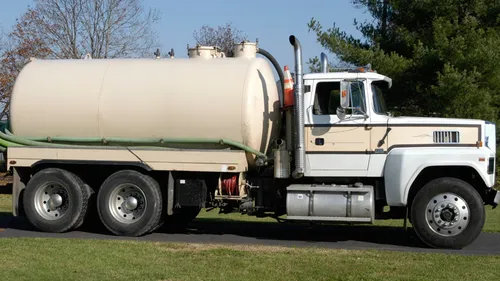
Howell Sanitary Co. II provides a range of septic system services in Lansing, MI. Their offerings include septic tank pumping, inspections, repairs, and new installations. They also handle septic field repairs and replacements, with expertise in various field types such as conventional, elevated, dry wells, bed, and trench systems. Additional capabilities include septic tank riser installation, effluent filter cleaning, excavating, driveway grading, and land clearing.
Al Pearson & Son Septic Tank Cleaning
46885 Ford Rd, Canton Township, MI 48187
Al Pearson & Son Septic Tank Cleaning is a family-owned business serving Ann Arbor, MI, and the surrounding Southeast Michigan area. They offer a full range of septic services including tank pumping, cleaning, system repairs, new installations, soil evaluations, and excavation. With over 70 years of experience since 1953, the company is licensed and certified to handle advanced septic system work for both residential and commercial clients. They emphasize clear communication and honest recommendations to ensure septic systems operate reliably. Emergency septic services are also available with often same-day pumping.
Understanding Your Septic System's Lifeline
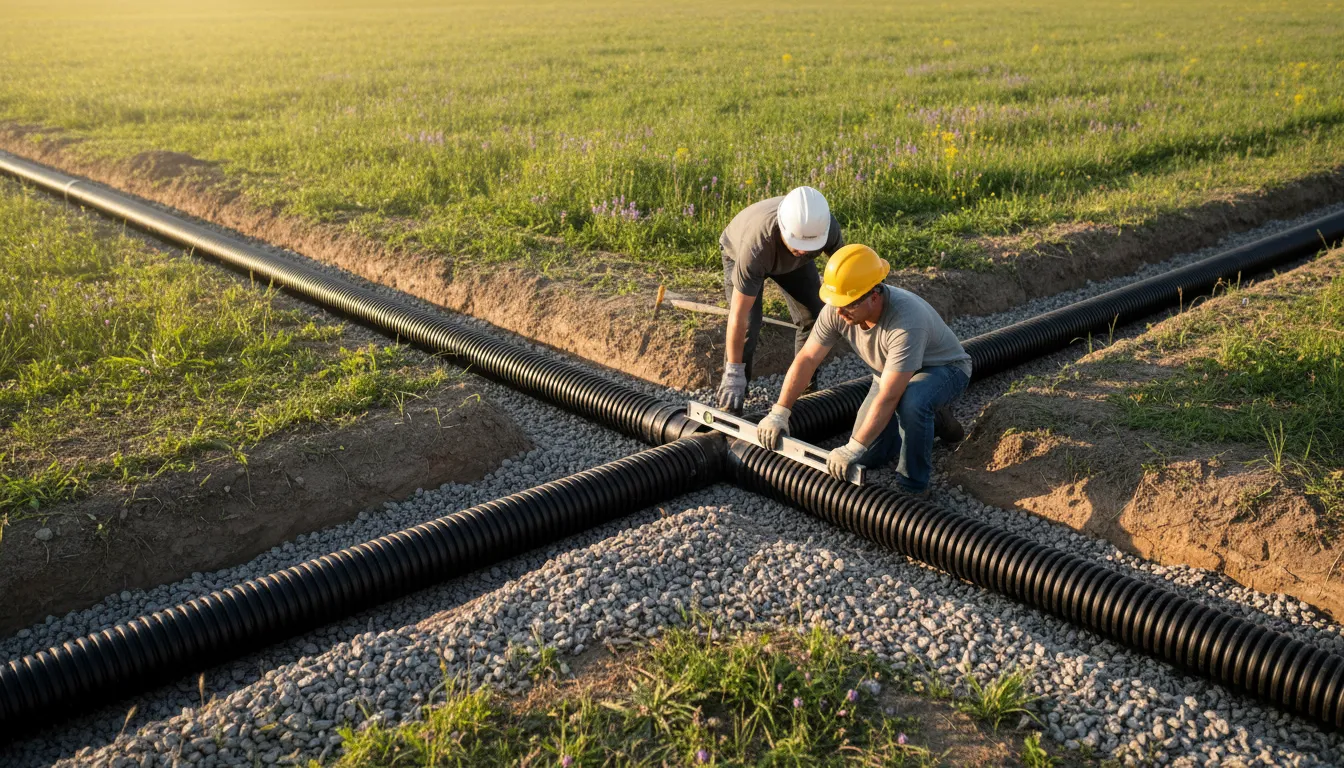
Often called a leach field or absorption field, the drain field is the final stage of onsite wastewater treatment. After solids settle in the septic tank, liquid effluent flows into a network of perforated pipes buried in trenches filled with gravel or specialized chambers. This effluent slowly percolates through the soil, where natural biological processes filter and purify it before it rejoins the groundwater. A failure here means untreated wastewater can surface, creating a nuisance and a potential public health hazard. Recognizing the signs of a failing leach field early is key to managing repair costs and complexity.
Why Rochester Hills Presents Unique Challenges
The soil and environmental conditions in Southeast Michigan, including Rochester Hills, directly impact septic system performance and longevity.
- Clay-Heavy Soils: The prevalent soil in our area has a high clay content. Clay particles are tiny and tightly packed, which slows the rate at which water can infiltrate-a property known as percolation. This often necessitates the design of larger, more robust drain fields to handle the same volume of effluent compared to sandy soils.
- High Water Tables: Areas with a high groundwater table pose a significant challenge. When the seasonal water table rises and saturates the soil in and around the drain field trenches, there is no room for additional effluent to be absorbed. This leads to immediate system failure. In these cases, a conventional in-ground field may not be viable, and an elevated mound system is often the required solution.
- System Age and Compaction: Older systems or those subjected to heavy vehicle traffic, construction, or even dense tree roots can suffer from soil compaction. Compacted soil loses its porosity, effectively choking the drain field and preventing proper drainage.
The Permit Process: Working with Oakland County
Any significant alteration, repair, or full replacement of an existing septic system in Rochester Hills requires a permit. The Oakland County Health Division is the local authority that enforces state regulations to protect public health and groundwater.
- Permit Application: You or your licensed contractor must apply for a "Repair Onsite Sewage Disposal System" permit from the Oakland County Health Division before work begins 1.
- Site Evaluation: A site assessment, including new soil percolation tests, is typically required to determine the most appropriate repair method or design a new system that meets current standards.
- Minimum Standards: All systems must comply with Michigan's established minimum standards, which dictate materials, design, sizing, and setbacks. These standards ensure the system is adequate for your home's size and the property's specific conditions.
Diagnosing Drain Field Failure
Before any repair can be planned, a professional must accurately diagnose the problem. This involves a systematic inspection to distinguish between a simple blockage, a remediable issue like compaction, or a complete structural failure.
- Initial Signs: Homeowners often notice the first warnings: persistently soggy or spongy ground over the field, sewage odors outdoors, unusually lush grass over the trenches, or slow-draining fixtures and gurgling pipes inside the home.
- Professional Assessment: A specialist will:
- Locate and Inspect: Find and inspect the septic tank and distribution box for sludge levels and baffle integrity.
- Conduct Diagnostic Tests: This may include a dye test (introducing dye into the system to see if it surfaces), a camera inspection of lateral lines, or a hydraulic load test to measure the soil's absorption capacity under controlled conditions 2 3.
- Evaluate Soil Conditions: Probe the soil to check for saturation layers and compaction 4.
Find the perfect drain field repair companies for your needs
Get personalized recommendations and expert advice
Repair and Restoration Options
Not every drain field problem requires a full, costly excavation. Several targeted interventions can restore functionality, depending on the diagnosis.
- High-Pressure Jetting: If the issue is isolated to clogged perforations in the distribution pipes, high-pressure water jetting can effectively clear biological matting and mineral deposits (often called "pipe cleaning") 5.
- Soil Restoration Techniques: For compacted or "sealed" soil, professionals may use specialized equipment to fracture and aerate the soil without full excavation. Methods like Terralift inject air and a porous aggregate to create permanent channels for effluent flow. Applying agricultural gypsum can also help break up clay particles 6.
- Drain Field "Kickstart" or Rejuvenation: This is a multi-step chemical and biological process designed to break down the biomat-a layer of organic material that naturally forms but can become too thick-and restore soil porosity. It's a non-invasive alternative that can add years to a field's life at a fraction of replacement cost 7.
When Replacement is Necessary
If diagnostic tests confirm that the soil is permanently saturated, the pipes have collapsed, or the field is undersized for the home, a full drain field replacement is the only permanent solution.
- Design & Permitting: A new system is designed based on current soil tests and household needs, and permits are secured 8.
- Excavation: The old field is decommissioned, and new trenches are dug. In areas with high clay content or high water tables, this may involve bringing in select fill material or constructing an above-grade mound.
- Installation: New distribution pipes are laid in trenches filled with gravel or modern plastic chambers, which provide a space for effluent storage and infiltration 9.
- Final Inspection & Restoration: The county conducts a final inspection before the area is backfilled and landscaped.
Costs for a full leach field replacement in our region typically range from $5,000 to $20,000 or more, heavily influenced by soil conditions, system size, and technology used 10.
Maintaining Your Investment
Preventative maintenance is the most cost-effective strategy for protecting your septic system.
- Pump Regularly: Have your septic tank pumped every 3 to 5 years by a licensed professional to prevent solids from overflowing into and clogging the drain field 11 12.
- Conserve Water: Spread out laundry loads, fix leaky fixtures, and use water-efficient appliances to avoid hydraulically overloading the system.
- Protect the Area: Never drive or park vehicles over the drain field, and avoid planting trees or shrubs with deep root systems nearby.
- Mind What You Flush: Only human waste and toilet paper should go down the drain. Avoid chemicals, grease, wipes, and other non-biodegradables.
Financial Assistance: Michigan Saves offers low-interest home energy loans that can also cover septic system repairs and replacements, with loan amounts ranging from $1,000 to $50,000 13. This can make a necessary repair more accessible for homeowners.
Frequently asked questions
Sources
Footnotes
-
Onsite Sewage Disposal System (Septic) | Oakland County, MI - https://www.oakgov.com/community/health/public-health-services/environmental-health/onsite-sewage-disposal-system-septic ↩
-
Diagnose Septic Problems Before You Replace - Michigan Drainfield - https://michigandrainfield.com/services/drainfield-assessment/ ↩
-
Septic Inspection Near Rochester Hills, Lake Orion and Ortonville - https://wini.com/lakeorion/services/septic-inspection/ ↩
-
Drainfield Assessment FAQs, What Homeowners in Michigan ... - https://michigandrainfield.com/resources/drainfield-assessment-faq/ ↩
-
Drainfield Repair in Southeast Michigan | Al Pearson & Son - https://alpearsonandson.net/services/drainfield-repair/ ↩
-
Drain Field Restoration in Southeast, MI - Universal Septic Services - https://www.universalsepticservices.com/services/drain-field-restoration/ ↩
-
Drainfield Kickstart Process - https://michigandrainfield.com/services/drainfield-kickstart-process/ ↩
-
Septic Repair or Replacement: Minimum Standards - https://www.michigan.gov/egle/-/media/Project/Websites/egle/Documents/Programs/WRD/NPS/General/Septic-System-Minimum-Standards.pdf ↩
-
Drain Field Installation in Southeast, MI - Universal Septic Services - https://www.universalsepticservices.com/services/drain-field-installation/ ↩
-
Septic Systems - MI Water Stewardship - https://miwaterstewardship.org/septic-systems/ ↩
-
Septic Systems: - Mid-Michigan District Health Department - https://www.mmdhd.org/wp-content/uploads/2018/09/Septic-Systems.pdf ↩
-
Managing Your Septic System - https://www.canr.msu.edu/septic_system_education/uploads/E-3350%20Managing%20Septic.pdf ↩
-
Navigating your home septic system replacement - https://michigansaves.org/news/navigating-your-home-septic-system-replacement/ ↩