Find the Best Drain Field Repair Companies for Your Business
No obligation • Fast responses • Nationwide coverage

Why you can trust Septic Spot
Septic Spot is a leading United States resource for understanding and comparing septic services. Our editors review providers using consistent criteria and verify key business details. Listings and scores are independent, and companies cannot pay to influence our content.
Search providers near you
Top Drain Field Repair Companies in Troy, Michigan Ranked
A failing septic system drain field can lead to serious property damage and environmental health risks. Drain field repair and replacement are critical services for homeowners in Troy who rely on onsite wastewater systems to manage household sewage. This guide explains the local regulations, processes, and considerations for restoring your septic system's soil absorption area, helping you connect with qualified professionals to navigate this complex project.
Howell Sanitary Co. II
Lansing, MI
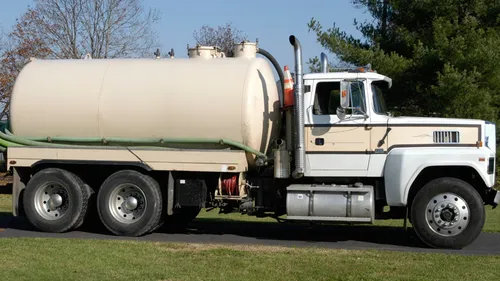
Howell Sanitary Co. II provides a range of septic system services in Lansing, MI. Their offerings include septic tank pumping, inspections, repairs, and new installations. They also handle septic field repairs and replacements, with expertise in various field types such as conventional, elevated, dry wells, bed, and trench systems. Additional capabilities include septic tank riser installation, effluent filter cleaning, excavating, driveway grading, and land clearing.
Al Pearson & Son Septic Tank Cleaning
46885 Ford Rd, Canton Township, MI 48187
Al Pearson & Son Septic Tank Cleaning is a family-owned business serving Ann Arbor, MI, and the surrounding Southeast Michigan area. They offer a full range of septic services including tank pumping, cleaning, system repairs, new installations, soil evaluations, and excavation. With over 70 years of experience since 1953, the company is licensed and certified to handle advanced septic system work for both residential and commercial clients. They emphasize clear communication and honest recommendations to ensure septic systems operate reliably. Emergency septic services are also available with often same-day pumping.
Understanding Your Septic System's Drain Field
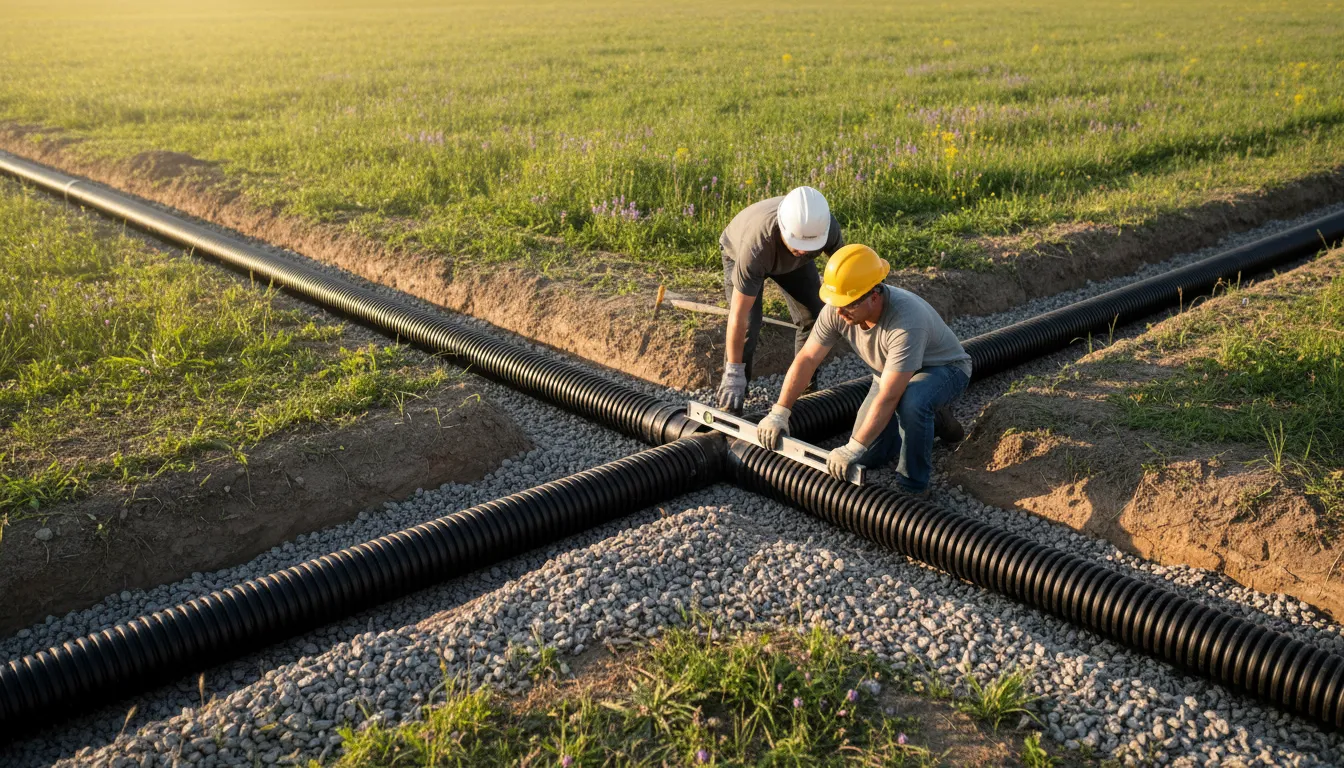
The drain field, also known as a leach field or soil absorption area, is the final and most crucial stage of a septic system. After solids settle in the tank, liquid effluent flows into a network of perforated pipes buried in trenches. This effluent slowly percolates through the soil, where natural processes remove harmful bacteria, viruses, and nutrients before the water reaches groundwater. When this area becomes clogged, saturated, or physically damaged, it can no longer absorb and treat wastewater, leading to system failure.
Common signs of drain field failure in Troy include:
- Sewage odors or soggy, bright green grass over the field area.
- Sewage backing up into household drains or toilets.
- Standing water or surfacing effluent in your yard.
- Slow drains throughout the home, even after the septic tank is pumped.
If you notice any of these issues, immediate action is required to protect your property and comply with local health codes.
Troy and Oakland County Regulations for Septic Work
All septic system work in Troy is regulated by the Oakland County Health Division (OCHD) and must also comply with the City of Troy's Municipal Code. Understanding these rules is the first step, as unauthorized repairs can result in fines and orders to cease work.
Key Regulatory Points:
- Permit Required: A "Repair Onsite Sewage Disposal System" permit from the OCHD is mandatory for any repair, alteration, or replacement of an existing system 1.
- Failure Definition: The county defines a failing system by evidence such as sewage on the ground, backups into the home, or an inability to properly treat effluent, especially when it threatens groundwater 2.
- Sewer Connection Mandate: A critical rule in Troy's code states that if a public sanitary sewer is available and accessible at the property line, the city may require you to connect to it instead of repairing or replacing your septic system.
- Licensed Professionals: All repair and installation work must be conducted by an installer approved by the Oakland County Health Department.
Before planning any repair, contact the OCHD at 248-858-1000 or the Troy Building Department to discuss your specific situation and permit requirements 3.
The Site Evaluation and Soil Assessment Process
Not every yard is suitable for a new leach field. The success of a septic system replacement hinges on a proper site evaluation conducted by an OCHD Sanitarian or a licensed professional. This evaluation determines if your property can support a new soil absorption system.
The site assessment focuses on:
- Soil Type and Permeability: The soil must have the correct texture (like loamy sand) and percolation rate to treat effluent effectively as it filters down 4.
- Depth to Water Table: The system must be placed above the seasonal high water table to prevent contamination.
- Required Setbacks: Michigan law mandates minimum separation distances. For example, a drain field must be at least 50 feet from any water well and have adequate clearance from property lines, lakes, and streams 5.
- Reserve Area: A "reserve area" for a future replacement drain field is typically required during the initial permitting process, ensuring there is space for a new system if the first one fails 6.
- Floodplain Restriction: The soil infiltrative surface must be located above the 100-year floodplain elevation 7.
If your site does not meet these criteria for a conventional system, you may need an advanced, engineered alternative like a mound system, which comes with higher installation costs.
Steps for Drain Field Repair or Replacement
Navigating a drain field project involves a series of formal steps, from diagnosis to final approval.
- Professional System Assessment: A licensed installer or evaluator will inspect the entire system. This involves locating and mapping the tank and field, checking for hydraulic overloading, and often using a soil probe to inspect the condition of the drain field trenches and soil 8. A septic tank pumping record (Michigan Form EQP1731) is required if the tank is being assessed or re-used, particularly if sludge exceeds 30% of the tank volume 9.
- Permit Application and Site Inspection: Once a plan is developed, your contractor will submit a permit application to the OCHD. A sanitarian will then perform a site visit. Homeowners are often required to flag the proposed repair area and may need to dig a test hole (typically 4 feet deep) for the sanitarian to evaluate the soil profile 10.
- Construction: After permit issuance, the approved contractor executes the work. This may involve repairing a clogged section, replacing a portion of the leach lines, or constructing an entirely new drain field in the designated reserve area.
- Final Inspection and Approval: Upon completion, the OCHD or a City of Troy inspector must perform a final inspection to ensure the work matches the permitted plans and operates correctly 11. Only after receiving this approval is your system considered legally functional.
Find the perfect drain field repair companies for your needs
Get personalized recommendations and expert advice
Costs and Financial Assistance Programs
Replacing a failed septic tank and drain field is a significant investment. In Michigan, total replacement costs typically range from $5,000 to $20,000 or more, depending heavily on the system size, soil conditions, and whether an engineered mound system is required 12 13. Permit and inspection fees from the county add to this total 14.
Important Note: These figures are general state estimates. Costs in Oakland County, with its specific regulations and potential for higher labor and material costs, may differ. Always obtain detailed, written estimates from multiple licensed contractors.
Fortunately, financial assistance is available. The State of Michigan, through the Septic Replacement Loan Program (SRLP), offers low-interest loans to homeowners with failing systems for repairs, replacements, or connections to public sewer 15. This program is administered through partnerships with local lenders and can make this necessary project more affordable.
Maintaining Your New or Repaired System
Protecting your investment is key. Regular maintenance is far more cost-effective than emergency replacement 16. For a standard system, this includes:
- Regular Pumping: Have the septic tank pumped every 3-5 years by a licensed hauler.
- Water Conservation: Spread out laundry loads and fix leaks to avoid hydraulically overloading the drain field.
- Proper Waste Disposal: Never flush chemicals, wipes, or grease, as these can clog the soil pores in your leach field.
- Protect the Area: Never drive or build over the drain field, and keep deep-rooted plants and trees away from the area.
By following these guidelines and acting quickly at the first sign of trouble, you can extend the life of your septic system's most vital component for decades.
Frequently asked questions
Sources
Footnotes
-
Onsite Sewage Disposal System (Septic) | Oakland County, MI - https://www.oakgov.com/community/health/public-health-services/environmental-health/onsite-sewage-disposal-system-septic ↩
-
Onsite Sewage Disposal System (Septic) | Oakland County, MI - https://www.oakgov.com/community/health/public-health-services/environmental-health/onsite-sewage-disposal-system-septic ↩
-
Septic Systems and Nutrients - State of Michigan - https://www.michigan.gov/-/media/Project/Websites/egle/Documents/Programs/WRD/GLWARM/Monitoring-Lake/nutrient-framework-septic.pdf?rev=900d111c8b8b4f6fb2edf5e7d237efac ↩
-
Sewage Systems | CMDHD - https://www.cmdhd.org/septicsystems ↩
-
MI Criteria for On-Site Wastewater Treatment - State of Michigan - https://www.michigan.gov/egle/-/media/Project/Websites/egle/Documents/Programs/DWEHD/Onsite-Wastewater-Management/CRITERIA-ONSITE-WASTEWATER-TREATMENT.pdf ↩
-
Managing Your Septic System - https://www.canr.msu.edu/septic_system_education/uploads/E-3350%20Managing%20Septic.pdf ↩
-
Mich. Admin. Code R. 325.423 - Minimum standards for septic tank ... - https://www.law.cornell.edu/regulations/michigan/Mich-Admin-Code-R-325-423 ↩
-
Drainfield Assessment FAQs, What Homeowners in Michigan Need ... - https://michigandrainfield.com/resources/drainfield-assessment-faq/ ↩
-
Septic Replacement Loan Program - State of Michigan - https://www.michigan.gov/egle/-/media/Project/Websites/egle/Documents/Programs/DWEHD/Onsite-Wastewater-Management/SRLP-Program-Minimum-Standards.pdf?rev=3317118c571346e5a797823d27cd5259&hash=89B7108338C062CBBA873006083A3C62 ↩
-
Sewage Systems | CMDHD - https://www.cmdhd.org/septicsystems ↩
-
Chapter 19 - City Sewer Service - Revize - https://cms6.revize.com/revize/citytroymi/Residents/Forms/Building%20Inspection/CH019.pdf ↩
-
Cost to Replace Septic Tank and Drain Field [2026 Data] | Angi - https://www.angi.com/articles/how-much-new-drain-fields-foot.htm ↩
-
Navigating your home septic system replacement - https://michigansaves.org/news/navigating-your-home-septic-system-replacement/ ↩
-
Septic Replacement Loan Program - flyer - https://bldhd.org/media/uploads/Environmental%20Health%20Form/septic_replacement_loan_program_flyer_april-may_2024_.pdf ↩
-
Septic Replacement Loan Program - Michigan Saves - https://michigansaves.org/septic/ ↩
-
Septic Systems - Michigan Water Stewardship Program - https://miwaterstewardship.org/septic-systems/ ↩