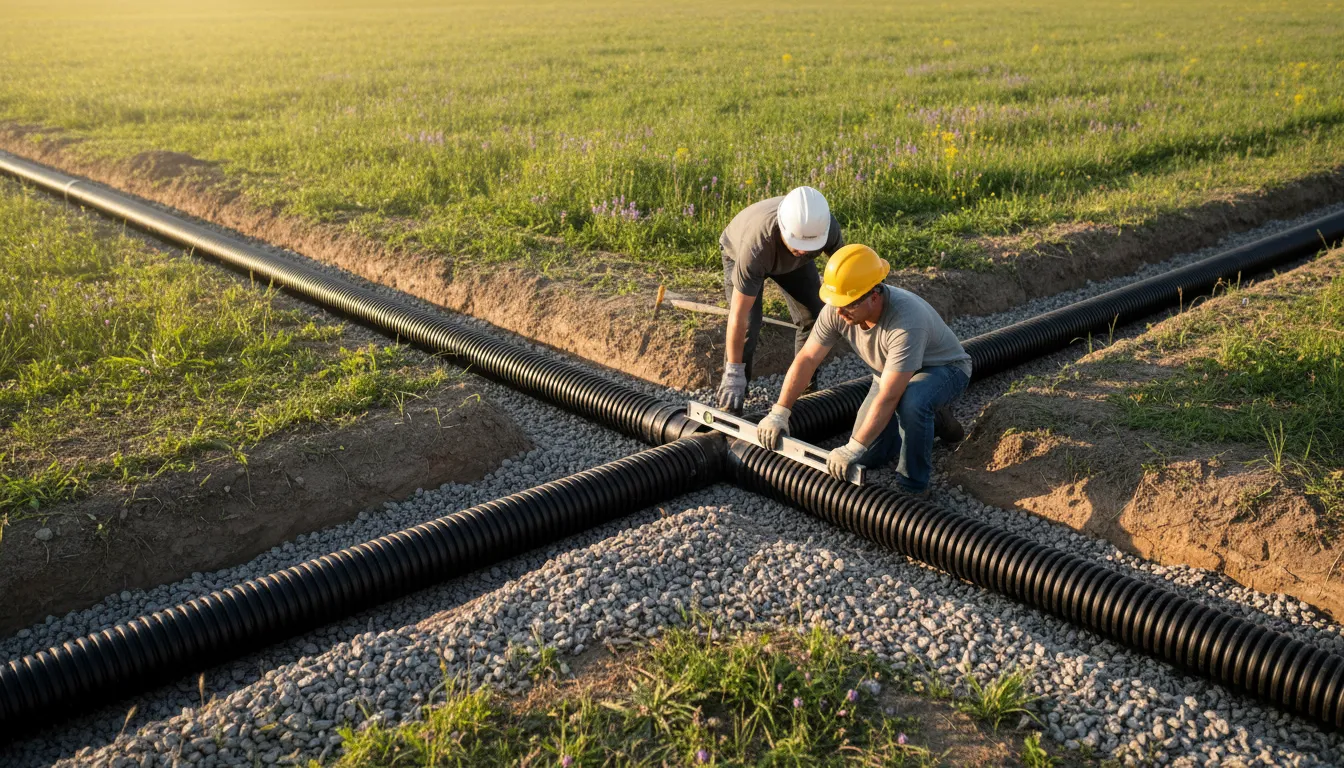
Find the Best Drain Field Repair Companies for Your Business
No obligation • Fast responses • Nationwide coverage

Why you can trust Septic Spot
Septic Spot is a leading United States resource for understanding and comparing septic services. Our editors review providers using consistent criteria and verify key business details. Listings and scores are independent, and companies cannot pay to influence our content.
Search providers near you
Top Drain Field Repair Companies in West Bloomfield, Michigan Ranked
A failing drain field is a serious concern for any homeowner with a septic system. This critical component, also known as a leach field or absorption field, is responsible for safely filtering and dispersing treated wastewater into the soil. When it malfunctions, it can lead to sewage backups, soggy yards, and environmental contamination. For residents of West Bloomfield, navigating drain field issues involves understanding local Oakland County regulations, soil conditions, and repair options. This guide helps you understand the process, costs, and local considerations for septic leach field restoration and replacement, connecting you with experienced professionals who can assess and address your system's needs.
Patrick Esper Septic
Lansing, MI
Patrick Esper Septic is a septic service provider located in Lansing, MI. They offer a range of services including septic tank pumping, system repairs, and installation of septic tanks and drain fields. Their capabilities include effluent pump repair and drain field replacement, as well as engineered septic services and community system installation. The company also provides excavation, grading, and land clearing services related to septic system projects.
Howell Sanitary Co
5205 Pinckney Rd, Howell, MI 48843
Howell Sanitary Co provides a range of septic system services in Lansing, MI. Their offerings include septic tank pumping, inspections, repairs, and new installations, as well as septic field repairs and replacements. They also handle septic tank riser installation, effluent filter cleaning, and various types of septic fields such as conventional, elevated, and trench systems. Additional services include excavating, driveway grading, and land clearing.
Howell Sanitary Co. II
Lansing, MI
Howell Sanitary Co. II provides a range of septic system services in Lansing, MI. Their offerings include septic tank pumping, inspections, repairs, and new installations. They also handle septic field repairs and replacements, with expertise in various field types such as conventional, elevated, dry wells, bed, and trench systems. Additional capabilities include septic tank riser installation, effluent filter cleaning, excavating, driveway grading, and land clearing.
Al Pearson & Son Septic Tank Cleaning
46885 Ford Rd, Canton Township, MI 48187
Al Pearson & Son Septic Tank Cleaning is a family-owned business serving Ann Arbor, MI, and the surrounding Southeast Michigan area. They offer a full range of septic services including tank pumping, cleaning, system repairs, new installations, soil evaluations, and excavation. With over 70 years of experience since 1953, the company is licensed and certified to handle advanced septic system work for both residential and commercial clients. They emphasize clear communication and honest recommendations to ensure septic systems operate reliably. Emergency septic services are also available with often same-day pumping.
Understanding Your Septic System's Drain Field
The drain field is the final stage of your onsite wastewater treatment system. After solids settle in the septic tank, the liquid effluent flows through a network of perforated pipes buried in trenches filled with gravel. This effluent slowly seeps into the surrounding soil, where natural processes provide final treatment. A typical drain field for a three-bedroom home in our area ranges from 450 to 900 square feet. The system's performance is heavily dependent on the soil's ability to absorb and treat this water, which is why local conditions are so important.
Why Drain Fields Fail in West Bloomfield
Drain field failure is rarely sudden. It's usually the result of long-term issues that compromise the soil's absorption capacity. Common causes include:
- Age and Normal Wear: Systems have a finite lifespan, often 20-40 years.
- Soil Compaction: Driving or building over the field can crush pipes and compact soil.
- Root Intrusion: Tree and shrub roots can clog and break pipes.
- Hydraulic Overload: Excessive water use from leaks, fixtures, or large gatherings overwhelms the field.
- Improper Maintenance: Failure to pump the septic tank regularly allows solids to wash out and clog the drain field soil.
- High Groundwater: Seasonal high water tables, common in some parts of Oakland County, can saturate the soil, preventing proper drainage.
Signs of failure include sewage odors, unusually lush or soggy grass over the field, slow-draining household fixtures, and even sewage backing up into the home.
The Critical Role of Local Regulations and Permits
Michigan is unique as the last state without a uniform statewide septic code 1. Instead, regulation falls to county health departments. In West Bloomfield, the Oakland County Health Division enforces local sanitary codes governing onsite sewage systems.
Key Regulatory Points for West Bloomfield Homeowners:
- Permit Required: Any substantial repair, alteration, or replacement of a septic system requires a "Repair Onsite Sewage Disposal System" permit from Oakland County, unless the system handles over 10,000 gallons per day.
- Township Oversight: Bloomfield Township may require additional inspections, especially if connecting to a new system or during property transfer 2 3.
- Notification: For major work, a 48-hour notification of intent to perform work may be required.
- Site Constraints: Systems must maintain strict separation distances from wells, wetlands, property lines, and building foundations. Your professional will design around these constraints.
Always contact the Oakland County Health Division for the most current requirements before proceeding with any work 4.
The Professional Assessment Process
Before any repair or replacement can be planned, a thorough professional assessment is essential. This diagnostic process typically involves several steps:
- Locating & Mapping: The technician will find and map the exact locations of your septic tank and drain field lines, which may be buried and forgotten.
- Tank Inspection: The septic tank is pumped and inspected. Sludge and scum levels are measured; if they are within 6-12 inches of the outlet baffle, pumping is required to prevent further damage to the drain field 5 6.
- Pipe Inspection: Using specialized cameras, professionals can check distribution pipes for breaks, collapses, or root blockages.
- Soil & Hydraulic Testing: This is the core of the assessment. Tests like a percolation (perc) test or soil morphology evaluation determine the soil's absorption rate. A "flow test" may also be conducted to see how the system handles a simulated load.
This assessment, which typically costs between $400 and $800+, provides the data needed to determine if a targeted repair is possible or if a full replacement is necessary 7.
Soil and Site Conditions: The West Bloomfield Factor
The success of any drain field is rooted in the soil. Local conditions significantly influence both failure and the design of a solution.
- Sandy Soils: Found in many areas, sandy soils generally offer better drainage and treatment capabilities than clay, potentially allowing for a smaller absorption area 8.
- Heavy Clay Soils: Clay particles are tiny and compact easily, severely limiting water movement. Systems in clay soils require a much larger absorption area and are more prone to failure from saturation.
- High Water Tables: If the seasonal high water table is too close to the surface, a conventional trench system will not work. In these cases, the county will likely require an engineered system, such as a mound system, which elevates the drain field above the natural grade to ensure proper treatment 9 10.
Find the perfect drain field repair companies for your needs
Get personalized recommendations and expert advice
Repair vs. Replacement: Understanding Your Options
The assessment findings will guide the recommendation. Costs can vary widely based on the solution.
Drain Field Repair & Restoration If the failure is localized-such as a broken pipe, a clogged section, or minor soil compaction-a repair may be viable. Modern techniques can sometimes restore a field's function without full excavation. These targeted repairs can range from $500 to $2,500 and aim to extend the system's life 11. This is not always possible, especially if the entire soil absorption area is compromised.
Full Drain Field Replacement When the soil is permanently clogged (a condition called "biomat" over-saturation) or the system is too old and undersized, a full replacement is the only permanent solution. This involves designing and installing a completely new leach field, and often a new septic tank, in a suitable area of your property. This is a major excavation and construction project. In West Bloomfield, full drain field replacement costs typically range from $5,000 to over $20,00012 13. The final price depends on:
- System Size & Type: A larger home or an engineered mound system costs more.
- Soil Conditions: Difficult soils (clay, high water table) require more complex, expensive systems.
- Site Access: Limited access for heavy machinery can increase labor costs.
- Permitting & Engineering: County permits and possible design by a licensed engineer add to the cost.
Maintaining Your New or Repaired System
Once you've invested in a repair or replacement, proper maintenance is key to a long lifespan.
- Pump Regularly: Have your septic tank pumped every 3-5 years by a licensed professional.
- Conserve Water: Spread out laundry loads, fix leaks, and install water-efficient fixtures.
- Mind What You Flush: Only human waste and toilet paper. No grease, wipes, chemicals, or medications.
- Protect the Field: Never drive, park, or build on the drain field. Plant only grass over it.
Frequently asked questions
Sources
Footnotes
-
Michigan is last state without a septic system code. Will that change? - https://greatlakesecho.org/2026/02/10/michigan-is-last-state-without-a-septic-system-code-will-that-change/ ↩
-
What To Know About Your Septic System - Bloomfield Township - https://www.bloomfieldtwp.org/resources/latest-news/what-to-know-about-your-septic-system/ ↩
-
CHARTER TOWNSHIP OF WEST BLOOMFIELD ORDINANCE ... - https://cms4files1.revize.com/westbloomfieldtwp/Clerk/Ordinances/09.N.%20ADOPTION%20-%20C-825%20%20Water%20Supply%20and%20Sanitary%20Sewer%20Ordinance.pdf ↩
-
Onsite Sewage Disposal System (Septic) | Oakland County, MI - https://www.oakgov.com/community/health/public-health-services/environmental-health/onsite-sewage-disposal-system-septic ↩
-
On-Site Septic Systems | Bloomfield Hills, MI - https://www.bloomfieldhillsmi.net/227/On-Site-Septic-Systems ↩
-
Managing Your Septic System - https://www.canr.msu.edu/septic_system_education/uploads/E-3350%20Managing%20Septic.pdf ↩
-
How Much Does a Septic Inspection Cost? [2026 Data] - Angie's List - https://www.angi.com/articles/septic-inspection-cost.htm ↩
-
Diagnose Septic Problems Before You Replace - Michigan Drainfield - https://michigandrainfield.com/services/drainfield-assessment/ ↩
-
Drainfield Assessment FAQs, What Homeowners in Michigan ... - https://michigandrainfield.com/resources/drainfield-assessment-faq/ ↩
-
Florida Septic System Requirements & Drainfield Regulations (2025 Guide) - https://www.acesepticandwaste.com/ace-guide-to-floridas-onsite-septic-system-regulations/ ↩
-
Fixing Septic Drain Fields: What Florida Homeowners Should Know - https://mathisandsonsseptic.com/mathis-sons-septic-blog-orlando-fl/septic-drain-fields-what-florida-homeowners-should-know/ ↩
-
Drainfield Repair & Septic System Replacement in Michigan - https://michigandrainfield.com/services/drainfield-repair-services/ ↩
-
Septic Drain Field Replacement Cost - https://dillonseptic.com/septic-drain-field-replacement-cost/ ↩