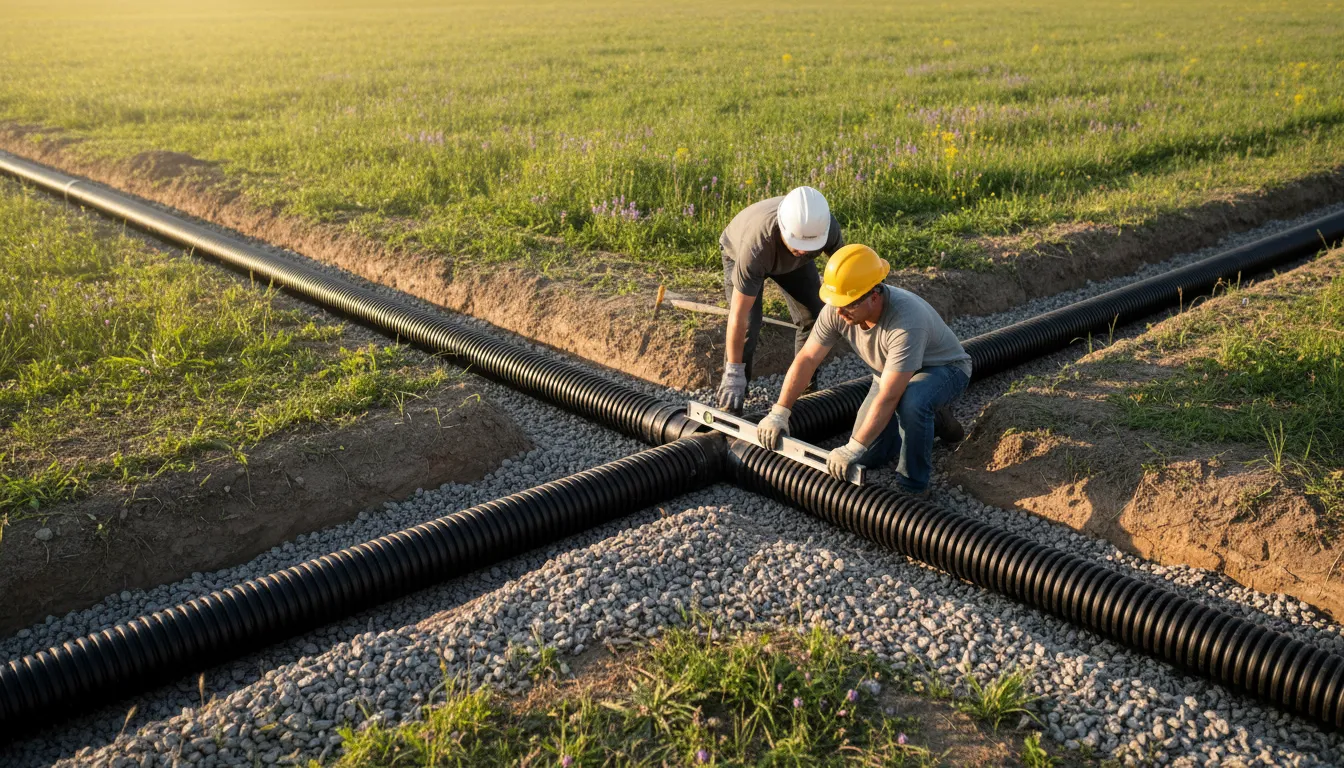
Find the Best Drain Field Repair Companies for Your Business
No obligation • Fast responses • Nationwide coverage

Why you can trust Septic Spot
Septic Spot is a leading United States resource for understanding and comparing septic services. Our editors review providers using consistent criteria and verify key business details. Listings and scores are independent, and companies cannot pay to influence our content.
Search providers near you
Top Drain Field Repair Companies in Ypsilanti, Michigan Ranked
A failing septic system drain field is a serious issue that can lead to sewage backups, environmental contamination, and significant property value loss. Drain field repair and replacement involves diagnosing and fixing the soil absorption area of your septic system, a critical component for safely dispersing treated wastewater. This guide explains the local regulations, processes, and key considerations for homeowners in Ypsilanti, Michigan, to help you understand your options and connect with qualified, certified professionals for this essential work.
Patrick Esper Septic
Lansing, MI
Patrick Esper Septic is a septic service provider located in Lansing, MI. They offer a range of services including septic tank pumping, system repairs, and installation of septic tanks and drain fields. Their capabilities include effluent pump repair and drain field replacement, as well as engineered septic services and community system installation. The company also provides excavation, grading, and land clearing services related to septic system projects.
Howell Sanitary Co
5205 Pinckney Rd, Howell, MI 48843
Howell Sanitary Co provides a range of septic system services in Lansing, MI. Their offerings include septic tank pumping, inspections, repairs, and new installations, as well as septic field repairs and replacements. They also handle septic tank riser installation, effluent filter cleaning, and various types of septic fields such as conventional, elevated, and trench systems. Additional services include excavating, driveway grading, and land clearing.
Howell Sanitary Co. II
Lansing, MI
Howell Sanitary Co. II provides a range of septic system services in Lansing, MI. Their offerings include septic tank pumping, inspections, repairs, and new installations. They also handle septic field repairs and replacements, with expertise in various field types such as conventional, elevated, dry wells, bed, and trench systems. Additional capabilities include septic tank riser installation, effluent filter cleaning, excavating, driveway grading, and land clearing.
Al Pearson & Son Septic Tank Cleaning
46885 Ford Rd, Canton Township, MI 48187
Al Pearson & Son Septic Tank Cleaning is a family-owned business serving Ann Arbor, MI, and the surrounding Southeast Michigan area. They offer a full range of septic services including tank pumping, cleaning, system repairs, new installations, soil evaluations, and excavation. With over 70 years of experience since 1953, the company is licensed and certified to handle advanced septic system work for both residential and commercial clients. They emphasize clear communication and honest recommendations to ensure septic systems operate reliably. Emergency septic services are also available with often same-day pumping.
Understanding Your Septic System's Drain Field
Often called a leach field or soil absorption field, the drain field is the final stage of a conventional septic system. After solids settle in the tank, liquid effluent flows into a network of perforated pipes buried in trenches filled with gravel. This effluent slowly percolates through the soil, where natural processes provide final treatment before it rejoins the groundwater. When this area fails, it can no longer absorb water, leading to surfacing sewage, soggy lawns, and foul odors.
In Ypsilanti and all of Washtenaw County, these systems are strictly regulated to protect public health and local water resources, including the Huron River watershed 1. A malfunctioning leach field is not just an inconvenience; it's a violation of state and county environmental health codes that requires prompt action.
Signs You Need Drain Field Service
Recognizing early warning signs can prevent a complete system failure and more costly repairs. Contact a certified contractor for an evaluation if you notice:
- Soggy Ground or Surfacing Effluent: Puddles or persistently wet, spongy soil over the drain field area, especially when it hasn't rained.
- Sewage Odors: Unpleasant smells emanating from your yard near the septic tank or drain field.
- Slow Drains and Backups: Gurgling pipes, slow-draining sinks and toilets, or sewage backups in your home.
- Unusually Green Grass: Patches of grass over the drain field that are much lusher and grow faster than the rest of the lawn, indicating a nutrient surge from surfacing effluent.
- Failed Inspection: A "Time of Sale" inspection (required in some Washtenaw County townships) or a routine evaluation has identified a failure.
The Washtenaw County Regulatory Process
Any significant repair or full replacement of a septic system drain field in Ypsilanti requires navigating the Washtenaw County Environmental Health Division's permitting process. Working with a county-certified contractor is not just recommended-it's mandatory for this work.
1. Initial Contact and Site Evaluation: Your first step upon noticing problems should be to contact the Environmental Health Division at 734-222-3800 or a certified septic professional 2. They will likely recommend a site and soil evaluation. This crucial step assesses the soil's percolation (perc) rate, depth to groundwater, and presence of limiting layers like clay or bedrock. Michigan law requires a minimum of 4 feet of vertical separation between the bottom of the drain field and any restricting layer or high water table 3.
2. Permit Application and Site Plan: Your certified contractor will handle the permit application. This requires submitting a detailed, scaled site plan showing your home, well, property lines, water bodies, and the locations of both the existing and proposed new system components 4. New drain fields must meet strict isolation distances from wells (typically 50-100 feet), streams or lakes (25 feet), and property lines 5 6.
3. System Design and Approval: Based on the soil evaluation and your home's size (number of bedrooms), a system is designed. A standard three-bedroom home in Michigan often requires a drain field absorption area between 450 and 900 square feet, but poor soil can require a much larger or engineered system 7. The design plans must be approved by a county sanitarian before a permit is issued 8.
4. Installation and Final Inspection: Before any digging, you or your contractor must call 811 or visit Miss Dig to have underground utility lines marked 9. Once installed, the new or repaired drain field must be inspected and approved by the county sanitarian before it can be covered with soil 10.
Find the perfect drain field repair companies for your needs
Get personalized recommendations and expert advice
Key Requirements for Ypsilanti Homeowners
- Certified Contractors: Only contractors certified by Washtenaw County can install or repair septic systems. Always verify certification 11.
- Reserve Area: For new installations, Washtenaw County typically requires a designated "reserve area" of at least 1.5 times the size of the initial drain field. This space must be preserved for future expansion or replacement.
- Soil Suitability: The site must have well-drained soil with no evidence of a seasonal high-water table within the top 36 inches 12.
- System Types: If soil conditions are poor, a conventional trench system may not be allowed. Alternatives include raised sand mounds, at-grade systems, or other engineered solutions approved by the county.
Understanding Costs and Financing
Drain field work is a significant investment. Costs vary widely based on the extent of the problem, soil conditions, system type, and property layout.
- Repairs: Addressing a single clogged line or a small section may cost several thousand dollars.
- Full Replacement: A complete drain field replacement for a standard home often ranges from $10,000 to $20,000 or more. Complex engineered systems (like mounds) for challenging sites can exceed $30,000 13 14.
- Permit Fees: Washtenaw County charges fees for permits and reviews, which vary based on the project scope.
- Financial Assistance: Michigan Saves offers a dedicated Septic Replacement Loan Program in partnership with the state. This provides low-interest financing from $1,000 to $50,000 for homeowners with failing systems, which can make necessary repairs more accessible 15.
Maintenance: Preventing Future Drain Field Failure
Proper care can extend your drain field's life for decades. Key practices include:
- Regular Pumping: Have your septic tank pumped every 3-5 years by a licensed hauler to prevent solids from escaping into and clogging the drain field 16.
- Water Conservation: Spread out laundry loads, fix leaks, and use water-efficient fixtures to avoid hydraulically overloading the system.
- Mind What You Flush: Only human waste and toilet paper should go down the drain. Never flush chemicals, wipes, feminine products, or grease.
- Protect the Area: Never drive or park vehicles over the drain field, and avoid planting trees or deep-rooted shrubs nearby.
Frequently asked questions
Sources
Footnotes
-
Septic System Basics | Washtenaw County, MI - Official Website ↩
-
Mich. Admin. Code R. 325.423 - Minimum standards for septic tank ... ↩
-
Sewage System Sizing | Washtenaw County, MI - Official Website ↩
-
Septic & Well Project Application Requirements - Washtenaw County ↩
-
Septic System Basics | Washtenaw County, MI - Official Website ↩
-
Cost to Replace Septic Tank and Drain Field [2026 Data] | Angi ↩
-
How Much Does It Cost to Replace a Septic Tank and Drain Field? ↩
-
Engineered Septic Systems in Michigan: Costs, Maintenance ... ↩