Find the Best Drain Field Repair Companies for Your Business
No obligation • Fast responses • Nationwide coverage

Why you can trust Septic Spot
Septic Spot is a leading United States resource for understanding and comparing septic services. Our editors review providers using consistent criteria and verify key business details. Listings and scores are independent, and companies cannot pay to influence our content.
Search providers near you
Top Drain Field Repair Companies in Blue Springs, Missouri Ranked
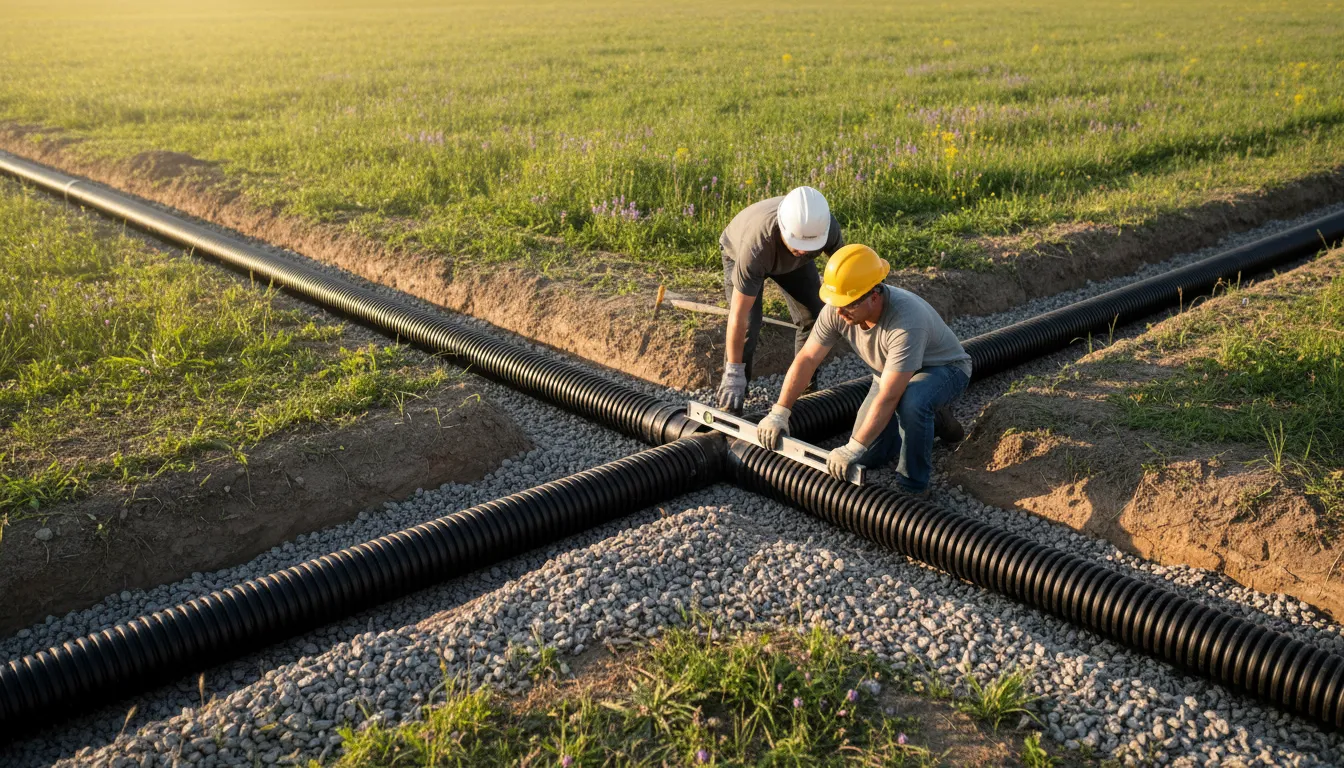
A failing drain field is a serious issue for any homeowner with a septic system, leading to unpleasant odors, soggy yards, and potential environmental contamination. Drain field repair and replacement involves diagnosing the cause of system failure and implementing a solution, which can range from minor repairs to a complete new leach field installation. This guide provides essential information for Blue Springs residents navigating this complex process, from local regulations to cost considerations, helping you connect with qualified local professionals for your project.
A-1 Sewer & Septic
1891 Merriam Ln, Kansas City, KS 66106
A-1 Sewer & Septic provides plumbing and septic system services in Kansas City, MO. They offer septic tank pumping, septic system repair, drain field repair, and comprehensive drain cleaning services including hydro jetting. Serving residential, commercial, and industrial clients, A-1 Sewer & Septic has been operating since 1968. The company offers same-day emergency and weekend services to address urgent plumbing and septic issues promptly.
Burns Septic And Excavation
Kansas City, MO
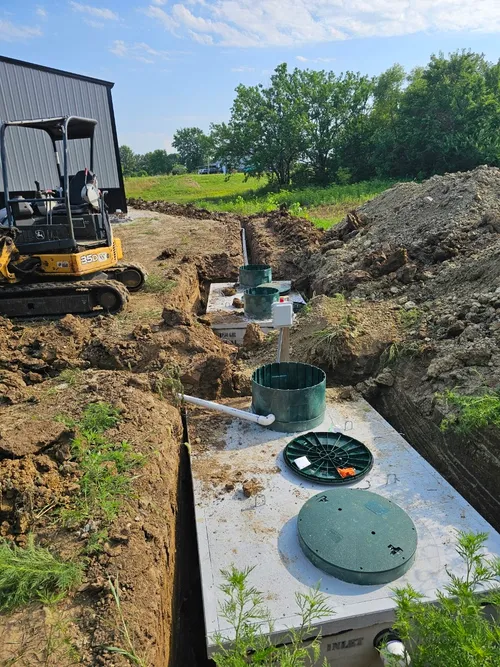
Burns Septic And Excavation is a septic system repair and installation company based in Kansas City, MO. They provide services including new septic system installations, septic tank replacements, and drain field repair or replacement. The company serves multiple counties in Missouri and Kansas, such as Cass, Johnson, Lafayette, and Jackson counties. Their capabilities include both lateral (drain field) replacements and preventative maintenance to support septic system health.

KCS, LLC
Kansas City, MO
KCS, LLC is a licensed and insured septic tank installation and drain field repair contractor serving Kansas City, MO, and surrounding areas. With over 25 years of experience, they provide comprehensive septic and wastewater solutions including tank replacement, lateral field installation, full system installs, septic engineering design, and septic to sewer conversion. Their expertise extends to water and sewer line installations and repairs, ensuring efficient and compliant septic system performance tailored to local soil and environmental conditions. KCS, LLC is recognized for its specialized knowledge and has been featured on FOX4KC's "KC Experts."
Residential Sewage Treatment
12800 2nd St, Grandview, MO 64030
Residential Sewage Treatment is a family-owned septic service provider based in Kansas City, MO, serving Clay County and surrounding areas. Established in 1972, the company offers a range of residential and commercial septic services including installation, repair, maintenance, and inspection of septic tanks and drain fields. They specialize in installing Aerobic Treatment Units certified by the National Sanitation Foundation, which are suitable for properties not compatible with traditional septic systems. Their certified technicians also handle lift station maintenance and drip irrigation system repairs to support proper wastewater management.
Understanding Your Septic System's Drain Field
The drain field, also known as a leach field or absorption field, is the final and most critical stage of your onsite wastewater treatment system. After solids settle in the septic tank, liquid effluent flows into a network of perforated pipes buried in trenches filled with gravel. This effluent slowly percolates through the soil, where natural processes provide final treatment before the water rejoins the groundwater. When this area becomes clogged, saturated, or physically damaged, the entire system fails. Recognizing early signs-like slow drains, sewage odors in the yard, or unusually lush, wet grass over the field-is key to addressing problems before they escalate.
Blue Springs Regulations and Permit Requirements
Any work on a septic system in Blue Springs is strictly regulated. Before any repair or replacement begins, a permit must be obtained from the Blue Springs Community Development Department. This is not a mere formality; it ensures the work complies with local amendments to the Jackson County Environmental Health codes and the Missouri Department of Health and Senior Services (MDHSS) standards.
Key regulations include:
- Mandatory Connection: If a public sewer line becomes available to your property, you are required to abandon your private septic system and connect to the public system.
- Setback Distances: New or repaired systems must maintain specific minimum distances from property lines, buildings, wells, and other water sources. These setbacks are critical for public health and are verified during inspection.
- Inspections: The city inspector has the authority to inspect the work at any stage. Crucially, a final inspection is required before any components are covered. You must notify the city, and the inspector typically has 48 hours to respond.
The Site Evaluation and Design Process
Successful drain field installation hinges on proper site evaluation. A key requirement is a soil morphologic analysis, often performed by a licensed soil scientist or evaluator 1. This test determines the soil's texture, structure, and percolation rate, which dictates the size and type of absorption field needed.
Design must account for several site constraints2 3:
- Topography: The field must be on suitable, gently sloping land to prevent runoff.
- Bedrock and Water Table: The system must be placed well above seasonal high groundwater and bedrock to ensure proper treatment.
- Vegetation: Trees and large shrubs should be kept far away from the field, as roots can infiltrate and destroy distribution pipes.
Common Causes of Drain Field Failure
Understanding why a leach field fails informs the repair strategy. Common causes include:
- Biological Mat Buildup: Over time, a layer of biomat can form around the trenches, eventually slowing percolation to a halt.
- Physical Damage: Crushed or broken pipes from soil compaction, often due to driving vehicles or placing heavy structures over the field.
- Hydraulic Overload: Consistently exceeding the system's design capacity with excessive water use.
- Poor Original Design or Installation: An undersized field or one installed in unsuitable soil is prone to early failure.
The Repair and Replacement Process
Step 1: Professional Assessment
A licensed professional will perform a thorough inspection to diagnose the exact problem. This may involve excavating test pits to examine the soil and the condition of the distribution pipes.
Step 2: Exploring Solutions
Not all failures require a full replacement. Sometimes, less invasive fixes are possible:
- Jet Cleaning: High-pressure water can clear minor blockages in pipes.
- Adding a New Field Section: If space allows, a new set of trenches can be added to share the load.
- Full Replacement: When the soil is permanently clogged or the field is too damaged, a complete new drain field in a new location is necessary.
Step 3: Installation & Inspection
For a full replacement, the process involves:
- Obtaining the city permit.
- Excavating the new trenches according to the approved design.
- Placing gravel and the new distribution pipes.
- Critical Inspection: All underground work must be inspected by the City Inspector before it is covered with soil4 5.
- Backfilling and restoring the landscape.
Find the perfect drain field repair companies for your needs
Get personalized recommendations and expert advice
Cost Considerations for Blue Springs Homeowners
The cost for drain field work varies significantly based on the scope. According to industry data and state guides, homeowners in the Blue Springs area can expect the following ranges6 7 8:
- Full System Replacement (Tank & Drain Field): This is a major project, typically costing between $5,000 and over $12,000, depending on system size, soil conditions, and site accessibility.
- Septic Tank Replacement Only: If the drain field is sound, replacing just the tank can cost $500-$900 for materials, with labor adding significantly to the total.
- Routine Maintenance: To avoid catastrophic failure, regular pumping and inspection every 3-5 years is crucial, generally costing $200-$500 per service.
These figures are estimates; always get detailed quotes from local contractors. Remember, the cheapest option is not always the most cost-effective long-term solution.
Maintaining Your New or Repaired Drain Field
Protecting your investment is simple with good habits:
- Practice Water Conservation: Spread out laundry loads and fix leaky fixtures to avoid overwhelming the system.
- Mind What You Flush: Only human waste and toilet paper should go down the drain. Avoid chemicals, grease, and non-biodegradable items.
- Keep It Clear: Never drive, park, or build structures (like sheds or patios) over your drain field. Also, divert rainwater runoff from roofs and driveways away from the area.
- Schedule Regular Pumping: Pumping the septic tank every 3-5 years prevents solids from escaping into and clogging the drain field9.
Frequently asked questions
Sources
Footnotes
-
Missouri Laws Accompanied by Department of Health and ... - https://health.mo.gov/living/environment/onsite/pdf/onsite_ref_book.pdf ↩
-
What Homeowners Should Know About Septic Systems - https://www.mohomeinspectors.com/septic-systems ↩
-
design criteria for sewage works - chapter contents page - https://cdmscwn.squarespace.com/s/C-EngineeringSewerAssessmentPrograms.pdf ↩
-
Article II: Private Sewage Disposal Systems - eCode360 - https://ecode360.com/28254102 ↩
-
City of Blue Springs, MO Sewer Regulations - eCode360 - https://ecode360.com/28254050 ↩
-
An Onsite Wastewater Treatment System Owner's Manual - https://health.mo.gov/living/environment/onsite/pdf/SystemOwnersManual.pdf ↩
-
Cost to Replace Septic Tank and Drain Field [2026 Data] | Angi - https://www.angi.com/articles/how-much-new-drain-fields-foot.htm ↩
-
Residential Septic Tank Pricing | Homeowner's Guide to Costs - https://www.ntotank.com/blog/residential-septic-tank-pricing ↩
-
Septic Tank/Absorption Field Systems: A Homeowner's Guide to Installation and Maintenance - https://extension.missouri.edu/sites/default/files/legacy_media/wysiwyg/Extensiondata/Pub/pdf/envqual/eq0401.pdf ↩