Find the Best Drain Field Repair Companies for Your Business
No obligation • Fast responses • Nationwide coverage

Why you can trust Septic Spot
Septic Spot is a leading United States resource for understanding and comparing septic services. Our editors review providers using consistent criteria and verify key business details. Listings and scores are independent, and companies cannot pay to influence our content.
Search providers near you
Top Drain Field Repair Companies in Lees Summit, Missouri Ranked
A failing drain field is a serious concern for any homeowner with a septic system. This critical component, also known as a leach field or absorption field, is responsible for the final treatment and dispersal of wastewater into the soil. When it malfunctions, it can lead to soggy yards, foul odors, and even environmental contamination. In Lees Summit, addressing these issues requires navigating specific local regulations and understanding the unique soil conditions of Jackson County. This guide provides essential information on the repair and replacement process, local rules, and how to connect with qualified professionals to restore your system's function and protect your property.
A-1 Sewer & Septic
1891 Merriam Ln, Kansas City, KS 66106
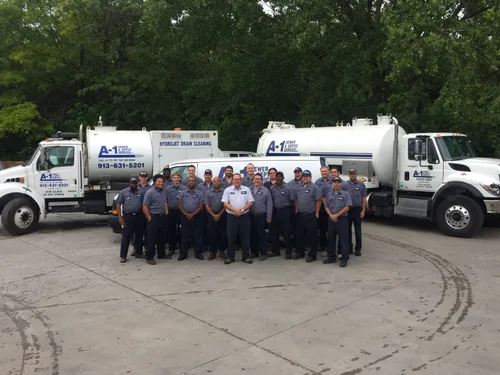
A-1 Sewer & Septic provides plumbing and septic system services in Kansas City, MO. They offer septic tank pumping, septic system repair, drain field repair, and comprehensive drain cleaning services including hydro jetting. Serving residential, commercial, and industrial clients, A-1 Sewer & Septic has been operating since 1968. The company offers same-day emergency and weekend services to address urgent plumbing and septic issues promptly.
Burns Septic And Excavation
Kansas City, MO
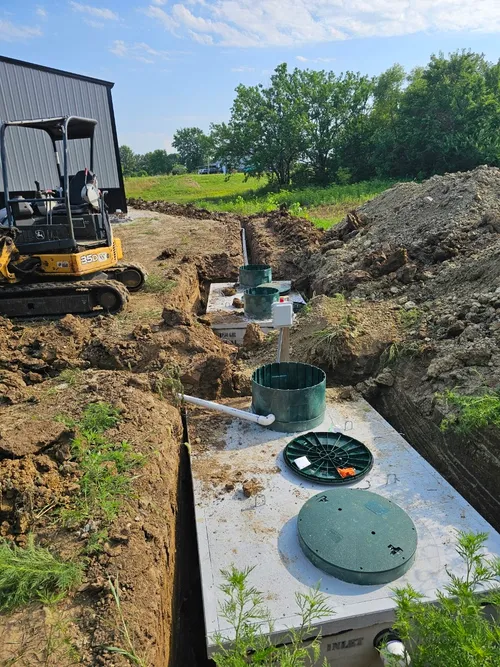
Burns Septic And Excavation is a septic system repair and installation company based in Kansas City, MO. They provide services including new septic system installations, septic tank replacements, and drain field repair or replacement. The company serves multiple counties in Missouri and Kansas, such as Cass, Johnson, Lafayette, and Jackson counties. Their capabilities include both lateral (drain field) replacements and preventative maintenance to support septic system health.

KCS, LLC
Kansas City, MO
KCS, LLC is a licensed and insured septic tank installation and drain field repair contractor serving Kansas City, MO, and surrounding areas. With over 25 years of experience, they provide comprehensive septic and wastewater solutions including tank replacement, lateral field installation, full system installs, septic engineering design, and septic to sewer conversion. Their expertise extends to water and sewer line installations and repairs, ensuring efficient and compliant septic system performance tailored to local soil and environmental conditions. KCS, LLC is recognized for its specialized knowledge and has been featured on FOX4KC's "KC Experts."
Residential Sewage Treatment
12800 2nd St, Grandview, MO 64030
Residential Sewage Treatment is a family-owned septic service provider based in Kansas City, MO, serving Clay County and surrounding areas. Established in 1972, the company offers a range of residential and commercial septic services including installation, repair, maintenance, and inspection of septic tanks and drain fields. They specialize in installing Aerobic Treatment Units certified by the National Sanitation Foundation, which are suitable for properties not compatible with traditional septic systems. Their certified technicians also handle lift station maintenance and drip irrigation system repairs to support proper wastewater management.
Understanding Your Drain Field's Role
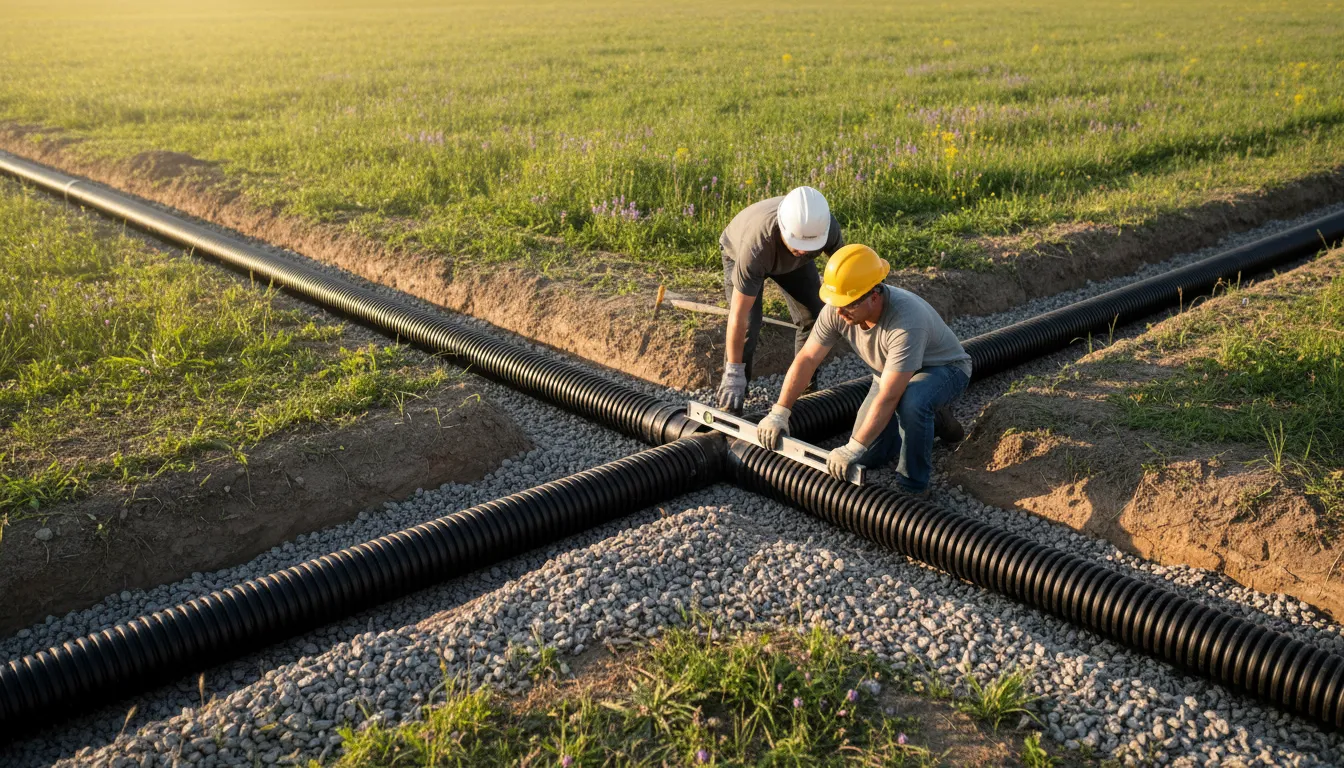
The drain field is the unsung hero of your onsite wastewater treatment system. After solids settle in the septic tank, the liquid effluent flows into a network of perforated pipes buried in trenches filled with gravel or chambers. This effluent then slowly percolates down through the soil, where natural processes filter out harmful bacteria, viruses, and nutrients before the water rejoins the groundwater. A properly functioning leach field is essential for public health and environmental protection, preventing untreated wastewater from surfacing or contaminating nearby wells and waterways.
Signs Your Absorption Field Needs Attention
Catching problems early can mean the difference between a simple repair and a costly full replacement. Be vigilant for these warning signs of a failing system:
- Soggy Ground or Surfacing Wastewater: Puddles or consistently wet, spongy soil over the drain field area, especially when it hasn't rained.
- Foul Odors: Unpleasant sewage smells emanating from the yard near the drain field or septic tank.
- Slow Drains & Backups: Gurgling pipes, slow-draining sinks and toilets, or sewage backups in the home, which can indicate the entire system is overloaded.
- Unusually Lush Vegetation: Grass over the drain field that is noticeably greener and grows faster than the rest of the lawn, indicating a surplus of nutrients from wastewater.
- Algae Blooms in Nearby Ponds: An increase in algae growth in adjacent surface water can be a sign of nutrient-rich effluent escaping the system.
Missouri and Jackson County Regulations You Must Follow
In Lees Summit, all work on septic system absorption fields is governed by Missouri Department of Health and Senior Services (DHSS) rules, typically enforced locally by the Jackson County Environmental Health department. Ignoring these regulations can result in fines and an unpermitted, non-compliant system.
- Permits Are Mandatory: Virtually any repair or replacement of a drain field requires a permit from the local health authority. This permit must be approved before any excavation or construction begins.
- Professional Design Required: A permitted, certified professional must conduct a formal site evaluation. This includes soil testing (percolation tests) to determine the soil's absorption rate and suitability, which directly dictates the size and design of the new leach field.
- Critical Setbacks: Regulations specify minimum distances the drain field must be from structures and features. Common setbacks include being at least 10-25 feet from your home, property lines, wells, and any water sources 1.
- Final Inspection: The local health agency must conduct a final inspection and approve the work before the new drain field is covered with soil.
The Step-by-Step Process for Repair or Replacement
Addressing a failed leach field is a structured process best handled by certified septic professionals.
- Comprehensive System Evaluation: A professional will first perform a thorough inspection to diagnose the exact cause of failure. Common issues include biomat clogging, saturated soil, crushed or collapsed distribution pipes, or damage from tree roots.
- Site Evaluation & Design: For a replacement, a new site evaluation is conducted. The professional will test the soil to ensure it is uncompacted and suitable for wastewater treatment. Missouri's often clay-heavy soils require specific design considerations for proper infiltration.
- Permit Application & Approval: The septic professional will prepare and submit the repair or replacement plans to Jackson County Environmental Health for permit approval 2.
- Site Preparation: The area must be cleared of deep-rooted trees, shrubs, stumps, and debris. Crucially, the soil must be protected from compaction by heavy equipment or vehicle traffic.
- Excavation & Installation: The old, failed system may be abandoned in place. New trenches are dug, and the chosen system-whether a traditional gravel-based field or a modern chamber system-is installed according to the approved design 3.
- Final Inspection & Restoration: After installation, the health department inspector will verify compliance. Once approved, the system is covered, and the landscape is restored, typically with grass seed only over the field.
Find the perfect drain field repair companies for your needs
Get personalized recommendations and expert advice
Key Factors Influencing Your Project in Lees Summit
Several local conditions directly impact the approach and cost of drain field work.
- Soil Suitability: The soil must be unsaturated and capable of absorbing effluent. Heavy clay soils, common in the region, have slow percolation rates and may require a larger drain field or an alternative system type 4 5.
- Land Slope & Drainage: Properties with steep slopes present challenges, as wastewater can seep downhill and cause system failure or contamination. These sites often require specialized engineering.
- System Size & Technology: The size of your household dictates the required capacity. Furthermore, while traditional gravel systems are common, advanced options like chamber systems or aerobic treatment units (ATUs) might be recommended for difficult sites, impacting the overall project scope and budget.
Understanding the Costs Involved
Investment in your drain field is an investment in your property's value and safety. Costs can vary widely based on the extent of the problem and site-specific challenges.
- Minor Repairs: Fixing a clogged line, replacing a damaged distribution box, or addressing a single failed lateral may cost under $1,000.
- Full Drain Field Replacement: This is a major undertaking. In the Lees Summit area, homeowners can expect an average cost range of $5,000 to $12,000 or more for a complete leach field replacement. The final price depends on system size, soil conditions, the technology used, and local labor rates 6.
- Additional Costs: Budget for required soil evaluations and system inspections (often $200-$500), permit fees from Jackson County, and any necessary landscaping restoration after the work is complete 7 8.
Maintaining Your New or Repaired System
Protect your investment with proper ongoing care to extend the life of your drain field for decades.
- Regular Septic Tank Pumping: Have your septic tank pumped every 3 to 5 years by a licensed professional to prevent solids from escaping into and clogging the drain field 9.
- Conserve Water: Spread out laundry loads and fix leaky fixtures to avoid hydraulically overloading the system. Reduce water usage significantly during periods of heavy rain when the soil is already saturated.
- Mind What You Flush: Never flush non-biodegradable items like wipes, feminine hygiene products, or dental floss. Avoid pouring cooking fats, oils, grease, or household chemicals (paint, pesticides) down the drain, as they can kill beneficial bacteria and clog the soil 10 11.
- Protect the Area: Never drive or park vehicles, build structures, or plant trees and shrubs over the drain field. The roots and weight can cause severe damage. Only grass should be planted over the absorption area 12.
Frequently asked questions
Sources
Footnotes
-
Professional Registration Courses | Onsite Wastewater Treatment | Health & Senior Services - https://health.mo.gov/living/environment/onsite/courses.php ↩
-
Septic Systems Reports, Regulations, Guidance, and Manuals - https://www.epa.gov/septic/septic-systems-reports-regulations-guidance-and-manuals ↩
-
The Ultimate Guide to Replacing a Septic Drain Field - https://www.rciseptic.com/the-ultimate-guide-to-replacing-a-septic-drain-field ↩
-
Septic Tank/Absorption Field Systems: A Homeowner's Guide ... - https://extension.missouri.edu/publications/eq401 ↩
-
Septic Tank/Absorption Field Systems - MU Extension - https://extension.missouri.edu/sites/default/files/legacy_media/wysiwyg/Extensiondata/Pub/pdf/envqual/eq0401.pdf ↩
-
Cost to Replace Septic Tank and Drain Field [2026 Data] | Angi - https://www.angi.com/articles/how-much-new-drain-fields-foot.htm ↩
-
An Onsite Wastewater Treatment System Owner's Manual - https://health.mo.gov/living/environment/onsite/pdf/SystemOwnersManual.pdf ↩
-
Fixing Septic Drain Fields: What Florida Homeowners Should Know - https://mathisandsonsseptic.com/mathis-sons-septic-blog-orlando-fl/septic-drain-fields-what-florida-homeowners-should-know/ ↩
-
When to Pump Your Septic Tank | Roto-Rooter - https://www.rotorooter.com/blog/outdoor-plumbing/5-signs-its-time-to-call-your-septic-pumping-service/ ↩
-
What Homeowners Should Know About Septic Systems - https://www.mohomeinspectors.com/septic-systems ↩
-
7 Things That Will Damage Your Septic System - Russo Bros. & Co. - https://russobrosplumbing.com/blog/3-worst-put-septic-system/ ↩
-
Septic Systems and Other Treatment Methods (Fact Sheet) - https://extension.missouri.edu/publications/eqm104f ↩