Find the Best Drain Field Repair Companies for Your Business
No obligation • Fast responses • Nationwide coverage

Why you can trust Septic Spot
Septic Spot is a leading United States resource for understanding and comparing septic services. Our editors review providers using consistent criteria and verify key business details. Listings and scores are independent, and companies cannot pay to influence our content.
Search providers near you
Top Drain Field Repair Companies in Moore, Oklahoma Ranked
A failing drain field, also known as a leach field or absorption field, is a serious issue for any home with a septic system. When this critical component stops properly absorbing and filtering wastewater, it can lead to sewage backups, soggy yards, and environmental contamination. In Moore, Oklahoma, addressing drain field problems requires navigating specific state regulations and understanding the unique soil conditions of the area. This guide helps you understand the repair and replacement process, local requirements, and how to connect with certified professionals who can assess your system and provide the necessary solutions.
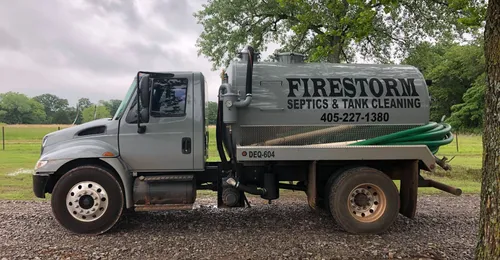
Firestorm Septics & Shelters
6114 US-177, Shawnee, OK 74804
Firestorm Septics & Shelters is a septic system and storm shelter company based in Oklahoma City, OK. They provide septic tank pumping, inspection, repair, installation, and drain field services, along with storm shelter installation. The company is known for handling septic system issues such as lateral line installation and aerobic system repairs. As a locally owned and veteran-owned business, Firestorm Septics & Shelters has built a reputation for thorough work and clear communication. They also offer after-hours service and quick response times, including weekend work when needed.
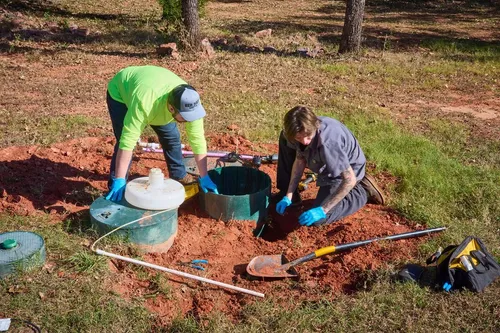
Red Dirt Septic
2018 OK-37, Tuttle, OK 73089
Red Dirt Septic is a full-service septic company based in Oklahoma City, OK, providing septic tank installation, repair, and ongoing maintenance services. They offer tailored septic system solutions including new installations, drain field repairs, and maintenance programs designed to keep systems functioning properly. The company uses remote monitoring technology and provides free on-site property evaluations to determine the most efficient septic solutions. As founding members of the Oklahoma Onsite Wastewater Association, they are committed to industry standards and ethics.
Understanding Your Drain Field's Role
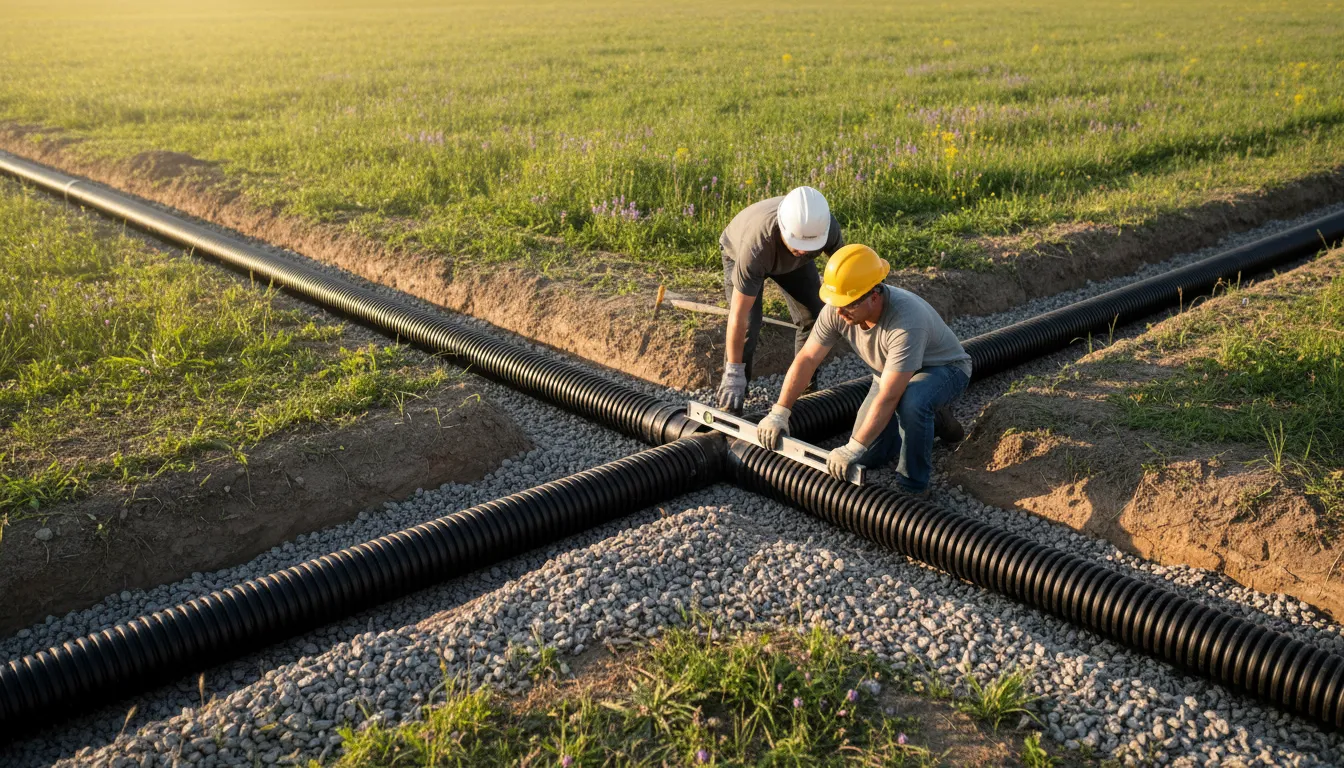
The drain field is the final and most crucial stage of a conventional septic system. After solids settle in the septic tank, the clarified liquid effluent flows into a network of perforated pipes buried in trenches filled with gravel. This effluent then slowly percolates down through the soil, where natural processes remove harmful bacteria, viruses, and nutrients before the water rejoins the groundwater. A properly functioning leach field is essential for protecting both your property and public health.
In Moore, the performance of your absorption field is directly tied to the local soil conditions. The upper 48 inches of soil are particularly critical for its absorption capacity 1. When this soil becomes clogged or "biomat" forms excessively, or if the underlying conditions are unsuitable, the field can fail, necessitating repair or a full replacement.
Signs You Need Drain Field Service
Recognizing early warning signs can prevent more extensive damage and costly emergencies. Common indicators of a failing leach field include:
- Sewage Odors or Wet Spots: Foul smells in the yard or persistently soggy, spongy areas above the drain field lines, especially when it hasn't rained.
- Slow Drains and Backups: Gurgling pipes, toilets that drain slowly, or sewage backing up into household drains.
- Unusually Green Grass: Patches of grass over the drain field that are much lusher and greener than the rest of the lawn, indicating a surge of nutrients from surfacing effluent.
- Standing Water: Pools of grey, foul-smelling water on the ground's surface near the septic system area.
If you notice any of these signs, it's time to contact a certified professional for an inspection. Ignoring them can lead to system collapse, property damage, and regulatory fines.
The Regulatory Landscape in Moore, OK
All septic system work in Oklahoma, including drain field repair and replacement, is regulated by the Oklahoma Department of Environmental Quality (DEQ). Understanding these rules is the first step in any project.
- Permit Required: A DEQ permit is mandatory before any repair, modification, or replacement of a septic system component, including drain fields. You or your installer must submit a site evaluation and system design for approval.
- Certified Installer: All repairs and installations must be performed by a DEQ-certified installer. If work is done by someone who is not certified, a DEQ inspection is required before the system can be covered up 2.
- Site Rules: Oklahoma law specifies strict separation distances from wells, property lines, buildings, and surface water. Your new or repaired drain field must adhere to these rules, which a certified professional will help you navigate 3.
The Drain Field Repair & Replacement Process
Addressing a failed leach field is a multi-step process that involves assessment, design, permitting, and construction.
1. Professional Site Assessment & Soil Testing A certified professional will first conduct a thorough inspection of your entire septic system to confirm the drain field is the source of failure. The cornerstone of designing a new field is a soil permeability test, often called a perc test. This test measures how quickly water drains through your soil, which determines the size and type of drain field needed 4. In areas with high clay content or a high water table-common challenges in parts of Oklahoma-a standard perc test may fail, indicating the need for an alternative system design.
2. System Design & Permit Acquisition Using the soil test results, the designer will create a plan for either repairing the existing absorption field or designing a completely new one. The design must account for the "limiting zone," which is typically 3 feet of separation from bedrock or the seasonal high water table 5 6. This plan is then submitted to the DEQ for permit approval.
3. Installation & Final Inspection Once the permit is secured, construction begins. For a full replacement, this involves excavating the area, removing the old material, and installing new gravel-filled trenches and perforated pipes in undisturbed soil. After installation, a final inspection-either by the DEQ or the certified installer themselves-is conducted before the system is buried. This ensures the work complies with the approved permit 7.
Find the perfect drain field repair companies for your needs
Get personalized recommendations and expert advice
Cost Considerations for Moore Homeowners
The cost for drain field repair or replacement in Moore varies significantly based on system size, soil conditions, and the extent of the problem. According to local industry data, homeowners should be prepared for the following investment ranges:
- Drain Field Repair/Replacement: The cost to replace a drain field often starts around $7,000 or more 8.
- Total System Replacement: If the entire septic system (tank and field) needs replacing, the average cost in Oklahoma ranges from $6,500 to $15,000+, with complex sites or alternative systems costing even more 9.
- Additional Costs: Remember to budget for the required soil testing ($300-$1,000) and DEQ permit fees, which are typically separate from the installation quote. The entire project, from assessment to completion, can take 6 to 8 weeks 10.
Alternative Systems for Challenging Sites
Not all properties in Moore are suited for a conventional gravel trench drain field. If your soil has a high clay content, shallow bedrock, or a high water table, an alternative septic system may be necessary 11. These systems, such as aerobic treatment units (ATUs), sand filters, or mound systems, provide advanced treatment and are designed for difficult sites. While they have a higher upfront cost, they are often the only viable solution for properties that fail a standard perc test 12.
Potential Financial Assistance
For qualifying homeowners, financial help may be available. The Oklahoma Conservation Commission administers a statewide septic program that may provide assistance for replacing failing systems. Eligibility often requires the property to be within 1,320 feet of a water body, and the homeowner must meet certain income criteria 13. It's worth inquiring about this program if cost is a significant concern.
Maintaining Your New Drain Field
Protecting your investment is key. Once your new or repaired leach field is installed, proper maintenance is essential for its longevity:
- Practice Water Conservation: Spread out laundry and dishwasher use to avoid overwhelming the system.
- Mind What You Flush: Only human waste and toilet paper should go down the drain. Avoid chemicals, grease, wipes, and feminine hygiene products.
- Protect the Area: Never drive or park vehicles over the drain field, and avoid planting trees or deep-rooted shrubs nearby.
- Pump the Tank Regularly: Have your septic tank pumped every 3-5 years by a licensed professional to prevent solids from escaping into and clogging the new drain field.
Frequently asked questions
Sources
Footnotes
-
Land Buyers' Septic System Guide for Oklahoma - https://extension.okstate.edu/fact-sheets/land-buyers-septic-system-guide-for-oklahoma.html ↩
-
Basic Septic System Rules for Oklahoma - https://extension.okstate.edu/fact-sheets/basic-septic-system-rules-for-oklahoma.html ↩
-
Septic Drainfield Design 101: A Complete Guide - https://landperc.com/septic-drainfield-design-guide/ ↩
-
Onsite Wastewater Treatment Systems Manual ... - EPA - https://www.epa.gov/sites/default/files/2015-06/documents/2004_07_07_septics_septic_2002_osdm_all.pdf ↩
-
Basic Septic System Rules for Oklahoma - https://extension.okstate.edu/fact-sheets/print-publications/pss/basic-septic-system-rules-for-oklahoma-pss-2918.pdf ↩
-
Septic System Repair or Replace Guide (2025) - https://www.vdwws.com/blog/traditional-septic-systems-when-to-repair-or-replace ↩
-
Stay Compliant: Avoid Fines with Septic System Regulations - https://smartsepticpros.com/blog/septic-system-regulations/ ↩
-
Cost to Replace Septic Tank and Drain Field [2026 Data] | Angi - https://www.angi.com/articles/how-much-new-drain-fields-foot.htm ↩
-
How Much Does a Septic System Cost in Oklahoma? - https://www.cycloneseptics.com/how-much-does-a-septic-system-cost-in-oklahoma/ ↩
-
Septic System Install Timeline | RCI Septic Service - https://www.rciseptic.com/complete-step-by-step-timeline-septic-system-installation-from-permit-to-finish ↩
-
Alternative Septic Systems For Difficult Sites - Building Advisor - https://buildingadvisor.com/buying-land/septic-systems/alternative-septic-systems/ ↩
-
What is the best septic system if your land fails a perc test? - https://www.premiertechaqua.com/en-us/blog/best-septic-system-failed-perc-test ↩
-
Statewide Septic Program info - Oklahoma Conservation Commission - https://conservation.ok.gov/wp-content/uploads/2025/02/Statewide-Septic-Program-info-2.pdf ↩