Find the Best Drain Field Repair Companies for Your Business
No obligation • Fast responses • Nationwide coverage

Why you can trust Septic Spot
Septic Spot is a leading United States resource for understanding and comparing septic services. Our editors review providers using consistent criteria and verify key business details. Listings and scores are independent, and companies cannot pay to influence our content.
Search providers near you
Top Drain Field Repair Companies in Oklahoma City, Oklahoma Ranked
A failing drain field, also known as a leach field or soil absorption system, is a serious issue for any Oklahoma City home on a septic system. This critical component is responsible for safely dispersing and treating wastewater after it leaves the septic tank. When it malfunctions, you may notice soggy ground, sewage odors, or even wastewater backing up into your home. Finding a qualified professional for drain field repair or a full septic system replacement is essential to protect your property, health, and the local environment. This guide helps you understand the local process, regulations, and costs, so you can make informed decisions when connecting with certified providers in the Oklahoma City area.
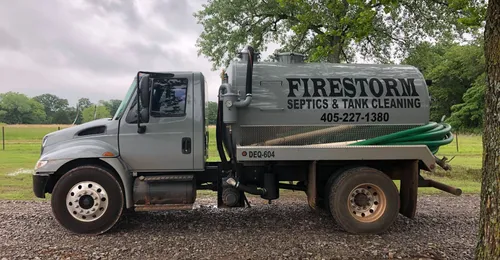
Firestorm Septics & Shelters
6114 US-177, Shawnee, OK 74804
Firestorm Septics & Shelters is a septic system and storm shelter company based in Oklahoma City, OK. They provide septic tank pumping, inspection, repair, installation, and drain field services, along with storm shelter installation. The company is known for handling septic system issues such as lateral line installation and aerobic system repairs. As a locally owned and veteran-owned business, Firestorm Septics & Shelters has built a reputation for thorough work and clear communication. They also offer after-hours service and quick response times, including weekend work when needed.
Red Dirt Septic
2018 OK-37, Tuttle, OK 73089
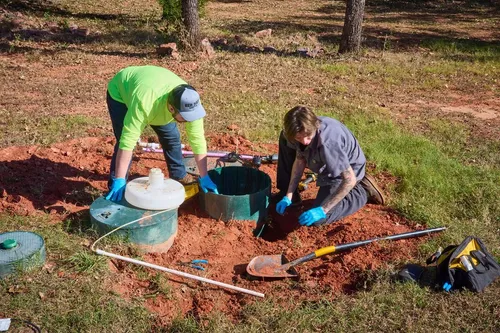
Red Dirt Septic is a full-service septic company based in Oklahoma City, OK, providing septic tank installation, repair, and ongoing maintenance services. They offer tailored septic system solutions including new installations, drain field repairs, and maintenance programs designed to keep systems functioning properly. The company uses remote monitoring technology and provides free on-site property evaluations to determine the most efficient septic solutions. As founding members of the Oklahoma Onsite Wastewater Association, they are committed to industry standards and ethics.
Understanding Your Drain Field and Common Failure Signs
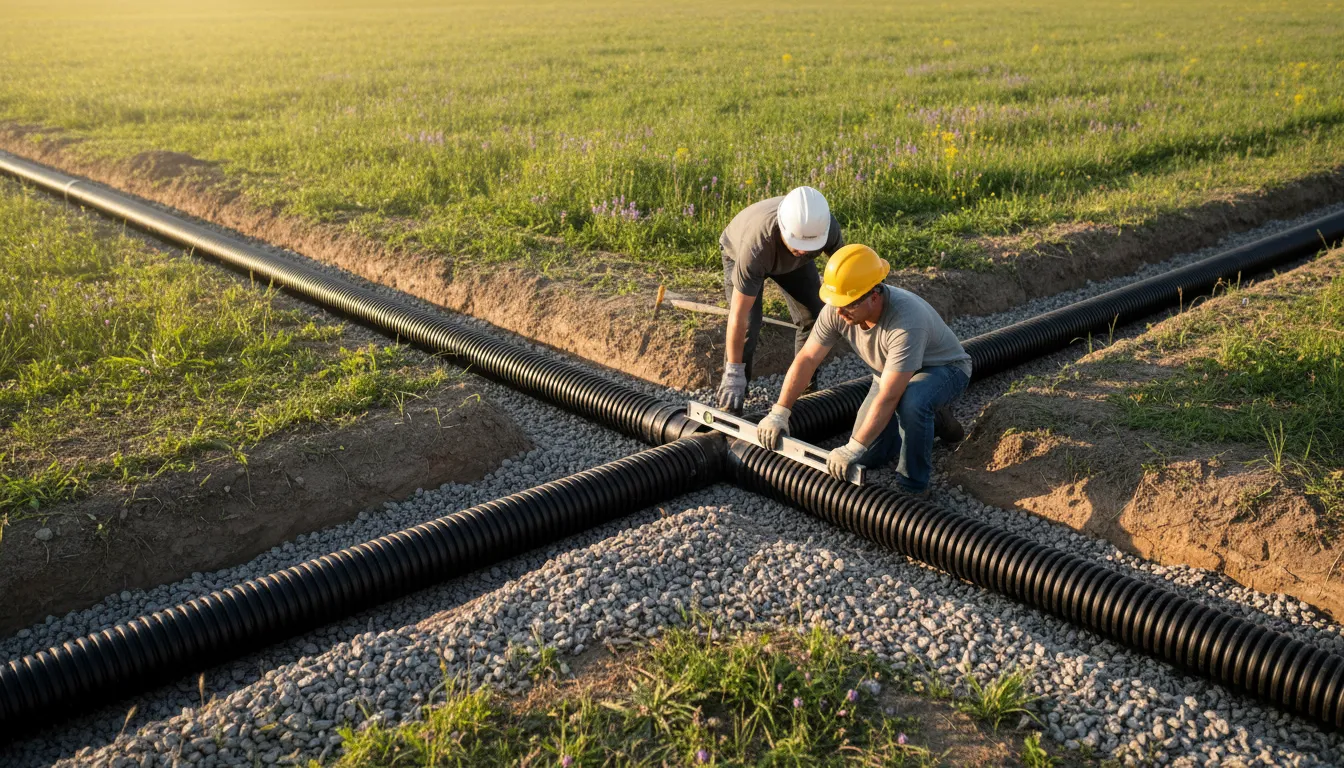
The drain field is the final stage of your onsite wastewater treatment system. After solids settle in the septic tank, the liquid effluent flows into a network of perforated pipes buried in trenches filled with gravel. This effluent slowly percolates into the soil, where natural processes provide final treatment. Over time, these systems can fail. Common reasons include soil compaction, root intrusion, hydraulic overloading from excessive water use, and the natural buildup of a biomat-a layer that can eventually slow drainage to a halt.
Recognizing early warning signs can save you from more extensive and costly repairs down the line. Be alert for:
- Soggy Ground or Standing Water: Persistent wet spots or lush, green grass over the drain field area, especially when the rest of the yard is dry.
- Sewage Odors: Unpleasant smells near the drain field or septic tank.
- Slow Drains: Gurgling pipes, slow flushing toilets, or drains that back up inside the home.
- Sewage Surfacing: The most severe sign, where untreated wastewater pools on the ground surface.
If you observe any of these issues, it's time to consult a DEQ-certified professional for an inspection.
Oklahoma City Regulations and Permit Requirements
All septic system work in Oklahoma, including drain field repairs and replacements, is regulated by the Oklahoma Department of Environmental Quality (DEQ). You cannot legally begin any modification without the proper permits. A certified installer must first obtain an "Authorization to Construct" or an individual permit from the local DEQ office before any work starts. This ensures the proposed solution meets state health and environmental standards.
A key rule is that all repairs and installations must be performed by a DEQ-certified installer. Hiring a certified professional is non-negotiable for permitted work. Furthermore, any system utilizing an Aerobic Treatment Unit (ATU) comes with a mandatory two-year warranty, which includes necessary maintenance services that the installer must provide to the homeowner. Finally, the completed system must be inspected and approved by either a DEQ inspector or a DEQ-certified installer before it can be put into use.
The Critical Role of Soil Evaluation
You cannot design or repair a drain field without first understanding the soil on your property. The soil's ability to absorb and treat wastewater-its percolation rate-dictates everything. A certified soil profiler must conduct a site evaluation to assess soil texture, color, and most importantly, the depth to a restricting layer like bedrock or dense clay 1. This test determines the soil's absorption rate and is legally required for a permit.
The results of this evaluation directly influence the type of system your property can support. Key site constraints include:
- Lot Size & Setbacks: Systems must maintain mandated distances from property lines, wells, streams, and other water bodies.
- Slope: Land with a slope over 10% is generally not suitable for a conventional septic system installation 2.
- Home Size: The system is designed based on the number of bedrooms, which estimates daily wastewater flow.
Find the perfect drain field repair companies for your needs
Get personalized recommendations and expert advice
The Step-by-Step Process for Repair or Replacement
Navigating a drain field project involves a defined sequence of steps. Understanding this timeline helps set realistic expectations.
- Site Evaluation & Soil Profile: A certified professional visits your property to perform the necessary soil tests and evaluate site conditions 3. This is the foundational step for all that follows.
- System Design & Selection: Based on the soil report and your home's size, the installer will design an appropriate system. For suitable soils, this may be a conventional trench system. For soils with poor percolation, an alternative system like an Aerobic Treatment Unit (ATU) may be required 4 5 6.
- Permitting: Your certified installer will submit the design and apply for the "Authorization to Construct" permit from the DEQ.
- Installation or Repair Work: Once the permit is secured, the crew will execute the plan. This may involve repairing a section of the leach field or excavating and installing a completely new absorption system.
- Final Inspection: After installation, a DEQ inspector or a DEQ-certified installer must conduct a final inspection to confirm the system is built correctly and operational before it is covered 7.
Cost Considerations for Oklahoma City Homeowners
The cost for drain field work varies widely based on the extent of the problem, soil conditions, and the type of system required. It's important to budget for both professional services and permit fees.
- Permit Fees: Approximately $500.
- Soil Test/Profile: Typically between $350 and $550 8.
- Conventional System Installation: For a full new conventional septic system (tank and drain field), costs often range from $3,000 to $4,000.
- Aerobic Treatment System (ATU): These advanced systems, needed for challenging soils, have a higher price tag, generally between $5,500 and $8,000.
- Tank Pumping: A related maintenance service, septic tank pumping, costs between $400 and $700 in the region 9.
Important Financial Assistance Note: Qualifying low-income homeowners in Oklahoma may be eligible for significant help. The Oklahoma Conservation Commission's Statewide Septic Program offers grants of up to $15,000 for the repair or replacement of failing systems, particularly for properties near water bodies 10 11. This program can be a vital resource for eligible residents facing a major unexpected expense.
Maintaining Your New or Repaired System
Protecting your investment is crucial. After a repair or replacement, proper maintenance is key to longevity. This includes regular septic tank pumping every 3-5 years, conserving water to avoid overloading the system, and avoiding flushing harmful chemicals or non-biodegradable materials. For ATU systems, adhering to the required maintenance contract is not just good practice-it's a condition of the mandatory warranty 12 13.
Frequently asked questions
Sources
Footnotes
-
Septic System Install Timeline | RCI Septic Service - https://www.rciseptic.com/complete-step-by-step-timeline-septic-system-installation-from-permit-to-finish ↩
-
Septic System Basics for Home Builders - OSU Extension - https://extension.okstate.edu/fact-sheets/print-publications/pss/septic-system-basics-for-home-builders-pss-2407.pdf ↩
-
Soil-Based Septic System Decisions in Oklahoma - https://extension.okstate.edu/fact-sheets/soil-based-septic-system-decisions-in-oklahoma.html ↩
-
Septic System Basics for Realtors | Oklahoma State University - https://extension.okstate.edu/fact-sheets/septic-system-basics-for-realtors.html ↩
-
Basic Septic System Rules for Oklahoma - https://extension.okstate.edu/fact-sheets/print-publications/pss/basic-septic-system-rules-for-oklahoma-pss-2918.pdf ↩
-
Best Septic System for Rural Properties in Northeastern Oklahoma - https://jtserviceco.com/best-septic-system-for-rural-properties-in-northeastern-oklahoma/ ↩
-
Sewage Treatment - Oklahoma.gov - https://oklahoma.gov/deq/divisions/ecls/on-site-sewage-programs/sewage-treatment.html ↩
-
Land Buyers' Septic System Guide for Oklahoma - https://extension.okstate.edu/fact-sheets/land-buyers-septic-system-guide-for-oklahoma.html ↩
-
How Much Does a Septic System Cost in Oklahoma? - https://www.cycloneseptics.com/how-much-does-a-septic-system-cost-in-oklahoma/ ↩
-
Final-Onsite-Replacement-Application-2024-002.docx - https://conservation.ok.gov/wp-content/uploads/2025/01/Final-Onsite-Replacement-Application-2024-002.docx ↩
-
Statewide Septic Program info - Oklahoma Conservation Commission - https://conservation.ok.gov/wp-content/uploads/2025/02/Statewide-Septic-Program-info-2.pdf ↩
-
chapter 641. individual and small public on-site sewage ... - https://oklahoma.gov/content/dam/ok/en/deq/documents/deqmainresources/641.pdf ↩
-
Basic Septic System Rules for Oklahoma - https://extension.okstate.edu/fact-sheets/basic-septic-system-rules-for-oklahoma.html ↩