Find the Best Drain Field Repair Companies for Your Business
No obligation • Fast responses • Nationwide coverage

Why you can trust Septic Spot
Septic Spot is a leading United States resource for understanding and comparing septic services. Our editors review providers using consistent criteria and verify key business details. Listings and scores are independent, and companies cannot pay to influence our content.
Search providers near you
Top Drain Field Repair Companies in Norman, Oklahoma Ranked
A failing drain field, also known as a leach field or absorption field, is a serious issue for any home with a septic system. This critical component is responsible for safely filtering and dispersing treated wastewater into the soil. When it malfunctions, it can lead to sewage backups, soggy yards, and environmental contamination. For Norman homeowners, navigating the repair or replacement of a septic drain field involves specific state and local regulations, professional assessments, and significant investment. This guide provides the essential information you need to understand the process, costs, and requirements for restoring your property's wastewater system with the help of local, qualified professionals.
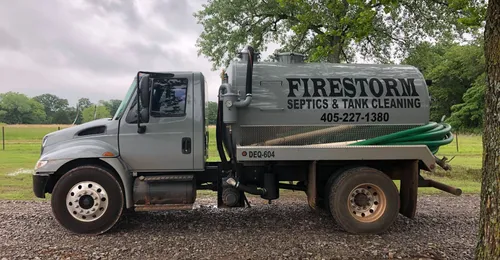
Firestorm Septics & Shelters
6114 US-177, Shawnee, OK 74804
Firestorm Septics & Shelters is a septic system and storm shelter company based in Oklahoma City, OK. They provide septic tank pumping, inspection, repair, installation, and drain field services, along with storm shelter installation. The company is known for handling septic system issues such as lateral line installation and aerobic system repairs. As a locally owned and veteran-owned business, Firestorm Septics & Shelters has built a reputation for thorough work and clear communication. They also offer after-hours service and quick response times, including weekend work when needed.
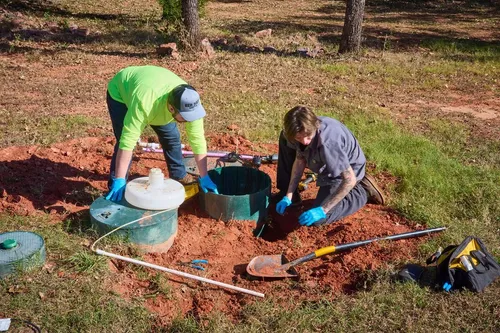
Red Dirt Septic
2018 OK-37, Tuttle, OK 73089
Red Dirt Septic is a full-service septic company based in Oklahoma City, OK, providing septic tank installation, repair, and ongoing maintenance services. They offer tailored septic system solutions including new installations, drain field repairs, and maintenance programs designed to keep systems functioning properly. The company uses remote monitoring technology and provides free on-site property evaluations to determine the most efficient septic solutions. As founding members of the Oklahoma Onsite Wastewater Association, they are committed to industry standards and ethics.
Understanding Your Drain Field and Signs of Failure
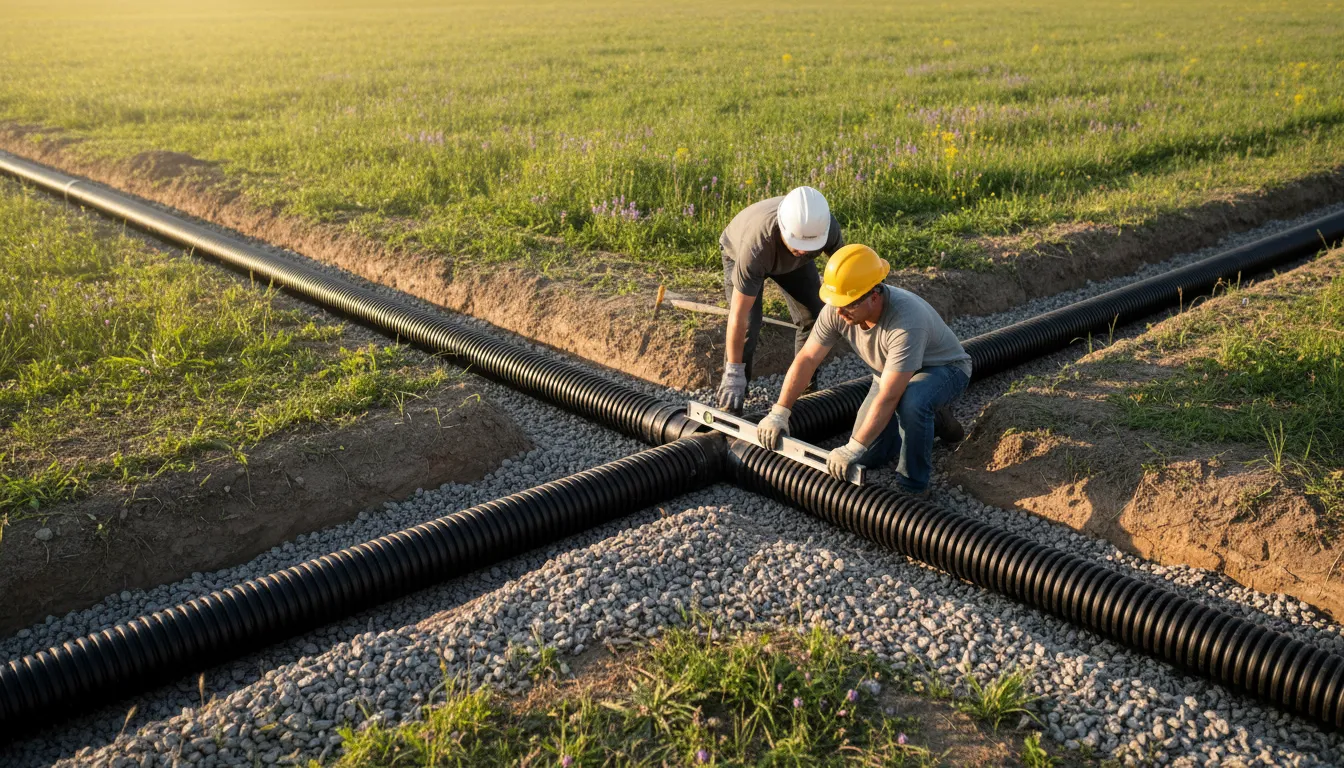
The drain field is the final stage of your onsite wastewater system. After solids settle in the septic tank, the liquid effluent flows into a network of perforated pipes buried in trenches filled with gravel. This effluent slowly seeps into the soil, where natural processes provide final treatment. A system fails when the soil can no longer absorb the water, often due to clogging, compaction, or hydraulic overload.
Common warning signs include:
- Sewage odors in the yard or home.
- Slow-draining sinks, tubs, and toilets.
- Gurgling sounds in plumbing.
- Standing water or unusually lush, green grass over the drain field area.
- Sewage backing up into the house.
If you notice any of these issues, it's crucial to act quickly. Ignoring a failing drain field can lead to more extensive environmental damage, costly property repairs, and potential health department violations.
Norman and Oklahoma Regulatory Requirements
In Oklahoma, all septic system work, including drain field repair, leach field replacement, and new installations, is regulated by the Oklahoma Department of Environmental Quality (DEQ). Norman property owners must adhere to these state-wide rules.
Permit is Mandatory: Before any shovel hits the ground, a DEQ permit must be secured for any modification, repair, or replacement of a malfunctioning system. Starting work without a permit can result in fines and orders to remove unapproved work.
Certified Professionals Required: All repairs and installations must be performed by a DEQ-certified installer. Alternatively, the work can be inspected by DEQ personnel before it is covered (backfilled). This ensures the system is built to code and will function properly.
The Repair Area: Oklahoma law requires that a designated "repair area" be identified for every septic system. This is a space on your property, separate from the original drain field, that is suitable for a replacement system if the original fails. The size of this area is determined by soil properties and the number of bedrooms in the house 1.
The Site Evaluation and Design Process
Replacing a leach field isn't a one-size-fits-all job. The entire process is dictated by the conditions on your specific property. The first and most critical step is a professional site evaluation.
Soil Evaluation: A licensed professional will conduct tests, including a percolation (perc) test, to determine the soil's absorption rate. The system design is heavily influenced by soil texture (e.g., sand, loam, or clay content) and color. Finer, clay-heavy soils have slower absorption rates and therefore require larger drain fields to handle the same amount of wastewater.
Site Constraints: There are strict setback requirements. For instance, systems cannot be placed within 1,320 feet of certain protected water sources like streams, rivers, or lakes 2. The evaluator will also note the slope, bedrock depth, and water table level.
Home Assessment: The system must be sized for the home's capacity, which is primarily based on the number of bedrooms (a proxy for potential occupants). It's important to note that if you renovate your home and add a bedroom, or significantly increase water usage, you may need a new permit to modify or upsize your system 3 4.
Find the perfect drain field repair companies for your needs
Get personalized recommendations and expert advice
Types of Systems and Associated Costs
The type of system your property can support-and its cost-is a direct result of the site evaluation. Here's a breakdown of common options and their price ranges in the Norman area.
Conventional Gravity System: This is the most common type, where effluent flows by gravity from the tank to the drain field. It's suitable for properties with permeable soil and adequate slope. The cost for a conventional system, including a new absorption field, typically ranges from $3,000 to $7,000 5.
Aerobic Treatment Unit (ATU): For sites with poor soil or high water tables, an ATU may be required. These systems use oxygen to break down waste more thoroughly before the effluent is dispersed, often via a spray field. They are more complex and expensive, generally costing between $10,000 and $15,000+ 6.
Drain Field Repair/Replacement Cost: The cost to replace the drain field itself is a major component. A local estimate for Norman for a conventional system replacement falls in the range of $6,523 to $7,751 7. Nationally, the cost to replace both the septic tank and drain field can average around $7,000, but this can vary widely based on system type and site conditions 8.
Financial Assistance: The Oklahoma Conservation Commission administers a Statewide Septic Program that may provide funding assistance for repairing or replacing failing systems for qualifying homeowners. Eligibility often considers household income, with one program targeting owners making less than $150,000 per year 9.
The Installation and Inspection Timeline
Once the permit is in hand and a system is designed, the installation process begins. Understanding the timeline can help manage expectations.
- Excavation and Installation: The certified installer will excavate the designated repair area, install the new tank (if needed) and the network of pipes and gravel for the new leach field.
- Pre-Cover Inspection: This is a critical checkpoint. Before any soil is backfilled over the new pipes, either the DEQ inspector or the certified installer must inspect the work to ensure it matches the permitted design and meets all code requirements 10 11 12.
- Backfilling and Restoration: After passing inspection, the trenches are carefully backfilled, and the yard is restored as much as possible.
- Final Steps: The installer will provide you with a "as-built" diagram showing the exact location of your new system components-a vital document for future maintenance or property sales.
Maintaining Your New Drain Field
Protecting your investment is key. Proper maintenance can extend the life of your new drain field for decades.
- Pump Regularly: Have your septic tank pumped every 3-5 years by a licensed professional to prevent solids from escaping into the drain field.
- Conserve Water: Spread out laundry loads and fix leaks to avoid hydraulically overloading the system.
- Mind What You Flush: Only human waste and toilet paper should go down the drain. Avoid chemicals, grease, wipes, and feminine hygiene products.
- Protect the Area: Never drive or park vehicles over the drain field, and avoid planting trees or deep-rooted shrubs nearby.
Frequently asked questions
Sources
Footnotes
-
On-Site Sewage Programs - DEQ - Oklahoma.gov - https://oklahoma.gov/deq/divisions/ecls/on-site-sewage-programs.html ↩
-
Soil-Based Septic System Decisions in Oklahoma - https://extension.okstate.edu/fact-sheets/soil-based-septic-system-decisions-in-oklahoma.html ↩
-
Basic Septic System Rules for Oklahoma - https://pods.okstate.edu/fact-sheets/PSS-2918pod.pdf ↩
-
Basic Septic System Rules for Oklahoma - https://extension.okstate.edu/fact-sheets/basic-septic-system-rules-for-oklahoma.html ↩
-
Land Buyers' Septic System Guide for Oklahoma - https://extension.okstate.edu/fact-sheets/land-buyers-septic-system-guide-for-oklahoma.html ↩
-
How Much Does a Septic System Cost in Oklahoma? - https://www.cycloneseptics.com/how-much-does-a-septic-system-cost-in-oklahoma/ ↩
-
Norman Septic Systems Costs & Prices - ProMatcher Cost Report - https://septic-systems.promatcher.com/cost/norman-ok-septic-systems-costs-prices.aspx ↩
-
Cost to Replace Septic Tank and Drain Field [2026 Data] | Angi - https://www.angi.com/articles/how-much-new-drain-fields-foot.htm ↩
-
Statewide Septic Program info - Oklahoma Conservation Commission - https://conservation.ok.gov/wp-content/uploads/2025/02/Statewide-Septic-Program-info-2.pdf ↩
-
Basic Septic System Rules for Oklahoma - https://extension.okstate.edu/fact-sheets/print-publications/pss/basic-septic-system-rules-for-oklahoma-pss-2918.pdf ↩
-
Septic System Install Timeline | RCI Septic Service - https://www.rciseptic.com/complete-step-by-step-timeline-septic-system-installation-from-permit-to-finish ↩
-
Septic System Installation 101: A Beginner's Guide - https://www.townesseptic.com/blog/septic-system-installation-beginners-guide ↩