Find the Best Drain Field Repair Companies for Your Business
No obligation • Fast responses • Nationwide coverage

Why you can trust Septic Spot
Septic Spot is a leading United States resource for understanding and comparing septic services. Our editors review providers using consistent criteria and verify key business details. Listings and scores are independent, and companies cannot pay to influence our content.
Search providers near you
Top Drain Field Repair Companies in Philadelphia, Pennsylvania Ranked
A failing drain field, also known as a leach field or absorption area, is a serious issue for any home with a septic system. It means your wastewater can no longer be safely absorbed and treated by the soil, posing health and environmental risks. In Philadelphia, where some older or outlying properties still rely on onsite sewage systems, addressing drain field problems requires navigating specific Pennsylvania regulations and local soil conditions. This guide helps you understand the repair and replacement process, local requirements, and how to find qualified professionals to restore your system's function.

Understanding Your Drain Field and Common Failures
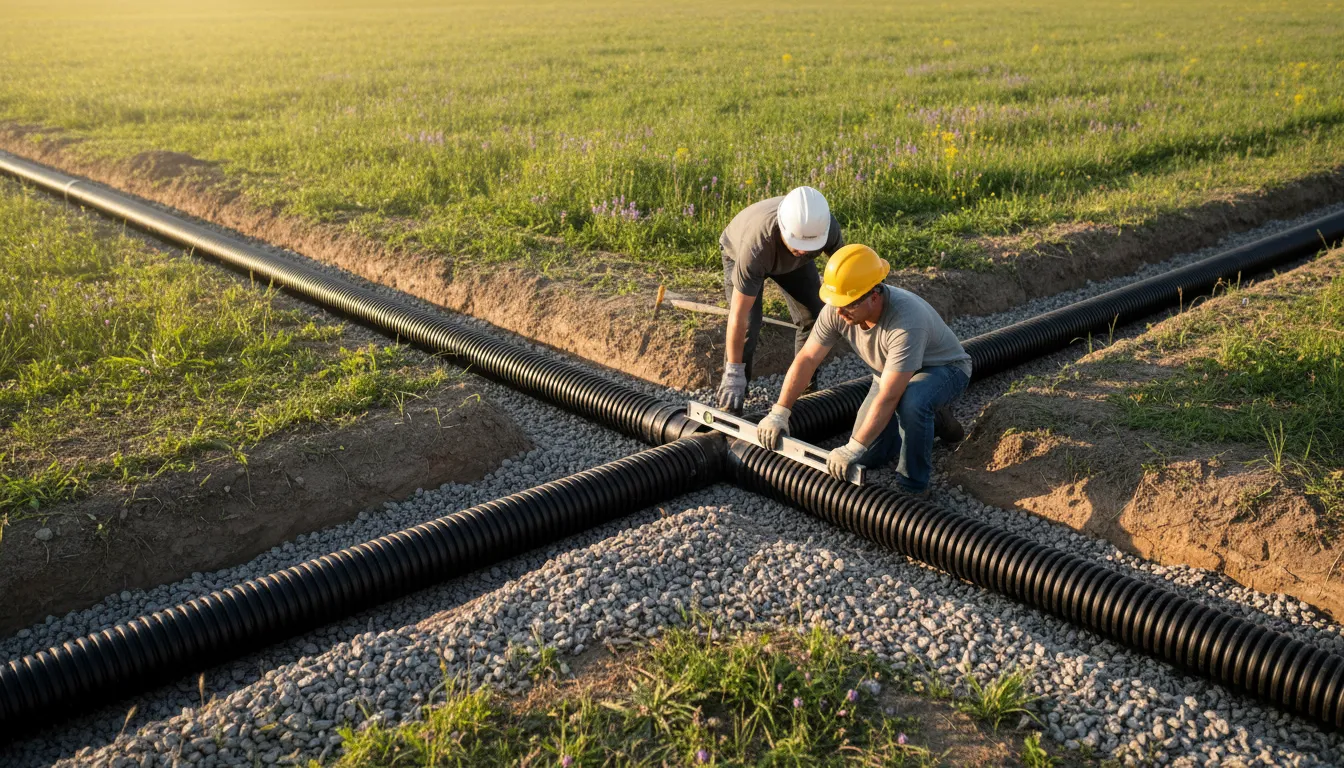
The drain field is the final, critical stage of a septic system. After solids settle in the tank, liquid effluent flows into a network of perforated pipes buried in trenches filled with gravel. This effluent slowly percolates into the soil, where natural processes purify it before it rejoins the groundwater. When this area fails, untreated sewage can surface in your yard, cause foul odors, or lead to backups in your home.
Common reasons for drain field failure in our area include:
- Soil Saturation: The dense clay soils common in Southeastern Pennsylvania absorb water very slowly. Over time, especially with high water usage, the soil can become permanently waterlogged.
- Physical Damage: Crushing from vehicle traffic, root intrusion from trees and shrubs, or a damaged distribution box can disrupt the flow.
- Biomat Clogging: A thick layer of organic matter and bacteria can form around the drain field pipes, essentially sealing them and preventing effluent from entering the soil.
- System Age and Lack of Maintenance: All components have a lifespan. Neglecting regular tank pumping allows excess solids to wash into and clog the drain field.
Philadelphia and Pennsylvania Regulatory Landscape
Before any shovel hits the ground, you must understand the legal requirements. All work on septic systems, including drain field repairs, is regulated in Pennsylvania.
- Permitting is Mandatory: You must obtain a permit from your local township's Sewage Enforcement Officer (SEO) before beginning any repair or replacement 1. The SEO will review your site plan and ensure the proposed solution meets state code.
- PA DEP Standards: Repairs must comply with the Pennsylvania Department of Environmental Protection's (PA DEP) regulations for on-lot sewage systems. A key rule is maintaining a minimum of four feet of suitable soil between the bottom of the drain field and the seasonal high water table or bedrock.
- Philadelphia Specifics: While most of the city is connected to the public sewer system managed by the Philadelphia Water Department2, some properties, particularly in more rural sections of the city, may use private septic systems. These systems fall under the same state permitting process, often requiring contractors with specific septic licensing.
The Professional Assessment: Site Evaluation and Inspection
You cannot fix what you haven't properly diagnosed. A professional evaluation is the essential first step to determine the exact cause of failure and the viable solutions.
- Site Inspection and Deep Probe: A licensed contractor or SEO will perform a "deep probe" to examine your soil's texture, structure, and depth to limiting factors like bedrock or water tables. This determines the soil's long-term acceptance rate.
- Percolation Test: Often called a "perc test," this measures how quickly water drains through a prepared hole in your soil. The results directly influence the size and type of drain field required3.
- Comprehensive System Inspection: For real estate transactions or a full health check, professionals follow standards like those from the PA Sewage Management Association (PSMA). This involves inspecting the tank, distribution box, and the drain field for signs of surfacing sewage or hydraulic failure4 5.
Repair vs. Replacement: Understanding Your Options
The solution depends on the extent of the damage and your site's conditions.
Minor Repairs may be possible if the problem is isolated. This could involve:
- Repairing or replacing a crushed section of distribution pipe.
- Clearing root intrusions from lines.
- Fixing a malfunctioning distribution box to ensure even flow. Costs for these targeted fixes often start around $1,500.
Full Drain Field Replacement is necessary when the entire absorption area is clogged or hydraulically failed. This is a major project that typically involves:
- Abandoning the Old Field: The existing trenches must be properly taken out of service and often filled in, which may require a separate permit.
- Constructing a New Field: Installing a completely new network of trenches in a different, suitable location on your property. In Philadelphia's clay soils, this often requires a larger footprint than the original.
- System Upgrades: If soil conditions are poor (slow percolation) or space is limited, a standard trench system may not work. The solution may be an advanced system like an elevated sand mound, which uses a constructed bed of sand to treat effluent before it reaches the native soil.
Find the perfect drain field repair companies for your needs
Get personalized recommendations and expert advice
Cost Considerations for Drain Field Work in Philadelphia
Costs can vary widely based on system size, soil conditions, and the chosen technology. Always get multiple detailed quotes from licensed contractors.
- Drain Field Replacement: For a standard replacement system, homeowners can expect an average cost around $10,000, with a typical range from $5,000 to $12,000 6. This includes excavation, new piping, gravel, and labor.
- Advanced System Installation: If your site requires an elevated sand mound or other alternative technology due to poor soil or a high water table, costs increase significantly. Projects can range from $15,000 to over $30,0007 8.
- Permit Fees: Budget for permit fees, which can vary by township but often fall in the range of $100 to $2509.
- Inspection Fees: Professional site evaluations and percolation tests are separate costs but are critical investments to ensure the chosen solution will work.
Choosing a Qualified Contractor in Philadelphia
Selecting the right professional is crucial for a compliant, long-lasting repair.
- Verify Licensing and Insurance: Ensure the contractor is licensed for septic work in Pennsylvania and carries adequate liability and workers' compensation insurance.
- Check Local Experience: Choose a company familiar with Philadelphia and surrounding county regulations, as well as the specific soil challenges (like clay) in our region10 11.
- Ask for References and Detailed Quotes: A reputable contractor will provide references from past clients and a written, detailed quote that breaks down costs for materials, labor, permits, and site restoration.
- Confirm They Handle Permitting: A full-service contractor will typically manage the permit application process with the local SEO on your behalf.
Frequently asked questions
Sources
Footnotes
-
Septic Permits - Hellam Township, PA - https://www.hellamtownship.gov/permits/septic-permits/ ↩
-
Sewer Connection and Repair Manual - https://water.phila.gov/wp-content/uploads/files/sewer-connection-manual.pdf ↩
-
DEP/PA Fact Sheets on Sewage Disposal Systems - http://www.paupacktownship.org/forms/Fact_Sheets_Sewage.pdf ↩
-
On-Lot Septic System Inspections During Real Estate Transactions - https://extension.psu.edu/on-lot-septic-system-inspections-during-real-estate-transactions ↩
-
Septic Inspections, Testing & Design | Hapchuk, A Wind River Company - https://www.wrenvironmental.com/washington-county/residential/septic-inspections-testing-design/ ↩
-
How Much Does a Septic System Cost? Your Complete 2025 Guide - https://www.centralpennseptic.com/how-much-does-a-septic-system-cost-your-complete-2025-guide/ ↩
-
Drain Field Repair Pennsylvania: Cost and Options | Septic & Well Pro - https://septicandwell.com/articles/drain-field-repair-pennsylvania ↩
-
Cost to Replace Septic Tank and Drain Field [2026 Data] | Angi - https://www.angi.com/articles/how-much-new-drain-fields-foot.htm ↩
-
How much would it cost to replace septic tank ? - https://www.facebook.com/groups/361333991113349/posts/1867296640517069/ ↩
-
Septic System Basics - Penn State Extension - https://extension.psu.edu/septic-system-basics ↩
-
PROPOSED SEPTIC MANAGEMENT PROGRAM - https://northnewtontownship.com/download/SEWAGE-MANAGEMENT-PROGRAM-FLYER.pdf ↩