Find the Best Drain Field Repair Companies for Your Business
No obligation • Fast responses • Nationwide coverage

Why you can trust Septic Spot
Septic Spot is a leading United States resource for understanding and comparing septic services. Our editors review providers using consistent criteria and verify key business details. Listings and scores are independent, and companies cannot pay to influence our content.
Search providers near you
Top Drain Field Repair Companies in Pittsburgh, Pennsylvania Ranked
A failing drain field, also known as a leach field or absorption area, is a serious issue for any home with a septic system. It's the final and most critical stage where treated wastewater is safely returned to the soil. When this component fails, it can lead to sewage backups, soggy yards, and environmental contamination. This guide explains the unique challenges of drain field work in Western Pennsylvania, outlines the local regulatory process, and helps you understand your options for repair or a full system replacement.

Understanding Your Septic System's Drain Field
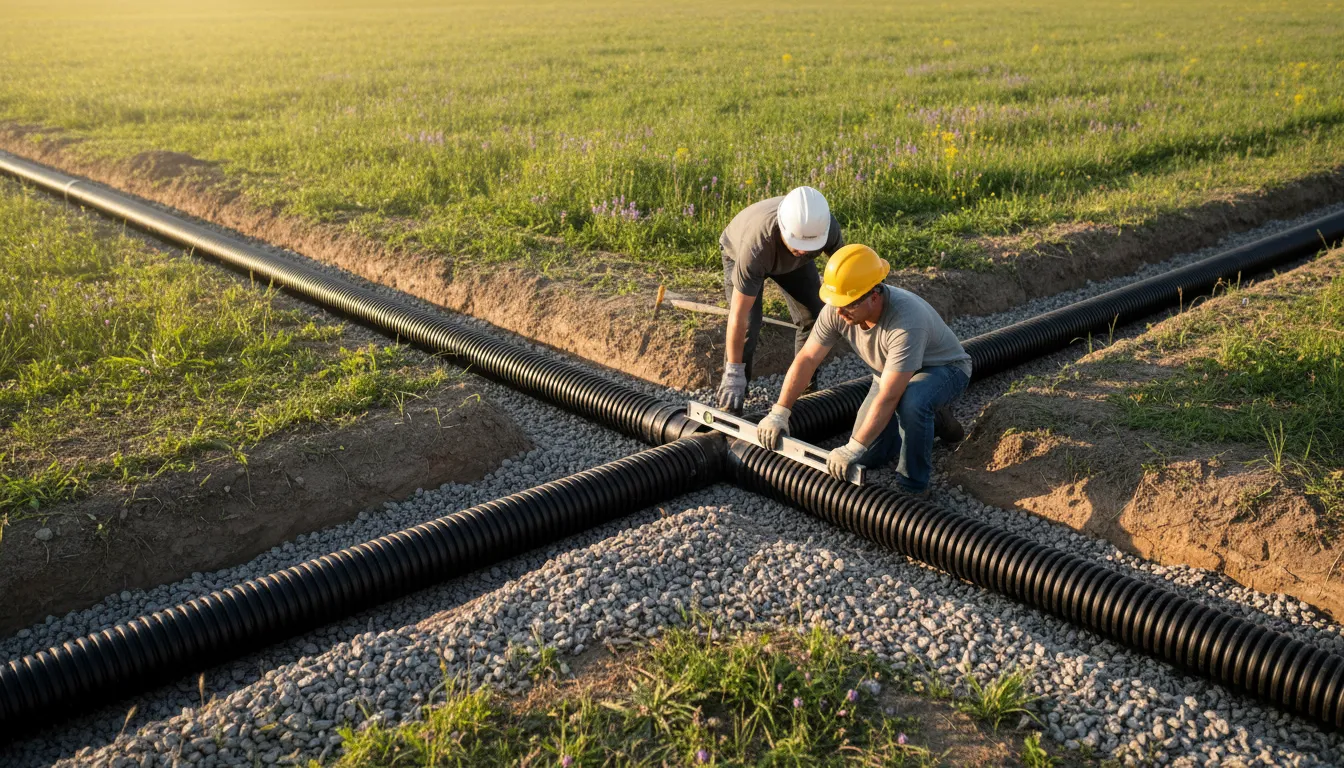
The drain field is a network of perforated pipes buried in trenches filled with gravel. After solids settle in the septic tank, the liquid effluent flows into these pipes and slowly percolates into the surrounding soil, where natural processes provide final treatment. A failure occurs when the soil can no longer absorb the water. Common signs include:
- Slow-draining fixtures throughout the house.
- Sewage odors near the tank or drain field area.
- Unusually lush, green grass or soggy, spongy ground over the field.
- Standing water or surfacing sewage.
If you notice these signs, it's crucial to act quickly to prevent health hazards and further property damage.
Pittsburgh-Area Regulations and Permits
All work on an on-lot sewage system in the Pittsburgh area requires official approval. For properties in rural parts of Allegheny County not served by the ALCOSAN sewer system, the Allegheny County Health Department is the permitting authority.
Key Permit Steps:
- Professional Inspection: Before any permit application, a licensed inspector (often a Pennsylvania Sewage Management Association or National Onsite Wastewater Recycling Association professional) must evaluate the entire system to confirm the failure and its cause1 2.
- Contact a Sewage Enforcement Officer (SEO): A county-licensed SEO must review your site and proposed solution. They will determine the necessary testing and approve the final design.
- Submit Application: Your chosen septic contractor will typically handle the permit application process with the SEO, including submitting the required site and design plans.
No construction, repair, or modification can legally begin without this permit3.
Unique Soil and Site Challenges in Western PA
The geology around Pittsburgh presents specific hurdles for drain field function and installation, making professional assessment non-negotiable.
- Shallow Bedrock: Limestone and other bedrock often lie very close to the surface, limiting how deep trenches can be excavated for a conventional system.
- Dense Clay Soils: Heavy clay is common and has a very slow percolation rate, meaning it absorbs water poorly. This is a frequent cause of system failure.
- Hilly Terrain: Slopes greater than 25% are considered landslide-prone and require special engineering. All systems need proper setback distances from wells, property lines, and buildings4.
These conditions mean a standard gravity-fed trench system often isn't viable. Instead, many properties require an alternative system, with the elevated sand mound being the most common solution in the region.
The Diagnostic Process: Soil Testing and Evaluation
Determining the right fix starts with understanding your property's soil conditions. The SEO will mandate a multi-phase evaluation.
- Site and Soil Evaluation (Phase I): A backhoe digs deep observation pits or a contractor uses a soil probe to determine the depth to bedrock or seasonal high water table. This costs approximately $275 (not including equipment rental).
- Percolation Test (Phase II): This test measures how fast water drains through the soil in inches per minute. It's essential for sizing the drain field. A professional perc test typically costs around $350 5.
Combined, this essential diagnostic testing often starts at about $625 or more.
Repair vs. Replacement Options and Costs
The solution depends on the extent of the failure, soil conditions, and local regulations.
Minor Repairs ($1,000 - $3,000): If the problem is isolated-such as a crushed pipe, clogged distribution box, or a small saturated area-a targeted repair may suffice 6.
Full Drain Field Replacement ($5,000 - $12,000+): When the entire absorption area has failed, installing a new conventional drain field is necessary. Cost depends heavily on size and excavation difficulty.
Alternative System Installation ($15,000 - $30,000+): For sites with poor soil, high water tables, or shallow bedrock, an engineered solution is required. An elevated sand mound system-where a suitable sand fill is imported and placed on top of the native soil-is a common, effective, but more expensive option for Pittsburgh-area homes7 8 9.
Find the perfect drain field repair companies for your needs
Get personalized recommendations and expert advice
Choosing the Right System for Your Property
Your SEO and contractor will recommend a system based on the Phase I and II test results.
- Conventional Trenches: Only possible if soil percolation is adequate and depth to bedrock/water table is sufficient.
- Sand Mound Systems: The go-to alternative for slow-percolating soils (like clay) or sites with a high water table. The mound allows for proper treatment before effluent reaches the restrictive layer 10.
- Other Alternatives: In some cases, aerobic treatment units (ATUs) or drip irrigation systems may be proposed, especially for sites with severe space constraints.
The Installation and Project Management Process
A major drain field project is a significant undertaking. Understanding the steps helps manage expectations.
- Design & Permitting: After testing, the engineer or contractor creates a site-specific design for SEO approval.
- Site Preparation: This involves clearing the area, which may include tree/root removal and grading.
- Excavation: Heavy equipment digs the trenches, bed, or mound area. This stage is where shallow bedrock can increase time and cost.
- Construction: Pipes, distribution boxes, gravel, and sand (for mounds) are placed according to the approved plan.
- Final Inspection: The SEO inspects the installation before it is covered. Once approved, the area is backfilled and seeded.
Remember to budget for ancillary costs like permit fees, landscaping restoration, and potential costs for pumping the septic tank during construction.
Maintaining Your New or Repaired Drain Field
Protect your investment with proper care:
- Practice Water Conservation: Spread out laundry and dishwasher use to avoid overwhelming the field.
- Divert Water: Ensure roof gutters and surface runoff are directed away from the drain field area.
- Never Drive or Build: Keep vehicles, sheds, and patios off the absorption area. The soil must remain uncompacted.
- Mind What You Flush: Only human waste and toilet paper should go down the drain. Avoid chemicals, grease, and non-biodegradable items.
- Pump the Tank Regularly: Have the septic tank pumped every 3-5 years to prevent solids from clogging the drain field11 12.
Frequently asked questions
Sources
Footnotes
-
On-Lot Septic System Inspections During Real Estate Transactions - https://extension.psu.edu/on-lot-septic-system-inspections-during-real-estate-transactions ↩
-
Pennsylvania Septic License & Certification | 2024 Contractor Guide - https://www.servicetitan.com/licensing/septic/pennsylvania ↩
-
Allegheny County PA Septic Permits & Regulations (2026) - https://septicandwell.com/pennsylvania/allegheny/regulations ↩
-
Septic Tank Plans: A Complete Homeowner's Guide - https://landperc.com/septic-tank-plans-guide/ ↩
-
Septic Systems | Department of Environmental Protection | Commonwealth of Pennsylvania - https://www.pa.gov/agencies/dep/residents/my-water/septic-systems ↩
-
Cost to Replace Septic Tank and Drain Field [2026 Data] | Angi - https://www.angi.com/articles/how-much-new-drain-fields-foot.htm ↩
-
What are the standard procedures and guidelines for septic system testing? | Carroll Valley, PA - https://www.carrollvalley.org/codes-enforcement-zoning/faq/what-are-standard-procedures-and-guidelines-septic-system-testing ↩
-
Drain Field Repair Pennsylvania: Cost and Options - https://septicandwell.com/articles/drain-field-repair-pennsylvania ↩
-
How Much Does a Septic System Cost? Your Complete 2025 Guide - https://www.centralpennseptic.com/how-much-does-a-septic-system-cost-your-complete-2025-guide/ ↩
-
Septic Drain Field Design: A Comprehensive Guide | Angi - https://www.angi.com/articles/septic-drain-field-design.htm ↩
-
New Homebuyer's Guide to Septic Systems - EPA - https://www.epa.gov/sites/default/files/2017-08/documents/170803-homebuyerssepticguide_508c.pdf ↩
-
Septic Systems Reports, Regulations, Guidance, and Manuals - https://www.epa.gov/septic/septic-systems-reports-regulations-guidance-and-manuals ↩