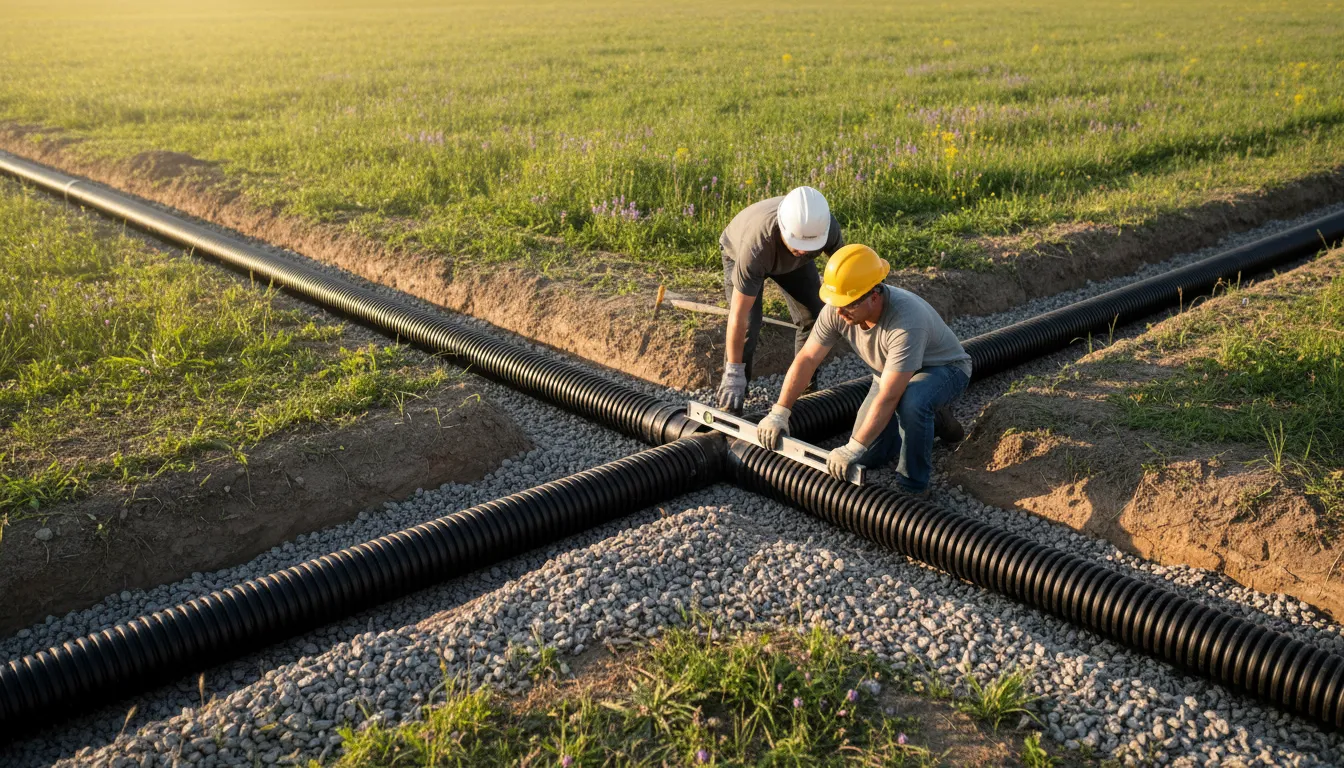
Find the Best Drain Field Repair Companies for Your Business
No obligation • Fast responses • Nationwide coverage

Why you can trust Septic Spot
Septic Spot is a leading United States resource for understanding and comparing septic services. Our editors review providers using consistent criteria and verify key business details. Listings and scores are independent, and companies cannot pay to influence our content.
Search providers near you
Top Drain Field Repair Companies in Edmonds, Washington Ranked
A failing septic drain field is a serious issue for any homeowner, signaling that your property's essential wastewater treatment system is no longer functioning properly. In Edmonds, addressing this problem quickly and correctly is crucial to protect your property value, your family's health, and the local environment, including the nearby Puget Sound. This guide explains the process, regulations, and costs specific to Snohomish County, helping you understand your options and connect with qualified local professionals who can assess, repair, or replace your leaching field.
Septic Response
672 7th Ave, Kirkland, WA 98033
Septic Response is a septic tank service provider based in Seattle, WA, offering a wide range of services including septic tank pumping, inspection, repair, installation, and drain field replacement. They serve King County, Snohomish County, and Pierce County with expertise in maintaining both traditional and advanced septic systems. Their capabilities include inlet pipe cleaning using jetting technology and comprehensive septic system maintenance tailored to local soil and environmental conditions. The company emphasizes preventative maintenance and environmental compliance to extend system lifespan. Septic Response operates 24/7 to support urgent septic needs.
The Septic Group (Formerly Woodinville Septic Service)
2822 Old Hartford Rd, Lake Stevens, WA 98258
The Septic Group (Formerly Woodinville Septic Service) is a septic service company based in Lake Stevens, serving Everett, WA, and the Greater Seattle area. With 60 years of experience, they provide septic tank pumping, inspection, repair, installation, and drain field replacement services. Their licensed experts conduct thorough system inspections, including mainlines and drainfields, and provide detailed pumping reports and county filings. The team also handles septic pump repair and replacement, offering personalized service throughout installation and maintenance.
Upfront Septic & Plumbing
600 1st Ave UNIT 516, Seattle, WA 98104
Upfront Septic & Plumbing is a septic service provider based in Seattle, WA, serving King and Pierce Counties. They offer septic tank pumping, inspection, repair, and installation services for various septic systems including aerobic and anaerobic tanks made of concrete, metal, fiberglass, or plastic. The company also handles drain field repair and provides emergency septic services available 24/7. Founded by David White, Upfront Septic aims to provide transparent pricing and straightforward service to local customers.
Sno Valley Underground
12113 221st St SE, Snohomish, WA 98296
Sno Valley Underground is a family-owned septic system repair and installation company based near Seattle, WA. They serve King, Skagit, and Snohomish counties, providing services such as septic system installations, expansions, repairs, and drain field replacements. The company offers expertise in traditional and aerobic septic tanks made of plastic, poly, or concrete. Founded by Tucker Jones, Sno Valley Underground emphasizes clear communication and thorough project management to meet customer expectations. Extended hours are available by appointment.
The Septic Group (Formerly Kingsgate Septic)
Everett, WA
The Septic Group (Formerly Kingsgate Septic) is a septic service company based in Everett, WA, serving the Greater Seattle area from Everett to Kent. With 60 years of experience, they provide septic system pumping, inspection, repair, installation, and drain field services. Their licensed experts conduct thorough inspections and file reports with local counties. The company handles septic pump repairs and replacements, ensuring efficient waste removal and system maintenance tailored to customer needs.
Understanding Your Septic System's Leach Field
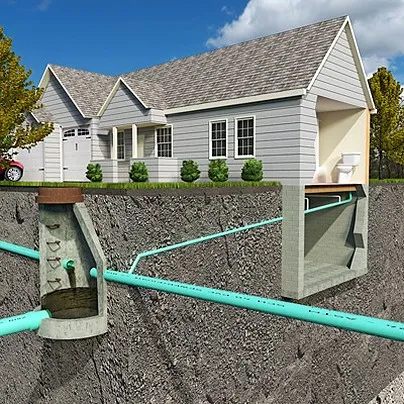
The drain field, also known as a leach field or absorption field, is the final and most critical stage of a conventional septic system. After solids settle in the septic tank, the liquid effluent flows into a network of perforated pipes buried in trenches filled with gravel. This effluent slowly percolates down through the soil, where natural processes filter out harmful bacteria, viruses, and nutrients before the water rejoins the groundwater. When this area becomes saturated, clogged, or damaged, it can no longer absorb and treat wastewater, leading to system failure.
Common signs of a failing drain field include:
- Sewage odors in the yard or home.
- Soggy, spongy, or standing water over the drain field area, even in dry weather.
- Slow-draining sinks, tubs, and toilets, or frequent backups.
- Unusually lush, green grass growing over the field.
Edmonds and Snohomish County Regulations You Must Know
All major septic system work in Edmonds is regulated by the Snohomish County Health Department. Undertaking repairs without following their protocols can result in fines and an uninhabitable property. Key regulations include:
- Licensed Professionals Required: Any repair or replacement must be performed by a state-licensed septic system designer and a certified installer. Homeowners cannot perform this work themselves.
- Permits are Mandatory: A "Repair Construction Installation Permit" is required from the county before any significant work begins on your leaching field.
- Mandatory Inspections: Washington state law requires septic systems to be inspected every 1 to 3 years, depending on the system type and capacity. A failing inspection is often the first step toward a major repair.
- Replacement Requirement: If the primary drain field has irreparably failed, county regulations typically require a suitable secondary area on your property for a new system to be designated.
The Step-by-Step Process for Drain Field Work
Navigating a drain field repair or replacement is a multi-stage process. Here's what Edmonds homeowners can expect:
- Locate System & Review Records: The first step is to find your system's "As-Built" drawing, which shows the exact location and design of your tank and drain field. These records are often available through the Snohomish County online database.
- Professional Inspection: A licensed septic professional will conduct a thorough inspection. This includes pumping the tank, checking baffles and outlets, and performing a percolation or "deep hole" test to evaluate the soil's absorption capacity in the drain field area 1.
- Evaluation & Cause Assessment: The professional will determine the cause of failure. Common causes include hydraulic overloading (too much water), root intrusion, soil compaction, or a degraded pipe network. The solution depends on the root cause.
- Design & Permit Submission: A licensed designer or engineer creates a repair or replacement plan that complies with all current county and state codes. This plan is submitted to the Snohomish County Health Department for permit approval 2.
- Construction & Final Inspection: A certified installer executes the approved plan. Critically, a mandatory pre-cover inspection by a county sanitarian must occur before the new drain field is covered with soil. This ensures the work meets the permitted design 3.
Find the perfect drain field repair companies for your needs
Get personalized recommendations and expert advice
Key Factors Influencing Your Project in Edmonds
The feasibility and cost of your drain field project depend heavily on your specific property conditions, which a professional will evaluate 4 5.
- Soil Suitability: The soil's texture, depth to bedrock, and percolation rate are the most critical factors. Edmonds' varied topography can mean clay-heavy soils or areas with a high seasonal water table, which may require an alternative system design like a mound or sand filter 6 7.
- Setback Requirements: County codes mandate minimum distances (setbacks) from the drain field to wells, property lines, streams, buildings, and slopes. A lack of space meeting these setbacks can complicate or limit repair options 8.
- Site Constraints: Steep slopes, large trees, and existing structures can limit where a new leaching field can be placed and may increase excavation costs.
- System Type: While conventional gravity-fed systems are most common, some properties may require pressure distribution, mound, or other alternative technologies, which impact cost and design complexity.
Cost Guide for Drain Field Repair and Replacement
Costs in Edmonds can vary widely based on the factors above. The following are typical price ranges, but always get multiple detailed quotes from licensed professionals.
- Minor Drain Field Repairs: Addressing a localized issue, such as replacing a clogged section of pipe or removing tree roots, typically ranges from $1,500 to $5,000.
- Complete Drain Field Replacement: Installing a brand-new leach field on your property generally costs between $5,000 and $12,000. In cases with difficult access, poor soil, or the need for an alternative system, costs can exceed this range.
- Full System Replacement: If both the septic tank and drain field must be replaced, homeowners should budget $10,000 to $20,000+ for a conventional system, and $15,000 to $30,000 or more for advanced alternative systems.
- Financial Assistance: Snohomish County offers resources like the Savvy Septic Program, which provides free training and may offer rebates (up to $500) for maintenance and inspections, helping to prevent catastrophic failures 9.
Important Disclaimer: The costs above are estimates. Your final project cost can be significantly affected by unforeseen site conditions, the need for engineering reports, permit fees, and landscaping restoration 10 11.
Maintaining Your New or Repaired System
Once your drain field is functioning again, proper maintenance is key to a long lifespan. This includes regular septic tank pumping (every 3-5 years), conserving water, avoiding pouring grease or chemicals down drains, and never driving or building over the drain field area. Keeping detailed records of all inspections, pumping, and repairs is also recommended for both maintenance and future property sales 12 13.
Frequently asked questions
Sources
Footnotes
-
Do-It-Yourself Septic System Inspection Field Guide - https://doh.wa.gov/sites/default/files/legacy/Documents/Pubs/337-121.pdf ↩
-
Septic Permit Steps | Snohomish County Health Department, WA - https://www.snohd.org/676/Septic-Permit-Process-Steps ↩
-
REPAIR PERMIT FOR A SEPTIC SYSTEM PROCEDURE ... - https://www.washingtoncountyor.gov/hhs/documents/repair-permit-pack/download?inline ↩
-
REPAIR PERMIT FOR A SEPTIC SYSTEM PROCEDURE & CRITERIA - https://www.washingtoncountyor.gov/hhs/documents/repair-procedure-and-criteria/download?inline ↩
-
Septic System Design & Installation in Texas: Expert Help - https://www.vdwws.com/blog/septic-system-design-and-installation-process ↩
-
Understanding Residential Water Wells & Septic Systems - https://support.explorekeyrealty.com/s/article/Understanding-Residential-Water-Wells-Septic-Systems ↩
-
How Deep Is a Septic Drain Field? - https://www.upfrontseptic.com/2025/10/19/how-deep-is-a-septic-drain-field/ ↩
-
Onsite Septic Program - https://www.co.coos.or.us/community-dev/page/onsite-septic-program ↩
-
Septic Systems | Snohomish County, WA - Official Website - https://snohomishcountywa.gov/2591/LakeWise-Septic-Systems ↩
-
Home Fails Septic Inspection in Washington: A Recovery Guide - https://davissepticdesign.com/home-fails-septic-inspection-in-washington-a-recovery-guide/ ↩
-
Septic System Pricing Guide for Washington State Homeowners ... - https://www.caringrealestate.com/blog/septic-system-pricing-guide-for-washington-state-homeowners-2025/ ↩
-
Caring for Your Septic System | Washington State Department ... - https://doh.wa.gov/community-and-environment/wastewater-management/septic-system/caring-your-system ↩
-
WA Septic System Rules Buyers Need to Know (2025-2026 Guide) - https://www.lanifisherhomesblogs.com/blog/wa-septic-system-rules-buyers-need-to-know-20252026-guide ↩