Find the Best Drain Field Repair Companies for Your Business
No obligation • Fast responses • Nationwide coverage

Why you can trust Septic Spot
Septic Spot is a leading United States resource for understanding and comparing septic services. Our editors review providers using consistent criteria and verify key business details. Listings and scores are independent, and companies cannot pay to influence our content.
Search providers near you
Top Drain Field Repair Companies in Lacey, Washington Ranked
A failing drain field is a serious issue for any home with a septic system, leading to soggy yards, unpleasant odors, and potential environmental health risks. Drain field repair and replacement involves diagnosing and fixing the underground network of pipes and soil that treats and disperses wastewater from your home. This guide explains the process, local regulations, and costs specific to Lacey, Washington, helping you understand your options and connect with qualified local professionals for an assessment.

Upfront Septic & Plumbing
2367 Tacoma Ave S Suite 201, Tacoma, WA 98402
Upfront Septic & Plumbing is a septic service provider located in Tacoma, WA, serving King and Pierce County. They offer septic tank pumping, inspection, repair, and installation services for various septic systems including aerobic and anaerobic tanks made of concrete, metal, fiberglass, or plastic. The company also handles drain field repairs and provides emergency septic services available 24/7. Founded by a local resident, Upfront Septic & Plumbing emphasizes transparent pricing and straightforward service to address septic system needs efficiently.
Bumblebee Services Inc.
9600 Canyon Rd E, Puyallup, WA 98371
Bumblebee Services Inc. is a septic and drain cleaning company based in Tacoma, WA. They provide a variety of septic services including pumping, inspections, repairs, installations, and troubleshooting. Their expertise includes hydro jetting to address blockages and clogs effectively. The company also offers site restoration services such as landscaping and grading to improve property appearance and safety. Bumblebee Services Inc. emphasizes a community-focused approach and maintains a small business atmosphere.

Alpha Bravo Septic And Drainage, Inc
Tacoma, WA 98405
Alpha Bravo Septic And Drainage, Inc is a septic tank and drainage service provider based in Tacoma, WA. They offer a range of services including septic tank pumping, inspection, repair, installation, and drain field repair or replacement. With nearly 15 years of experience, they handle residential and commercial septic and drainage systems, using specialized tools for inspections and repairs. Their capabilities include camera scoping, drain field jetting, and septic troubleshooting. Alpha Bravo serves a wide area including King and Pierce Counties, covering many local communities.
Understanding Your Septic System's Drain Field
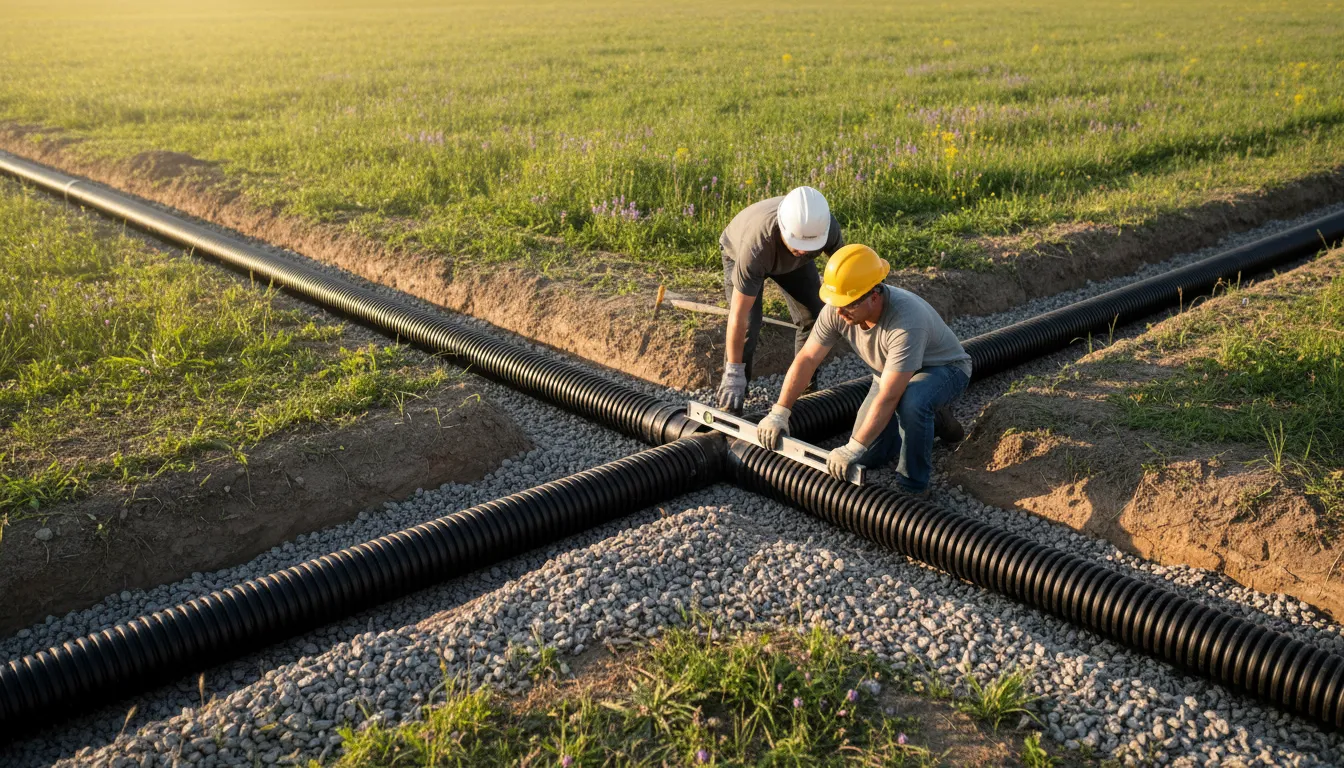
Often called a leach field or absorption field, the drain field is the final and most critical stage of your onsite sewage system. After solids settle in the septic tank, liquid effluent flows into a network of perforated pipes buried in trenches filled with gravel. This effluent slowly percolates into the soil, where natural processes provide the final treatment. When this area fails, wastewater can no longer be absorbed, leading to surface breakout and system backup. In Lacey and throughout Thurston County, the health of your drain field is directly tied to the suitability of your soil and the proper maintenance of the entire system 1.
Signs You Need Drain Field Repair in Lacey
Recognizing early warning signs can prevent a complete system failure and more costly repairs. Be alert for these common indicators:
- Soggy Ground or Surfacing Effluent: Persistent wet, spongy, or foul-smelling areas over your drain field, especially when it hasn't rained, are a primary sign of failure.
- Slow Drains and Sewage Backups: Gurgling pipes, slow-draining sinks and toilets, or sewage backing up into household drains can signal that the drain field is saturated and not accepting water.
- Unusually Green Grass: While a small amount of nutrients can encourage growth, patches of grass over the drain field that are drastically greener and lusher than the rest of the lawn may indicate effluent rising to the surface.
- Failed Inspection: During a mandated routine inspection (required every 1-3 years in Washington depending on system type), a professional may find that the soil is no longer absorbing effluent properly, signaling the need for repair 2.
The Lacey and Thurston County Regulatory Process
Any major repair or replacement of a septic system component in Lacey requires adherence to Thurston County Public Health regulations. You cannot simply hire a contractor to dig up and replace a leach field; a specific permitting process must be followed.
- Site Evaluation and Design: The first mandatory step is hiring a Licensed Septic Designer. This professional will conduct a thorough site evaluation, including new soil tests (percolation tests) to determine the current absorption rate and identify a suitable repair area. They will then design a system that meets current health code standards 3.
- Obtain a Permit: With the designer's plans, you must apply for a Repair Construction Installation Permit from Thurston County Environmental Health. This ensures the proposed repair meets all safety and environmental standards.
- Installation by a Licensed Contractor: The actual construction or replacement work must be performed by a Washington State-licensed septic installer.
- Final Inspection: Before the new or repaired drain field is covered with soil, a county health inspector must perform a "pre-cover" inspection to approve the workmanship and materials 4.
Key Factors Influencing Repair and Replacement
Several local conditions will directly impact the repair strategy and cost for Lacey homeowners.
- Soil and Site Conditions: Western Washington's varied soil types and high winter water tables are major factors. Your designer will assess soil depth, texture, and the seasonal high-water table level. Poor soils or high water tables may necessitate an advanced treatment system or a raised mound system, which increases complexity and cost 5 6.
- Reserve Area: Thurston County requires that an original septic system design include a designated "reserve area" for future expansion or repair. The availability and suitability of this area will dictate where a new drain field can be placed. If no viable reserve area exists, options become more limited and expensive 7 8.
- System Age and Type: Older systems may use cesspools or steel tanks that are prone to failure and no longer meet code. Replacing these often requires a full system upgrade to modern standards.
Find the perfect drain field repair companies for your needs
Get personalized recommendations and expert advice
Cost of Drain Field Repair and Replacement in Lacey
Costs can vary widely based on the factors above. The following ranges are typical for Western Washington, including the Lacey area 9 10 11:
- Site Evaluation and Design: Hiring a licensed designer and soil scientist for the required evaluation and engineering plans typically costs between $1,000 and $3,000.
- Conventional Drain Field Replacement: For a standard in-ground trench system where soil conditions are favorable, full replacement generally ranges from $5,000 to $12,000.
- Advanced System Replacement: If your site requires an alternative technology like a mound system, sand filter, or aerobic treatment unit (ATU) to overcome poor soil or space constraints, costs can easily exceed $20,000.
- Ongoing Costs: Remember to factor in the cost of routine inspections (every 1-3 years) and potential pumping, which are essential to protect your new investment and are legally required 12 13.
Financial Assistance: Low-income property owners in Thurston County may qualify for assistance programs to help cover the cost of necessary septic system repairs or replacements. It's worth inquiring with the county about available grants or low-interest loan programs 14.
Maintenance to Extend Your Drain Field's Life
Protecting a new or repaired leach field is crucial. Follow these best practices:
- Manage Water Use: Spread out laundry loads, fix leaking toilets and faucets, and install water-efficient fixtures to avoid hydraulically overloading the field.
- Divert Water: Ensure roof gutter downspouts, sump pump discharges, and surface runoff from patios or driveways are directed away from the drain field area.
- Protect the Area: Never drive, park, or build heavy structures (like sheds or patios) over the drain field. Soil compaction crushes the pipes and destroys the soil's absorptive capacity.
- Mind the Landscape: Plant only grass over the drain field. Tree and shrub roots should be kept at least 30 feet away, as they can seek out moisture and clog or rupture pipes.
- Pump and Inspect Regularly: Have your septic tank pumped as needed (typically every 3-5 years) to prevent solids from washing out into the drain field. Adhere to the state-mandated inspection schedule to catch small issues before they become big failures 15.
The Professional Assessment: What to Expect
When you contact a local licensed designer or installer for an assessment, they will typically:
- Review your property's existing "as-built" system diagram (if available).
- Locate and inspect the septic tank and distribution box.
- Probe the drain field area to assess soil saturation.
- Discuss the symptoms you're experiencing and your property's history.
- Explain the likely repair options and the subsequent steps for permitting and installation.
This professional evaluation is the essential first step toward resolving any drain field issue and restoring the proper function of your home's wastewater system.
Frequently asked questions
Sources
Footnotes
-
Caring for Your Septic System | Washington State Department of ... - https://doh.wa.gov/community-and-environment/wastewater-management/septic-system/caring-your-system ↩
-
WA Septic System Rules Buyers Need to Know (2025-2026 Guide) - https://www.lanifisherhomesblogs.com/blog/wa-septic-system-rules-buyers-need-to-know-20252026-guide ↩
-
REPAIR PERMIT FOR A SEPTIC SYSTEM PROCEDURE ... - https://www.washingtoncountyor.gov/hhs/documents/repair-permit-pack/download?inline ↩
-
5-Year Operations and Maintenance Permit - Guidelines - https://www.sbdd.org/pdfs/Criteria%20Manual%202015/5-Year%20Operations%20and%20Maintenance%20Permit%20-%20Guidelines.pdf ↩
-
REPAIR PERMIT FOR A SEPTIC SYSTEM PROCEDURE & CRITERIA - https://www.washingtoncountyor.gov/hhs/documents/repair-procedure-and-criteria/download?inline ↩
-
Drainfield Care - Large On-site Sewage System Fact Sheet - https://doh.wa.gov/sites/default/files/legacy/Documents/Pubs/337-150.pdf ↩
-
Do-It-Yourself Septic System Inspection Field Guide - https://doh.wa.gov/sites/default/files/legacy/Documents/Pubs/337-121.pdf ↩
-
Understanding and Caring for your Septic System Brochure - https://doh.wa.gov/sites/default/files/legacy/Documents/Pubs//337-086.pdf ↩
-
Home Fails Septic Inspection in Washington: A Recovery Guide - https://davissepticdesign.com/home-fails-septic-inspection-in-washington-a-recovery-guide/ ↩
-
Septic System Pricing Guide for Washington State Homeowners ... - https://www.caringrealestate.com/blog/septic-system-pricing-guide-for-washington-state-homeowners-2025/ ↩
-
Septic Systems - Washington State Department of Health - https://doh.wa.gov/community-and-environment/wastewater-management/septic-system ↩
-
Frequently Asked Questions - Thurston County - https://www.thurstoncountywa.gov/departments/public-health-and-social-services/environmental-health/septic-systems/frequently-asked-questions ↩
-
Care & Maintenance of Your Septic System | Thurston County - https://www.thurstoncountywa.gov/departments/public-health-and-social-services/environmental-health/septic-systems/care-maintenance-your-septic-system ↩
-
On Site Septic Systems (Thurston County Customers) - Lacey, WA - https://laceywa.qscend.com/311/knowledgebase/article/447 ↩
-
Maintaining Your Septic System | Clallam County, WA - https://www.clallamcountywa.gov/506/Maintaining-Your-Septic-System ↩