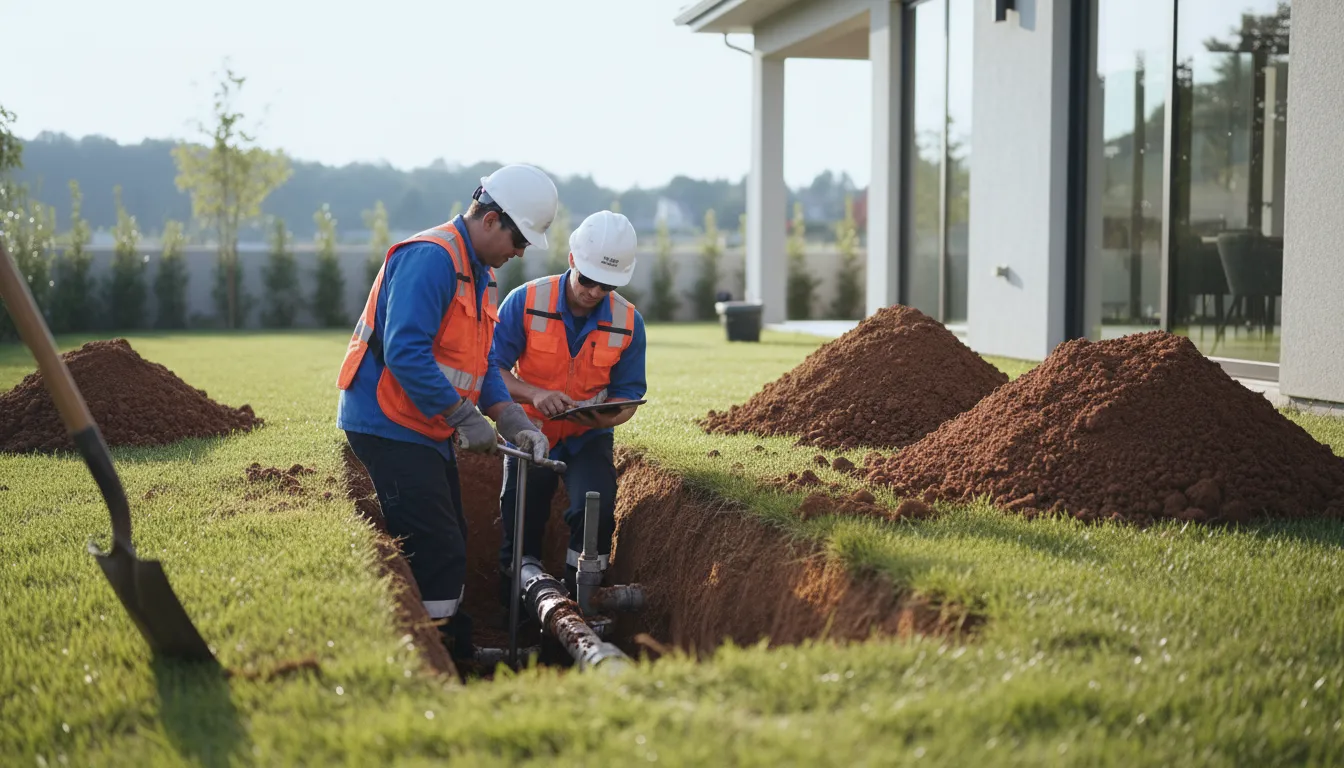
Find the Best Septic System Repair Companies for Your Business
No obligation • Fast responses • Nationwide coverage

Why you can trust Septic Spot
Septic Spot is a leading United States resource for understanding and comparing septic services. Our editors review providers using consistent criteria and verify key business details. Listings and scores are independent, and companies cannot pay to influence our content.
Search providers near you
Top Septic System Repair Companies in Columbia, Missouri Ranked
A failing septic system is a serious issue that can lead to property damage, environmental contamination, and health hazards. Septic system repair in Missouri involves addressing problems with your tank, drain field, or connecting pipes to restore proper wastewater treatment. This guide explains the state's specific regulations, common repair scenarios, and how to find qualified local professionals to ensure your system is fixed correctly and complies with all legal requirements.

Understanding Missouri's Septic System Regulations
All major septic system repairs in Missouri are governed by state regulations designed to protect public health and groundwater. The primary rule is 19 CSR 20-3.060, the Minimum Construction Standards for On-Site Wastewater Treatment Systems. These standards dictate everything from system design and materials to setback distances and soil requirements. Repairs must address underlying soil limitations and prevent groundwater contamination, which often necessitates a certified soil evaluation before work begins.
The permitting and enforcement of these rules are handled at the local level. You will work with your county health department or local building department to obtain the necessary approvals for repair work. It's crucial to contact them early in the process, as they can clarify what permits are needed for your specific situation and provide guidance on compliant solutions.
When is a Repair Permit Required?
Knowing when you need a permit is the first step in any septic repair project. The general rule is that any work beyond simple, minor fixes requires official approval from your local health authority.
- Major Repairs Requiring a Permit: Any project that involves replacing the septic tank, repairing or replacing the lateral drain field (absorption field), modifying the system's design, or installing a new system component requires a permit. This ensures the repair meets current standards for safety and performance.
- Minor Repairs That May Not Need a Permit: Simple tasks like fixing a broken pipe between your house and the tank, replacing a tank baffle, or cleaning out a blockage might not always trigger a full permit, depending on your local jurisdiction's rules 1.
- The "Minor Repair Permit": Some counties, like Boone County, offer a specific Minor Repair Permit (often with a fixed fee, such as $150) for limited-scope work. This can cover situations like repairing a collapsed tank section or cleaning a lagoon, providing a streamlined process for smaller jobs 2.
Always check with your local health department before starting any work. Proceeding without a required permit can result in fines and may complicate the sale of your property later.
Common Septic System Problems in Missouri
Missouri's diverse geography creates unique challenges for septic systems. Understanding these common issues can help you identify problems early.
- Drain Field Failure: This is often the most expensive problem. Symptoms include soggy ground over the field, sewage odors, and slow-draining household fixtures. Failure can be caused by soil compaction, hydraulic overloading, or biomat buildup.
- Tank Structural Issues: Cracks, collapse, or deterioration of concrete tanks can lead to leaks and soil contamination. Older tanks are particularly susceptible.
- Pipe Blockages or Breaks: Blockages in the inlet or outlet pipes, or broken pipes leading to the drain field, can cause backups and system failure.
- Pump Malfunctions: For systems with a pump to move effluent to the drain field, pump failure will halt the entire treatment process.
Find the perfect septic system repair companies for your needs
Get personalized recommendations and expert advice
The Critical Role of Soil and Site Evaluation
Before any major repair, especially one involving the drain field, a certified soil scientist must evaluate your property. Missouri's regulations are strict because the soil's ability to absorb and treat wastewater is the most important factor in a system's longevity and safety.
- Soil Limitations: High clay content, which is common in many parts of Missouri, restricts water percolation and can lead to premature system failure. Shallow bedrock, high water tables, and very sandy soils also present significant challenges 3.
- Setback Distances: Repairs must adhere to minimum distances from property features. For example, septic tanks must be at least 50 feet from a private well, and lateral fields must be at least 100 feet away 4. Other setbacks apply to buildings, property lines, and waterways.
- Site Constraints: Steep slopes (over 15%), floodplains, and limited space often require engineered, alternative systems that are more complex and costly to install and repair 5.
A proper soil evaluation will determine if a conventional repair is possible or if an alternative system is necessary.
Repair Costs and Timelines
The cost of septic system repair in Missouri varies widely based on the problem's severity and your site's conditions.
- Minor Repairs: Fixing a pipe, replacing a baffle, or servicing a pump typically ranges from a few hundred dollars to over $1,000.
- Major Repairs and System Upgrades: Replacing a failing drain field or installing a new septic tank is a significant investment. These projects often range from $3,000 to over $10,000, with costs climbing higher if poor soil conditions require an advanced treatment system 6.
- Timeline for Compliance: If your system is officially declared failing by a health department inspector, you are typically required to remediate the problem within 30 to 60 days. Planning and securing permits promptly is essential to avoid penalties.
Choosing a Qualified Repair Professional
For your safety and to ensure compliance, major repairs must be performed by a qualified expert. In Missouri, any substantial work should be done by a registered onsite wastewater professional 7 8.
When evaluating local septic repair companies:
- Verify they are registered with the state and insured.
- Ask if they handle the permit application process with the local health department.
- Request references from recent jobs similar to yours.
- Ensure they conduct or arrange for a proper soil site evaluation before proposing a repair solution.
- Get detailed, written estimates that break down labor, materials, and permit fees.
A reputable professional will be familiar with Missouri's code (19 CSR 20-3.060) and your county's specific requirements, guiding you toward a durable, legal solution.
Frequently asked questions
Sources
Footnotes
-
Resources | Onsite Wastewater Treatment | Health & Senior Services - https://health.mo.gov/living/environment/onsite/resources.php ↩
-
On-Site Wastewater Systems - Boone County - https://www.showmeboone.com/resource-management/on-sitewastewatersystems.asp ↩
-
Septic System Requirements - Columbia, MO - https://www.como.gov/wp-content/uploads/2021/03/Septic-System-Requirements-2020-fees-pdf.pdf ↩
-
An Onsite Wastewater Treatment System Owner's Manual - https://health.mo.gov/living/environment/onsite/pdf/SystemOwnersManual.pdf ↩
-
regulations & standards for on-site wastewater systems - https://greenecountymo.gov/files/files.php?id=1493 ↩
-
Septic Tank/Absorption Field Systems: A Homeowner's Guide to ... - https://extension.missouri.edu/publications/eq401 ↩
-
Onsite Wastewater Treatment | Health & Senior Services - https://health.mo.gov/living/environment/onsite/ ↩
-
Missouri Laws accompanied by - https://www.misscohealth.com/cmsAdmin/uploads/1/onsite_ref_book_001.pdf ↩