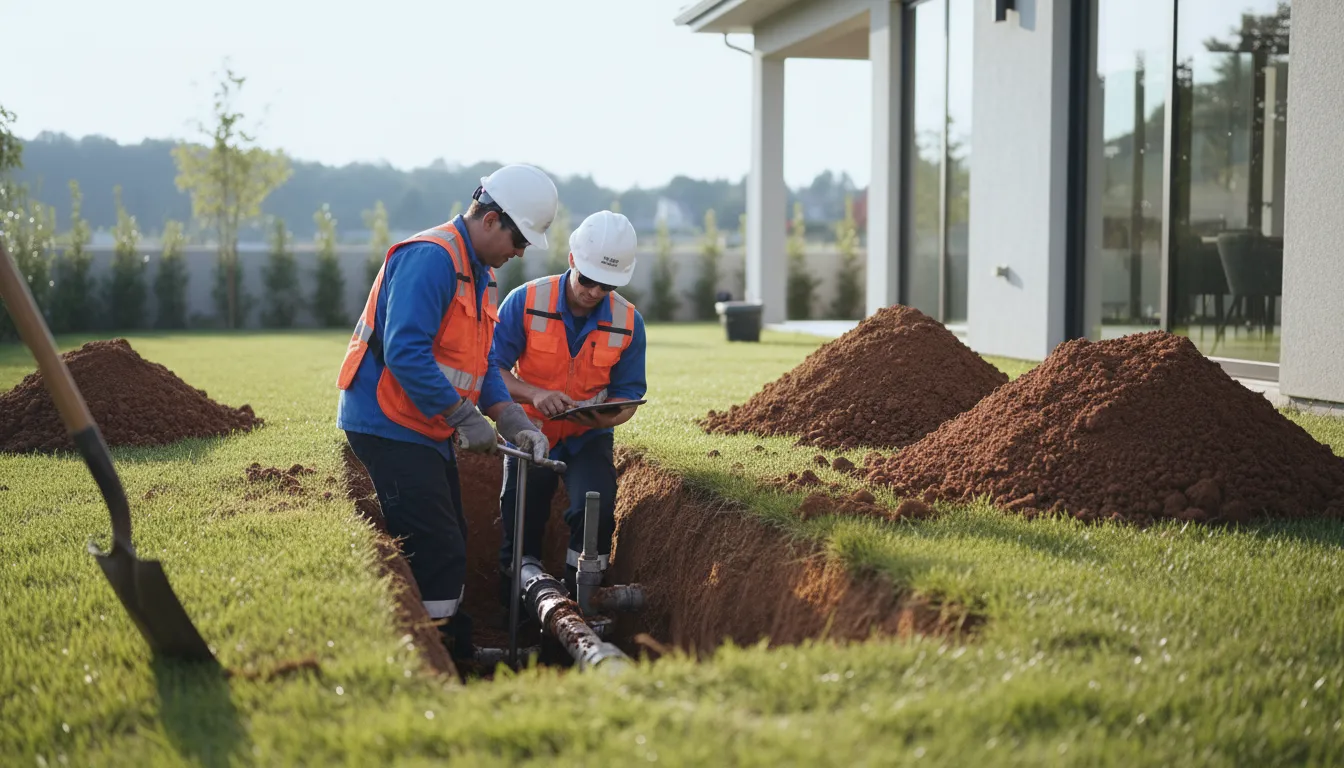
Find the Best Septic System Repair Companies for Your Business
No obligation • Fast responses • Nationwide coverage

Why you can trust Septic Spot
Septic Spot is a leading United States resource for understanding and comparing septic services. Our editors review providers using consistent criteria and verify key business details. Listings and scores are independent, and companies cannot pay to influence our content.
Search providers near you
Top Septic System Repair Companies in St Louis, Missouri Ranked
Maintaining a functional septic system is crucial for the health of your home and the local environment in St. Louis. When components fail, timely and proper septic system repair is essential to prevent backups, property damage, and contamination of groundwater. This guide explains the local repair process, common issues, and how to navigate St. Louis County's specific regulations to connect with qualified professionals who can restore your system's operation.
Superior Sewer Co
11084 Gravois Industrial Ct, St. Louis, MO 63128
Superior Sewer Co is a family-owned septic system repair company serving St Louis, MO, and the surrounding region including the Illinois border. With over 30 years of experience, they provide a wide range of sewer and plumbing services such as drain cleaning, sewer line replacements, trenchless repairs, and hydro jetting for tough blockages. Their team offers same-day inspections and typically completes services within 48 hours, focusing on efficient and fair solutions for sewer and plumbing needs.
Shults Septic Service, LLC
5656 Saxtown Rd, Millstadt, IL 62260
Shults Septic Service, LLC is a locally owned company based near St Louis, MO, specializing in septic system design, installation, inspection, and repair. They provide customized solutions tailored to each customer's specific septic needs and offer service and maintenance agreements to help keep systems functioning properly. Their team focuses on identifying problems accurately and delivering appropriate services to address them.
Understanding Septic System Failures and Repairs
A septic system is a complex onsite wastewater treatment system (OWTS) that relies on a delicate balance of mechanical and biological processes. Repairs can range from simple fixes to major overhauls. Common signs you may need septic work include slow drains, sewage odors in your yard, soggy ground or lush grass over the drain field, and gurgling sounds from your plumbing. Ignoring these signs can lead to complete system failure, which is far more costly and disruptive to address.
In St. Louis County, all septic system installations and repairs are strictly regulated to protect public health and groundwater. Before any significant work begins, a construction permit is typically required from the local health department or the Department of Transportation and Public Works. Major modifications must be performed by a contractor registered with the Missouri Department of Health and Senior Services (DHSS). Furthermore, all new or repaired plumbing must remain exposed until inspected and approved by a Code Official 1.
Common Types of Septic Repairs
Not all system problems require a full replacement. Many issues can be resolved with targeted repairs.
Minor Component Replacements: This is often the most straightforward and affordable type of septic service. It includes replacing damaged inlet or outlet baffles inside the tank, installing or repairing risers for easier future access, or fixing broken PVC piping that runs between your house and the septic tank. Replacing a clogged or damaged effluent filter is another common minor repair that can significantly improve system performance.
Pump and Mechanical Repairs: If your system includes a pump to move effluent to a drain field at a higher elevation, a failing pump is a critical issue. Repair or replacement of sewage injection pumps or grinder pumps falls under this category. These repairs require an electrician or specialist familiar with septic pump systems.
Drain Field Rehabilitation: When the soil absorption area (drain field) fails, it's often the most concerning and expensive problem. Repair options can include hydro-jetting to clear clogged distribution lines or installing new lateral lines to restore absorption capacity 2. In some cases, advanced technologies like drip irrigation systems or aerobic treatment units may be installed as part of the repair to enhance treatment and extend the life of the drain field.
Full System Replacement: If the tank is structurally compromised (cracked or collapsed) or the drain field is irreparably saturated, a complete system replacement is necessary. This is a major construction project that involves designing a new system compliant with current codes, obtaining permits, and significant excavation. Costs for this major work often exceed $10,000.
The Professional Inspection: Your First Step
Before any repair plan is formulated, a thorough professional inspection is indispensable. This evaluation provides a clear diagnosis of the problem and forms the basis for any repair estimates or permit applications.
A comprehensive inspection usually takes 1-2 hours and includes several key steps 3 4:
- Record Review: The technician will review any existing "as-built" diagrams and maintenance history for your system.
- Locating & Exposing: Finding and safely uncovering the tank and access ports.
- Visual Inspection: Checking the tank interior and exterior for leaks, cracks, and structural damage.
- Flow and Dye Test: Running water from the house and adding dye to check for proper drainage and identify blockages or surfacing effluent.
- Sludge and Scum Measurement: Using specialized tools to measure the levels of solids, which determines if immediate pumping is needed.
- Detailed Report: You will receive a written report with findings, photos, and recommended actions, which is crucial for repair planning and compliance 5 6 7.
In the St. Louis area, a standalone septic inspection typically costs between $300 and $550, while a combined well and septic inspection may range from $400 to $650 8.
Find the perfect septic system repair companies for your needs
Get personalized recommendations and expert advice
Navigating St. Louis County Regulations and Permits
Understanding local rules is non-negotiable for septic system repair. St. Louis County and the State of Missouri have established clear protocols to ensure work is done safely and effectively.
Permit Requirements: A construction permit is required to install or repair an On-Site Wastewater Treatment System (OWTS) on residential property 9 10. The permitting authority is typically the St. Louis County Department of Transportation and Public Works for lateral repairs, while the Missouri DHSS sets the overarching state standards (19 CSR 20-3.060) 9. You or your contractor must submit the proper application before commencing work.
The Point-of-Sale Inspection: This is a critical regulation for homeowners buying or selling property. If a septic system is deemed non-compliant during a property transfer inspection, the county may require a 100% repair cost to be held in escrow, or mandate that the repairs be completed within a specified period, often 12-24 months 11 12. This makes a pre-listing inspection a wise investment for sellers.
Financial Assistance Programs: St. Louis County operates a Sewer Lateral Repair Program (SLRP). For eligible emergency repairs, property owners may qualify for financial assistance. It is imperative to contact the SLRP before starting any repair work to check for coverage and follow their procedures 13. Failure to do so may void any potential reimbursement.
Cost Considerations for Septic Repairs
Repair costs vary widely based on the problem's severity and the system's complexity. Here's a general breakdown for the St. Louis region:
- Routine Pumping: Generally $200-$500, recommended every 3-5 years depending on usage 14.
- Minor Repairs: Installing risers or repairing a pipe can range from a few hundred to a few thousand dollars.
- Major System Replacement: As noted, this often exceeds $10,000, especially if advanced treatment components are required 15 16.
Always obtain multiple detailed estimates from licensed, registered contractors. Ensure the estimate includes all costs for permits, inspections, and restoration of your landscaping.
Disclaimer: Septic regulations and program details can change. Always confirm current requirements with the St. Louis County Department of Public Works or a licensed professional before initiating any repairs.
Frequently asked questions
Sources
Footnotes
-
St. Louis County Plumbing Code Notice - https://stlouiscountymo.gov/st-louis-county-departments/transportation-and-public-works/codes-and-ordinances/2019-plumbing-code/ ↩
-
SweenCo Sewer & Septic | St. Louis & Surrounding Areas - https://www.sweenco.com/ ↩
-
Preparing for Septic Tank Inspection: 7 Key Steps - https://septic911.com/preparing-for-septic-tank-inspection/ ↩
-
Septic Inspection Duration: Time & Steps Guide - https://crewssepticsolutions.com/how-long-does-a-septic-inspection-take-and-what-steps-are-involved/ ↩
-
What to Expect from a Septic Inspection - https://www.wrenvironmental.com/blog/2023/may/what-to-expect-from-a-septic-inspection/ ↩
-
Septic Tank Inspection: A Guide - Pete's Outflow Technicians - https://www.petesoutflow.com/septic-tank-inspection-a-guidee01bcb81 ↩
-
SEPTIC SYSTEM ELVALUATION - https://priorityinspectionservices.com/septic-system-elvaluation ↩
-
How Much Does A Well And Septic Inspection Cost In Missouri? - https://arc-homeinspections.com/well-septic-inspection-cost/ ↩
-
Onsite Wastewater Treatment | Health & Senior Services - https://health.mo.gov/living/environment/onsite/ ↩ ↩2
-
OWTS Construction Permit Application Process - https://health.mo.gov/living/environment/onsite/permitprocess.html ↩
-
Buying/Selling Property - St. Louis County - https://www.stlouiscountymn.gov/departments-a-z/planning-zoning/onsite-wastewater/buying-selling-property ↩
-
Form 3030: Disclosure & Transfer Agreement - St. Louis County - https://www.stlouiscountymn.gov/LinkClick.aspx?fileticket=wcV7ldDaY7A%3D&portalid=0 ↩
-
Welcome to City of Richmond Heights, MO - https://www.richmondheights.org/rh_sewer_lateral_repair_program/index.php ↩
-
Top 10 Best Septic Tank Services Near Saint Louis, Missouri - Yelp - https://m.yelp.com/search?find_desc=Septic+Tank+Services&find_loc=Saint+Louis%2C+MO ↩
-
SLRP - Information - St. Louis County Website - https://stlouiscountymo.gov/st-louis-county-departments/transportation-and-public-works/residential-sewer-lateral-repair/slrp-information/ ↩
-
An Onsite Wastewater Treatment System Owner's Manual - https://health.mo.gov/living/environment/onsite/pdf/SystemOwnersManual.pdf ↩