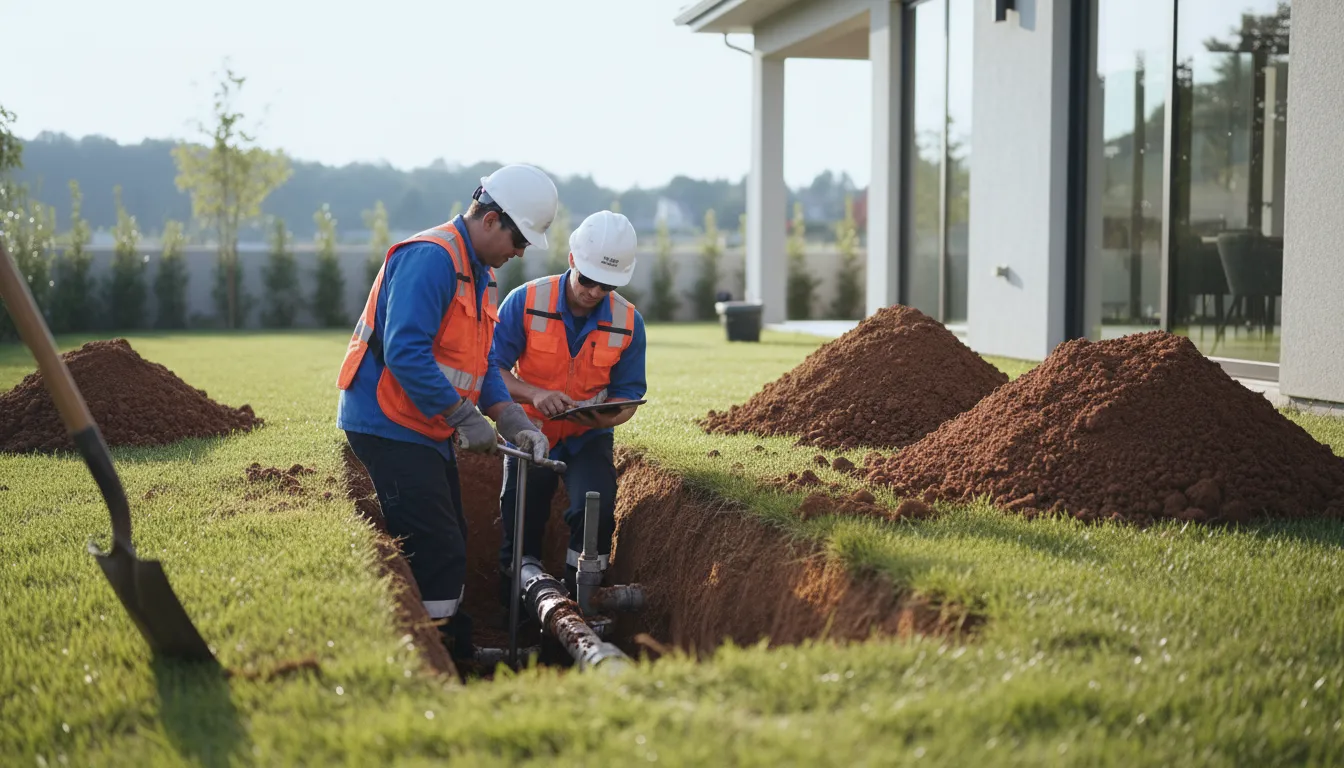
Find the Best Septic System Repair Companies for Your Business
No obligation • Fast responses • Nationwide coverage

Why you can trust Septic Spot
Septic Spot is a leading United States resource for understanding and comparing septic services. Our editors review providers using consistent criteria and verify key business details. Listings and scores are independent, and companies cannot pay to influence our content.
Search providers near you
Top Septic System Repair Companies in St Charles, Missouri Ranked
When your home's on-site wastewater treatment system shows signs of trouble-like slow drains, soggy ground, or unpleasant odors-timely and professional repair is essential. In St. Charles, these systems are a critical part of your property's infrastructure, and their proper function is regulated to protect public health and the local environment. This guide explains the common issues that require septic system servicing, the local rules you must follow, and how to connect with qualified professionals who can diagnose and fix problems correctly.
Understanding Septic System Regulations in St. Charles County
Residential septic systems, officially called On-site Wastewater Treatment Systems (OWTS), are strictly regulated by the St. Charles County Division of Building and Code Enforcement 1. The primary goal is to prevent groundwater contamination and protect public health. This means nearly all repair work requires permits and must be performed by licensed professionals. A key regulation involves property transfers: sellers must have their system inspected by a third-party, county-licensed inspector, and any defects found must be repaired by a licensed installer before the sale is finalized.
Key Regulatory Points:
- Permits Are Required: A permit is needed for any repair, alteration, or expansion of an OWTS. Minor maintenance like cleaning filters or replacing a pump with an identical model may be exempt, but it's best to check 2.
- Licensed Professionals Only: All septic repair and installation work must be done by an OWTS Installer licensed with St. Charles County 3.
- System Standards: For repairs involving tank replacement, new tanks are generally required to be Aerobic Treatment Units (ATUs) that meet NSF Standard 40, Class 1 4.
- Setback Rules: Repairs must respect property setbacks. For example, septic tanks must be at least 10 feet from building foundations, and drain fields have specific required distances from wells and property lines 5.
Common Septic Repairs and Servicing Needs
A malfunctioning wastewater system can fail in several ways. Understanding the common issues helps you communicate effectively with a service provider.
Tank-Related Issues:
- Structural Damage: Cracks in the concrete tank, broken inlet/outlet pipes, or damaged baffles and tees can allow solids to escape into the drain field, causing premature failure.
- Access Problems: Broken or missing risers and manhole covers make routine pumping and inspection difficult and unsafe.
Drainfield (Lateral Field) Failure: This is often the most serious and costly repair. Signs include surfacing sewage, persistently soggy soil, or unusually lush grass over the field. Causes include:
- Clogging: A biomat (layer of sludge) can form, preventing effluent from percolating into the soil.
- Physical Damage: Pipes can collapse or become crushed by soil compaction or root intrusion.
- Hydraulic Overloading: Consistently overloading the system with too much water prevents proper treatment and drainage.
Aerobic System Component Repair: Many modern systems in the area are Aerobic Treatment Units (ATUs) or use Low-Pressure Dosing (LPD). These have mechanical and electrical parts that can fail:
- Pump Failure: The pump that moves effluent from the tank to the drainfield stops working.
- Alarm Malfunction: Float switches or control panels that warn of high water levels need repair or replacement.
- Aerator Issues: The aerator that introduces oxygen into the treatment tank may fail, halting the treatment process.
System Upgrades and Replacements: Sometimes, repair isn't feasible, and a full system upgrade or replacement is necessary. This could involve replacing an old conventional system with a modern ATU or installing a completely new lateral field in a different location on the property.
Find the perfect septic system repair companies for your needs
Get personalized recommendations and expert advice
The Professional Repair Process: From Diagnosis to Completion
A proper repair follows a structured process to ensure the problem is correctly identified and fixed in compliance with county codes.
- System Locating and Evaluation: A technician will first locate all components-tank, distribution box, and drainfield-often using probe rods or consulting property records. They will then uncover access points.
- Tank Pumping and Inspection: To properly assess the tank's condition, it usually needs to be pumped. This allows the technician to check for cracks, inspect baffles, and measure sludge and scum levels 6.
- Diagnosing the Problem: The technician will perform tests, such as a dye test or a percolation test on the drainfield, to pinpoint the cause of failure. They will look for signs of surfacing effluent or saturated soil 7.
- Permitting and Repair Plan: For any significant repair, your licensed contractor will pull the required permit from St. Charles County. The repair plan must adhere to current code standards for materials and setbacks.
- Execution of Repair: The repair work is performed. This could range from replacing a pump and alarm to excavating and installing a new section of drainfield pipe and gravel.
- Final Inspection and Reporting: Once work is complete, the contractor will schedule a final inspection with the county (if required by the permit). For repairs done during a property sale, a maintenance affidavit must be submitted to the county to close the loop on the inspection report.
Understanding Costs and Potential Assistance
The cost of septic system servicing varies widely based on the problem's complexity.
- Inspection Costs: A standard septic inspection in Missouri typically ranges from $300 to $550 8.
- Permit Fees: In St. Charles County, a conventional system repair permit costs around $50, while a permit for an alternative system (like an ATU) is about $275 9.
- County Filing Fee: There is a $15 fee for submitting a maintenance affidavit to the county 10.
- Repair Costs: These can span from a few hundred dollars for a pump replacement to several thousand dollars for a partial or complete drainfield replacement, which involves significant excavation and materials.
- Local Assistance Program: The City of St. Charles offers a unique Residential Sanitary Sewer Lateral Insurance Program (SLIP). For eligible homeowners, it can cover 90% of repair costs for defective sewer laterals, up to $7,500, after a 10% homeowner co-pay 11. It's important to check if your specific septic issue qualifies under this program.
For the most official and up-to-date information on regulations, permits, and licensed contractors, homeowners are encouraged to visit the St. Charles County Septic Portal at www.stcseptic.com.
Maintaining Your System After Repair
Once your system is repaired, proper maintenance is key to preventing future problems and protecting your investment.
- Regular Pumping: Have your tank pumped every 3-5 years by a licensed hauler.
- Water Conservation: Spread out laundry loads and fix leaking faucets to avoid hydraulically overloading the system.
- Mind What You Flush: Only human waste and toilet paper should go down the drain. Avoid chemicals, grease, wipes, and feminine hygiene products.
- Protect the Drainfield: Never park vehicles or build structures over the drainfield, and divert rainwater runoff away from it.
Frequently asked questions
Sources
Footnotes
-
Septic System Inspections In St. Charles County - https://npiweb.com/gould/services/septic-inspections/ ↩
-
Sewage Tanks | St Charles County, MO - Official Website - https://www.sccmo.org/2179/Sewage-Tanks ↩
-
OWTS Permitting and Inspection | St Charles County, MO - https://www.sccmo.org/2175/OWTS-Permitting-and-Inspection ↩
-
Frequently Asked Questions - CivicPlus.CMS.FAQ - St. Charles County - https://sccmo.org/Faq.aspx?TID=51,24,22,25,26,23,27, ↩
-
Setbacks | St Charles County, MO - Official Website - https://www.sccmo.org/2176/Setbacks ↩
-
Septic Tank/Absorption Field Systems: A Homeowner's Guide to ... - https://extension.missouri.edu/publications/eq401 ↩
-
The Importance of Regular Septic System Inspections - https://www.allproplumbers.com/blog/the-importance-of-regular-septic-system-inspections/ ↩
-
How Much Does A Well And Septic Inspection Cost In Missouri? - https://arc-homeinspections.com/well-septic-inspection-cost/ ↩
-
Septic System Installation Permit Application - https://charlescountyhealth.org/wp-content/uploads/2025/07/2b-Septic-System-Installation-Permit-Application.pdf ↩
-
PRIVATE SEWAGE DISPOSAL CODE - St. Charles County - https://www.sccmo.org/DocumentCenter/View/22408/2021-Private-Sewage-Disposal-Code-Amendments ↩
-
City of St. Charles, Missouri Residential Sanitary Sewer ... - https://stcharlescitymo.gov/DocumentCenter/View/11742/SLIP-Application-2024- ↩