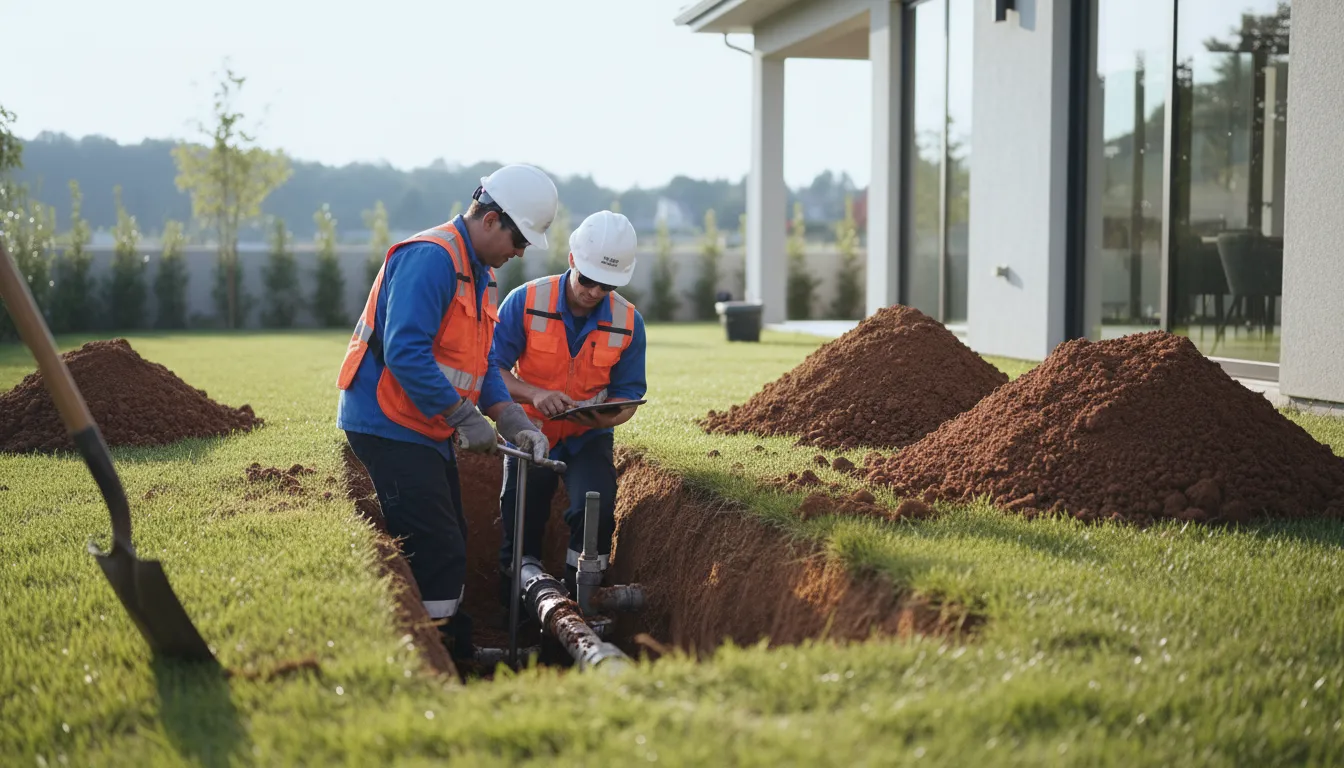
Find the Best Septic System Repair Companies for Your Business
No obligation • Fast responses • Nationwide coverage

Why you can trust Septic Spot
Septic Spot is a leading United States resource for understanding and comparing septic services. Our editors review providers using consistent criteria and verify key business details. Listings and scores are independent, and companies cannot pay to influence our content.
Search providers near you
Top Septic System Repair Companies in Beavercreek, Ohio Ranked
A properly functioning septic system is essential for protecting your home's value, your family's health, and the local environment in Beavercreek. When issues arise, timely septic system repair is critical to prevent backups, property damage, and regulatory violations. This guide helps you understand common repair needs, local regulations, and how to connect with qualified professionals who can diagnose and fix problems with your onsite wastewater treatment system.
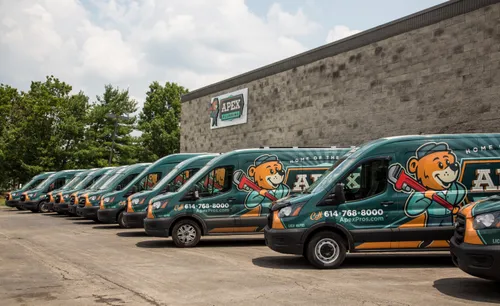
Apex Pros Plumbing, Electrical, Heating and Air
5450 Far Hills Ave Suite 209, Dayton, OH 45429
Apex Pros Plumbing, Electrical, Heating and Air provides a range of home services in Dayton, OH, including septic tank pumping, inspection, and septic system repair. The company also offers heating, cooling, plumbing, and electrical services, with experienced technicians using quality parts and tools. Apex Pros is known for handling various plumbing challenges such as clogged drains and sewer repairs, and they provide advanced drain cleaning techniques. Their team includes NATE-certified technicians skilled in HVAC and plumbing systems. They serve the Dayton area and emphasize thorough, reliable work.
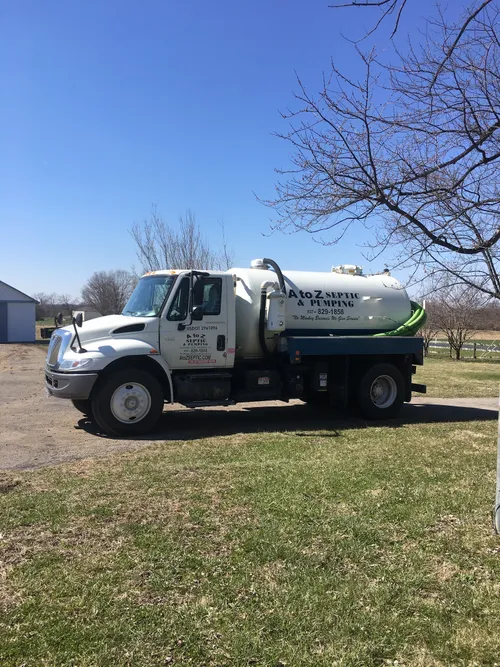
A to Z Septic and Pumping
Dayton, OH
A to Z Septic and Pumping provides a range of septic services in Dayton, OH, including septic tank pumping, inspection, installation, and repair. They also handle drain field repair and grease trap cleaning for both residential and commercial customers. The company offers expertise in maintaining and installing septic systems, ensuring effective wastewater disposal and environmental protection. Their services include emergency septic tank repairs and dumpster rentals for additional waste disposal needs. A to Z Septic and Pumping serves the Dayton area with experienced plumbing professionals who assist customers in managing wastewater safely and efficiently.
Understanding Your Septic System in Beavercreek
A residential septic system, or household sewage treatment system (HSTS), is a self-contained wastewater treatment plant on your property. It typically consists of a septic tank and a soil absorption field (drain field). Wastewater from your home flows into the tank, where solids settle and begin to decompose. The clarified liquid (effluent) then discharges into the drain field, where the soil provides final treatment. Keeping this system in good working order requires understanding its components and the local rules that govern them.
In Beavercreek and all of Montgomery County, these systems are regulated by Public Health - Dayton & Montgomery County. Ohio law requires that all systems be placed on an Operation & Maintenance (O&M) plan, which includes regular inspections by a registered contractor. This proactive approach is designed to catch minor issues before they become major, costly failures.
Common Septic System Repairs
Not every system problem requires a full replacement. Many issues can be resolved with targeted repairs. Here are some of the most common septic fixes performed by contractors in the Beavercreek area.
Component Replacement and Tank Maintenance
Over time, specific parts of your system can wear out or fail. Common component replacements include:
- Baffles and Filters: The inlet and outlet baffles in your tank are crucial for preventing scum and solids from escaping into the drain field. These can crack or deteriorate and need replacing.
- Pumps and Aerators: If your system includes a pump to move effluent to a raised drain field, or an aerator for an advanced treatment unit, these mechanical parts will eventually require service or replacement 1.
- Tank Pumping: While not a repair per se, regular pumping (typically every 3-5 years) is essential maintenance that prevents solids from overflowing and damaging the drain field 2. The Ohio Department of Health notes that pumping often costs between $100 and $200 as part of annual maintenance.
Drain Field and Pipe Repairs
Problems in the soil absorption area are often the most serious. Repairs here may involve:
- Pipe Jetting or Repair: Using high-pressure water to clear clogged distribution pipes in the drain field or repairing broken, crushed, or root-intruded pipes.
- Drain Field Restoration: Techniques to address a failing leach field, which may include adding additional lines or using specialized treatments to rejuvenate the soil's absorption capacity.
System Upgrades and Alterations
Sometimes, a repair involves upgrading part of the system to meet current standards or improve performance. This could mean installing a newer type of effluent filter or adding an advanced treatment component to reduce nutrient levels. It's important to note that any alteration or replacement of a system component requires a permit from the local health department.
When is a Repair Not Enough? Considering System Replacement
A key decision for any homeowner is whether to repair an existing system or replace it entirely. Repair is usually the first and most cost-effective option. However, replacement becomes necessary when:
- The drain field has completely failed and cannot be restored.
- The septic tank is structurally compromised (e.g., cracked, collapsing).
- The system is too small for the current household size.
- The cost of repeated repairs approaches or exceeds the cost of a new system.
A full system replacement is a significant investment, often costing thousands of dollars. Fortunately, financial assistance may be available for qualifying homeowners through the Ohio EPA's Water Pollution Control Loan Fund (WPCLF), which can provide low-interest loans or other aid accessed through the local health department 3 4.
Find the perfect septic system repair companies for your needs
Get personalized recommendations and expert advice
The Role of Inspections in Identifying Repair Needs
You can't fix what you don't know is broken. Regular professional inspections are the cornerstone of a sound O&M plan and are mandated by Ohio law. An inspection will pinpoint exactly what repairs are needed. Here's what a thorough inspection in Beavercreek typically involves:
- Visual Evaluation: The contractor will locate and inspect the tank, distribution box, and drain field area for signs of surfacing sewage, soggy soil, or unpleasant odors.
- Scum and Sludge Measurement: The inspector will measure the layers of scum and sludge in your tank to determine if pumping is needed.
- Component Check: For systems with pumps, aerators, alarms, or filters, each mechanical part is tested for proper operation.
- Distribution Inspection: The flow of effluent out of the tank and into the drain field is checked to ensure it is even and unobstructed.
The cost for a professional inspection in Ohio averages around $550, though it can range from $200 to $900 depending on the system's size and complexity 5. This is a critical investment that can save you from much larger repair bills down the line.
Navigating Beavercreek and Ohio Septic Regulations
Understanding the regulatory landscape is crucial when planning any repair. Working with a registered sewage system contractor is not just a recommendation-it's the law in Ohio. These professionals are certified by the state to ensure work is done correctly and safely.
Do you need a permit for your repair? The answer depends on the scope of work:
- Minor Repairs: Simple tasks like replacing a baffle or a pump often do not require a permit, but it's always best to confirm with Public Health - Dayton & Montgomery County.
- Alterations and Replacements: Any change to the system's design, capacity, or location, including replacing the tank or expanding the drain field, does require a permit 6.
Inspection Frequency: Your required inspection schedule is part of your O&M plan. Standard systems generally need inspection every 3 years. However, systems with mechanical components (like pumps or aerators) require annual inspections 7 8. Staying on schedule with these inspections keeps you in compliance and helps plan for maintenance costs, which the Ohio Department of Health estimates at $100-$200 annually for inspection and pumping 9.
Maintaining Your System to Minimize Future Repairs
The best repair is the one you avoid. Proactive maintenance extends the life of your system and protects your investment. Key maintenance habits include:
- Conserve Water: Spread out laundry loads and fix leaky faucets to avoid overloading the system.
- Mind What You Flush: Only human waste and toilet paper should go down the drain. Avoid chemicals, grease, wipes, and feminine hygiene products.
- Protect the Drain Field: Never park vehicles or build structures over the drain field. Keep roof drains and sump pumps directed away from it.
- Keep Records: Maintain a log of all inspections, pumpings, and repairs. This is valuable for your own planning and is often required for real estate transactions 10.
Frequently asked questions
Sources
Footnotes
-
Information for Homeowners - https://odh.ohio.gov/know-our-programs/sewage-treatment-systems/INFORMATION-FOR-HOMEOWNERS ↩
-
How to Care for Your Septic System | US EPA - https://www.epa.gov/septic/how-care-your-septic-system ↩
-
Home Sewage Treatment Systems (HSTS) - Ohio EPA - https://epa.ohio.gov/wps/portal/gov/epa/divisions-and-offices/environmental-financial-assistance/financial-assistance/home-sewage-treatment-systems-hsts ↩
-
Septic Repair vs Replacement in Ohio | SepTek Guide - https://www.septekservices.com/2025/05/22/the-difference-between-septic-repair-and-replacement-which-is-right-for-your-ohio-home/ ↩
-
How Much Does a Septic Inspection Cost? [2026 Data] - Angie's List - https://www.angi.com/articles/septic-inspection-cost.htm ↩
-
Understanding Ohio's Septic System Regulations - https://checkmateohio.com/understanding-ohios-septic-system-regulations/ ↩
-
Sewage Treatment Systems - Public Health - Dayton ... - https://www.phdmc.org/programs-a-to-z/household-sewage-treatment-system-program ↩
-
Ohio's Septic System Operation & Maintenance Regulations - https://supeckseptic.com/operation-maintenance-regs/ ↩
-
STS Components, Systems and Maintenance - https://odh.ohio.gov/know-our-programs/sewage-treatment-systems/information-for-homeowners/sts-components-systems-and-maintenance ↩
-
Septic Inspections for Real Estate in Ohio - SepTek - https://www.septekservices.com/2025/06/19/what-to-expect-during-a-septic-inspection-for-real-estate-transactions-in-ohio/ ↩