Find the Best Septic System Repair Companies for Your Business
No obligation • Fast responses • Nationwide coverage

Why you can trust Septic Spot
Septic Spot is a leading United States resource for understanding and comparing septic services. Our editors review providers using consistent criteria and verify key business details. Listings and scores are independent, and companies cannot pay to influence our content.
Search providers near you
Top Septic System Repair Companies in Nashville, Tennessee Ranked
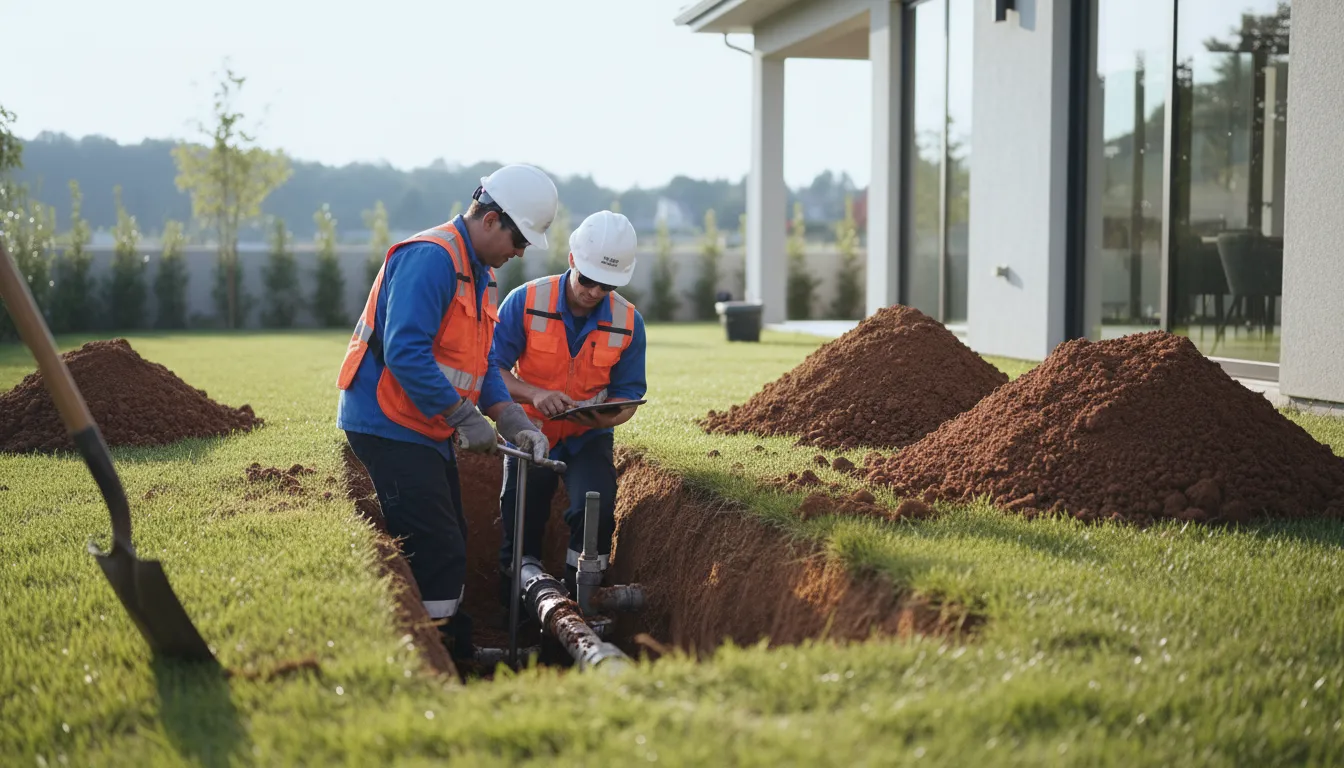
A failing septic system is more than an inconvenience; it's a serious health and environmental hazard that requires immediate professional attention. Septic system repair involves diagnosing and fixing issues with your onsite wastewater treatment system, from the tank to the drainfield. In Nashville, this work is strictly regulated to protect groundwater and public health, meaning repairs must be handled by licensed professionals following state guidelines. This guide will help you understand common septic problems, the repair process, local regulations, and how to connect with qualified specialists to restore your system's function.
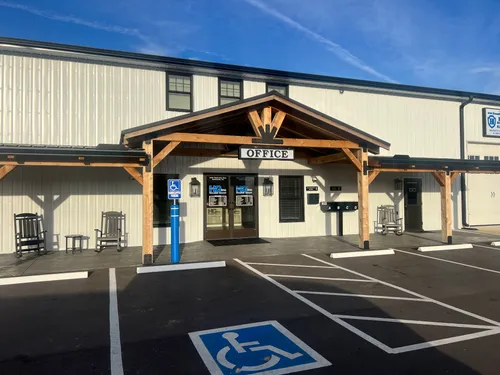
Holmes Services
2500 Nashville Hwy Suite A, Smithville, TN 37166
Holmes Services is an excavation and septic company serving Nashville, TN, and surrounding Middle Tennessee areas including Smithville, Lebanon, Cookeville, and Sparta. With 30 years of combined experience, they provide a wide range of services such as septic tank pumping, inspection, repair, and installation, alongside excavation work and material deliveries like gravel, topsoil, fill dirt, and sand. Holmes Services is licensed, insured, and bonded, offering after-hours service and a 24-hour emergency line to support their customers' needs.
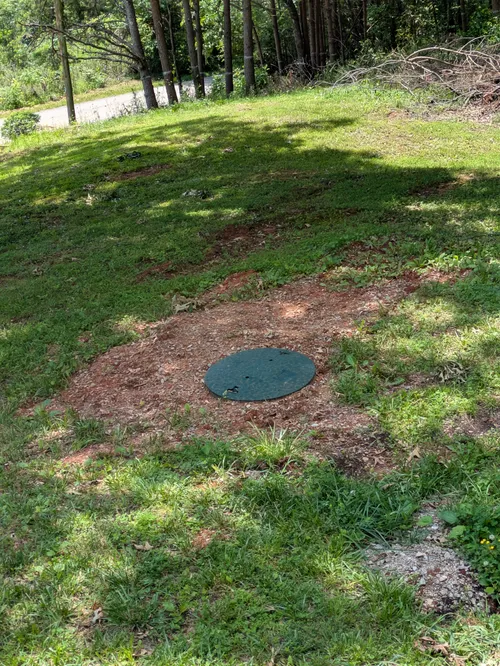
Septic Pros
143 Tara Dr, Cookeville, TN 38501
Septic Pros is a locally owned and operated septic tank pumping, repair, and installation company serving Nashville, TN, and the surrounding Middle Tennessee area. They provide septic services across Wilson County and neighboring counties, including Davidson, Sumner, Rutherford, and Williamson. The company offers 24/7 emergency service in Wilson County and specializes in septic tank pumping, system repairs, and new installations. Septic Pros emphasizes regular pump-outs to maintain system efficiency and prevent costly damage. The business is licensed and insured and has built a reputation for responsive and knowledgeable service.
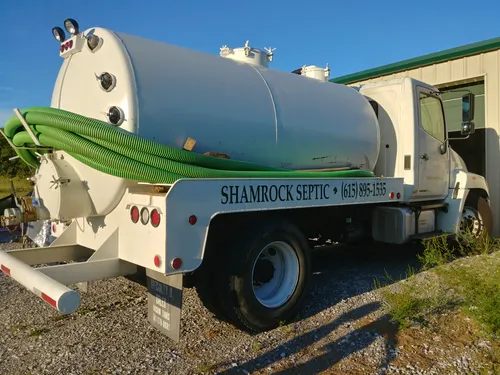
Shamrock Septic Service
250 Gatemouth Ln, Auburntown, TN 37016
Shamrock Septic Service has been providing septic system services in Nashville, TN, and the surrounding Rutherford County area since 2005. They offer septic tank pumping, inspections, repairs, installations, and drain field maintenance for both residential and commercial properties. Using modern equipment and proven techniques, Shamrock Septic Service focuses on maintaining and repairing septic systems to prevent costly backups and extend system life.

Scott Septic Tank Service LLC
10201 Manchester Pike, Christiana, TN 37037
Scott Septic Tank Service LLC is a locally owned company providing comprehensive septic system services in Nashville, TN, and surrounding areas. They offer septic tank cleaning, inspections, repairs, installations, field line restoration, and riser installation. The company emphasizes accurate evaluations and durable solutions tailored to local soil conditions and regulations. With over 60 years of experience, Scott Septic Tank Service focuses on long-term system performance and environmental protection through careful planning and proven methods.
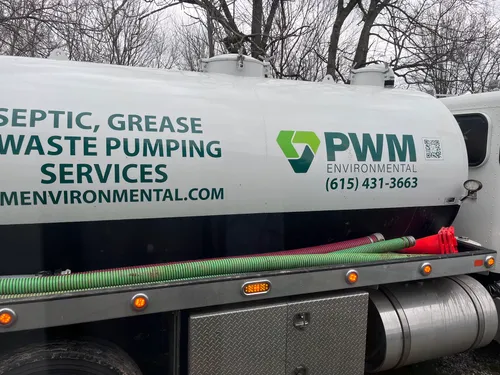
PWM Environmental
3403 Pleasant Grove Rd, White House, TN 37188
PWM Environmental is a family-owned septic service company based in Nashville, TN. They provide septic tank pumping, installation, repair, and inspection services for residential and commercial clients throughout Middle Tennessee and surrounding areas. Their capabilities include hydro jetting to clear clogged lines, camera inspections for accurate tank locating, and grease disposal. PWM Environmental uses modern equipment and a fleet of trucks to ensure compliance with EPA regulations.
Understanding Your Septic System and Common Failures
Your septic system is a self-contained wastewater treatment plant for your property. When functioning correctly, it safely processes household waste. A failure occurs when the system can no longer effectively treat or dispose of sewage. Common warning signs in Nashville homes include sewage backing up into household drains, foul odors around the tank or drainfield, soggy ground or surfacing sewage in the yard, and unusually lush, green grass over the drainfield 1. Slow-draining sinks and toilets are also early red flags. Ignoring these signs can lead to groundwater contamination, property damage, and costly enforcement actions from health authorities.
Nashville and Tennessee Regulatory Requirements
All septic system work in Davidson County, including repairs, is governed by the Tennessee Department of Environment & Conservation (TDEC) and local health departments. A critical first step for any repair beyond routine pumping is securing a permit. A permit is legally required for the construction, modification, or repair of any subsurface sewage disposal system (SSDS) 2. The application is submitted online and must include detailed site plans. Importantly, only a state-licensed installer or contractor can perform the permitted repair work 3 4. The system must also be completely contained within your property lines with specific setbacks from wells, property lines, and waterways. Permit processing can take up to 45 days after a complete application is received, so planning ahead is essential.
Types of Septic System Repairs
The scope of your septic repair in Nashville will depend on which component has failed. Here are the most common types of corrective work:
- Tank Pumping and Cleaning: Often the first step, this addresses a buildup of solids (sludge and scum) and is recommended every 3-5 years as preventative maintenance, not just a repair. It allows for a full inspection of the tank's interior.
- Tank Repairs: This includes fixing structural issues like cracks in concrete tanks, replacing broken inlet or outlet baffles (which are crucial for proper flow), or installing new access risers for easier future maintenance.
- Drainfield Repair or Replacement: This is often the most complex and expensive type of repair. A failing drainfield (or absorption field) may be clogged with biomat or have crushed pipes. Solutions range from cleaning lines to a partial or complete replacement of the field, which may involve installing new distribution lines, pipes, and gravel.
- Component Replacement: Replacing failed parts like the distribution box (D-box) or effluent filter can sometimes restore proper function without a full drainfield overhaul 5.
The Professional Diagnosis and Inspection Process
Before a repair plan is made, a thorough inspection is necessary to pinpoint the problem. A licensed professional will typically:
- Locate the System: Find the tank and drainfield boundaries using maps, probes, or electronic locating equipment.
- Visual Assessment: Check for surface evidence of failure, such as wet spots, odors, or effluent breakout 6.
- Tank Access and Level Check: Open the tank access ports to check the liquid level. A level higher than the outlet may indicate a drainfield backup.
- Pump and Inspect: Pump out the tank to inspect the interior structure, baffles, and tank walls for cracks, and to check for groundwater infiltration 7.
Find the perfect septic system repair companies for your needs
Get personalized recommendations and expert advice
Cost Considerations for Septic Repairs in Nashville
Septic system repair costs in the Nashville area vary dramatically based on the repair's complexity and the system's size and location. It's important to get multiple estimates from licensed contractors.
- Routine Inspection and Pump-Out: Generally ranges from $250 to $500 8.
- Minor Repairs: Fixing a baffle, replacing a filter, or repairing a small section of pipe may cost between $500 and $2,000.
- Major Repairs or Full System Replacement: This is where costs escalate. Replacing a drainfield or installing a completely new system can range from $10,000 to over $60,000, heavily dependent on soil conditions, lot size, topography, and the type of system required 9 10.
- Permit Fees: Separate from labor and materials, permit fees paid to TDEC will vary based on the type and scale of the repair.
Proactive Maintenance to Avoid Major Repairs
The best repair is the one you can avoid. Proactive maintenance is key to extending your septic system's life and preventing catastrophic failures.
- Pump Regularly: Have your tank inspected every 1-3 years and pumped every 3-5 years, or as recommended by a professional based on your household size and usage 11.
- Practice Water Conservation: Spread out laundry loads, fix leaking faucets, and use high-efficiency fixtures to avoid hydraulically overloading the system.
- Protect the Drainfield: Never drive or park vehicles over the tank or drainfield, as this can compact soil and crush pipes. Divert roof drains, sump pumps, and other surface water away from the area 12.
- Mind What You Flush: Only human waste and toilet paper should go down the drain. Avoid flushing chemicals, grease, wipes, and feminine hygiene products.
- Permit All Work: Always check with your local health department or TDEC Environmental Field Office before starting any work on your system 13.
Frequently asked questions
Sources
Footnotes
-
Septic System Repair: Essential Guidelines for Homeowners - https://smartsepticpros.com/blog/septic-system-repair-guidelines/ ↩
-
Health Department Notice Regarding Properties With Septic Systems - https://www.nashville.gov/departments/health/environmental-health/warranty-deed ↩
-
Septic System Installation - Rocky Top Septic Service, llc - https://rockytopseptic.com/service/septic-system-installation/ ↩
-
Tennessee Modernizes Septic System Permitting and ... - Esri - https://www.esri.com/about/newsroom/blog/tennessee-updates-permitting-systems ↩
-
Yard - TN.gov - https://www.tn.gov/health/cedep/environmental/healthy-homes/hh/yard.html ↩
-
Guidance for the Inspection of On-site Sewage Disposal Systems - https://www.mass.gov/guides/guidance-for-the-inspection-of-on-site-sewage-disposal-systems ↩
-
Septic Inspection Explained: What Homeowners Can Expect - https://www.townesseptic.com/blog/what-happens-during-a-septic-inspection ↩
-
New Homebuyer's Guide to Septic Systems - EPA - https://www.epa.gov/sites/default/files/2017-08/documents/170803-homebuyerssepticguide_508c.pdf ↩
-
Understanding and Inspecting Septic Systems - Flush Fellas - https://www.theflushfellas.com/understanding-and-inspecting-septic-systems ↩
-
How Much Does Failed Septic System Cost? - https://www.septicconnection.com/how-much-does-failed-septic-system-cost ↩
-
Frequent Questions on Septic Systems | US EPA - https://www.epa.gov/septic/frequent-questions-septic-systems ↩
-
Onsite Wastewater Treatment Systems "Septic Systems" - https://www.tn.gov/health/cedep/environmental/healthy-homes/hh/onsite-wastewater-treatment-systems.html ↩
-
Subsurface Sewage Disposal System (SSDS) Frequently Asked Questions - https://www.tn.gov/environment/permit-permits/water-permits1/septic-systems-permits/ssp/ssds-faqs.html ↩