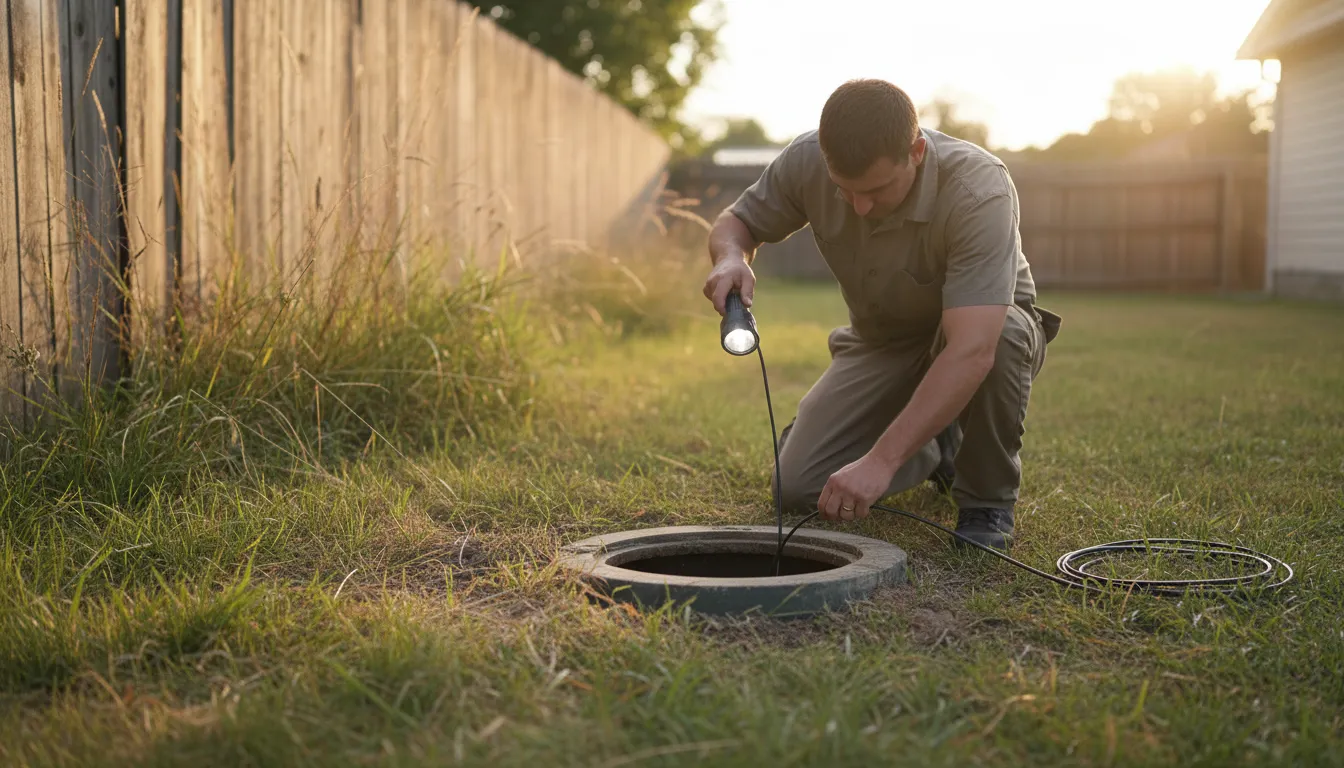
Find the Best Septic Tank Inspection Companies for Your Business
No obligation • Fast responses • Nationwide coverage

Why you can trust Septic Spot
Septic Spot is a leading United States resource for understanding and comparing septic services. Our editors review providers using consistent criteria and verify key business details. Listings and scores are independent, and companies cannot pay to influence our content.
Search providers near you
Top Septic Tank Inspection Companies in Fort Myers, Florida Ranked
A septic tank inspection is a critical evaluation of your onsite sewage treatment and disposal system, ensuring it is functioning safely and efficiently. In Fort Myers, where many homes rely on these private systems, a professional assessment is essential for protecting your property value, your family's health, and the local environment. This guide will help you understand the process, local regulations, and what to look for when seeking a qualified professional to evaluate your system.
Champion Plumbing Sewer & Drain LLC
931 NE 7th St Suite B, Cape Coral, FL 33909
Champion Plumbing Sewer & Drain LLC is a veteran and family-owned plumbing company based in Cape Coral, FL. They provide a wide range of services including septic tank pumping, inspection, repair, and installation, along with hydro jetting, video inspections, grease trap cleaning, backflow testing, lift station maintenance, and stormwater services. Their team uses advanced tools such as high-resolution cameras for plumbing inspections and offers hydro excavation services to minimize disruption during projects. With over 50 years of combined experience, Champion Plumbing Sewer & Drain serves multiple counties in Southwest Florida and offers 24/7 availability for plumbing emergencies.
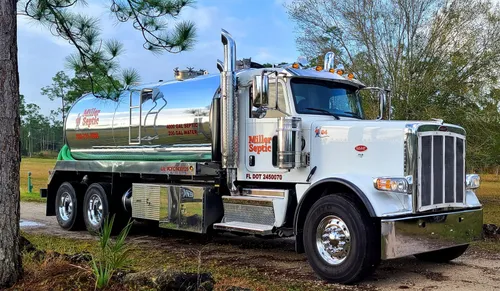
Miller Septic
5020 Bayline Dr, North Fort Myers, FL 33917
Miller Septic is a septic service company based in Cape Coral, FL, providing a range of services including septic tank pumping, inspections, repairs, drain field work, grease trap maintenance, and lift station servicing. They serve residential and commercial clients throughout Southwest Florida, including Fort Myers and surrounding communities. Their licensed technicians offer 24/7 emergency service and use professional-grade equipment to handle tasks such as high-pressure jetting and code-compliant drain field installations. Miller Septic is fully licensed and insured, with local expertise in regional regulations and soil conditions.
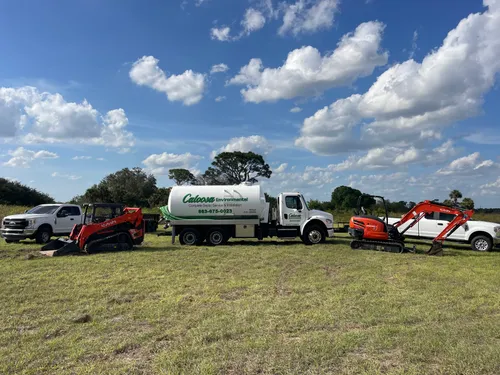
Caloosa Environmental
890 Spratt Blvd, LaBelle, FL 33935
Caloosa Environmental is a septic tank inspection company based in Cape Coral, FL. They specialize in septic system inspections to help maintain the health and functionality of septic systems. Customers can expect timely communication, as the company commits to returning calls the same day.
Hazelbaker Inspection Services
Cape Coral, FL
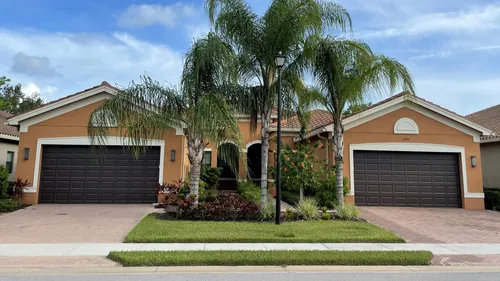
Hazelbaker Inspection Services is a home inspection company based in Cape Coral, FL, serving Lee and Collier Counties. They offer a range of inspection services including septic tank inspections, mold and radon testing, termite inspections, and general home inspections for various property types. Their septic tank inspections include open tank documentation, size and location assessment, and drain field analysis. With over 10 years of experience, Hazelbaker Inspection Services aims to provide thorough evaluations to help clients make informed decisions about their homes.
Southwest Environmental Septic Service
17551 Rockefeller Cir, Fort Myers, FL 33967
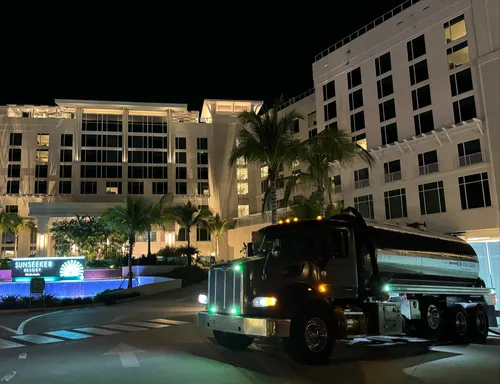
Southwest Environmental Septic Service provides septic tank pumping and inspection services in Cape Coral, FL. They focus on thorough cleaning to remove sludge and scum, helping to optimize septic system performance and longevity. Their services include detailed septic system inspections and the use of specialized additives to promote beneficial bacteria growth. The company emphasizes environmentally responsible practices aligned with EPA guidelines to protect local ecosystems.
Understanding Septic Systems in Lee County
A septic system is an independent wastewater treatment plant for your property. In areas without centralized municipal sewer lines, like many parts of Fort Myers and Lee County, these systems are common. They consist of a septic tank, where solids settle and begin to decompose, and a drainfield (or leach field), where the treated liquid effluent is dispersed into the soil for final purification. Proper maintenance, anchored by regular inspections, is the only way to prevent costly failures, environmental contamination, and public health hazards 1.
The regulatory landscape for onsite sewage systems in Florida is managed at the county level. In Lee County, the Florida Department of Health (DOH) is the primary permitting and regulatory authority for new installations, repairs, and abandonments. As of 2021, the Florida Department of Environmental Protection (DEP) also plays a role in broader oversight. Understanding that your system is governed by specific local codes is the first step in responsible ownership.
Why Regular Septic Inspections Are Non-Negotiable
You wouldn't drive a car for years without an oil change or a mechanic's check-up. Your septic system requires the same proactive care. A system failure is not just an inconvenience; it can lead to raw sewage backing up into your home or surfacing in your yard, creating serious health risks and expensive emergency repairs.
Scheduling a routine septic system evaluation every 3-5 years is the standard recommendation 2. This frequency can vary based on household size and usage. An inspection provides a clear snapshot of your system's health, identifying minor issues-like a damaged baffle or excessive sludge-before they escalate into major problems. It's a key part of preventative maintenance that saves money in the long run and is often required during real estate transactions.
What a Comprehensive Septic Inspection Entails
A thorough inspection by a qualified professional is much more than a quick look. It is a multi-step diagnostic process designed to assess every critical component of your onsite wastewater system.
1. Locating and Uncovering the System The inspector will first locate all components, including the septic tank and drainfield. This may involve using probe rods or electronic locating equipment if the access ports (lids) are buried. The tank lids are then carefully uncovered to allow for visual and physical access.
2. Tank Integrity and Level Check The inspector examines the tank for any signs of structural failure, such as cracks, leaks, or corrosion. They will also check that the tank is properly leveled; settling or shifting can cause operational issues 3.
3. Sludge and Scum Measurement This is a core part of the inspection. Using specialized tools, the professional measures the depth of the sludge layer at the bottom of the tank and the scum layer floating on top. These measurements determine if the tank needs to be pumped. If the combined sludge and scum occupy too much of the tank's volume, it can allow solids to escape into the drainfield, causing irreversible clogging and failure.
4. Baffle and Tee Inspection The inlet baffle (where wastewater enters the tank) and outlet baffle or tee (where liquid exits to the drainfield) are checked for integrity. If these are broken or missing, solids can flow directly into the drainfield, leading to rapid system failure 4.
5. Drainfield Assessment The inspector will evaluate the drainfield area for any warning signs. These include soggy, spongy soil, foul odors, or the surfacing of sewage effluent. Lush green grass over the drainfield, especially during dry weather, can also indicate a problem.
6. Documentation and Reporting A professional inspection concludes with a detailed, written report provided to the homeowner. This report should document all findings, measurements, and any recommendations for repair, pumping, or further action. In Florida, this signed evaluation is a crucial document for compliance and record-keeping 5 6.
Find the perfect septic tank inspection companies for your needs
Get personalized recommendations and expert advice
Lee County Regulations and the Role of Private Providers
Navigating local regulations is a key part of septic system ownership. For any new installation, repair, or abandonment of a system, a permit from the Florida Department of Health in Lee County is required.
- New System Permits: The process involves a site evaluation (with a $115 fee) and a construction permit ($390), with additional fees for challenging locations 7. A DOH inspector must examine the new system before it is covered 8.
- Abandonment: If you connect to a municipal sewer line, your old septic tank must be properly abandoned. This involves pumping it out, breaking up or collapsing the tank, and filling it with sand or similar material. A permit for this abandonment in Lee County costs $100.
- The Private Provider Option: A significant update for homeowners is that, as of July 2022, Florida law allows property owners to hire qualified private providers to perform inspection services that were once solely the domain of county health department staff 9. This gives homeowners more flexibility and choice in scheduling and selecting their inspection professional, though all work must still meet state and county standards.
Understanding Costs for Inspection and Related Services
Costs for septic services in Fort Myers can vary based on tank size, depth, accessibility, and the scope of work. Here is a general overview of what you might expect:
- Basic Visual Inspection: A standard inspection, as described above, typically ranges from $200 to $500.
- Inspection with Pumping: Many experts recommend combining an inspection with a tank pumping for a complete assessment. This more detailed service usually costs between $500 and $900 10.
- Routine Pumping: If the inspection reveals your tank needs pumping, that service alone generally costs $300 to $600, varying significantly with tank capacity (e.g., 1,000-gallon vs. 1,500-gallon) 11 12.
Remember, these are estimates. Always get detailed quotes from licensed professionals for your specific situation.
Choosing a Qualified Professional in Fort Myers
When your home's wastewater system and local environment are at stake, choosing the right inspector is paramount. Look for a contractor who is state-licensed for septic system work. They should carry appropriate insurance and have verifiable experience with the soil types and regulations specific to Southwest Florida. Don't hesitate to ask for references and examples of their inspection reports. A reputable professional will be happy to explain their process, answer your questions, and provide a clear, detailed proposal.
Frequently asked questions
Sources
Footnotes
-
Onsite Sewage Disposal (Septic Systems) - https://lee.floridahealth.gov/programs-and-services/environmental-health/onsite-sewage-disposal/ ↩
-
Your Complete Guide to Septic System Inspections in Florida - https://southernsepticanddesign.com/septic-services-blog/your-complete-guide-to-septic-system-inspections-in-florida-what-contractors-and-property-owners-need-to-know/ ↩
-
Preparing for Septic Tank Inspection: 7 Key Steps | Septic System Professionals - https://septic911.com/preparing-for-septic-tank-inspection/ ↩
-
Septic Tank Plans: A Complete Homeowner's Guide - Land Perc - https://landperc.com/septic-tank-plans-guide/ ↩
-
Chapter 381 Section 00651 - 2019 Florida Statutes - https://www.flsenate.gov/laws/statutes/2019/381.00651 ↩
-
Septic Tank Inspection in Fort Myers, FL - https://millersepticfl.com/septic-tank-inspection-in-fort-myers-fl/ ↩
-
New Septic System Application Requirements - Florida Department of Health in Lee County - https://lee.floridahealth.gov/programs-and-services/environmental-health/onsite-sewage-disposal/permits/ostds-new-permit/ ↩
-
Florida Septic Tank Requirements | Onsite Sewage Treatment ... - https://www.ntotank.com/blog/florida-septic-tank-requirements ↩
-
Septic Systems - Florida Department of Health - https://www.floridahealth.gov/community-environmental-public-health/environmental-public-health/water-quality/septic-systems/ ↩
-
How Much Does a Septic Inspection Cost? [2026 Data] - Angie's List - https://www.angi.com/articles/septic-inspection-cost.htm ↩
-
Septic Tank Abandonment Application - https://lee.floridahealth.gov/programs-and-services/environmental-health/onsite-sewage-disposal/permits/abandonments/ ↩
-
2026 Septic Inspection Costs | Tank, System, & Title 5 - https://homeguide.com/costs/septic-tank-inspection-cost ↩