Find the Best Septic Tank Inspection Companies for Your Business
No obligation • Fast responses • Nationwide coverage

Why you can trust Septic Spot
Septic Spot is a leading United States resource for understanding and comparing septic services. Our editors review providers using consistent criteria and verify key business details. Listings and scores are independent, and companies cannot pay to influence our content.
Search providers near you
Top Septic Tank Inspection Companies in North Port, Florida Ranked
A septic tank inspection is a professional evaluation of your entire onsite wastewater treatment system, from the tank to the drainfield. This process is crucial for protecting your property investment, ensuring public health, and complying with local and state environmental regulations in Florida. For North Port homeowners, understanding when and why an inspection is needed-and what it entails-can prevent costly emergencies and environmental contamination. This guide will help you navigate the inspection process, understand local requirements, and know what to expect when you schedule a system evaluation.
Why Septic System Inspections Are Essential in North Port
In a city like North Port, where many homes rely on private septic systems instead of municipal sewer lines, regular system assessments are a key part of responsible homeownership. A failing septic system can lead to sewage backups into your home, foul odors in your yard, and the contamination of local groundwater-a serious concern in Florida's sensitive ecosystem. Proactive inspections help identify minor issues before they become major, expensive repairs. Furthermore, Sarasota County and the Florida Department of Health have specific regulations governing these systems, making certain inspections a legal requirement, not just a recommendation.
Beyond avoiding disasters, a clean bill of health from a septic inspection is often required during real estate transactions, property refinancing, or before undertaking major home additions. It provides peace of mind that one of your home's most critical-and often overlooked-systems is functioning properly.
Understanding Local Inspection Requirements
Sarasota County, which includes North Port, enforces state septic system rules through the Florida Department of Health. Knowing when an inspection is mandatory can save you from legal and financial penalties.
Mandatory Inspections:
- New System Installation: A full inspection is always required before a new septic system is approved for use.
- System Repairs or Alterations: Any significant repair or modification to an existing system must be inspected and permitted.
- Property Improvements: If you are applying for a building permit to add a bedroom, expand your home, or install a pool, the county will likely require a septic system evaluation to ensure your existing drainfield can handle the increased load.
- Aerobic Treatment Units (ATUs): If your home uses an advanced aerobic treatment system or a Performance-Based Treatment System (PBTS), regulations are stricter. These systems require a current operating permit, which must be renewed every two years, and a professional maintenance contract. As part of this contract, the system must be inspected by a licensed professional at least twice per year.
Recommended Voluntary Inspections: For conventional gravity septic systems, while not always mandated by law for existing homes, environmental and public health experts strongly recommend a professional inspection every 1 to 3 years. This "safe check" is the best way to gauge your system's health and determine the optimal pumping schedule, which is typically every 3 to 5 years 1.
The Step-by-Step Septic Inspection Process
A thorough septic system evaluation is a detailed process conducted by a licensed inspector or septic contractor. Here's what you can expect during a comprehensive assessment:
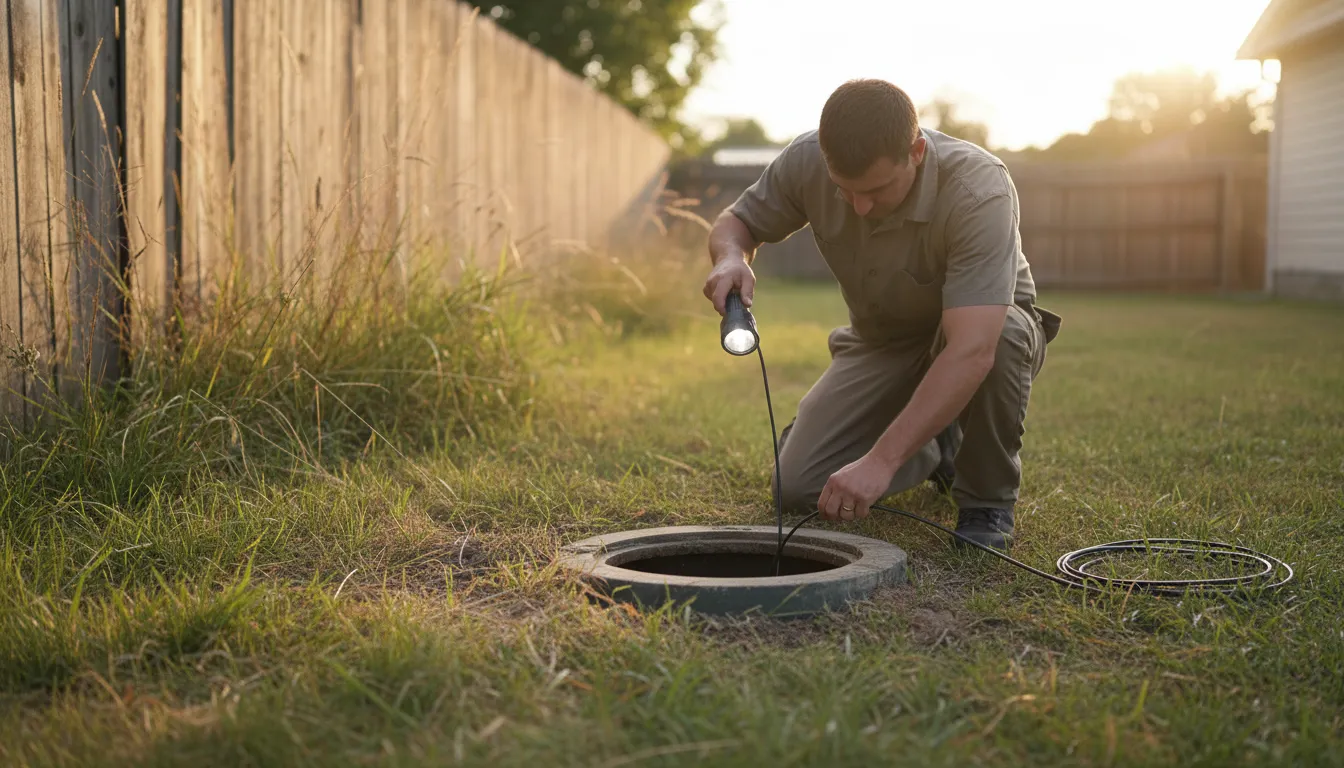
- System Location & Access: The inspector will first locate your septic tank and drainfield using available records or probing tools. They will then excavate and open the main access covers to the tank.
- Sludge and Scum Measurement: This is a critical step. The inspector uses specialized tools to measure the thickness of the scum layer (floating solids) and the sludge layer (settled solids) at the bottom of the tank. If the sludge depth exceeds one-third of the tank's liquid volume, pumping is immediately necessary to prevent solids from flowing out and clogging the drainfield 2 3.
- Structural Integrity Check: The inspector examines the tank-whether concrete, fiberglass, or plastic-for any signs of cracks, leaks, or corrosion. They will also check the inlet and outlet pipes for blockages or damage.
- Component Inspection: Key internal components like baffles (or tees) and outlet filters are inspected. These parts are vital for preventing solids from exiting the tank; if they are missing or damaged, the drainfield is at risk.
- Drainfield Evaluation: The inspector assesses the soil absorption field (drainfield) for signs of failure. This includes looking for overly soggy ground, surfacing sewage, or unusually lush grass-all indicators that the field is saturated and not properly absorbing treated effluent 4 5.
- Documentation & Certification: Upon completion, a detailed report is provided. If the tank is pumped as part of the service, the contractor will supply a pumping certification form. For mandatory inspections, the report is often submitted directly to the Sarasota County Health Department to satisfy permit requirements 6.
Find the perfect septic tank inspection companies for your needs
Get personalized recommendations and expert advice
Common Issues Found During North Port Inspections
Florida's unique environment presents specific challenges for septic systems. Common problems identified during inspections in the North Port area include:
- Drainfield Saturation: Due to the region's high water table, especially during the rainy season, drainfields can become waterlogged and fail to percolate properly.
- Root Intrusion: Tree and shrub roots can infiltrate and clog drainfield lines or even crack septic tanks in search of water and nutrients.
- Component Failure: Outlet filters can become clogged, and concrete baffles can deteriorate over time, allowing solids to escape.
- Hydraulic Overloading: Excessive water use from large households, leaking fixtures, or draining pools into the system can overwhelm the tank's capacity to settle solids, pushing them into the drainfield.
- System Age: Many older systems were designed to standards that are no longer considered adequate for environmental protection and may need upgrading or replacement.
Cost of Septic Inspections and Related Services
Understanding the potential costs helps homeowners budget for this essential maintenance. It's important to note that inspection costs can vary based on the system's size, type (conventional vs. ATU), and accessibility.
- Septic Tank Inspection: A standard inspection in North Port typically ranges from $100 to $1,000. The wide range depends on the inspection's complexity-a basic visual check costs less, while a full evaluation for a real estate transaction that includes a detailed report and possibly a hydraulic load test will be at the higher end 7.
- Septic Tank Pumping: If the inspection reveals the tank needs to be pumped, this service generally costs between $200 and $1,237 in the region, with an average often falling in the $400 to $500 range. Many companies offer combined inspection and pumping packages, which can provide better overall value 8.
- Permit Fees: For systems requiring an operating permit (like ATUs), renewal fees are set by the county health department and vary based on the permit type.
Always get detailed quotes from licensed, local professionals, as pricing can be influenced by travel distance, tank depth, and the need for additional excavation.
Choosing a Qualified Septic Inspector in North Port
Selecting the right professional is critical. Look for a contractor who is:
- Licensed & Insured: Ensure they hold a valid Florida septic contractor's license and carry adequate liability insurance.
- Locally Experienced: Choose a provider familiar with Sarasota County regulations, soil conditions, and common system types in North Port.
- Transparent: They should be willing to explain the process, provide a clear written estimate, and detail what their inspection includes.
- Well-Reviewed: Check online reviews and ask for references from past customers in your area.
A proper septic system evaluation is not just a line item on a maintenance checklist; it's an investment in your home's functionality, your family's health, and the preservation of North Port's natural environment.
Frequently asked questions
Sources
Footnotes
-
Frequent Questions on Septic Systems | US EPA - https://www.epa.gov/septic/frequent-questions-septic-systems ↩
-
Managed Septic System Information - https://charlotte.floridahealth.gov/wp-content/uploads/sites/11/2025/06/Managed_System_Combined_Documents-1_Revised_20221.pdf ↩
-
Septic Inspections Made Easy: What Every Contractor Needs to Know Before Breaking Ground (2025) - Florida Engineering LLC - https://flengineeringllc.com/septic-inspections-guide-contractors-2025/ ↩
-
How to Get Septic to Pass Inspection - https://www.guardianangelinspections.com/how-to-get-septic-to-pass-inspection ↩
-
Septic Inspections - https://www.wrenvironmental.com/residential/septic-inspections/ ↩
-
Onsite Sewage Disposal - Florida Department of Health in Sarasota ... - https://sarasota.floridahealth.gov/programs-and-services/environmental-public-health/onsite-sewage-disposal/ ↩
-
Septic System Cost Estimate: A Complete Breakdown - Land Perc - https://landperc.com/septic-system-cost-estimate/ ↩
-
Septic Tank Pumping Cost: Guide & Pricing in 2025 - Splash Plumbing - https://www.splashplumbing.com/how-much-does-it-cost-to-pump-septic-tank-understanding-pricing-and-factors-involved/ ↩