Find the Best Septic Tank Inspection Companies for Your Business
No obligation • Fast responses • Nationwide coverage

Why you can trust Septic Spot
Septic Spot is a leading United States resource for understanding and comparing septic services. Our editors review providers using consistent criteria and verify key business details. Listings and scores are independent, and companies cannot pay to influence our content.
Search providers near you
Top Septic Tank Inspection Companies in Allentown, Pennsylvania Ranked
A septic tank inspection is a professional evaluation of your entire on-site wastewater treatment system. This process is critical for protecting your property value, ensuring public health, and complying with local regulations in Allentown. Regular assessments help identify minor issues before they become costly system failures. This guide will help you understand the inspection process, local requirements, and how to find qualified professionals to evaluate your septic system.

CDA Inspection Services
173 Green St, Emmaus, PA 18049
CDA Inspection Services is a certified home and commercial inspection company serving Allentown, PA, and surrounding areas including Northampton, Macungie, Bethlehem, and Easton. They offer a range of inspection services such as home inspections, commercial property evaluations, septic system inspections, sewer lateral scopes using high-definition cameras, pool inspections, well inspections with yield testing, mold and radon testing, termite inspections, water testing, lead paint testing, and walk-through consultations. Their septic inspections include visual and minimally invasive assessments of septic tanks and absorption systems to help ensure system functionality and safety.
Allied Inspection Services Inc.
142 W Main St Suite 4, Macungie, PA 18062
Allied Inspection Services Inc. is a septic tank inspection company based in Allentown, PA. They offer a range of inspection services including septic inspections, home inspections, radon testing, water testing, mold testing, and commercial inspections. The company serves multiple counties including Berks, Bucks, Lehigh, Northampton, Schuylkill, Carbon, Montgomery, and Monroe. Allied Inspection Services Inc. provides certified inspections to help clients make informed purchasing decisions.
Septix
455 Texas Rd, Easton, PA 18042
Septix is a septic tank pumping, inspection, repair, and installation company based in Allentown, PA. They offer comprehensive septic system services, including emergency response for alarms and backups. Septix provides 24/7 emergency services to address urgent septic problems promptly. Customers can schedule consultations to diagnose issues and receive repair or replacement solutions.
Lehigh Valley Plumbing Experts
502 Jefferson St Suite B, Whitehall Township, PA 18052
Lehigh Valley Plumbing Experts is a plumbing company serving Allentown, PA, and the surrounding Lehigh Valley area. They provide a range of plumbing services including septic tank pumping, septic system care, tank inspection, and high-tech sewer jetting. The company offers both residential and commercial plumbing solutions, with capabilities in drain cleaning, leak detection, and plumbing maintenance. Their team has nearly two decades of experience and provides 24/7 emergency plumbing services for urgent needs.
Why Septic System Inspections Are Required in Allentown
Most municipalities in and around Allentown operate under local Sewage Management Programs (SMPs). These programs are designed to protect groundwater and public health by ensuring that thousands of private septic systems are functioning properly. A key component of these SMPs is the mandatory, periodic inspection of your septic system, typically required every 3 to 5 years. The specific schedule is set by your local township and enforced by a Sewage Enforcement Officer (SEO).
Failing to comply with these inspection mandates can result in penalties. More importantly, a malfunctioning system can contaminate local waterways, create unhealthy conditions on your property, and lead to extremely expensive repairs or complete system replacement. Regular inspections are a proactive measure that provides peace of mind and financial protection.
What a Comprehensive Septic Inspection Involves
A thorough septic system evaluation is more than just looking at the tank. Professional inspectors follow a detailed procedure to assess every component.
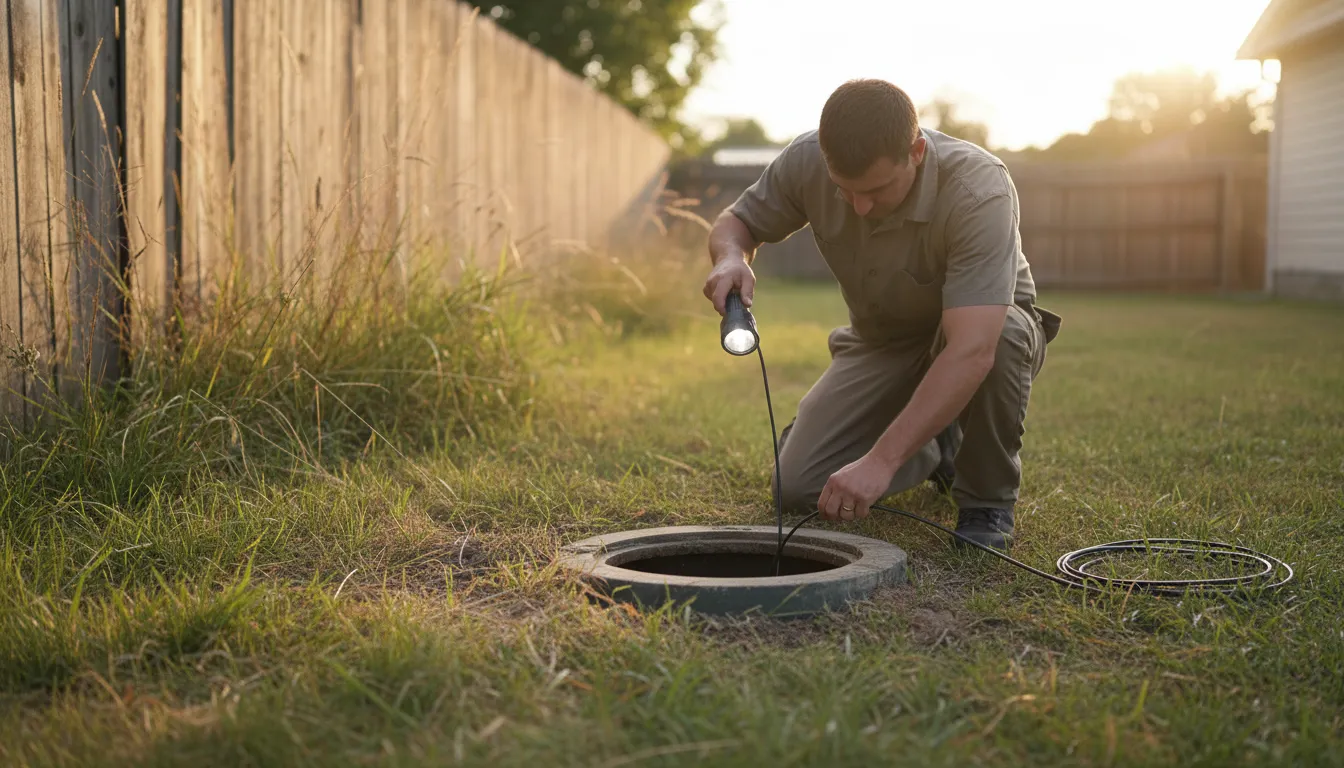
Locating and Uncovering the System: The inspector will first locate all critical components: the septic tank, distribution box, and drainfield (or absorption area). They must then uncover the manhole cover on the septic tank to gain access for internal inspection.
Internal Tank Assessment: This is the core of the inspection. The inspector will:
- Measure Sludge and Scum: Using specialized tools, they measure the layers of sludge (solid waste at the bottom) and scum (floating fats and grease). If the combined depth of these layers equals more than one-third of the tank's liquid depth, pumping is immediately required.
- Inspect Baffles and Tees: The inlet and outlet baffles (or tees) are checked for damage or blockage. These components are vital for preventing solids from flowing out into the drainfield.
- Check Tank Structure: The inspector looks for cracks, corrosion (in steel tanks), or other signs of structural failure.
Functional and Drainfield Checks:
- Flow Test: Water is run in the home to verify wastewater is flowing properly into the tank and to check for any backups 1.
- Drainfield Evaluation: The area above the drainfield is inspected for telltale signs of failure, such as soggy ground, foul odors, or unusually lush and green grass.
Pumping for Observation: Often, a full inspection requires pumping the tank. This allows the inspector to clearly see the tank's interior walls, baffles, and outlet structure for a definitive assessment of its condition.
Find the perfect septic tank inspection companies for your needs
Get personalized recommendations and expert advice
Understanding Inspection Costs in the Allentown Area
The cost of a septic inspection can vary based on the type of system you have and whether pumping is included. Standard gravity systems are generally less expensive to inspect than more complex systems.
- Inspection Only: For a standard visual and measurement inspection, homeowners can expect costs to range from approximately $300 to $500.
- Inspection with Pumping: A combined service, where the tank is pumped as part of the inspection process, typically ranges from $450 to $700 or more, with the final price heavily dependent on tank size 2.
- Advanced System Inspections: If your home has an alternative system (like an aerobic treatment unit, sand filter, or pressure-dosed drainfield), inspection costs will be higher-often starting around $600-due to the need to check electrical components, pumps, alarms, and other specialized parts 3 4.
It's important to obtain detailed quotes from local providers that specify exactly what services are included.
Local Regulations: Permits and Your Responsibilities
As a septic system owner in Pennsylvania, you have specific legal responsibilities 5. Understanding these can help you navigate the process smoothly.
The Role of the Sewage Enforcement Officer (SEO): Your local township SEO administers the state's sewage regulations. They review permit applications for new installations, repairs, and replacements, and they often receive the official inspection reports required by your municipality's SMP 6.
Permit Requirements: Any significant work on your system-including repairs, alterations, or a full replacement-requires a permit from the local SEO before any work begins 7 8. This ensures the work is done to code.
Owner Responsibility: Ultimately, the property owner is responsible for maintaining their system, having it inspected and pumped on schedule, and correcting any malfunctions promptly 9 10. Signs you should watch for include slow-draining fixtures, sewage backups, foul odors indoors or outdoors, and wet, spongy areas in your yard.
Choosing a Qualified Septic Inspection Provider
When your inspection is due, selecting the right professional is crucial. Look for a licensed septic service company with strong local experience in the Lehigh Valley. They should be familiar with the specific requirements of your township and its SEO. A reputable inspector will provide a clear report detailing the condition of each system component and any recommended actions. Always verify that the company is properly insured. Using a knowledgeable local expert ensures your inspection will be recognized by your municipality and provides you with the most accurate assessment of your system's health.
Frequently asked questions
Sources
Footnotes
-
Septic Services - https://www.alliedinspection.com/services/septic-inspection/ ↩
-
What are the standard procedures and guidelines for septic system ... - https://www.carrollvalley.org/codes-enforcement-zoning/faq/what-are-standard-procedures-and-guidelines-septic-system-testing ↩
-
Septic Inspections Central PA - https://www.johnklineseptic.com/residential/inspections ↩
-
Septic System Inspections: A Step-by-Step How-To Guide - https://westcoastsanitationinc.com/septic-inspection-service/ ↩
-
Septic System Basics - Penn State Extension - https://extension.psu.edu/septic-system-basics ↩
-
Septic Systems | Department of Environmental Protection | Commonwealth of Pennsylvania - https://www.pa.gov/agencies/dep/residents/my-water/septic-systems ↩
-
PUMP It Out! - https://www.crcog.net/vertical/sites/%7B6AD7E2DC-ECE4-41CD-B8E1-BAC6A6336348%7D/uploads/Sewer_Brochure%281%29.pdf ↩
-
The Ins and Outs of Septic Systems in Pennsylvania - https://www.eastvincent.org/vertical/sites/%7B5B8F1E55-6CA8-450E-BB40-12A8385B1313%7D/uploads/septicsystems%281%29.pdf ↩
-
Frequent Questions on Septic Systems | US EPA - https://www.epa.gov/septic/frequent-questions-septic-systems ↩
-
Pennsylvania Septic System Guide: Costs, Regulations, and ... - https://findaseptic.com/blog/pennsylvania-septic-system-guide ↩