Find the Best Septic Tank Installation & Replacement Contractors for Your Business
No obligation • Fast responses • Nationwide coverage

Why you can trust Septic Spot
Septic Spot is a leading United States resource for understanding and comparing septic services. Our editors review providers using consistent criteria and verify key business details. Listings and scores are independent, and companies cannot pay to influence our content.
Search providers near you
Top Septic Tank Installation & Replacement Contractors in Tuscaloosa, Alabama Ranked
Installing or replacing a septic system is a significant investment in your property's long-term functionality and value. For homeowners in Tuscaloosa, this process is governed by specific state and county health regulations designed to protect public health and the local environment. Understanding the required permits, inspections, and installation steps is crucial for a successful project. This guide provides a clear overview of the process, costs, and key considerations for septic system work in the Tuscaloosa area, helping you connect with qualified local professionals.
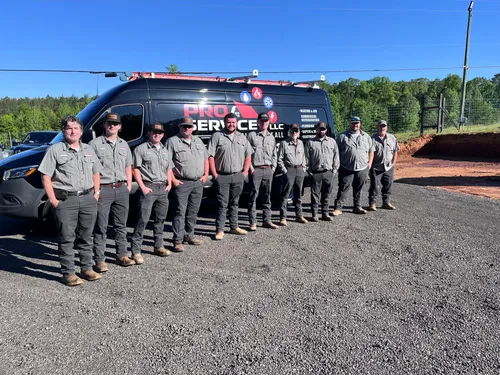
Pro Services LLC
22311 Diesel Dr, McCalla, AL 35111
Pro Services LLC is a multi-trade contractor based in Birmingham, AL, offering septic system repair and septic tank installation among other services. Serving Birmingham and surrounding counties including Tuscaloosa, Hoover, and Bessemer, the company provides comprehensive residential and commercial HVAC, plumbing, electrical, and septic services. They are equipped with fully stocked trucks and have been serving central Alabama since 1987. Their team includes master tradesmen who handle septic system maintenance and installation with expertise.
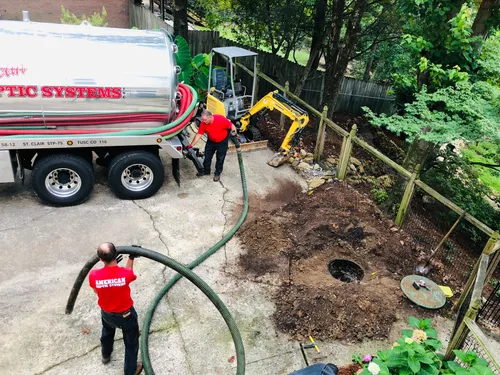
American Septic Systems
10650 Lock 17 Rd, Adger, AL 35006
American Septic Systems is a licensed septic service provider based near Birmingham, AL. They offer a wide range of septic services including tank pumping, inspections approved by county health departments, repairs, and new installations. Their capabilities include field line installation and repair, grease trap cleaning, and effluent pump replacement. The company emphasizes thorough septic system maintenance to prevent issues before they arise.
Understanding the Regulatory Process
In Alabama, all onsite wastewater system installations and major replacements are regulated by the Alabama Department of Public Health (ADPH) through local county health departments 1. For Tuscaloosa County, this means the Tuscaloosa County Health Department must approve your project before any work begins. The cornerstone of this approval is obtaining a "Permit to Install" or an "Approval for Use". You cannot legally install or use a new system without this permit.
The regulatory framework is detailed in the Alabama Administrative Code 420-3-1, which sets the standards for system design, location, and maintenance. These rules ensure systems are built to handle household wastewater effectively without contaminating groundwater or creating a nuisance. The process is not just bureaucratic; it's a necessary series of checks to verify that your property can safely support a septic system.
Step 1: The Permit Application and Site Evaluation
The formal process starts with submitting an Application for a Permit to Install an Onsite Sewage Disposal System (Form CEP-11) to the local environmental health office. A Public Health Environmentalist will then conduct an initial site evaluation. This evaluation assesses critical factors like lot size, slope, proximity to water wells and property lines, and the estimated daily wastewater flow based on your home's number of bedrooms 2.
The most critical part of this evaluation is the soil analysis. The environmentalist will determine the soil type and depth to any limiting conditions, such as bedrock or a high water table. This information is essential for designing a system that matches your property's specific absorption capabilities. The goal is to determine if the land is suitable for a conventional septic system or if an advanced treatment system will be required 3.
The Essential Percolation Test
A key component of the soil evaluation is the percolation test (often called a "perc test"). This test is mandatory and measures the soil's ability to absorb water, which directly determines the size and type of drain field needed 4. The test must be performed by an authorized professional following the state's strict procedure.
The standard method involves boring holes 4-8 inches in diameter and 12 inches deep into the soil in the proposed drain field area. These holes are pre-soaked for at least four hours, preferably overnight, to simulate saturated conditions. The actual test measures how many minutes it takes for the water level to drop one inch 5 6. The results of this test are a primary factor in the system design approved by the health department.
Cost Note: While not part of the permit fee itself, the perc test is a separate expense. Costs can range widely from $150 for simple, small sites to over $3,000 for large or complex properties, with a common average range of $750 to $1,900 7.
Step 2: System Design and Hiring a Licensed Installer
Once the site is evaluated and the perc test results are in, a system design can be finalized. This design must comply with all aspects of Alabama Administrative Code 420-3-1 8. It will specify the tank size, the drain field layout, and the type of system (e.g., conventional trench, chamber system, or advanced aerobic treatment unit).
A critical state requirement is that the physical installation must be performed by a professional licensed by the Alabama Onsite Wastewater Board (AOWB). Hiring a licensed installer is non-negotiable for obtaining final approval. These professionals understand the local regulations, can pull the necessary permits, and ensure the installation matches the approved design exactly. They are also responsible for scheduling the required inspections.
Find the perfect septic tank installation & replacement contractors for your needs
Get personalized recommendations and expert advice
Step 3: Installation and Mandatory Inspections
The installation process involves excavating, placing the septic tank and distribution box, and constructing the drain field according to the engineered plan. Throughout this phase, the Tuscaloosa County Health Department must conduct inspections at specific milestones. The most crucial is the installation inspection, which occurs after the tank and drain field are placed but before they are backfilled and covered 9 10.
A county inspector will visit the site to verify that the materials, layout, depths, and construction meet the permitted design specifications. Passing this inspection is essential before the installer can complete the job by backfilling the trenches. Skipping or failing this inspection can lead to costly re-excavation and corrections.
Step 4: Final Approval and Costs
After the installation passes inspection and is completed, the health department will issue the final Approval for Use permit 11. This document is your legal authorization to begin using the new septic system. Keep this approval with your property records, as it may be required for future real estate transactions.
Understanding the costs involved in Tuscaloosa is important for planning. It's a multi-part investment:
- Permit Fees: Paid to the health department, these generally range from $150 to $500.
- New System Installation: For a standard 3-bedroom home in Tuscaloosa, typical installation costs range from $6,500 to $7,800. Statewide, the broader range for a complete new system is $5,000 to $15,000, with complex sites or advanced systems costing more 12.
- Full System Replacement: If replacing an old, failing system, costs can range from $3,000 to $20,000, heavily dependent on the system size and site conditions.
- Related Services: For context, septic tank repairs can cost $1,000 to $4,200, and routine pumping for a 1,000-gallon tank in Tuscaloosa averages about $263 per service 13.
Disclaimer: All costs are estimates and can vary significantly based on your property's specific soil conditions, accessibility, and the exact system design required by Alabama regulations 14.
Maintaining Your New Septic System
Once your new onsite wastewater system is installed and approved, proper maintenance is key to its longevity. Regular pumping (typically every 3-5 years), water conservation, and avoiding flushing harmful chemicals or non-biodegradable materials will protect your investment 15. A well-maintained system can last for decades, while neglect can lead to premature failure, environmental contamination, and a very expensive replacement project.
Frequently asked questions
Sources
Footnotes
-
Septic Tank Systems | Alabama Department of Public Health (ADPH) - https://www.alabamapublichealth.gov/onsite/septic-tanks.html ↩
-
rules of state board of health bureau of - http://www.adph.org/onsite/assets/proposedonsiterules6-13.pdf ↩
-
Can I Live On This Lot? | Alabama Department of Public Health (ADPH) - https://www.alabamapublichealth.gov/onsite/before-construction.html ↩
-
Septic Tank Installation Requirements - Angie's List - https://www.angi.com/articles/complete-septic-installation-checklist.htm ↩
-
Rule 420-3-1-.45 - Percolation Test Procedure - https://admincode.legislature.state.al.us/administrative-code/420-3-1-.45 ↩
-
Ala. Admin. Code r. 420-3-1-.45 - Percolation Test Procedure - https://www.law.cornell.edu/regulations/alabama/Ala-Admin-Code-r-420-3-1-.45 ↩
-
How Much Does a Perc Test Cost? [2026 Data] | Angi - https://www.angi.com/articles/perc-test-cost.htm ↩
-
Rule 420-3-1-.19 - Per-made Septic Tank, Grease Trap, And ... - https://admincode.legislature.state.al.us/administrative-code/420-3-1-.19 ↩
-
Septic System Regulations and Permits: What You Need to Know - https://tidytanksepticservice.com/blog/septic-system-regulations-and-permits-what-you-need-to-know/ ↩
-
Septic System Installation 101: A Beginner's Guide - https://www.townesseptic.com/blog/septic-system-installation-beginners-guide ↩
-
Alabama Septic Tank Requirements - https://www.ntotank.com/blog/alabama-septic-tank-requirements ↩
-
Understanding Septic Tank Permits and Regulations - https://westcoastsanitationinc.com/understanding-septic-tank-permits-and-regulations/ ↩
-
Tuscaloosa Septic Systems Costs & Prices - ProMatcher Cost Report - https://septic-systems.promatcher.com/cost/tuscaloosa-al-septic-systems-costs-prices.aspx ↩
-
What is the process and cost of installing a septic tank on a ... - https://www.facebook.com/groups/202656180111656/posts/2032764333767489/ ↩
-
Caring for Septic Systems - Alabama Cooperative Extension System - https://www.aces.edu/blog/topics/fish-water/caring-for-septic-systems/ ↩