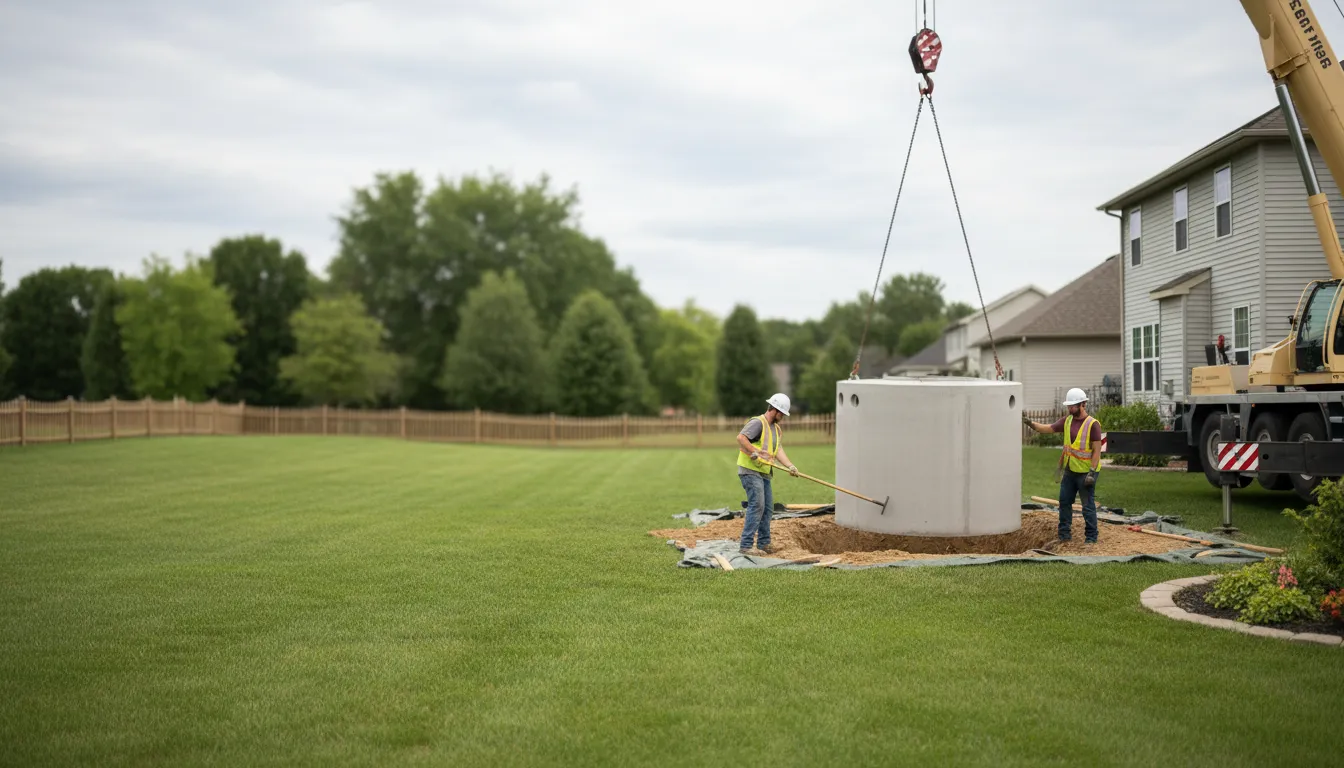
Find the Best Septic Tank Installation & Replacement Contractors for Your Business
No obligation • Fast responses • Nationwide coverage

Why you can trust Septic Spot
Septic Spot is a leading United States resource for understanding and comparing septic services. Our editors review providers using consistent criteria and verify key business details. Listings and scores are independent, and companies cannot pay to influence our content.
Search providers near you
Top Septic Tank Installation & Replacement Contractors in Bristol, Connecticut Ranked
Installing or replacing a septic system is a significant home improvement project that ensures the safe and efficient treatment of household wastewater. For Bristol homeowners, this process is governed by specific local and state health regulations to protect both your property and the environment. Understanding the steps, costs, and requirements for septic system work can help you plan effectively and connect with qualified local professionals who can navigate the permitting and installation process.
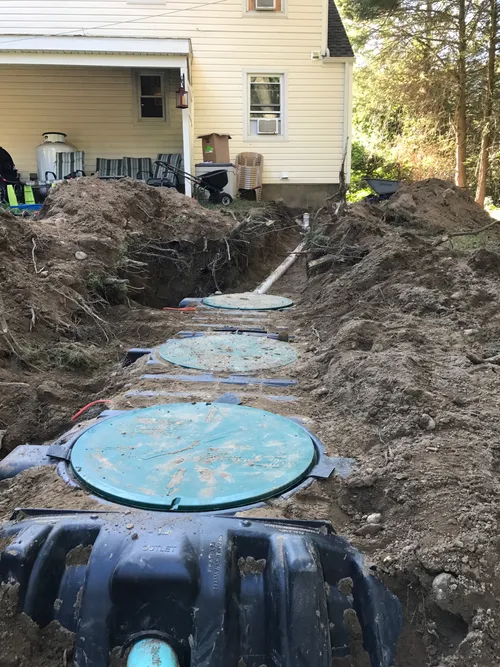
Septicology
47 Plantation Rd Unit D, Broad Brook, CT 06016
Septicology is a family-owned septic company serving Hartford, CT, and all towns across Connecticut. Since 2017, they have provided septic system inspections, repairs, installations, and pumping services throughout the state. Their inspection reports include detailed analyses, color photos, and system location drawings, offering clear insights into septic system conditions. Septicology emphasizes flexible scheduling to accommodate customer needs and maintains open communication throughout the service process.
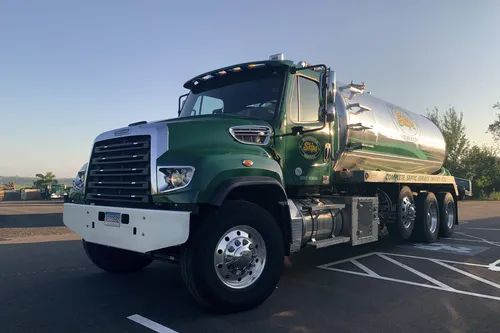
Skips Wastewater Services
21 Courtney Dr, Ellington, CT 06029
Skips Wastewater Services provides septic tank pumping, inspection, repair, and installation services in Hartford, CT. They serve residential and commercial clients across multiple counties in Connecticut, including Hartford, Middlesex, New London, Tolland, Windham, and New Haven. The company operates with a large fleet of pump trucks and uses advanced technology to handle septic emergencies and routine maintenance efficiently. With over 60 years of experience, Skips Wastewater Services offers 24/7 emergency support to address issues like sewage backups and slow drains promptly.
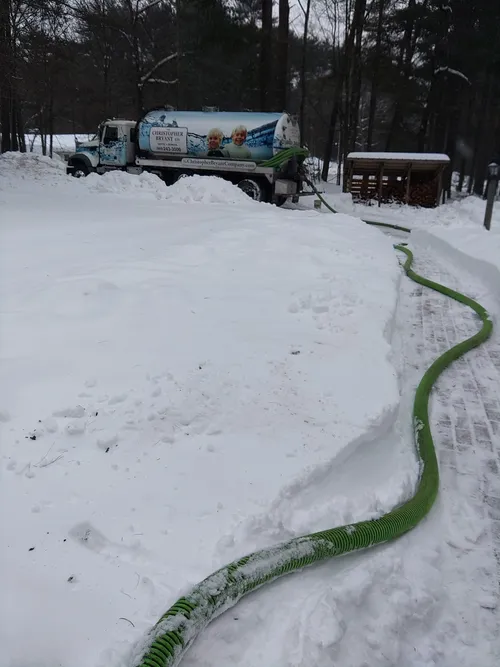
The Christopher Bryant Co. LLC
126 W Dudley Town Rd, Bloomfield, CT 06002
The Christopher Bryant Co. LLC is a family-owned septic service provider based in Hartford, CT, serving Hartford County and surrounding communities since 1995. They offer a full range of septic system services including pumping, inspection, repair, and installation. The company is known for its hands-on ownership and expertise in septic riser installation, which facilitates easier maintenance and inspection. With over 30 years in business, they provide 24/7 emergency service and same-day service options to address urgent septic needs.
Laco Site Services
35 Russell Rd, Bethany, CT 06524
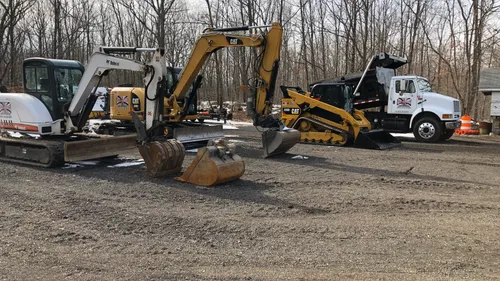
Laco Site Services is a septic tank installation contractor based in New Haven, CT. The company provides septic system design and installation along with excavation services for residential and commercial projects across New Haven County. With experience dating back to 1987, Laco Site Services has handled complex jobs including large septic systems and challenging waterproofing and drainage projects. The business also offers specialized excavation capabilities such as footing drain installation and stump removal following natural disasters.
Valley View Excavating, LLC
230 S Washington St Suite 13, Plainville, CT 06062
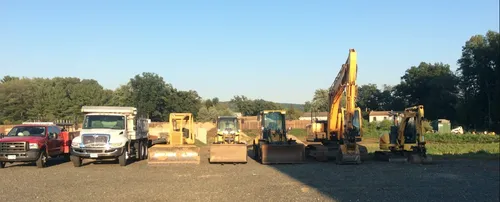
Valley View Excavating, LLC is an excavating contractor based in Waterbury, CT, offering services for both residential and commercial projects. Their expertise includes septic tank installation, general excavation, sewer excavation, and various hardscaping solutions such as patio pavers and retaining walls. Established in 2007, the company emphasizes quality materials and hands-on management, with the owner involved in every job to ensure proper completion.
Understanding Septic System Regulations in Bristol
All residential septic system installations and replacements in Bristol are regulated by the Bristol-Burlington Health District (BBHD) under the Connecticut Public Health Code. The BBHD oversees systems designed for a flow of less than 7,500 gallons per day, which covers virtually all single-family homes. A fundamental rule is that no construction can begin without an approved permit from the health district. This regulatory framework is designed to ensure systems are properly sited and constructed to prevent public health hazards and environmental contamination.
The cornerstone of the permit application is often the B100a form, a site plan review that must demonstrate a code-complying area exists for the entire sewage disposal system-including the tank and leaching fields 1. Your application packet, submitted to the BBHD, must include a completed Sewer Permit Application and a detailed site plan. This plan should show property lines, the location of your house, and any existing structures like decks, pools, or sheds, as well as the distance to any wells 2.
The Role of Soil Testing and Site Evaluation
Before a septic system can be designed, the soil conditions on your property must be thoroughly evaluated. If existing soil data is not available, a licensed professional such as a soil scientist or professional engineer must conduct official soil testing 3. This typically involves perc tests (percolation tests) and deep test pits to determine the soil's absorption rate and to identify the depth to both bedrock and the seasonal high groundwater table 4 5.
The results of this evaluation are critical. They dictate the size, type, and design of the leach field. For instance, slower-absorbing soils will require a larger leaching area, while a high water table may necessitate a specialized system like a raised sand filter or aerobic treatment unit. Investing in proper soil analysis upfront prevents costly redesigns and system failures down the line.
Working with Licensed Installers and the Inspection Process
Connecticut law requires that all septic system construction be performed by a state-licensed installer 6. Choosing a licensed professional is non-negotiable; they understand local codes, can help prepare permit paperwork, and ensure the installation meets all health department standards. Once your permit is issued, the installation process begins, which is followed by mandatory inspections.
The BBHD will conduct at least two key inspections 7 8:
- Initial/Site Inspection: To verify the proposed system location matches the approved plans.
- Installation Inspection: This occurs after the tank and leach field are installed but before they are backfilled and covered. The inspector checks for proper construction, materials, and placement.
After passing the final inspection, you or your installer must submit an as-built plan (or record drawing) showing the system as it was actually installed. This document is required to finalize the permit and is crucial for future maintenance and repairs 9.
Find the perfect septic tank installation & replacement contractors for your needs
Get personalized recommendations and expert advice
Cost Factors for Septic System Projects
The total cost for a new septic system or a full replacement in Bristol can vary widely, but homeowners can generally expect a range of $10,000 to over $30,000 for a complete standard system. The final price depends heavily on the site-specific conditions uncovered during the soil evaluation. A straightforward installation on ideal soil will be at the lower end, while challenging sites requiring engineered solutions can drive costs significantly higher.
Breaking down the costs, the septic tank itself is a major component. For a standard 1,000-gallon concrete tank, material costs alone are typically between $500 and $900, with an additional $50 to $150 for every extra 100 gallons of capacity 10 11. Remember, this is just the tank; the total project cost includes excavation, the leach field, piping, distribution boxes, gravel, and all labor and permitting fees.
Planning for Replacement, Expansion, and Future Maintenance
Systems don't last forever, and there are specific triggers for replacement. In Connecticut, a 50% increase in sewage flow-such as from adding a bedroom or a major appliance-legally requires a new or expanded septic system 12 13. Furthermore, if an existing system is failing or requires a repair that exceeds 50% of the cost of a new system, full replacement is often the mandated solution.
Proactive planning is key. When designing a new system, it is highly recommended to designate a reserve area on your property-a section of land suitable for a future leach field 14. This provides a backup location if the original field ever fails, protecting your property value and saving you from the challenge of finding space later. To maximize the lifespan of your investment, a routine maintenance schedule is essential. Industry experts and health officials recommend having your septic tank pumped and the system inspected every 2 to 3 years, depending on usage 14.
Choosing the Right System Components and Design
The classic septic system consists of a tank and a subsurface leach field, but several design variations exist to suit different sites. Your licensed installer and the soil evaluation will determine the best type. Common designs include conventional trench systems, chamber systems, and for properties with poor soil or high groundwater, more advanced alternative systems like aerobic treatment units (ATUs) or sand filters.
The size of the tank and the leach field is calculated based on the number of bedrooms in your home (a proxy for daily wastewater flow) and the soil's percolation rate. A standard three-bedroom home in Connecticut will typically require a 1,000-gallon tank, but larger homes or those with garbage disposals may need more capacity. The leach field size is mathematically derived from the flow and the soil's absorption capability, ensuring the treated wastewater can be safely dispersed into the ground.
Frequently asked questions
Sources
Footnotes
-
Bristol-Burlington Health District B100 Form (PDF) - https://www.burlingtonct.gov/159/Bristol-Burlington-Health-District-B100- ↩
-
SEWER PERMITS | Bristol, CT - Official Website - https://www.bristolct.gov/1217/SEWER-PERMITS ↩
-
Septic System Installation - https://sep-tekservices.com/septic-system-installation/ ↩
-
Chapter 13.10 PRIVATE SEWAGE DISPOSAL - https://www.codepublishing.com/IN/Evansville/html/Evansville13/Evansville1310.html ↩
-
Septic tanks for homes: Top 5 Essential Tips for Success 2025 - https://patriotdirt.com/septic-tanks-for-homes/ ↩
-
Environmental Engineering - Subsurface Sewage - CT.gov - https://portal.ct.gov/dph/environmental-health/environmental-engineering/environmental-engineering----subsurface-sewage ↩
-
Septic and Sewage - Bristol - Burlington Health District - https://bbhd.org/septic-and-sewage/ ↩
-
CONNECTICUT PUBLIC HEALTH CODE On-site Sewage Disposal ... - https://portal.ct.gov/dph/-/media/departments-and-agencies/dph/dph/environmental_health/environmental_engineering/2023-uploads/ts-master-2023-1242023a.pdf?rev=ff2a02fba994441d8db4a5690867a002&hash=153A7DFFC69CCAAE2595B4A254D97960 ↩
-
The Ultimate Guide to Septic System Installation Process | Septic System Professionals - https://septic911.com/septic-system-installation-process/ ↩
-
Residential Septic Tank Pricing | Homeowner's Guide to Costs - https://www.ntotank.com/blog/residential-septic-tank-pricing ↩
-
Septic Tank Installation: A Complete Guide - https://midvalleyseptics.com.au/blog/septic-system-installation-australia/ ↩
-
CONNECTICUT PUBLIC HEALTH CODE On-site Sewage ... - https://portal.ct.gov/-/media/Departments-and-Agencies/DPH/dph/environmental_health/environmental_engineering/2023-uploads/TS-Master-2023-1242023A.pdf ↩
-
Septic System Design: What CT Homeowners Need to Know - https://andersonseptic.com/septic-system-design-guide/ ↩
-
Septic Homeowners - North Central Distict Health Department - https://www.ncdhd.org/septic-homeowners ↩ ↩2