Find the Best Septic Tank Installation & Replacement Contractors for Your Business
No obligation • Fast responses • Nationwide coverage

Why you can trust Septic Spot
Septic Spot is a leading United States resource for understanding and comparing septic services. Our editors review providers using consistent criteria and verify key business details. Listings and scores are independent, and companies cannot pay to influence our content.
Search providers near you
Top Septic Tank Installation & Replacement Contractors in Clinton, Michigan Ranked
Installing or replacing a septic system is a significant home infrastructure project that requires careful planning, professional expertise, and adherence to local health codes. For homeowners in Clinton, Michigan, this process is overseen by the Mid-Michigan District Health Department (MMDHD), which ensures systems are designed and installed to protect both public health and the local environment. This guide explains the key steps, regulations, and considerations for septic system installation and replacement in Clinton County, helping you navigate the process to find qualified local professionals for your project.
Apex Septic And Excavating, Inc
114 E Lawrence Ave Ste. 210, Charlotte, MI 48813
Apex Septic And Excavating, Inc is a septic tank pumping and installation company based in Lansing, MI. They offer a range of excavation services for both commercial and residential projects, including site preparation, grading, trenching, and land clearing. The company specializes in septic system installation and maintenance, ensuring compliance with local regulations. They also provide emergency excavation services for urgent issues like foundation failures and pipeline breaks. Apex has experience creating stable foundations for pole barns and barndominiums using precise staking and leveling techniques. Their septic pumping service uses advanced equipment to efficiently remove waste and sludge while following proper disposal guidelines.
Ball Septic Tank Service
Lansing, MI
Ball Septic Tank Service provides residential and commercial septic system services in Lansing, MI, including septic tank pumping, installation, repair, and drain field replacement. Serving the Greater Lansing area and nearby communities such as Charlotte, Grand Ledge, and Mason, the company focuses on safety and clear communication. Their team offers reliable scheduling and well-equipped trucks to complete most jobs in one visit, along with maintenance guidance to help prevent future issues.
G A Hunt Excavating and Septic Services
1220 E Taft Rd, St Johns, MI 48879
G A Hunt Excavating and Septic Services is a septic system company serving Lansing, MI, and surrounding mid-Michigan areas. They provide septic tank installation, pumping, inspection, maintenance, and repair services, including drain field repair and trenchless excavation technology to minimize property disruption. With over 30 years of experience, the company offers 24/7 emergency septic and sewer services to address urgent issues promptly and efficiently.
Understanding Septic System Basics
A septic system is an on-site wastewater treatment system for properties not connected to a municipal sewer line. It typically consists of a septic tank, where solids settle and begin to decompose, and a drainfield (or leach field), where the treated liquid effluent is dispersed into the soil for final purification. When a new septic system installation is necessary for new construction, or an existing system fails and requires a septic tank replacement, understanding the components and local requirements is the first critical step.
In Michigan, and specifically Clinton County, there is no single statewide septic code 1. Instead, local health departments like the MMDHD establish and enforce the regulations. This makes it essential to work with the department and contractors familiar with Clinton's specific rules. A properly designed and permitted system is not just a legal requirement; it's a long-term investment in your property's value and environmental responsibility.
The Permit Process with MMDHD
Before any digging begins, you must obtain a Sewage Disposal System Permit from the Mid-Michigan District Health Department. This permit is required for all new installations, full replacements, or substantial modifications to an existing septic system 2.
Key steps in the permitting process include:
- Application Submission: You or your contractor will need to submit a completed application to the MMDHD office. This must be accompanied by a detailed site plan showing the proposed location of the house, well, septic tank, drainfield, and any pertinent features like driveways, property lines, and bodies of water 3.
- Soil Evaluation: The health department will conduct a mandatory site inspection and soil evaluation. This is a crucial step that determines the type of system your property can support.
- Plan Review: A sanitarian from the MMDHD will review your application and site plan to ensure compliance with all spacing, sizing, and design regulations.
- Permit Issuance: Once approved, the permit is issued, authorizing the installation to proceed according to the approved plans.
The Critical Soil Evaluation
Gone are the days of the simple "perc test" in this region. The MMDHD uses a more comprehensive soil evaluation process to assess a property's suitability for a septic system. A sanitarian will typically excavate a test pit that is 4 to 6 feet deep to examine the soil profile.
They are evaluating several key factors:
- Soil Texture: The composition (sand, silt, clay) affects how quickly water drains.
- Seasonal High Water Table: The depth at which the ground is saturated with water at its highest point during the year. Drainfields must be placed above this level.
- Soil Structure and Depth to Bedrock: There must be enough suitable soil between the drainfield and any limiting layer, like bedrock or dense clay.
The results of this evaluation directly dictate the type of septic system installation allowed. Properties with deep, well-draining soils may qualify for a conventional gravity-fed system. Properties with high water tables, shallow bedrock, or poor drainage will require an engineered septic system, such as a mound system, to safely treat wastewater.
System Types and Sizing Requirements
Based on the soil evaluation, the MMDHD will approve a specific system design. Common types in Clinton County include:
- Conventional Gravity System: The most basic type, relying on gravity to move effluent from the tank to a series of perforated pipes in a trench or bed.
- Engineered System (Pressure-Dosed Mound): Used when soil conditions are not suitable for a conventional system. Effluent is pumped to a raised mound of sand and gravel constructed on the natural soil surface. These are more complex and costly to install 4.
- Alternative/Advanced Treatment Systems: These may incorporate additional treatment components to reduce nutrients or allow installation in challenging sites.
System sizing is primarily based on the number of bedrooms in the home, which is used as a proxy for daily wastewater flow. Regulations typically mandate a minimum septic tank capacity, often between 1,000 and 1,500 gallons, depending on the bedroom count 5. The drainfield size is then calculated based on the daily flow and the soil's absorption capacity determined during the evaluation.
Find the perfect septic tank installation & replacement contractors for your needs
Get personalized recommendations and expert advice
Working with a Registered Contractor
While Michigan law may allow homeowners to install their own septic system under certain conditions, it is a highly technical job with significant long-term consequences for failure. The MMDHD requires that anyone installing a system for hire must be a registered contractor with the department 6.
Hiring a qualified septic system installer offers major advantages:
- Regulatory Knowledge: They understand the specific paperwork, design standards, and inspection protocols of the MMDHD.
- Proper Equipment: Excavation, tank handling, and system construction require heavy machinery and skilled operators.
- System Warranty: Reputable contractors often provide warranties on their workmanship and the components they install.
- Inspection Coordination: They handle the critical step of notifying the health department for the required final inspection before the system is buried.
When comparing local providers, verify their registration with the MMDHD, ask for references from recent jobs in Clinton County, and ensure they are properly insured.
Installation Steps and Final Inspection
Once a permit is in hand and a contractor is hired, the physical installation begins. The process generally follows these steps:
- Site Preparation: The area is cleared and marked according to the approved site plan.
- Excavation: Holes are dug for the septic tank and the drainfield trenches or mound bed.
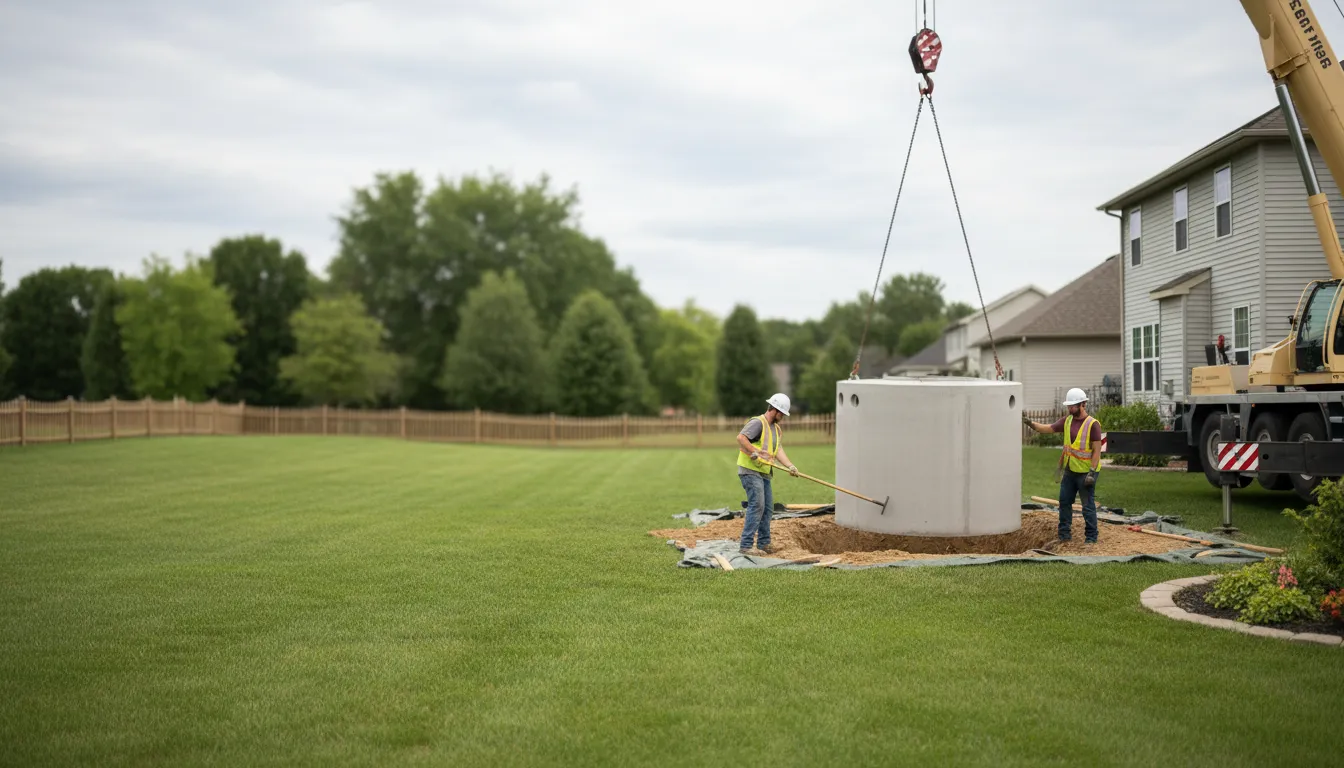
- Tank Placement: The septic tank (often concrete or plastic) is set into place and leveled. All inlet and outlet pipes are connected.
- Drainfield Construction: For a conventional system, gravel and perforated pipe are laid in the trenches. For a mound system, sand and gravel are built up to create the elevated treatment area.
- Pressure Testing & Connection: The system's piping is tested, and the tank is connected to the home's main waste line.
A critical legal requirement is the final inspection. The installer must contact the MMDHD at least 24 hours before the system is scheduled to be covered with soil 7. A sanitarian will visit the site to verify that the installation matches the permitted plans, that all components are correct and properly installed, and that the site is ready for backfilling. Only after passing this inspection should the system be buried.
Cost Considerations for Installation and Replacement
The cost of a septic tank replacement or new septic system installation in Clinton County can vary widely based on system type, soil conditions, property layout, and tank size. It's important to view this as a significant capital investment in your property.
Based on regional data, here are general cost ranges:
- Conventional Gravity System: For a standard residential installation on suitable soil, costs typically range from $6,000 to $12,000.
- Engineered Mound System: Due to the extra materials (sand, gravel, pumps, controls) and labor involved, these systems are more expensive, often adding $10,000 to $15,000 or more to the base cost of a conventional system 8.
These estimates include the permit fees, soil evaluation, tank, drainfield, and contractor labor. Costs can be higher for larger homes, difficult site access, or the need for advanced treatment technology. Always obtain detailed, written estimates from multiple registered contractors.
Maintaining Your New Septic System
After a successful septic tank installation, proper maintenance is key to longevity. The MMDHD and all experts emphasize regular pumping of the septic tank-typically every 3-5 years, depending on usage and tank size. Avoid flushing harmful chemicals, excessive use of garbage disposals, and overloading the system with water. Protect your drainfield by never driving or parking heavy vehicles over it and diverting rainwater runoff away from the area. A well-maintained system can function effectively for decades.