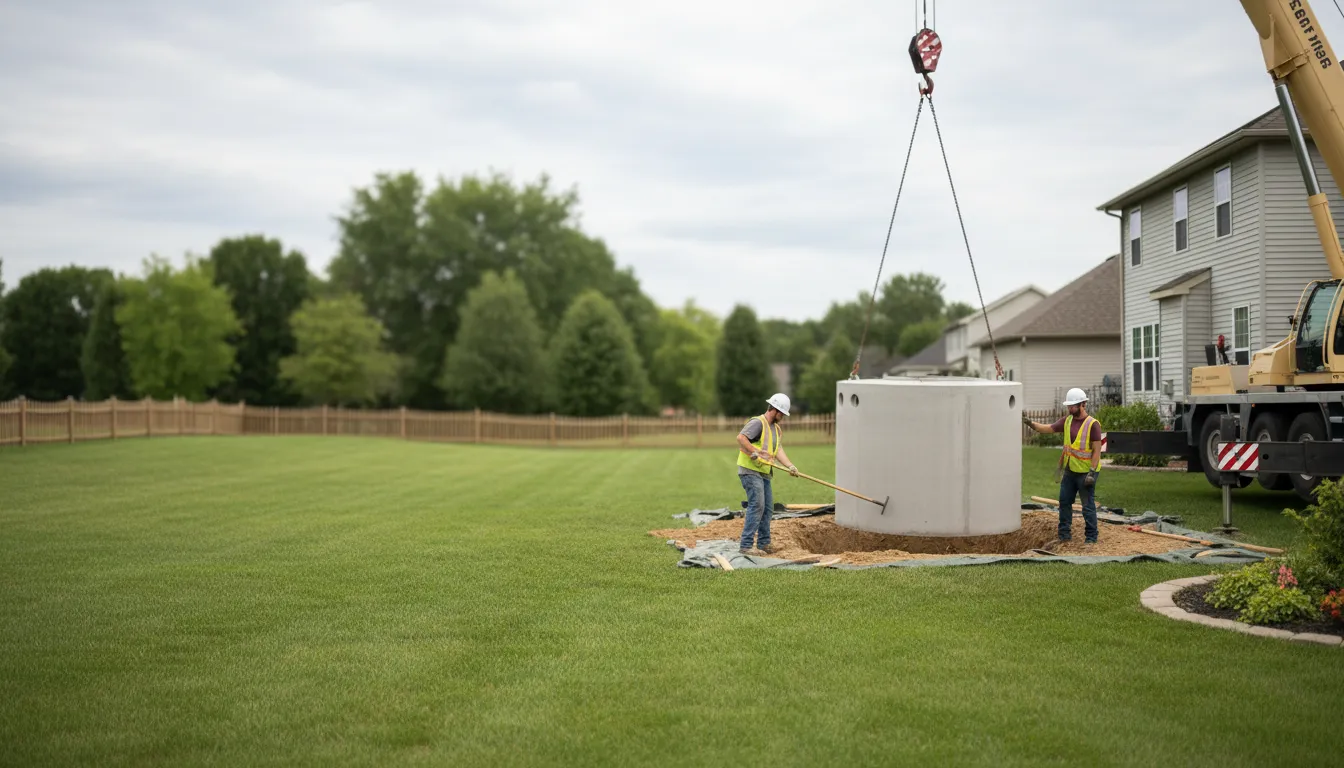
Find the Best Septic Tank Installation & Replacement Contractors for Your Business
No obligation • Fast responses • Nationwide coverage

Why you can trust Septic Spot
Septic Spot is a leading United States resource for understanding and comparing septic services. Our editors review providers using consistent criteria and verify key business details. Listings and scores are independent, and companies cannot pay to influence our content.
Search providers near you
Top Septic Tank Installation & Replacement Contractors in Rochester Hills, Michigan Ranked
Installing or replacing a septic system is a significant investment in your property's long-term functionality and environmental health. For homes in Rochester Hills not connected to municipal sewer lines, a properly designed and permitted septic system is essential for safely managing wastewater. This guide explains the local process, costs, and regulations to help you navigate your septic project and connect with qualified local professionals.

Schaefer Plumbing
Detroit, MI
Schaefer Plumbing is a family-owned plumbing and drain service company based in Detroit, MI. They offer a wide range of services including septic system installation, drain cleaning, pipe repair, and water heater installation and repair. Their team is trained in the latest plumbing technologies to handle various plumbing and drain issues efficiently. Schaefer Plumbing serves multiple communities around Detroit, including Lincoln Park, Dearborn, and Southfield, among others. They are known for their capability in septic system installations and provide service across a broad area in the Detroit region.
Howell Sanitary Co. II
Lansing, MI
Howell Sanitary Co. II provides a range of septic system services in Lansing, MI. Their offerings include septic tank pumping, inspections, repairs, and new installations. They also handle septic field repairs and replacements, with expertise in various field types such as conventional, elevated, dry wells, bed, and trench systems. Additional capabilities include septic tank riser installation, effluent filter cleaning, excavating, driveway grading, and land clearing.
Al Pearson & Son Septic Tank Cleaning
46885 Ford Rd, Canton Township, MI 48187
Al Pearson & Son Septic Tank Cleaning is a family-owned business serving Ann Arbor, MI, and the surrounding Southeast Michigan area. They offer a full range of septic services including tank pumping, cleaning, system repairs, new installations, soil evaluations, and excavation. With over 70 years of experience since 1953, the company is licensed and certified to handle advanced septic system work for both residential and commercial clients. They emphasize clear communication and honest recommendations to ensure septic systems operate reliably. Emergency septic services are also available with often same-day pumping.
Understanding the Septic System Installation Process
A septic system installation or replacement is not a simple excavation job; it's a regulated construction project that must comply with local and state health codes. The process ensures that wastewater from your home is treated effectively without contaminating groundwater or nearby water bodies. In Rochester Hills, this process is overseen by the Oakland County Health Division, which enforces standards set by the Michigan Department of Environment, Great Lakes, and Energy (EGLE) 1.
The journey typically begins with a site evaluation and ends with a final inspection before the system is covered. Key steps include soil testing, permit acquisition, system design, and hiring a licensed installer. Skipping or misunderstanding any of these steps can lead to costly delays, failed inspections, or a system that doesn't function properly. Being informed helps you work effectively with contractors and health department officials.
Step 1: The Critical Site Evaluation and Soil Testing
Before any plans are drawn, you must determine if your property can support a septic system. This starts with a percolation test (often called a "perc test"). Conducted by a licensed professional, this test measures how quickly water drains through your soil 2. The results determine the soil's absorption rate, which is the single most important factor in sizing the drain field (or absorption field).
- Why It's Mandatory: The perc test ensures the drain field can handle the estimated daily wastewater flow from your home. Unsuitable soil conditions may require an alternative, engineered system design.
- What It Determines: The test results dictate the size and type of the entire septic system. Poor drainage may necessitate a larger drain field or a more advanced treatment system.
- Feasibility: In rare cases, extremely poor soil conditions can make a conventional system infeasible, significantly impacting property development plans.
Step 2: Navigating Permits and Design Plans
With a successful perc test, the next phase is official planning and permitting. You cannot legally begin construction without the proper approvals from the Oakland County Health Division.
The Permit Application
Applications are typically submitted through Oakland County's online Citizen Access Portal. The application will require detailed information about your property and the proposed system. You or your contractor will need to provide:
- Engineered Site Plans: These are detailed, scaled drawings (often 24" x 36") showing the entire property layout. They must include the location of the proposed septic tank, drain field, well, property lines, structures, and any water bodies or drainage ways 3.
- System Specifications: Details on the tank capacity, drain field dimensions, and any proprietary treatment components.
- Licensed Professional Seal: The site plans usually must be stamped by a qualified engineer or designer approved by the health department.
The health department reviews these plans to ensure all required separation distances (e.g., from wells, property lines, and buildings) are met and that the design complies with all regulations.
Step 3: Choosing a System and Understanding Costs
The type of system installed depends largely on your soil conditions and property size. Costs can vary widely based on complexity.
Common System Types
- Conventional System: The most common type, featuring a septic tank and a subsurface drain field. It's the most affordable option if soil conditions permit.
- Engineered System: Required when soil has poor percolation, a high water table, or limited space. These systems may include pumps, sand filters, or advanced treatment units to pre-treat wastewater before it reaches the drain field.
Cost Breakdown for Rochester Hills
Septic system installation is a major expense. Here's a general breakdown of costs you can expect in the Rochester Hills area 4:
- Engineering & Design: $1,500 - $3,000
- Materials (Tank & Drain Field Components): $5,000 - $10,000+
- Installation Labor: $8,000 - $15,000
- Total Project Cost: $15,000 - $35,000+
Note: These are estimates. The final cost for a septic tank installation or full system replacement can be higher for large homes, challenging sites, or advanced engineered systems. Always get detailed, written quotes from multiple licensed contractors.
Find the perfect septic tank installation & replacement contractors for your needs
Get personalized recommendations and expert advice
Step 4: Installation and Mandatory Inspections
Once your permit is approved, installation can begin. Michigan law requires that the installation be performed by a licensed septic system installer. Hiring a licensed professional is non-negotiable for both compliance and the long-term reliability of your system.
A critical rule to remember: The system must be inspected by a county sanitarian before it is covered or backfilled. You or your installer must typically provide at least 24 hours' notice for this inspection 5 6. The inspector will check:
- The tank's placement, level, and integrity.
- The drain field trench depth, distribution piping, and gravel bed.
- The overall workmanship and adherence to the approved plans.
Failing this inspection means you'll have to uncover and correct any issues, leading to additional labor and costs. Passing the inspection allows you to proceed with backfilling and restoring the landscape.
Key Regulations and Sizing Considerations
System Sizing
The size of your septic tank is primarily based on the number of bedrooms in your home, as this estimates daily wastewater flow. A common minimum for a 2-3 bedroom house is a 1,000-gallon septic tank 7. Larger homes require larger tanks. The drain field size is determined directly by the perc test results.
Local Rochester Hills Standards
The City of Rochester Hills has specific engineering and design standards that complement county and state rules. Your site plans must comply with these local requirements, which cover details like construction materials, pipe specifications, and site restoration.
Separation Distances
State and local codes mandate minimum distances between septic system components and other features:
- Distance from the drain field to a private well.
- Distance from the septic tank to your home's foundation.
- Distance from system components to property lines and surface water.
Your approved site plan will detail these required setbacks for your specific property 8.
Planning for a System Replacement
If you're replacing a failing system, the process is largely the same as a new installation. The health department will require a new site evaluation and permit. Often, you cannot use the exact location of the old drain field, so a new area of your property must be evaluated. This underscores the importance of regular maintenance-pumping your tank every 3-5 years-to extend the life of your system and avoid a premature, costly replacement.
Frequently asked questions
Sources
Footnotes
-
A Guide to New Home and Addition Construction - https://cms9files.revize.com/rochesterhillsmi/Building/Guidebooks/NewHomeConstruction.pdf ↩
-
Perc Tests in Southeast Michigan - https://www.universalsepticservices.com/services/perc-test/ ↩
-
Septic & Well Project Application Requirements - https://www.washtenaw.org/1651/Septic-Well-Project-Application-Requirem ↩
-
Engineered Septic Systems in Michigan: Costs, Maintenance, a ... - https://www.michiganseptic.com/post/engineered-septic-systems-in-michigan-costs-maintenance-a-2026-guide ↩
-
Onsite Sewage Disposal System (Septic) | Oakland County, MI - https://www.oakgov.com/community/health/public-health-services/environmental-health/onsite-sewage-disposal-system-septic ↩
-
Residential Well & Septic - District Health Department #10 - https://www.dhd10.org/environmental-health/well-septic/residential/ ↩
-
What Size Septic Tank Do I Need - https://www.ntotank.com/blog/what-size-septic-tank-do-i-need ↩
-
City of Rochester Hills - Revize - https://cms9files.revize.com/rochesterhillsmi/DPS/EngineeringDesignStandards.pdf ↩