Find the Best Septic Tank Installation & Replacement Contractors for Your Business
No obligation • Fast responses • Nationwide coverage

Why you can trust Septic Spot
Septic Spot is a leading United States resource for understanding and comparing septic services. Our editors review providers using consistent criteria and verify key business details. Listings and scores are independent, and companies cannot pay to influence our content.
Search providers near you
Top Septic Tank Installation & Replacement Contractors in Henderson, Nevada Ranked
Installing or replacing a septic system is a significant investment in your property's infrastructure and environmental health. In Henderson, this process is governed by specific local and county regulations designed to protect public health and groundwater. Whether you're building a new home on a rural lot or facing a failing system, understanding the required permits, inspections, and site evaluations is crucial. This guide outlines the key steps and considerations for septic system work in Henderson, helping you navigate the process and connect with qualified local professionals.
Understanding Henderson's Septic System Regulations
In Henderson, all individual sewage disposal system (ISDS) projects fall under the jurisdiction of the Southern Nevada Health District (SNHD) 1. The City of Henderson also plays a role, as its Utility Services department requires coordination for any building or development permits. The most critical rule to understand upfront is the sewer connection mandate. If your property is within a certain distance of a municipal sewer line-often cited as 400 feet for individual lots, and up to 2 miles for new subdivisions-you are legally required to connect to the public sewer and cannot install a new septic system 2. Your first step should always be to verify sewer availability with the City of Henderson.
For properties where a septic tank installation or replacement is permissible, a Permit to Construct from the SNHD is mandatory before any work begins. This permit process is integrated with the city's building permit system, meaning approval from both entities is required. Furthermore, new systems installed after certain dates will require a 5-year operating permit from the SNHD, with a planned fee structure to ensure ongoing compliance.
The Permit and Planning Process
Navigating the permit process is the foundation of a successful septic system project. It begins with a formal application to the SNHD, which must include a detailed site plan and the results of a professional site evaluation. You cannot simply choose a tank size or location; the system's design is dictated by the property's soil conditions, water table, and intended household usage.
The City of Henderson emphasizes that development involving septic systems requires careful planning with their Utility Services department to ensure all public health and infrastructure standards are met 3. This often means your contractor will need to secure the SNHD permit concurrently with or prior to obtaining the necessary city building permits. Skipping this step can lead to costly work stoppages, fines, or the need to redo installations.
Required Site Evaluation and Soil Testing
A professional site evaluation is the non-negotiable first technical step. This evaluation determines if your land can support a septic leach field (drainfield) and what type of system is suitable. The core component is a soil percolation test (commonly called a "perc test"), which measures how quickly water drains through the soil 4 5. In Nevada, the standard procedure typically involves excavating a minimum of two percolation test holes and two deep observation pits to create a detailed soil profile 4 6.
These tests must be conducted by a licensed professional, such as a soil scientist or engineer, who will submit the official report to the SNHD as part of your permit application. The results dictate critical design elements, including the size of the drainfield and the required depth of the trenches. Poor percolation rates may necessitate a more advanced (and more expensive) alternative system.
Installation, Inspection, and Certification
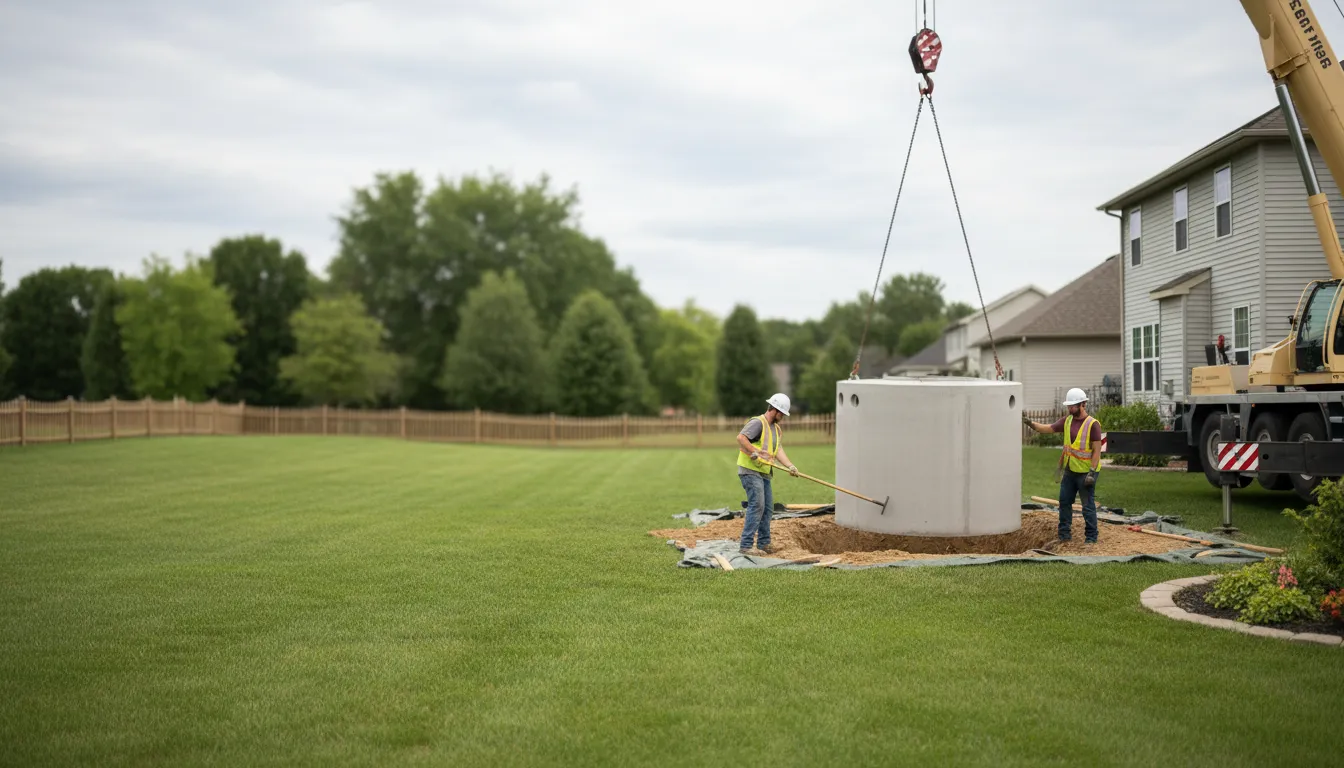
Once permits are secured and the design is approved, physical installation can begin. For a full septic system replacement, this involves excavating the old tank and drainfield, installing the new precast concrete or fiberglass tank, and constructing the new leach field according to the engineered plan. It's a major excavation project that requires heavy equipment and expertise.
The SNHD mandates specific inspections during construction that you must schedule. The most critical is the construction inspection, which must occur after the tank and drainage lines are placed but before they are backfilled with soil 7 8. Failing to call for this inspection will result in a violation and may require costly re-excavation.
After the system is installed and passes final inspections, you may need a system certification. This is often required for property transfers, remodels, or final sign-off on new construction. This certification verifies that the system is functioning properly and is legally recognized for its intended use.
Find the perfect septic tank installation & replacement contractors for your needs
Get personalized recommendations and expert advice
Cost Considerations for Henderson Homeowners
Septic system work is a substantial financial undertaking. While costs vary based on system size, soil conditions, and property accessibility, homeowners should be prepared for significant expenses. Replacing an entire system, including the tank and drainfield, is a major project with estimated costs often exceeding $20,000. The drainfield itself is frequently the most expensive component, with replacement costs for that portion alone surpassing $20,000 in many cases.
For smaller-scale work, like a tank-only replacement, the tank material itself represents a portion of the cost. A standard 1,000-gallon concrete tank may range from $500 to $900 for the unit, not including excavation, delivery, installation, or plumbing connections 9. Professional fees for the required site evaluation, permit processing, and inspections are additional. An existing system evaluation or inspection for certification purposes typically ranges from $500 to $1,200 10.
Navigating System Repairs vs. Full Replacement
Not all septic problems require a full system overhaul. Sometimes, issues are isolated to a clogged pipe, a damaged baffle, or a failing pump in an advanced system. A professional assessment can determine if a repair is feasible. However, in Henderson's often challenging soils, a failing drainfield usually indicates the need for a complete replacement of the absorption area.
If you are considering repairs, be aware that any major repair that alters the system's design or location will likely require a permit from the SNHD, similar to a new installation 11. It's always wise to consult with a licensed professional and the health district before proceeding with any significant repair to ensure it meets code and doesn't lead to further issues.
Working with Licensed Professionals
Given the regulatory complexity and technical demands, hiring a licensed, experienced septic contractor in Henderson is essential. A qualified professional will:
- Understand the specific requirements of the SNHD and City of Henderson.
- Coordinate the necessary soil testing and engineering.
- Handle the permit application process.
- Schedule all mandatory inspections.
- Install the system correctly to ensure long-term functionality and compliance.
They can also provide crucial guidance on system maintenance to extend its lifespan. Always verify a contractor's license with the Nevada State Contractors Board and ask for references from recent projects in the area.
The Importance of Proper Maintenance
Once your new or replacement system is installed, proper maintenance is key to protecting your investment and avoiding premature failure. This includes regular pumping of the tank (typically every 3-5 years, depending on usage), conserving water to avoid overloading the system, and avoiding flushing harmful chemicals or non-biodegradable materials. With new regulations introducing 5-year operating permits, demonstrating proper maintenance may become part of ongoing compliance 12.
Frequently asked questions
Sources
Footnotes
-
Sewage/Septic Disposal Systems (ISDS) - https://www.southernnevadahealthdistrict.org/permits-and-regulations/sewage-septic-disposal-systems-isds/ ↩
-
Frequently Asked Questions - Southern Nevada Health District - https://www.southernnevadahealthdistrict.org/permits-and-regulations/sewage-septic-disposal-systems-isds/faq/ ↩
-
Development | Henderson, NV - https://www.cityofhenderson.com/government/departments/utility-services/development ↩
-
Design Criteria for Septic Tanks and Individual Disposal ... - https://ndep.nv.gov/uploads/water-wpc-resources-publications-docs/wts22-rev-5-2017.pdf ↩ ↩2
-
How to Know if You Need a Septic System Permit - Pippin Home Designs - https://www.pippinhomedesigns.com/septic-system-permit/ ↩
-
GENERAL INSTRUCTIONS: Fill out this application in full. Do not leave blank spaces or your application may be refused. Two se - https://cityoffernley.org/DocumentCenter/View/27413/Septic-Application ↩
-
Septic Systems & Liquid Waste - Northern Nevada Public Health - https://www.nnph.org/programs-and-services/environmental-health/land-development/septic-liquid-waste.php ↩
-
Certification Procedures for Individual Sewage Disposal System ( ... - https://www.southernnevadahealthdistrict.org/permits-and-regulations/sewage-septic-disposal-systems-isds/residential-isds-permits/certification-procedures-for-individual-sewage-disposal-system-isds-and-or-water-well/ ↩
-
Residential Septic Tank Pricing | Homeowner's Guide to Costs - https://www.ntotank.com/blog/residential-septic-tank-pricing ↩
-
New Septic Rules in 2025: What Nevada Homeowners Need ... - https://www.thebrenkusteam.com/blog/nevada-septic-rules-2025-homeowners-guide ↩
-
Residential Septic System Permit Requirements - https://www.southernnevadahealthdistrict.org/permits-and-regulations/sewage-septic-disposal-systems-isds/residential-isds-permits/residential-septic-tank-permit-requirements/ ↩
-
Memorandum 01-26 - Southern Nevada Health District - https://media.southernnevadahealthdistrict.org/download/boh25/20250828/item-viii-1.pdf ↩