Find the Best Septic Tank Installation & Replacement Contractors for Your Business
No obligation • Fast responses • Nationwide coverage

Why you can trust Septic Spot
Septic Spot is a leading United States resource for understanding and comparing septic services. Our editors review providers using consistent criteria and verify key business details. Listings and scores are independent, and companies cannot pay to influence our content.
Search providers near you
Top Septic Tank Installation & Replacement Contractors in Pittsburgh, Pennsylvania Ranked
Installing or replacing a septic system is a significant home improvement project that ensures safe, long-term wastewater management for properties not connected to a municipal sewer line. In Pittsburgh and Allegheny County, this process is governed by specific state and county health regulations designed to protect groundwater and public health. Understanding the steps, from soil testing to final inspection, is crucial for a successful project. This guide provides a detailed overview of the local process, costs, and key considerations to help you navigate planning your new or replacement septic system installation.

Understanding Local Regulations: Act 537 and ACHD
All onsite sewage disposal systems in Allegheny County are regulated under Pennsylvania's Act 537 Sewage Facilities Act and overseen by the Allegheny County Health Department (ACHD). This framework ensures systems are designed, installed, and maintained to prevent contamination. You cannot simply hire a contractor and begin digging; the project must start with obtaining the proper permits through a certified local Sewage Enforcement Officer (SEO). The SEO is a key figure who represents the local municipality or county and is responsible for reviewing site evaluations, approving designs, and conducting mandatory inspections.
The permit, once issued, is typically valid for three years, giving you adequate time to complete the installation. It's important to note that regulations can be updated, so always contact the ACHD or your local municipality for the most current requirements before beginning any work 1.
The Step-by-Step Installation Process
1. Site Evaluation and Soil Testing
The first and most critical step is determining if your property can support a conventional septic system. This involves a comprehensive site evaluation conducted by a certified SEO.
- Deep Soil Probes (Deep Probe Tests): The SEO will use specialized equipment to dig a series of deep holes to examine the soil profile. They are checking for limiting factors such as the depth to bedrock, the presence of a high seasonal water table, and soil texture.
- Percolation Test (Perc Test): This test measures the soil's ability to absorb water, which determines the size of the absorption area (drain field) needed. The procedure involves pre-soaking test holes for 8 to 24 hours to simulate wet conditions before measuring the water drop rate over a set period 2.
Common reasons a site may fail include slopes exceeding 25%, a high water table, shallow bedrock, or soils with very slow percolation rates like heavy clay 3. If a conventional system isn't feasible, the SEO and a system designer will discuss alternative systems, such as aerobic treatment units (ATUs) or pumped systems.
2. System Design and Engineering
Once the soil data is collected, a professional system designer or engineer creates a detailed plan. This engineered design must comply with all state and county regulations and is based directly on the findings from the site evaluation. The design will specify:
- Septic Tank Size: Tanks are sized by bedroom count. For example, a standard 3-bedroom home requires a minimum 900 to 1,000-gallon tank 4 5.
- Absorption Area Size and Layout: The percolation test results dictate the total square footage of the drain field.
- System Type: Whether it's a conventional gravity-fed system, a pressure-dosed system, or a more advanced alternative technology.
3. Permit Application and Approval
With the engineered design in hand, you or your contractor submits the official permit application to the local permitting agency (often through the ACHD) 6 7. The application includes the design plans, the site evaluation report, and the required fees. The SEO and health department reviewers will check the application for compliance before issuing the construction permit.
4. Professional Installation
Only after the permit is issued should excavation and installation begin. It is essential to work with a licensed and experienced septic system contractor familiar with Allegheny County's specific requirements. The installation involves:
- Excavating the tank bed and drain field trenches.
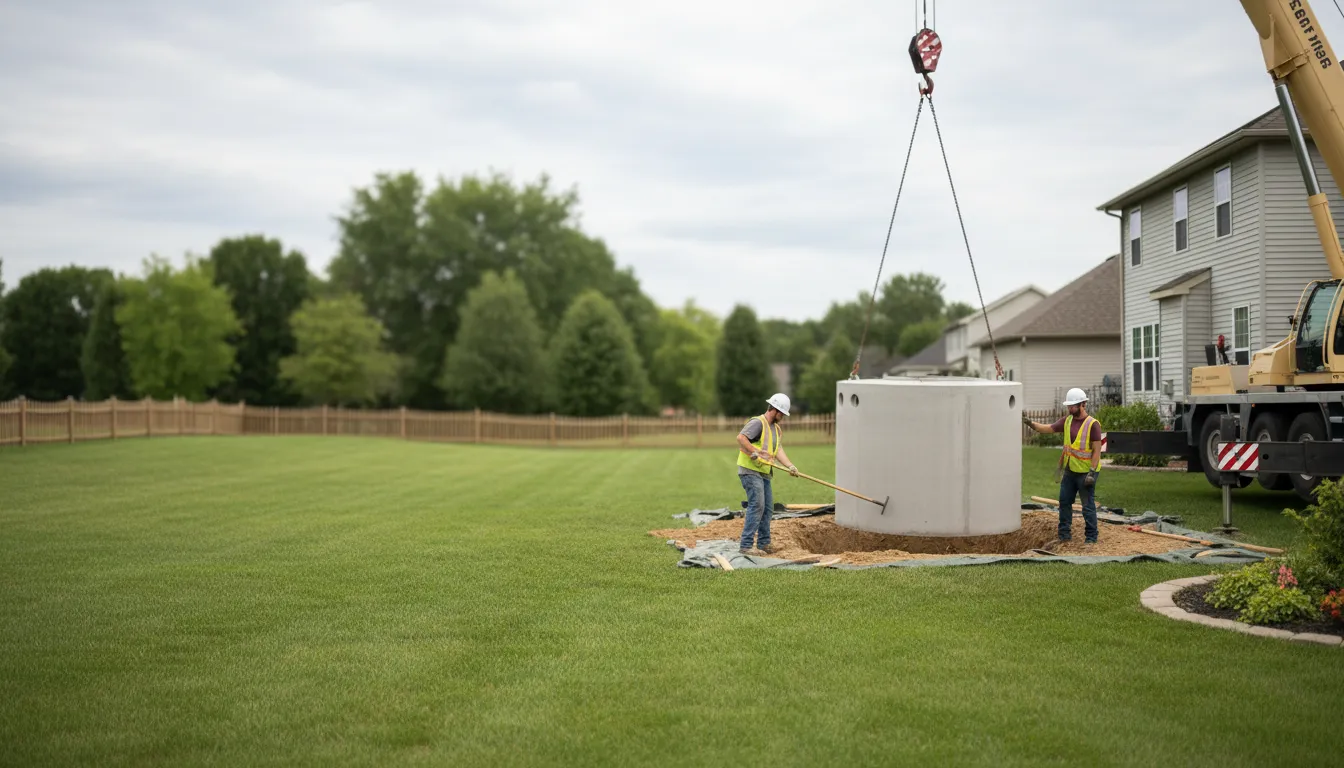
- Setting the septic tank (typically concrete, plastic, or fiberglass).
- Installing distribution boxes and laying perforated pipe in the gravel-filled absorption trenches.
- Ensuring proper pipe slope and connections.
5. Mandatory Inspections Before Cover-Up
This is a non-negotiable and crucial step. The certified SEO must inspect the installation before the tank and drainage lines are covered with soil 8 9 10. The inspector will verify:
- The tank is the correct material, properly leveled, and watertight.
- All pipes have the correct slope and are securely connected.
- The absorption area is prepared with the correct amount and type of gravel.
- The overall installation matches the approved engineered design.
Failing to get this inspection can result in being forced to excavate the system for inspection, leading to significant additional costs and delays. Once the SEO approves the installation, you receive permission to backfill and cover the system.
Find the perfect septic tank installation & replacement contractors for your needs
Get personalized recommendations and expert advice
Cost Breakdown for Septic System Installation in Pittsburgh
The total cost for a new septic system installation or a full system replacement in the Pittsburgh area can vary widely based on soil conditions, system type, and property accessibility. Here is a general breakdown of expected costs:
- Permit Application Fees: These administrative fees paid to the health department typically range from $150 to $500.
- Soil and Percolation Testing: The critical site evaluation performed by the SEO is a separate cost, usually ranging from $750 to $1,900 11.
- System Design & Engineering: Hiring a professional to create the compliant design plan can cost several hundred to over a thousand dollars.
- Installation (Labor & Materials): This is the largest expense, covering excavation, the septic tank, piping, gravel, and labor. For a conventional gravity system, costs generally range from $5,000 to over $15,000 12. A typical project for a 3-4 bedroom home might fall in the $7,000 to $10,000 range. Complex sites requiring alternative systems like sand mounds or aerobic treatment units will be at the higher end of the scale or exceed it.
Maintaining Your New Septic System
After investing in a new septic system, proper maintenance is key to its longevity-often 25-30 years or more. Regular pumping (every 3-5 years), water conservation, and being mindful of what goes down the drain will protect your investment and prevent premature system failure. Keep a detailed record of inspections, pumping, and any repairs for future reference.
Frequently asked questions
Sources
Footnotes
-
The Ins and Outs of Septic Systems in Pennsylvania - https://www.eastvincent.org/vertical/sites/%7B5B8F1E55-6CA8-450E-BB40-12A8385B1313%7D/uploads/septicsystems%281%29.pdf ↩
-
25 Pa. Code § 73.15. Percolation tests. - https://www.pacodeandbulletin.gov/Display/pacode?file=/secure/pacode/data/025/chapter73/s73.15.html&d=reduce ↩
-
What are the standard procedures and guidelines for septic system testing? | Carroll Valley, PA - https://www.carrollvalley.org/codes-enforcement-zoning/faq/what-are-standard-procedures-and-guidelines-septic-system-testing ↩
-
Onlot Sewage Program - Home Buyer's / Builders Guide - DEP - https://www.dep.state.pa.us/dep/deputate/watermgt/wqp/wqp_wm/FACTS/pa1607.htm ↩
-
Septic Systems | Department of Environmental Protection | Commonwealth of Pennsylvania - https://www.pa.gov/agencies/dep/residents/my-water/septic-systems ↩
-
Allegheny County PA Septic Permits & Regulations (2026) - https://septicandwell.com/pennsylvania/allegheny/regulations ↩
-
Permit Process - Pittsburgh, PA - https://www.pittsburghpa.gov/Business-Development/Permits-Licenses-and-Inspections/Permits/Permit-Process ↩
-
ACT 537: UNDERSTANDING SEPTIC SYSTEMS - GreenPort - https://greenport.pa.gov/elibrary/PDFProvider.ashx?action=PDFStream&docID=5303&chksum=&revision=3&docName=ACT+537%3A+UNDERSTANDING+SEPTIC+SYSTEMS&nativeExt=pdf&PromptToSave=False&Size=210363&ViewerMode=2&overlay=0 ↩
-
DEP/PA Fact Sheets on Sewage Disposal Systems - http://www.paupacktownship.org/forms/Fact_Sheets_Sewage.pdf ↩
-
Septic Inspections Made Easy: What Every Contractor Needs to Know Before Breaking Ground (2025) - https://flengineeringllc.com/septic-inspections-guide-contractors-2025/ ↩
-
How Much Does a Perc Test Cost? [2026 Data] | Angi - https://www.angi.com/articles/perc-test-cost.htm ↩
-
Understanding Septic Tank Permits and Regulations - https://westcoastsanitationinc.com/understanding-septic-tank-permits-and-regulations/ ↩