Find the Best Drain Field Repair Companies for Your Business
No obligation • Fast responses • Nationwide coverage

Why you can trust Septic Spot
Septic Spot is a leading United States resource for understanding and comparing septic services. Our editors review providers using consistent criteria and verify key business details. Listings and scores are independent, and companies cannot pay to influence our content.
Search providers near you
Top Drain Field Repair Companies in Tuscaloosa, Alabama Ranked
A failing drain field, also known as a leach field or absorption field, is a serious issue for any home with a septic system. It's the final and most critical stage for treating and dispersing wastewater into the soil. When it malfunctions, it can lead to sewage backups, soggy yards, and environmental contamination. This guide explains the essentials of drain field repair and replacement in Tuscaloosa, helping you understand the process, local regulations, and how to find qualified professionals to restore your system's function.
Caffee Environmental LLC
Birmingham, AL
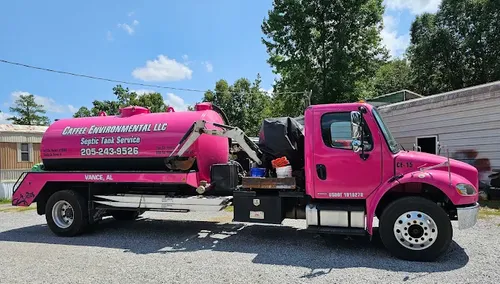
Caffee Environmental LLC is a family-owned septic service company based in Birmingham, AL, offering a full range of septic system services including tank pumping, inspections, pump replacements, and drain field repairs. With 25 years of combined experience, their licensed and certified team serves residential customers across Tuscaloosa, Jefferson, and Bibb Counties. They use modern equipment and eco-friendly practices tailored to local soil conditions to maintain system health and prevent costly issues. The company also provides land clearing and excavation services, supporting property maintenance and preparation beyond septic care.
American Septic Systems
10650 Lock 17 Rd, Adger, AL 35006
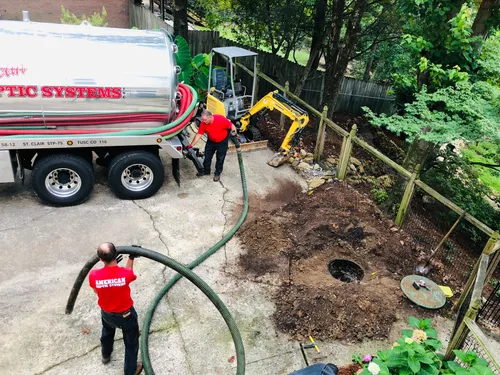
American Septic Systems is a licensed septic service provider based near Birmingham, AL. They offer a wide range of septic services including tank pumping, inspections approved by county health departments, repairs, and new installations. Their capabilities include field line installation and repair, grease trap cleaning, and effluent pump replacement. The company emphasizes thorough septic system maintenance to prevent issues before they arise.
Understanding Your Septic Drain Field
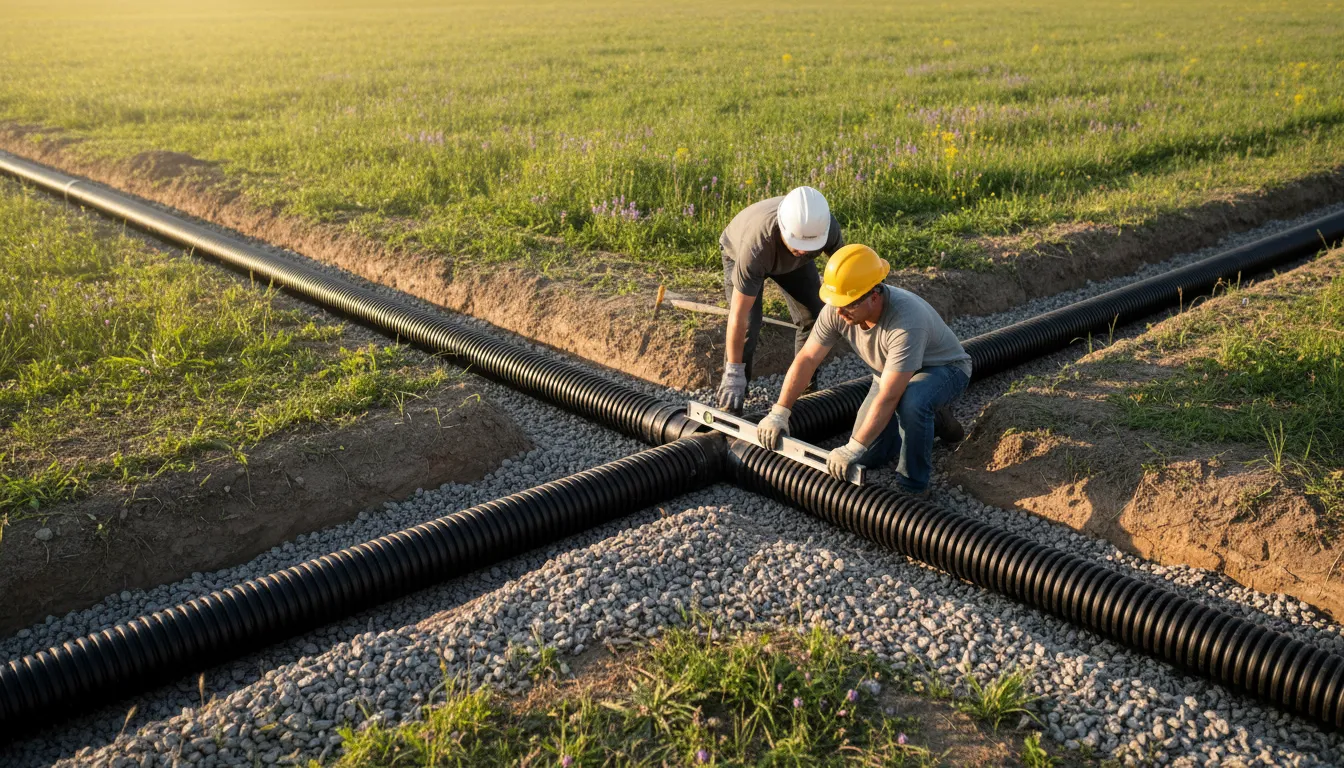
The drain field is a network of perforated pipes buried in trenches filled with gravel. After solids settle in the septic tank, the liquid effluent flows out into these distribution lines, where it slowly seeps into the soil. The soil acts as a natural filter, removing harmful bacteria, viruses, and nutrients before the water reaches groundwater. For this process to work, the soil must be suitable and the system must be properly sized and maintained.
In Tuscaloosa, the performance of your leach field is heavily dependent on local soil conditions. A soil evaluation or percolation (perc) test is required to determine how quickly water drains through the earth on your property. This test dictates the size and type of absorption field needed to handle your household's wastewater flow effectively.
Signs Your Drain Field Needs Attention
Recognizing early warning signs can prevent a complete system failure and more costly repairs. Look for these common indicators:
- Soggy Ground or Standing Water: Puddles or persistently wet, spongy soil over the drain field area, especially when it hasn't rained, is a primary sign of saturation.
- Sewage Odors: Foul smells emanating from your yard or near the septic tank and distribution box can indicate that untreated effluent is rising to the surface.
- Slow Drains and Backups: If toilets, showers, and sinks drain slowly or back up throughout the house, it could point to a clogged or failing field preventing effluent from leaving the system.
- Unusually Green Grass: While counterintuitive, patches of grass over the drain field that are much greener and lusher than the rest of the yard can signal a nutrient-rich sewage leak.
- Gurgling Sounds: Noises coming from your plumbing fixtures can suggest a blockage in the system.
If you notice these signs, the first step is often to check soil moisture and have your septic tank pumped and inspected by a licensed professional. Sometimes, simple maintenance can alleviate the problem, but persistent issues typically require field line diagnostics.
Diagnosis: Repair vs. Replacement
A professional assessment is crucial to determine the right course of action. Technicians will locate the field and may perform a camera inspection or pressure test to evaluate flow and diagnose leaks or blockages within the lateral lines.
- Repair: Minor issues might be resolved by cleaning a clogged distribution box, replacing a damaged pipe section, or using specialized treatments to break down biomat (a clogging layer) in the trenches. However, repair is often a temporary solution if the underlying soil is compromised.
- Replacement: A full drain field replacement is necessary when the soil is permanently saturated, the trenches have collapsed, or the entire network of pipes has failed. This involves excavating the old lateral lines and installing a new absorption field, often in a different area of your property 1.
Find the perfect drain field repair companies for your needs
Get personalized recommendations and expert advice
Tuscaloosa Regulations and Permit Requirements
All work on septic systems in Alabama, including drain field repair or replacement, is strictly regulated to protect public health and water resources.
- Permits: A permit from the local county health department (under the Alabama Department of Public Health - ADPH) is required for any repair or new installation. The process begins with a site evaluation by a licensed installer or soil classifier.
- Licensing: Always verify that any contractor you hire is licensed by the Alabama Onsite Wastewater Board. This ensures they are trained in state codes and proper installation techniques 2.
- Location Constraints: State codes mandate specific setbacks. For example, drain fields must be at least 100 feet from water wells and 50 feet from streams or lakes. They cannot be placed under driveways, patios, or other impervious surfaces. It's also advised to keep deep-rooted trees and plants away from the area.
- System Sizing: The size of your new absorption field is legally determined by the number of bedrooms in your home and the results of the soil percolation test.
Cost Factors for Drain Field Work in Tuscaloosa
The cost for drain field repair or replacement varies widely based on the extent of the damage, soil conditions, and the size of the system needed for your home. Typical total costs for repair or replacement range between $2,000 and $10,000+.
Here's a breakdown of key cost components:
- Lateral Line Replacement: This is often the bulk of the expense, with costs ranging from $9 to $12 per linear foot for the piping, excluding gravel and labor 3.
- Full System Installation: If the entire septic system (tank and field) needs replacement, average costs in the region can range from $3,743 to $5,348, with extremes from $1,334 to over $9,387 depending on system type and site challenges 4 5 6.
- Site Work and Regrading: After excavation and installation, restoring the yard through grading and seeding can add $1,000 to $3,300 to the project 7.
- Permit Fees: These are often included in the contractor's total bid but can vary by the specific Tuscaloosa County project requirements.
The Replacement Process: What to Expect
- Site Evaluation and Design: A licensed professional will perform soil tests and survey your property to design a new system that meets ADPH codes and identifies a suitable location-preferably a sunny, elevated area away from trees 8 9.
- Permitting: Your contractor will submit the design and secure the necessary permits from the health department.
- Excavation: Heavy equipment will excavate the trenches for the new lateral lines. The old field may be abandoned in place or excavated.
- Installation: Perforated pipes are laid in gravel-filled trenches, connected to a distribution box, and covered with more gravel and a layer of soil fabric before being backfilled with soil.
- Restoration and Final Inspection: The yard is regraded and seeded. A final inspection by the health department is usually required to close the permit.
Maintaining Your New Drain Field
Protect your investment with proper care:
- Pump your septic tank regularly (every 3-5 years) to prevent solids from washing out and clogging the new field 10 11.
- Conserve water and spread out laundry loads to avoid hydraulically overloading the system.
- Never drive or park vehicles, build structures, or plant trees and shrubs over the drain field area.
- Avoid pouring grease, chemicals, or non-biodegradable items down the drain.
Frequently asked questions
Sources
Footnotes
-
Field Line Repairs and Replacements in Alabama - https://sfienvironmental.net/field-line-repairs-replacements-north-central-alabama/ ↩
-
Objective: To ensure that residential on-site wastewater treatment systems protect soil, groundwater, and surface water resource - https://apa.ny.gov/files/permits/guidelines/dap/DAP-ProjectGuidelines-ResidentialOSWT.pdf ↩
-
Cost to Replace Septic Tank and Drain Field [2026 Data] | Angi - https://www.angi.com/articles/how-much-new-drain-fields-foot.htm ↩
-
How Much Does A Septic System Cost? - https://uniquedrainseptic.com/blogs/resources/how-much-does-a-septic-system-cost ↩
-
Tuscaloosa Septic Systems Costs & Prices - ProMatcher Cost Report - https://septic-systems.promatcher.com/cost/tuscaloosa-al-septic-systems-costs-prices.aspx ↩
-
Septic Tank Installation in Tuscaloosa, AL - Costs 02 / 2026 - homeyou - https://www.homeyou.com/al/septic-tank-installation-tuscaloosa-costs ↩
-
Alabama Septic Tank Requirements | Onsite Sewage and Disposal Systems - https://www.ntotank.com/blog/alabama-septic-tank-requirements ↩
-
Septic Tank System: Homeowner's Guide & Records Folder - https://www.alabamapublichealth.gov/onsite/assets/homeownersguide.pdf ↩
-
The Ultimate Guide to Replacing a Septic Drain Field - https://www.rciseptic.com/the-ultimate-guide-to-replacing-a-septic-drain-field ↩
-
Septic Tank Maintenance | Alabama Department of Public ... - https://www.alabamapublichealth.gov/onsite/maintenance.html ↩
-
Caring for Septic Systems - https://www.aces.edu/blog/topics/fish-water/caring-for-septic-systems/ ↩