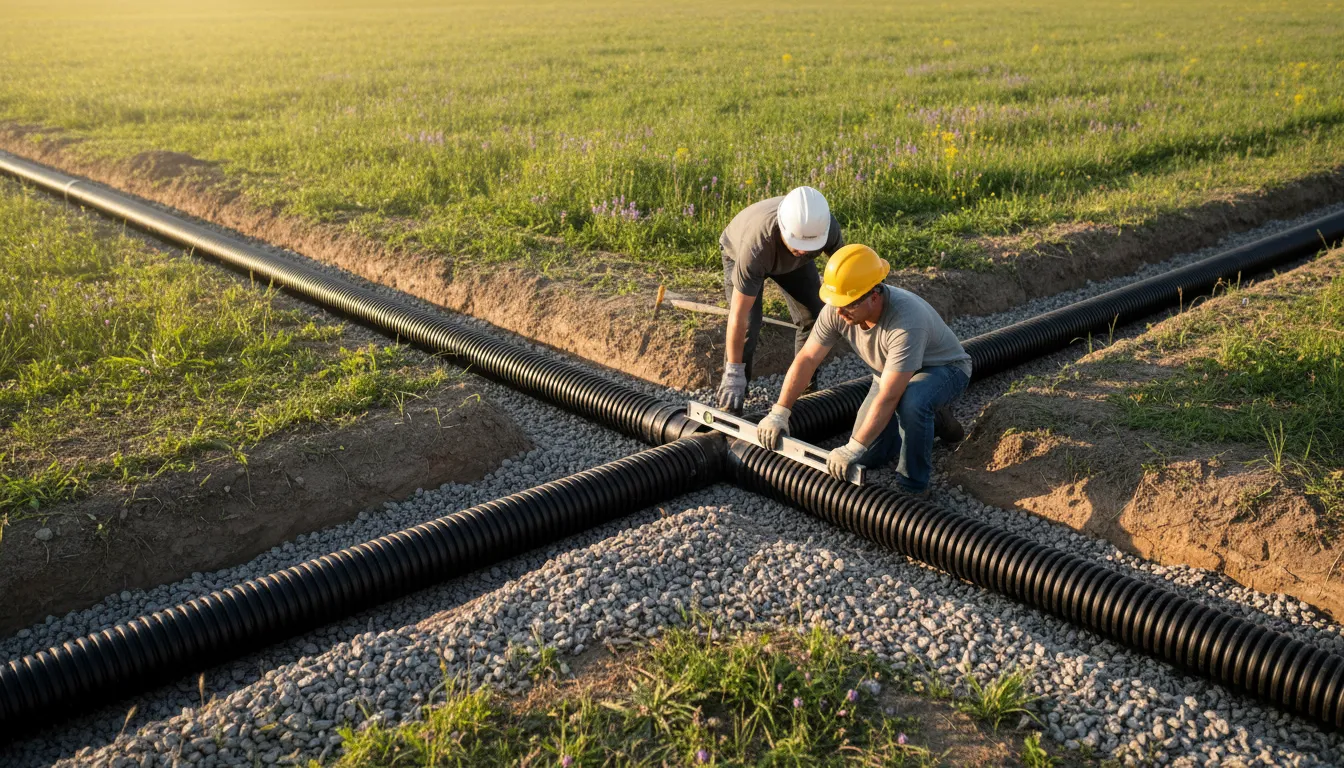
Find the Best Drain Field Repair Companies for Your Business
No obligation • Fast responses • Nationwide coverage

Why you can trust Septic Spot
Septic Spot is a leading United States resource for understanding and comparing septic services. Our editors review providers using consistent criteria and verify key business details. Listings and scores are independent, and companies cannot pay to influence our content.
Search providers near you
Top Drain Field Repair Companies in Augusta, Georgia Ranked
A failing drain field is a serious issue for any home with a septic system, leading to soggy yards, foul odors, and potential environmental contamination. Drain field repair and replacement involves diagnosing and fixing the soil absorption area, a critical component that treats and disperses wastewater. This guide explains the local process, costs, and regulations to help Augusta homeowners understand their options and connect with qualified local specialists for soil evaluation, system design, and installation.
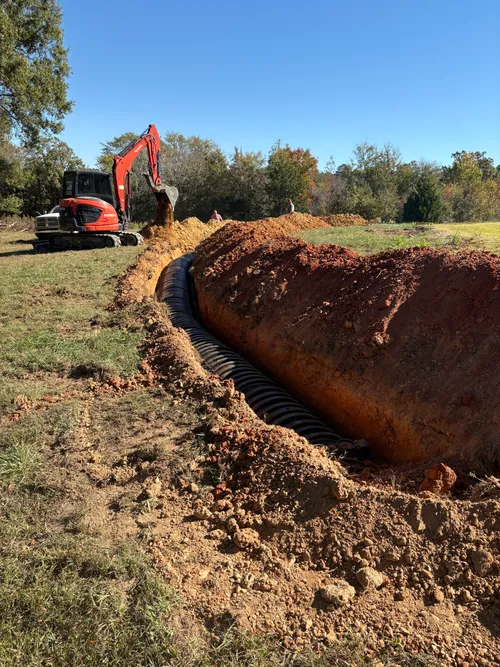
Skipper's Septic Service LLC
444 Clinton Church Rd, Salley, SC 29137
Skipper's Septic Service LLC provides septic system installation, maintenance, repair, and inspections for residential and commercial properties in Augusta, GA. Their services include septic tank pumping, drain field repair and replacement, grease trap installation and cleaning, and well installation. The company handles everything from site evaluation to final installation, ensuring compliance with local and state regulations. They also offer septic system inspections for home buyers and sellers. Skipper's Septic Service LLC has years of experience and provides emergency septic services.
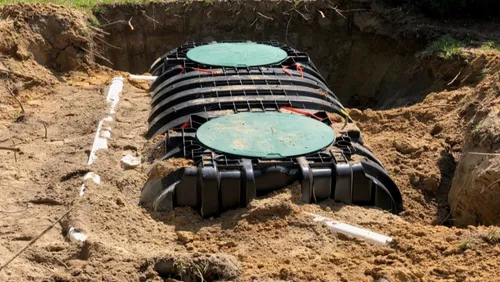
C.E. Taylor & Son Inc
128 Taylor Ln, Lexington, SC 29073
C.E. Taylor & Son Inc is a full-service septic tank company serving Augusta, GA. They provide residential and commercial septic tank pumping, inspection, repair, installation, and maintenance. Their services include drain field repair or replacement, grease trap pumping, high-pressure jetting, and sewer line repairs. With decades of experience, they use current techniques and quality products to address various septic system issues. The company is also available for emergency septic tank services.
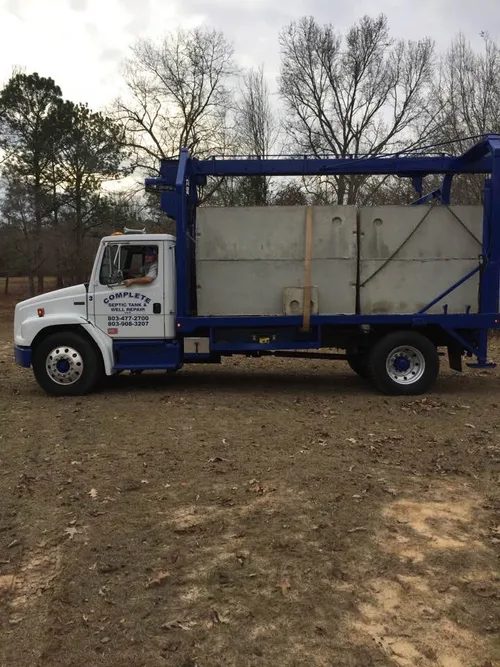
Complete Septic Tank LLC
1543 Swansea Rd, Pelion, SC 29123
Complete Septic Tank LLC is a full-service septic system provider based in Augusta, GA. They offer residential and commercial septic tank pumping, installation, repairs, and inspections, including grease trap pump-outs for restaurants and well services such as installation and repair. The company also provides septic tank and well inspection letters for home buyers and sellers. Their services cover issues like septic tank pump-outs and drain field repairs, using advanced technology to support conservation and cost reduction.
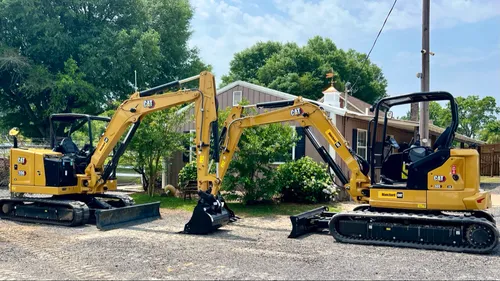
Sharpe's Septic Tank & Well Drilling Service LLC
3660 Fish Hatchery Rd, Gaston, SC 29053
Sharpe's Septic Tank & Well Drilling Service LLC provides septic system installation, inspection, pumping, repair, and maintenance services in Augusta, GA. The company also handles grease interceptors, sewer lift stations, and drain field repairs. With over 50 years of experience since 1966, Sharpe's follows state specifications and offers a range of services including septic system installation, pump repair, and septic inspections. The business is licensed, bonded, and insured, serving both residential and commercial clients in the area.
Understanding Your Drain Field in Augusta
Often called a leach field or soil absorption field, the drain field is the final stage of your onsite wastewater system. After solids settle in the septic tank, liquid effluent flows into a network of perforated pipes buried in trenches filled with gravel. This effluent slowly percolates through the soil, where natural processes filter and purify it before it rejoins the groundwater. A properly functioning leach field is essential for protecting both your property and the local environment, including the Savannah River watershed.
In Augusta and Richmond County, the health and longevity of your absorption field depend heavily on local soil conditions. The area features a mix of clay, sand, and loam, and the specific composition of your soil directly determines how well it can absorb and treat wastewater. A mandatory site and soil evaluation by a licensed professional is the first step in any repair or replacement project to assess percolation rates and identify the appropriate system design.
Signs You Need Drain Field or Leach Field Repair
Recognizing early warning signs can save you from a complete system failure and more costly repairs. Look out for these common indicators:
- Soggy Ground or Standing Water: Puddles or persistently wet, spongy soil over the drain field area, especially when it hasn't rained.
- Sewage Odors: Unpleasant smells emanating from your yard or even inside your home.
- Slow Drains and Backups: Gurgling pipes, slow-draining sinks and toilets, or sewage backing up into household drains.
- Unusually Green Grass: Patches of grass over the leach field that are much lusher and grow faster than the rest of the lawn, indicating a nutrient surge from surfacing effluent.
- Failed Inspection: A routine septic inspection that identifies saturated soil, biomat clogging, or damaged distribution pipes.
If you notice any of these issues, it's crucial to contact a licensed septic professional in Augusta for a diagnostic inspection. They can determine if the problem can be resolved with repairs like jetting clogged lines or if a full leach field replacement is necessary.
Augusta and Georgia Regulations for Septic System Work
All drain field repair or replacement in Augusta must comply with Georgia and Richmond County environmental health regulations. The local health department oversees these rules to protect public health and groundwater.
- Permit Requirement: You must obtain a permit from the local health department before any repair or replacement work begins. An application, including a site evaluation and system design by a licensed professional, must be submitted for approval.
- Mandatory Sewer Connection: If your property is within 200 feet of an available public sanitary sewer line, you are legally required to connect to it and abandon your septic system. You cannot repair or replace a drain field in this scenario.
- Licensed Contractors: Only state-licensed septic system contractors can perform the installation, repair, or replacement of a drain field. Always verify a contractor's license before hiring.
- System Setbacks: State law requires septic systems, including the drain field, to maintain minimum distances from property features. Key setbacks include 50 feet from wells, 10 feet from property lines, and 100 feet from streams or lakes. These are strictly enforced during the site inspection.
The Drain Field Replacement Process: Step-by-Step
Replacing a failed leach field is a significant project. Here's what Augusta homeowners can expect from the process.
- Site Inspection and Soil Evaluation: A licensed professional visits your property to assess the failure, evaluate soil characteristics (texture, percolation rate, depth to rock or water table), and check for proper setbacks from wells, property lines, and water sources 1.
- System Design and Permit Submission: Based on the evaluation and your home's size (number of bedrooms), the designer creates a plan for a new, compliant system. This design, along with the permit application, is submitted to the Richmond County Health Department for review and approval 2 3.
- Excavation and Installation: Once permitted, the contractor excavates the area for the new field. They install a new network of distribution pipes within gravel-filled trenches. In many cases, especially with older systems, this involves upgrading to a modern, engineered design that better suits the local soil conditions 4.
- Final Inspection and Backfill: A health department inspector performs a final inspection of the newly installed pipes and components before they are covered with soil. After passing inspection, the trenches are carefully backfilled and the landscape is restored 5.
Find the perfect drain field repair companies for your needs
Get personalized recommendations and expert advice
Cost of Drain Field Repair and Replacement in Augusta
Costs can vary widely based on the extent of the damage, soil conditions, system size, and the type of technology required. The figures below are estimates for the Augusta area.
- Drain Field Repair: For issues like a clogged line or a small section of failure, repairs typically range from $1,000 to $5,000.
- Full Leach Field Replacement: Completely replacing the entire soil absorption field generally costs between $3,000 and $15,000. The wide range accounts for field size and soil challenges.
- Combined Tank and Field Replacement: If both the septic tank and drain field need to be replaced, which is common for older systems, homeowners can expect costs from $5,000 to $12,000 or more 6.
- New Septic Lines: Installation of new distribution lines typically runs $100 to $240 per linear foot7.
- Inspection and Permit Fees: Professional site evaluations and county permit fees can add approximately $500 or more to the total project cost 8.
Maintaining Your New or Repaired Drain Field
Protecting your investment is key. Proper maintenance can extend the life of your new absorption field for decades.
- Practice Water Conservation: Spread out laundry loads, fix leaky fixtures, and install water-efficient appliances to avoid hydraulically overloading the field.
- Mind What You Flush: Only human waste and toilet paper should go down the drain. Avoid chemicals, grease, wipes, and feminine hygiene products.
- Protect the Area: Never drive, park, or build structures (like sheds or patios) over the drain field. The weight can compact the soil and crush pipes. Also, avoid planting trees or deep-rooted shrubs nearby.
- Divert Water: Ensure roof gutters, sump pumps, and yard drainage are directed away from the leach field to prevent saturation.
- Pump the Tank Regularly: Have your septic tank pumped every 3-5 years by a professional to prevent solids from escaping into and clogging the field 9 10.
Frequently asked questions
Sources
Footnotes
-
Residential-Study-Guide.pdf - GNR Health - https://gnrhealth.com/wp-content/uploads/2012/01/Residential-Study-Guide.pdf ↩
-
Georgia Septic Tank Requirements | On-Site Sewage ... - https://www.ntotank.com/blog/georgia-septic-tank-requirements ↩
-
Georgia Septic System Guide: Regulations & Maintenance Tips - https://smartsepticpros.com/blog/georgia-septic-system-regulations/ ↩
-
Septic Drain Field Installation Guide GA: 7 Key Steps - https://dandhsepticservices.com/septic-drain-field-installation/ ↩
-
When To Replace A Leach Field - https://bhcameron.com/2024/09/when-to-replace-a-leach-field/ ↩
-
How Much Does a Leach or Drain Field Replacement Cost? (2026) - https://homeguide.com/costs/drain-leach-field-replacement-cost ↩
-
Cost to Replace Septic Tank and Drain Field [2026 Data] | Angi - https://www.angi.com/articles/how-much-new-drain-fields-foot.htm ↩
-
Complete Guide to Septic Inspection in Georgia - https://dandhsepticservices.com/septic-inspection-in-georgia/ ↩
-
A Guide to Septic Systems - Augusta, GA - https://www.augustaga.gov/DocumentCenter/View/5326/Septic-Field-Maintenance ↩
-
A Beginner's Guide to Septic Systems - CAES Field Report - https://fieldreport.caes.uga.edu/publications/B1421/a-beginners-guide-to-septic-systems/ ↩