Find the Best Drain Field Repair Companies for Your Business
No obligation • Fast responses • Nationwide coverage

Why you can trust Septic Spot
Septic Spot is a leading United States resource for understanding and comparing septic services. Our editors review providers using consistent criteria and verify key business details. Listings and scores are independent, and companies cannot pay to influence our content.
Search providers near you
Top Drain Field Repair Companies in Macon, Georgia Ranked
A failing drain field, also known as a leach field or absorption field, is a serious issue for any home with a septic system. It's the final and most critical stage of wastewater treatment, where effluent is dispersed into the soil for final purification. When this component fails, it can lead to sewage backups, soggy yards, and environmental contamination. This guide explains the process, regulations, and costs for drain field repair and replacement in Macon, helping you understand your options and connect with qualified local professionals.

Understanding Your Septic Drain Field
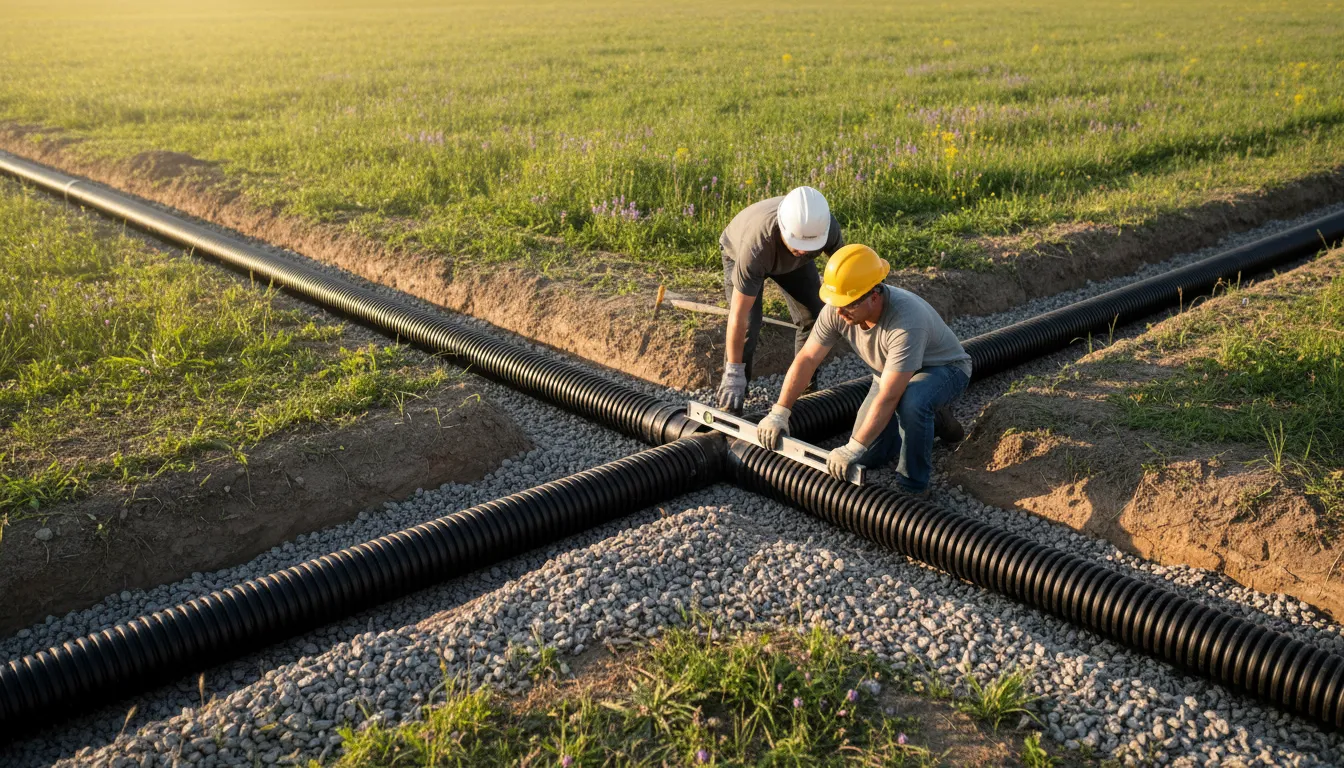
The drain field is a network of perforated pipes buried in gravel-filled trenches. After solids settle in the septic tank, the liquid effluent flows into this field, where it slowly percolates through the soil. Natural processes in the soil filter out harmful bacteria, viruses, and nutrients before the water rejoins the groundwater table. A properly functioning leach field is essential for protecting your health, your property value, and local water sources.
Common signs of a failing absorption field include:
- Sewage odors in the yard or home.
- Slow-draining toilets and fixtures.
- Standing water or soggy, spongy grass over the field area.
- Unusually green, lush grass over the field.
- Sewage backing up into the home.
If you notice any of these signs, it's crucial to act quickly to prevent further damage and potential health hazards.
Georgia and Macon Regulations You Must Know
Any work on a septic system in Bibb County, including drain field repairs or a full system replacement, is strictly regulated by the Georgia Department of Public Health and the local County Board of Health 1. You cannot simply hire a contractor to dig up your yard. The process is designed to ensure the new system is safe and effective.
Permits are mandatory. A permit must be secured from the local Health Department for any modification, repair, or replacement of a septic system. Starting work without a permit can result in fines and orders to remove unapproved work.
A licensed septic contractor is required. All repairs and installations must be performed by a state-licensed septic system contractor. They will handle the permit application and ensure all work meets code.
Key Setback Requirements
Georgia law mandates minimum distances, or setbacks, between your drain field and other features 2 3 4:
- 50 feet from any water well.
- 25 feet from any water body (stream, lake, pond).
- 10 feet from property lines.
- 15 feet from drainage ditches.
- 5 feet from building foundations.
These setbacks protect water sources and neighboring properties. If your lot cannot accommodate these distances, you may need an alternative engineered system.
The Step-by-Step Process for Replacement
Replacing a leach field is a multi-stage process involving both your contractor and the health department.
- Site Evaluation and Soil Testing: This is the first critical step. A licensed professional or health department inspector will evaluate your property's soil conditions, water table level, and slope. A percolation ("perc") test is often required to measure the soil's absorption rate, which determines the size and design of your new field 5 6. This test can cost around $1,300.
- Permit Application: Your contractor will submit the site evaluation results and a proposed system design to the health department for permit approval.
- Installation: Once the permit is issued, installation begins. This involves excavating the old field (if necessary) and constructing new trenches with precise depth, gravel, and pipe layout according to the approved plan.
- Inspections: The health inspector must review the installation before the trenches are covered with soil 7 8. A final inspection or hydraulic load test may also be required to confirm the system is functioning properly before backfilling is completed.
- Final Approval: After passing inspection, the system is covered, and the area is restored. The health department will provide a final approval for the system.
Find the perfect drain field repair companies for your needs
Get personalized recommendations and expert advice
Repair vs. Full Replacement: Costs and Considerations
The course of action depends on the extent of the failure. A professional inspection is needed to diagnose the problem accurately.
Drain Field Repair (Rejuvenation): In some cases, if the problem is caught early and the soil is not permanently clogged (a condition called "biomat" buildup), less invasive solutions may work. These can include jetting the lines to break up clogs or adding specialized treatments. These repairs typically range from $1,000 to $5,000.
Full Septic Tank and Drain Field Replacement: This is necessary when the soil is saturated and cannot recover, the pipes have collapsed, or the entire system is outdated. This is a major excavation project. Costs in the Macon area typically range from $3,500 to $12,000 or more for a conventional system 9. One local cost guide suggests a new installation in Macon can range from $1,182 to $8,326, with an average of $3,321 - $4,744 10.
Factors influencing cost include:
- System Size: Based on the number of bedrooms in your home.
- Soil Conditions: Poorly draining soil requires a larger field.
- Site Accessibility: Difficult terrain or limited equipment access increases labor.
- System Type: If a conventional trench system isn't suitable, an alternative engineered system (like a mound or aerobic treatment unit) may be needed, which can cost $15,000 or more11 12.
Protecting Your New Drain Field
Once you have a new absorption field, proper maintenance is key to a long lifespan (typically 20-30 years or more).
- Plant Grass Only: Only grass should be planted over the field. Tree and shrub roots can clog and damage pipes.
- Keep It Clear: Never drive, park, or build structures (decks, sheds) over the field. The weight can crush pipes and compact the soil.
- Divert Water: Ensure roof gutters, sump pumps, and surface runoff are directed away from the field to prevent saturation.
- Practice Water Conservation: Spread out laundry loads, fix leaks, and use water-efficient fixtures to avoid overwhelming the system.
- Pump the Tank Regularly: Have your septic tank pumped every 3-5 years by a professional to prevent solids from flowing into and clogging the new drain field.
Frequently asked questions
Sources
Footnotes
-
Georgia Septic Tank Requirements | On-Site Sewage ... - https://www.ntotank.com/blog/georgia-septic-tank-requirements ↩
-
homeowner's guide - to septic system maintenance - https://northgeorgiawater.org/wp-content/uploads/2017/10/SepticTankKit-MNGWPD.pdf ↩
-
The Ultimate Guide to Replacing a Septic Drain Field - https://www.rciseptic.com/the-ultimate-guide-to-replacing-a-septic-drain-field ↩
-
Expert New Septic Tank Installation - https://www.scorpionsepticservices.com/blog/septic-tank-installation-what-homeowners-need-to-know ↩
-
Residential-Study-Guide.pdf - GNR Health - https://gnrhealth.com/wp-content/uploads/2012/01/Residential-Study-Guide.pdf ↩
-
Septic Drain Field Installation Guide GA: 7 Key Steps - https://dandhsepticservices.com/septic-drain-field-installation/ ↩
-
Georgia Septic System Guide: Regulations & Maintenance Tips - https://smartsepticpros.com/blog/georgia-septic-system-regulations/ ↩
-
Georgia's Septic Drain Field Requirements: Homeowner's Guide - https://smartsepticpros.com/blog/georgias-septic-drain-field-requirements/ ↩
-
Complete Guide to Septic Inspection in Georgia - https://dandhsepticservices.com/septic-inspection-in-georgia/ ↩
-
Septic Tank Installation in Macon, GA - Costs 03 / 2026 - Homeyou - https://www.homeyou.com/ga/septic-tank-installation-macon-costs ↩
-
Cost to Replace Septic Tank and Drain Field [2026 Data] | Angi - https://www.angi.com/articles/how-much-new-drain-fields-foot.htm ↩
-
How Much Does a Leach or Drain Field Replacement Cost? (2026) - https://homeguide.com/costs/drain-leach-field-replacement-cost ↩