
Find the Best Drain Field Repair Companies for Your Business
No obligation • Fast responses • Nationwide coverage

Why you can trust Septic Spot
Septic Spot is a leading United States resource for understanding and comparing septic services. Our editors review providers using consistent criteria and verify key business details. Listings and scores are independent, and companies cannot pay to influence our content.
Search providers near you
Top Drain Field Repair Companies in Smyrna, Georgia Ranked
A failing drain field, also known as a leach field or absorption field, is a serious issue for any home with a septic system. It's the final and most critical stage of wastewater treatment, where effluent is dispersed into the soil for final purification. When this component fails, it can lead to soggy yards, foul odors, and even sewage backups into your home. For Smyrna homeowners, navigating the repair or replacement process involves understanding local Cobb County regulations, soil conditions, and finding qualified professionals. This guide provides the essential information you need to understand your options, the local requirements, and how to connect with certified specialists for your leach field project.
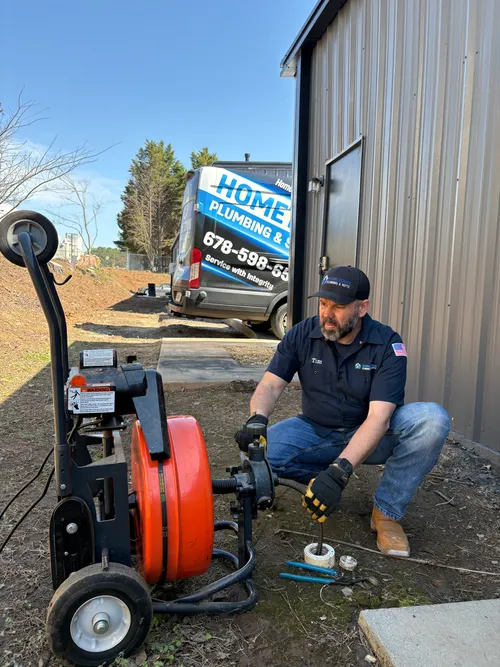
Hometown Plumbing and Septic
3375 Hutchinson Rd, Cumming, GA 30040
Hometown Plumbing and Septic provides professional septic services in South Fulton, GA, and the surrounding Metro Atlanta and North Georgia areas. They specialize in septic tank pumping, inspections, repairs, and complete system replacements for both residential and commercial properties. Their services also include drain field repair and lift station maintenance. With decades of experience and advanced equipment, they handle complex septic system issues with precision. They serve multiple counties including Barrow, Cherokee, Cobb, and others, offering preventative maintenance to help avoid emergency repairs.
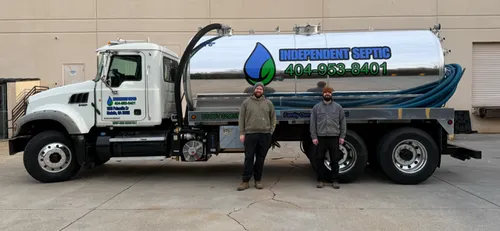
Independent Septic and Sewer LLC
Atlanta, GA
Independent Septic and Sewer LLC is a family-owned business serving Atlanta, GA, and surrounding counties. They provide septic tank pumping, cleaning, inspection, repair, and installation services for residential and commercial properties. With over 20 years of experience, the company offers expertise in diagnosing and repairing septic system issues, including drain field repairs and sewer line maintenance. They also provide a 10-year warranty on repairs and handle all necessary permits and building code requirements. Their services include thorough septic tank pumping that removes both liquids and solids, as well as hydro jetting and camera inspections when needed.
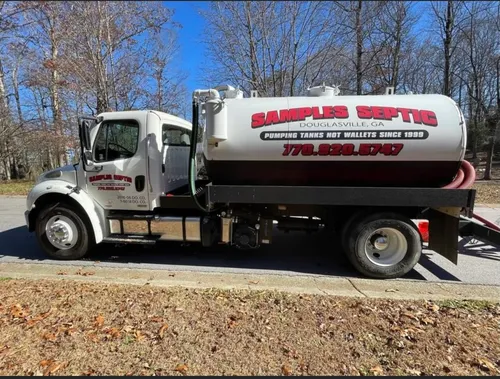
Samples Septic Service
2116 Mack Rd, Douglasville, GA 30135
Samples Septic Service is a family-owned and operated septic company based near Atlanta, GA. They provide septic tank pumping, repair, and installation, along with drain field installation and repair. Serving Douglas, Cobb, and Paulding counties, the company has been operating since 1999 and is state certified.
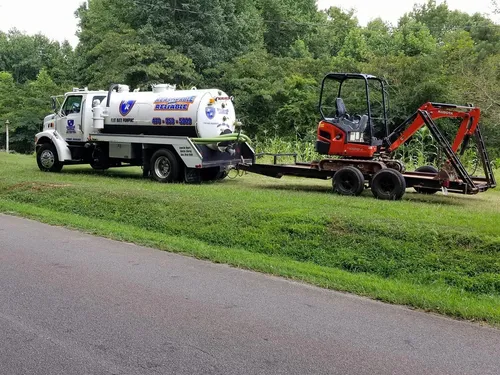
Reasonable and Reliable Septic
South Fulton, GA
Reasonable and Reliable Septic is a septic service provider based in South Fulton, GA, serving Cherokee and surrounding counties. They offer septic tank pumping, inspections, repairs, installations, and drain field services. The company is licensed and insured, with capabilities including sewer line and main line repair and replacement. Established in 2017, they focus on meeting each client's specific needs with clear communication and professional service.
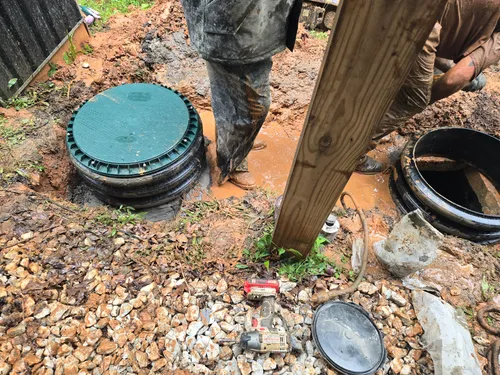
One Way Septic
6746 Redfield Ct SE, Acworth, GA 30102
One Way Septic is a septic and sewer service provider located in South Fulton, GA. With over 30 years of experience in Georgia, they offer a wide range of services including septic tank pumping, septic system repairs, drain field repair or replacement, and sewer line jetting. The company provides preventative maintenance to help avoid costly damage and system failures. One Way Septic is available 24/7, 365 days a year for emergency septic services, ensuring support whenever needed.
Understanding Your Drain Field and Signs of Failure
The drain field is a network of perforated pipes buried in trenches filled with gravel. After solids settle in the septic tank, the liquid effluent flows into this field, where it slowly percolates through the soil. The soil acts as a natural filter, removing harmful bacteria, viruses, and nutrients before the water rejoins the groundwater. Common causes of failure in Smyrna include invasive tree roots seeking moisture, soil compaction from driving or parking vehicles over the area, and system overloading from an increase in household size or high-water-use appliances 1.
Recognizing the early warning signs can save you from more extensive and costly damage. Be alert for:
- Soggy Ground or Standing Water: Persistent wet spots or lush, green grass over the drain field, especially when it hasn't rained.
- Sewage Odors: Unpleasant smells emanating from your yard or near the septic tank.
- Slow Drains: Gurgling pipes, slow-draining sinks, tubs, and toilets throughout the house.
- Sewage Backups: The most severe sign, where wastewater comes back up into household drains.
Smyrna and Cobb County Regulations You Must Follow
Any significant repair or full replacement of a septic drain field in Smyrna requires adherence to strict local and state codes managed by the Cobb County Board of Health. You cannot begin any excavation or construction without the proper permits. The permitting process is designed to protect public health, your property, and the local environment, particularly nearby water sources.
Key regulatory requirements include:
- Permit Requirement: A formal repair or construction permit is mandatory before starting work. Your licensed contractor will typically handle this submission, which includes a site plan and system design.
- Property Setbacks: Systems must be installed a minimum distance from certain features. Common setbacks are 50 feet from wells, 25 feet from water bodies, 10 feet from property lines, and 15 feet from drainage ditches 2.
- Licensed Professionals: All design and installation work must be performed by a state-certified and licensed septic system contractor. This ensures the work meets Georgia's standards for on-site sewage management systems 3.
The Critical Role of Soil Evaluation
Georgia's clay-heavy soils, common in the Smyrna area, present a unique challenge for septic systems. Clay has slow permeability, meaning water passes through it very slowly. A proper soil evaluation is the first technical step in any drain field project and directly impacts the system's design, size, and cost 4 5.
A certified professional will conduct a percolation (perc) test to measure the soil's absorption rate. They will also assess the depth to seasonal high groundwater and bedrock. These factors determine if a conventional gravity-fed system is suitable or if an alternative system, like a pressure-dosed or aerobic treatment unit (ATU), is necessary to ensure proper effluent treatment. The site layout is also crucial, as the drain field requires a suitable, undisturbed area away from driveways, future construction, and large trees.
The Step-by-Step Process for Repair or Replacement
Navigating a drain field project involves a series of coordinated steps from diagnosis to final inspection.
- Professional Assessment & Diagnosis: A licensed contractor will perform a thorough inspection, often using a camera to scope lines, to confirm the drain field is the source of the problem and assess the extent of the failure 6 7.
- Site Evaluation & Design: If replacement is needed, a new perc test and site evaluation are conducted. An engineer or contractor then designs a system that complies with Cobb County regulations for your specific soil conditions.
- Permit Application: The design plans and site map are submitted to the Cobb County Board of Health for permit approval. Do not proceed without this approved permit in hand.
- Excavation & Installation: The old, failed system is carefully excavated. For a replacement, new trenches are dug, gravel is laid, perforated pipes are installed, and the area is covered with soil.
- Final Inspection: Before the new drain field is fully covered, a county health department inspector must visit the site to verify the installation matches the approved plans and meets all codes 8.
- Restoration & Care: Once approved, the area is backfilled and landscaped. You'll receive guidance on proper maintenance, like avoiding planting trees nearby and never compacting the soil over the field.
Find the perfect drain field repair companies for your needs
Get personalized recommendations and expert advice
Cost Factors for Drain Field Work in Smyrna
The cost for drain field solutions in Smyrna varies widely based on the scope of work, soil conditions, and system type. It's important to get multiple detailed quotes from licensed contractors.
- Minor Drain Field Repairs: Addressing a localized issue, such as clearing a blockage or repairing a damaged junction box, typically ranges from $1,000 to $5,000.
- Complete Conventional Drain Field Replacement: This is the most common scenario for a total failure. For a standard gravity system, homeowners can expect costs between $5,000 and $12,000, with a broader range of $3,000 to $15,000+ depending on the size and soil 9.
- Alternative System Installation: If your site has poor soil, a high water table, or is too small for a conventional field, an engineered alternative system may be required. These systems (like mound, drip irrigation, or ATU systems) are more complex and can cost $10,000 to $50,000 or more 10 11.
Maintaining Your New or Repaired Drain Field
Protecting your investment is key. Proper maintenance extends the life of your entire septic system for decades. Key practices include:
- Conserve Water: Fix leaks and spread out laundry loads to avoid hydraulically overloading the system.
- Mind What You Flush: Only human waste and toilet paper should go down the drain. Avoid chemicals, grease, wipes, and feminine products.
- Protect the Area: Never drive, park, or build structures over the drain field. Avoid planting trees or shrubs with deep root systems nearby.
- Regular Pumping: Have your septic tank pumped every 3-5 years by a professional to prevent solids from escaping into and clogging the drain field.
Frequently asked questions
Sources
Footnotes
-
Septic Systems and Their Maintenance - https://nghd.org/files/ossms/Septic%20Systems%20and%20Their%20Maintenance.pdf ↩
-
INDEX SECTION 02320 - DRAINAGE SYSTEMS, SEPTIC PART 1 - GENERAL 1.1 DESCRIPTION 1.2 REFERENCE SPECIFICATIONS 1.3 QUALITY ASSURA - https://iowaagriculture.gov/sites/default/files/mines/Construction%20Specs/02320%20DRAINAGE%20SYSTEMS%2C%20SEPTIC%202025%20FINAL_0.pdf ↩
-
Georgia Septic Tank Requirements | On-Site Sewage ... - https://www.ntotank.com/blog/georgia-septic-tank-requirements ↩
-
Septic Drain Field Installation Guide GA: 7 Key Steps - https://dandhsepticservices.com/septic-drain-field-installation/ ↩
-
Georgia Septic System Guide: Regulations & Maintenance Tips - https://smartsepticpros.com/blog/georgia-septic-system-regulations/ ↩
-
Complete Guide to Septic Inspection in Georgia - https://dandhsepticservices.com/septic-inspection-in-georgia/ ↩
-
What Does a Septic Inspection Entail? - https://www.homelight.com/blog/septic-inspection/ ↩
-
The Ultimate Guide to Replacing a Septic Drain Field - https://www.rciseptic.com/the-ultimate-guide-to-replacing-a-septic-drain-field ↩
-
How Much Does a Leach or Drain Field Replacement Cost? (2026) - https://homeguide.com/costs/drain-leach-field-replacement-cost ↩
-
Georgia Septic System Maintenance: Tips for LaFayette, Dalton ... - https://www.fieldsconstructionga.com/post/septic-system-maintenance-schedule-for-georgia-homeowners-tips-for-lafayette-dalton-beyond ↩
-
Septic System Cost Adairsville GA: 2025 Price Guide - https://anytime-septic.com/septic-system-cost-in-adairsville-ga/ ↩