Find the Best Drain Field Repair Companies for Your Business
No obligation • Fast responses • Nationwide coverage

Why you can trust Septic Spot
Septic Spot is a leading United States resource for understanding and comparing septic services. Our editors review providers using consistent criteria and verify key business details. Listings and scores are independent, and companies cannot pay to influence our content.
Search providers near you
Top Drain Field Repair Companies in Anderson, Indiana Ranked
A failing drain field, also known as a leach field or soil absorption area, is a serious issue for any Anderson homeowner with a septic system. When this critical component stops properly dispersing wastewater, it can lead to soggy yards, foul odors, and even sewage backups into your home. Understanding the local regulations and process for drain field work is essential. This guide explains the steps, requirements, and key considerations for repairing or replacing a septic system drain field in Madison County, helping you connect with qualified local professionals to restore your system's function.
Understanding Your Drain Field and Signs of Failure
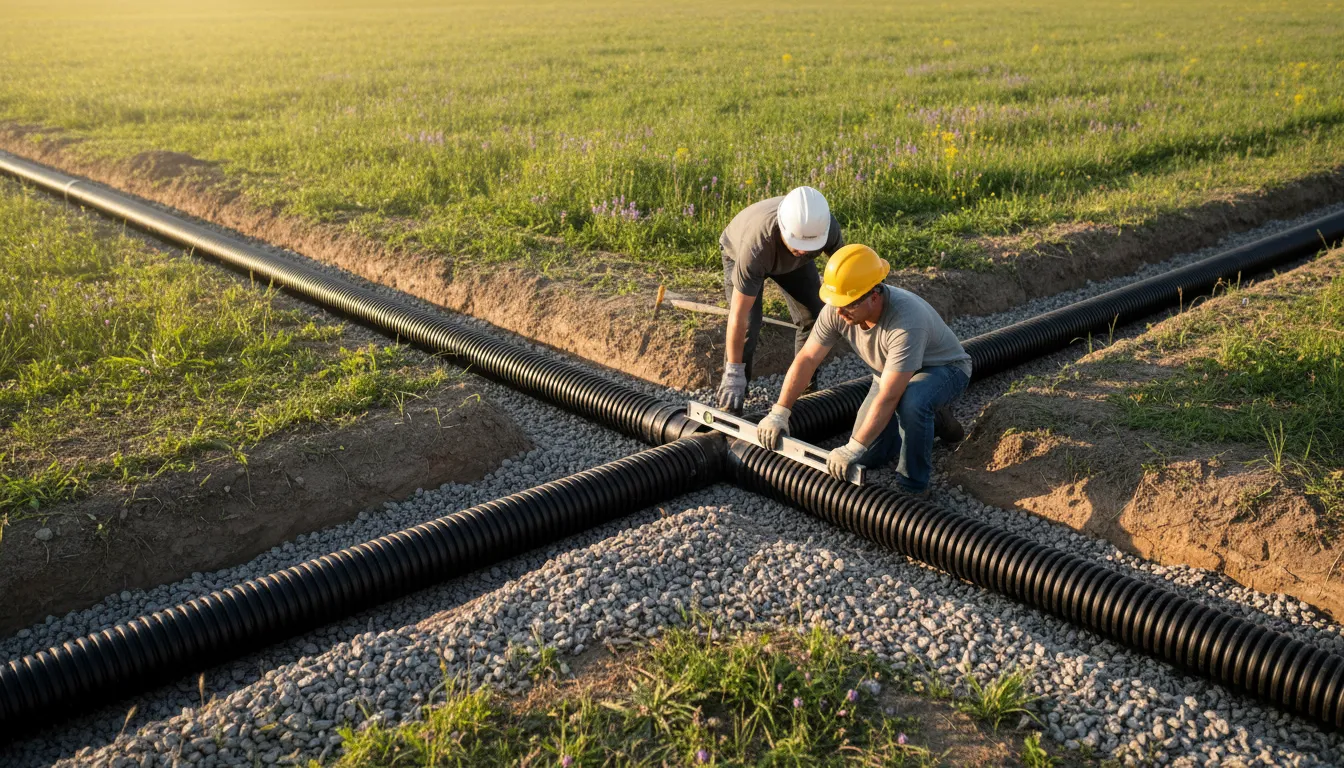
The drain field is the final stage of your onsite wastewater system. After solids settle in the septic tank, liquid effluent flows into a network of perforated pipes buried in trenches filled with gravel. This effluent slowly percolates into the soil, where natural processes filter and treat it before it rejoins the groundwater. A properly functioning leach field is invisible and odorless.
Common signs that your soil absorption area needs attention include:
- Soggy ground or standing water over the drain field area, especially when it hasn't rained.
- Sewage odors in your yard or home.
- Slow draining sinks, tubs, and toilets.
- Unusually green, lush grass directly over the trenches.
- Sewage backing up into household drains.
If you notice any of these issues, it's crucial to act quickly. Continuing to use a failing system can cause environmental contamination and lead to more extensive, costly repairs 1.
Madison County Regulations and Permit Requirements
All work on a septic system in Anderson, including any repair, replacement, or alteration of the drain field, is regulated by the Madison County Health Department under Indiana State Department of Health Rule 410 IAC 6-8.3 2. You must obtain a permit from the health department before any work begins.
The regulatory process is designed to protect public health and groundwater. Key requirements include:
- Professional Soil Evaluation: A certified soil scientist must perform a minimum of three soil profile evaluations (using borings or test pits) in the exact area proposed for the new or repaired absorption field. This evaluation determines the soil's permeability, depth to limiting layers, and seasonal high water table.
- Licensed Installation: The installation must be completed by a licensed septic system contractor. In many cases, contractors must pass a state exam to be registered for this work.
- System Design & Approval: A detailed, scaled design of the proposed system must be submitted to the health department for review and approval before a permit is issued 3.
- Setback Distances: The new drain field must meet minimum distance requirements from property lines, wells (50 feet), streams or ditches (25 feet), and other structures 4 5.
Find the perfect drain field repair companies for your needs
Get personalized recommendations and expert advice
The Step-by-Step Process for Drain Field Work
Navigating a drain field project involves several coordinated steps between you, your contractor, and the health department.
1. Initial Assessment and Soil Evaluation
The process begins with a professional inspection to confirm the drain field has failed. A contractor will often locate and expose the distribution box and inspect the septic tank 6. If replacement is necessary, a certified soil scientist is hired to conduct the mandatory site evaluation. This report is the foundation for the new system's design and is submitted with your permit application 7.
2. Permit Application and Design Submission
Your licensed contractor will typically handle the permit application process using the forms from the Madison County Health Department. The application package includes the soil scientist's report, the detailed system design, and the applicable fee. It's important to note that the soil must be dry and friable during the evaluation and excavation phases; working in wet soil can permanently reduce its permeability and cause the new system to fail.
3. Installation and Critical Construction Guidelines
Once the permit is approved, installation can begin. Adhering to construction guidelines is vital for long-term success:
- Preventing Compaction: The absorption area must be protected from all vehicle and heavy equipment traffic, as compaction destroys the soil structure needed for proper percolation.
- Managing Water: The site must be protected from surface water runoff. The health department may require a diversion ditch or swale upslope of the drain field 8 9.
- Addressing Soil Limitations: If the soil evaluation reveals a high water table (indicated by gray or yellow mottling in the soil) or shallow bedrock, a raised system, such as a mound, may be required instead of a conventional trench system 10 11.
4. Inspections and Final Approval
The Madison County Health Department conducts inspections during and after installation. An environmental health specialist will check the construction against the approved design before the trenches are backfilled 12 13. A final inspection and sometimes a "load test" (running water to confirm proper function) are required before the system receives final approval for use 14 15.
Cost Considerations for Anderson Homeowners
The cost of drain field repair or replacement in Anderson varies significantly based on the scope of work, soil conditions, and system type. It's wise to get multiple estimates from licensed contractors. Based on local data, you can expect the following general cost ranges 16 17:
- Permit Fee (Replacement): Approximately $30-$60.
- Soil Evaluation by Certified Scientist: $500-$1,000 or more, depending on site complexity.
- Septic Tank Pumping & Inspection: $300-$500 (often required during the process).
- Drain Field Work Itself: This is the major cost variable.
- Limited Repair: $5,000-$8,000 for fixing a specific section.
- Full Conventional Trench Replacement: $8,000-$12,000.
- Engineered Mound System Replacement: $12,000-$15,000+.
Always confirm the current fee schedule directly with the Madison County Health Department.
Choosing a Contractor and Protecting Your Investment
Selecting the right professional is the most important decision you'll make. Ensure any contractor you consider is licensed by the state of Indiana for septic system installation and is familiar with Madison County's specific procedures. They should be willing to pull the permit, coordinate the soil scientist, and guide you through the inspection process. A reputable contractor will also discuss how to maintain your new leach field to maximize its lifespan, such as avoiding planting trees nearby, diverting roof drains, and practicing water conservation.
Frequently asked questions
Sources
Footnotes
-
Septic Systems | Indiana State Department of Health - IN.gov - https://www.in.gov/localhealth/miamicounty/files/In-Your-Own-Backyard-Septic-Systems-ADunn.pdf ↩
-
Indiana Septic Tank Requirements | On-Site Sewage Systems - https://www.ntotank.com/blog/indiana-septic-tank-requirements ↩
-
CHAPTER 51. - SEWAGE AND SEPTIC SYSTEMS REGULATIONS | ... - https://library.municode.com/in/st._joseph_county/codes/code_of_ordinances?nodeId=TITVPUWO_CH51SESESYRE ↩
-
County On-site Sewage Systems Ordinance This ... - IN.gov - https://www.in.gov/health/eph/files/Recommended-Ordinance-Sections-2024-05-28.pdf ↩
-
Environmental Health: Installing Your Own Septic System? - IN.gov - https://www.in.gov/localhealth/harrisoncounty/environmental-health/septic-systems/installing-your-own-septic-system/ ↩
-
Septic System Booklet (PDF) - Adams County, IN - https://www.co.adams.in.us/DocumentCenter/View/1769/Septic-System-Booklet-PDF ↩
-
Understanding the Pores of a Soilless Substrate - IN.gov - https://www.in.gov/localhealth/browncounty/files/What-is-an-OSS-failure-and-what-to-do.pdf ↩
-
How to get a septic permit - IN.gov - https://www.in.gov/localhealth/harrisoncounty/files/Brochure_Septic_permit_how_to_get_one.pdf ↩
-
Construction Guidelines for Gravity and Flood-Dose Trench Onsite ... - https://www.in.gov/health/files/Construction_Guidelines_for_Gravity_and_Flood_Dosed_Trench_Septic_Systems.pdf ↩
-
How Does Soil Impact the Septic System You Can Have? - https://www.septicconnection.com/how-does-soil-impact-the-septic-system-you-can-have ↩
-
Section 11 - Design Criteria: Soil Treatment Area - https://www.clearcreekcounty.us/DocumentCenter/View/8798 ↩
-
SEPTIC APPLICATION - Madison County Health Department - https://www.madisoncountyhealth.org/uploads/5/9/7/0/59701963/septic_application_-_new_rev_07-31-2020.pdf ↩
-
Drain Field Inspection - Keep Your Septic System Healthy - https://www.vevor.com/diy-ideas/drain-field-inspection/ ↩
-
Septic Inspection Process: What Homeowners Should Know ... - https://www.lunspro.com/vlog/the-septic-system-inspection-process-what-homeowners-should-know ↩
-
2025 OnSite Septic System Application - IN.gov - https://www.in.gov/counties/cass/files/Health-Septic.pdf ↩
-
NEW HOME CONSTRUCTION OR SYSTEM REPLACEMENT - IN.gov - https://www.in.gov/localhealth/marshallcounty/files/guidance-residential-onsite-sewage-procedures.pdf ↩
-
Jecker Excavating and Septic - https://www.google.com/viewer/place?mid=/g/11fb0glkmb ↩