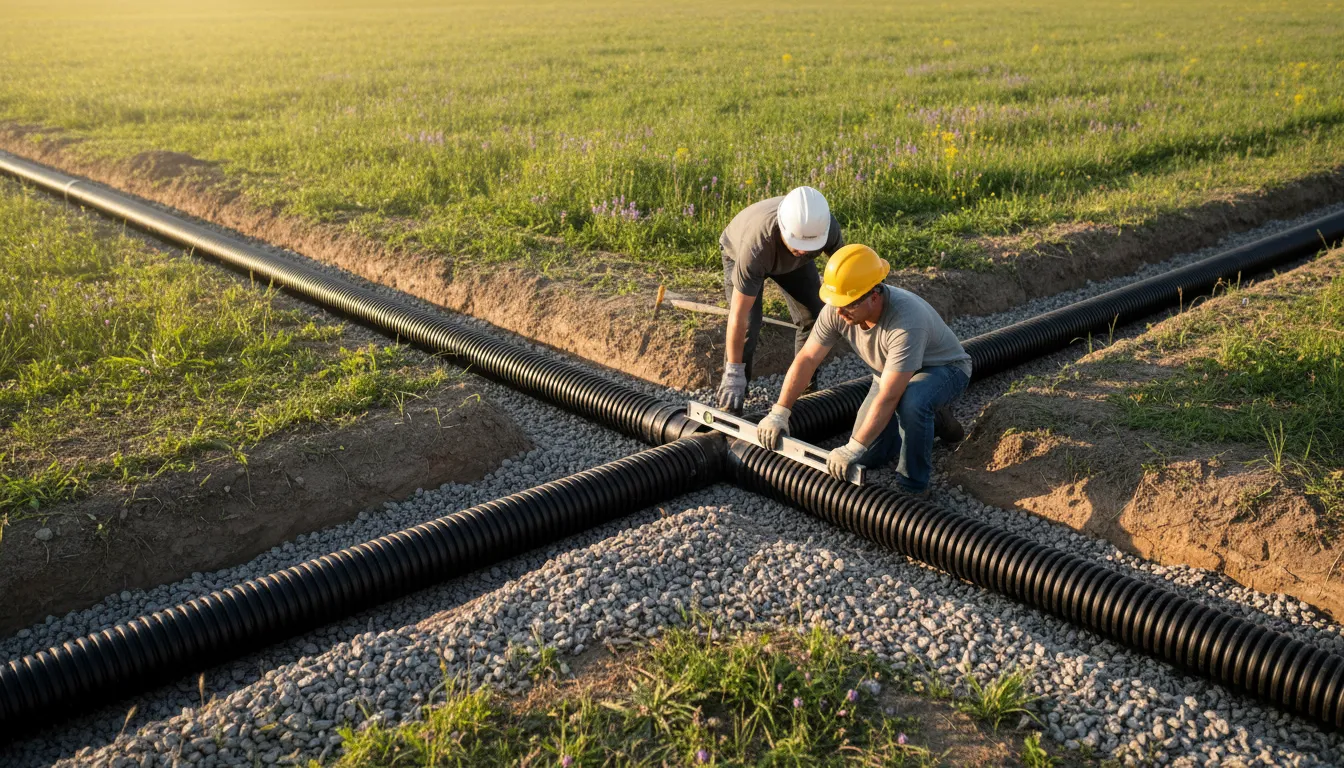
Find the Best Drain Field Repair Companies for Your Business
No obligation • Fast responses • Nationwide coverage

Why you can trust Septic Spot
Septic Spot is a leading United States resource for understanding and comparing septic services. Our editors review providers using consistent criteria and verify key business details. Listings and scores are independent, and companies cannot pay to influence our content.
Search providers near you
Top Drain Field Repair Companies in Carmel, Indiana Ranked
A failing drain field, also known as a leach field or absorption field, is a serious issue for any Carmel homeowner with a septic system. This critical component is responsible for the final treatment and dispersal of wastewater into the soil. When it malfunctions, it can lead to sewage backups, soggy yards, and environmental contamination. Navigating drain field repair or a full septic system replacement in Carmel involves strict local regulations, specific soil challenges, and a detailed permitting process. This guide explains the key steps, costs, and regulations to help you understand your options and connect with qualified local professionals for your soil absorption system needs.
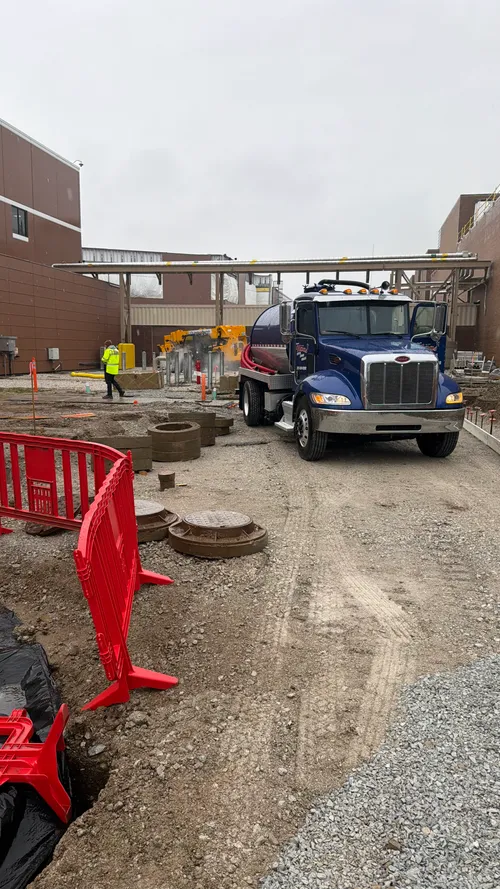
Understanding Carmel's Drain Field Regulations
All work on a septic system's drain field in Carmel is governed by the Hamilton County Health Department, which enforces the Indiana State Department of Health (ISDH) Rule 410 IAC 6-8.3. The cornerstone of these regulations is the permit requirement: no repair or replacement can begin until the Health Department issues a permit 1. This process is designed to protect public health and groundwater by ensuring systems are designed and installed correctly for the specific property conditions.
Key regulatory steps include:
- Mandatory Site Evaluation: Before a permit is issued, a licensed soil scientist must conduct a site evaluation, including soil borings, to assess the property's suitability. This is especially crucial in Carmel due to its prevalent clay soils.
- Design Standards: System size is based on the number of bedrooms in the home, using a standard design flow of 150 gallons per day per bedroom.
- Connection Mandates: If your property is within the service area of an active city sewer project, you may be required to connect to the municipal sewer, eliminating the need for a septic system repair 2.
The Permit and Inspection Process
Successfully permitting a drain field project involves a clear sequence of events with required inspections at critical stages.
- Application and Site Evaluation: The process starts with a site evaluation by a licensed soil scientist. Their report on soil composition, percolation rates, and seasonal high water table is submitted with your permit application to the Hamilton County Health Department.
- Permit Issuance: Once your application and site plan are approved, you will receive a permit. The health department requires at least 48 hours' notice before any construction work begins.
- Pre-Cover Inspection: This is one of the most important inspections. After the trenches, distribution pipes, and gravel are in place but before the system is backfilled, the Health Department must inspect the installation to verify it matches the approved plan.
- Final Inspection: When the installation is complete and the system is ready for use, your licensed installer must notify the Health Department for a final inspection 3.
A licensed septic installer must be on-site at all times during construction, including during backfilling 4.
Geographic and Soil Challenges in Carmel
Carmel's geography presents unique hurdles for septic system absorption fields. Understanding these can help set realistic expectations for your repair or replacement project.
- Clay-Rich Soils: The area is known for heavy, clay-rich soil, which has a slow permeability rate. This can limit how quickly wastewater can be absorbed, often requiring special design considerations. Solutions may include a larger absorption area, the use of sand-lined trenches, or even an advanced, engineered treatment system 5.
- Setback Distances: State and county codes mandate minimum distances from various features. For example, a new or replacement drain field must be at least 50 feet from a water well and 200 feet from lakes or streams 6 7.
- Seasonal High Water Table: The soil evaluation must identify the seasonal high water table level. If the water table rises too close to the drain field trenches, it can waterlog the system and prevent proper treatment of effluent 8.
- Regulated Drains: If your repair work is near a county-regulated drain, tile, or creek, you will likely need an additional permit from the Hamilton County Surveyor's Office 9.
Cost Considerations for Repair and Replacement
The cost to address drain field issues in Carmel can vary widely based on the scope of the problem and the solutions required. The Hamilton County health permit fee itself is non-refundable and is approximately $200 10.
- Soil Evaluation: Hiring a certified professional soil scientist to conduct the required site evaluation (typically involving 3 or more soil borings) usually costs between $500 and $1,000+ 11.
- Drain Field Replacement: The cost for a conventional drain field replacement often falls in the range of $3,000 to $7,000 or more, depending heavily on the size of the system needed and the excavation required 12 13.
- Advanced System Costs: If the soil evaluation reveals that a traditional system is no longer viable, an advanced pretreatment system (like an aerobic treatment unit or sand filter) may be necessary. These systems involve more complex technology and can significantly increase the total project cost 14.
- Additional Factors: Costs can also rise if the project requires bringing in special fill dirt, navigating difficult site access, or addressing damage from tree roots 15.
Find the perfect drain field repair companies for your needs
Get personalized recommendations and expert advice
Maintaining Your Carmel Drain Field
Proper maintenance is the best way to extend the life of your new or repaired leach field and avoid premature failure.
- Regular Pumping: Have your septic tank pumped every 3 to 5 years by a licensed professional to prevent solids from escaping into and clogging the drain field.
- Mind the Landscape: Only grass should be planted over the absorption field. Avoid trees and shrubs, as their roots can infiltrate and damage the pipes 16.
- Protect from Compaction: Never drive, park, or place heavy objects (like sheds or pools) on the drain field area. This compacts the soil, crushing pipes and destroying its ability to absorb water 17.
- Divert Water: Ensure roof gutters, sump pumps, and surface drainage are directed away from the septic field to prevent saturation 18 19.
Signs You May Need Drain Field Service
Being proactive can save you from a complete system failure. Watch for these warning signs:
- Sewage odors in the yard or home.
- Unusually lush, green grass or soggy, spongy ground over the drain field.
- Slow drains or sewage backups in the house.
- Gurgling sounds in plumbing fixtures.
- Standing water or surfacing sewage in the yard.
If you notice any of these issues, it's time to contact a licensed septic professional for an evaluation.
Frequently asked questions
Sources
Footnotes
-
Permits | Hamilton County, IN - https://www.hamiltoncounty.in.gov/300/Permits ↩
-
Onsite Sewage (Septic) Systems Program - https://marionhealth.org/onsite-sewage-septic-systems-program/ ↩
-
On-site Wastewater Treatment System Regulations - https://nchd.org/wp-content/uploads/2024/08/Onsite-wastewater-treatment-system-regulations.pdf ↩
-
Indiana Septic Tank Requirements | On-Site Sewage Systems - https://www.ntotank.com/blog/indiana-septic-tank-requirements ↩
-
Top 10 Best Septic tank pros in Carmel, IN - Angie's List - https://www.angi.com/companylist/us/in/carmel/septic-tank.htm ↩
-
Drainage Permits - Hamilton County, IN - https://www.hamiltoncounty.in.gov/615/Drainage-Permits ↩
-
Understanding Septic Regulations in Indiana: What Homeowners Need ... - https://www.norwayseptic.com/understanding-septic-regulations-in-indiana-what-homeowners-need-to-know/ ↩
-
March 28, 2025 - IN.gov - https://www.in.gov/health/eph/files/On-site-Sewage-Systems-Revision-Draft-410-IAC-6-8.3.pdf ↩
-
Drainage Permits - Hamilton County, IN - https://www.hamiltoncounty.in.gov/535/Drainage-Permits ↩
-
Septic System Policy - Hamilton County Public Health - https://www.hamiltoncountypublichealth.com/wp-content/uploads/2020/02/Septic-Systems-Policy-Revised-2-2020.pdf ↩
-
NEW HOME CONSTRUCTION OR SYSTEM REPLACEMENT - IN.gov - https://www.in.gov/localhealth/marshallcounty/files/guidance-residential-onsite-sewage-procedures.pdf ↩
-
How To Replace A Septic Drain Field Without Costly Mistakes - https://millersepticfl.com/how-to-replace-a-septic-drain-field-without-costly-mistakes/ ↩
-
Florida Septic System Requirements & Drainfield Regulations (2025 Guide) - https://www.acesepticandwaste.com/ace-guide-to-floridas-onsite-septic-system-regulations/ ↩
-
CHAPTER 51: SEWAGE AND SEPTIC SYSTEMS REGULATIONS - https://www.in.gov/localhealth/stjosephcounty/files/County-Code-Septic-Ordinance.pdf ↩
-
Comparing Fill Dirt Types for Safe Septic System Installation - https://www.soilconnect.com/blog/comparing-fill-dirt-types-for-safe-septic-system-installation ↩
-
Untitled - https://nationalland.com/listing-document/157486/683f213bb0cda.pdf ↩
-
On-Site Sewage Disposal Program - Hamilton County, IN - https://www.hamiltoncounty.in.gov/298/Sewage-Disposal-Program ↩
-
Septic System Care, Regulations, and Water Safety - https://nfmplumbing.com/septic-drain-field-failure-prevention-lee-county/ ↩
-
Septic Maintenance FAQs - Indiana Clear Choices Clean Water - https://indiana.clearchoicescleanwater.org/pledges/septic/septic-maintenance-faqs/ ↩