Find the Best Drain Field Repair Companies for Your Business
No obligation • Fast responses • Nationwide coverage

Why you can trust Septic Spot
Septic Spot is a leading United States resource for understanding and comparing septic services. Our editors review providers using consistent criteria and verify key business details. Listings and scores are independent, and companies cannot pay to influence our content.
Search providers near you
Top Drain Field Repair Companies in Greenwood, Indiana Ranked
A failing septic drain field is a serious issue for any Greenwood homeowner. This critical component of your onsite sewage system is responsible for safely filtering and dispersing treated wastewater into the soil. When it malfunctions, it can lead to soggy yards, foul odors, and even environmental contamination. Understanding the local regulations, process, and costs for drain field repair or replacement is essential for protecting your property and complying with Indiana law. This guide provides the information you need to navigate this complex project, from initial soil testing to final inspection, and helps you connect with qualified local professionals.
Understanding Your Septic System's Drain Field
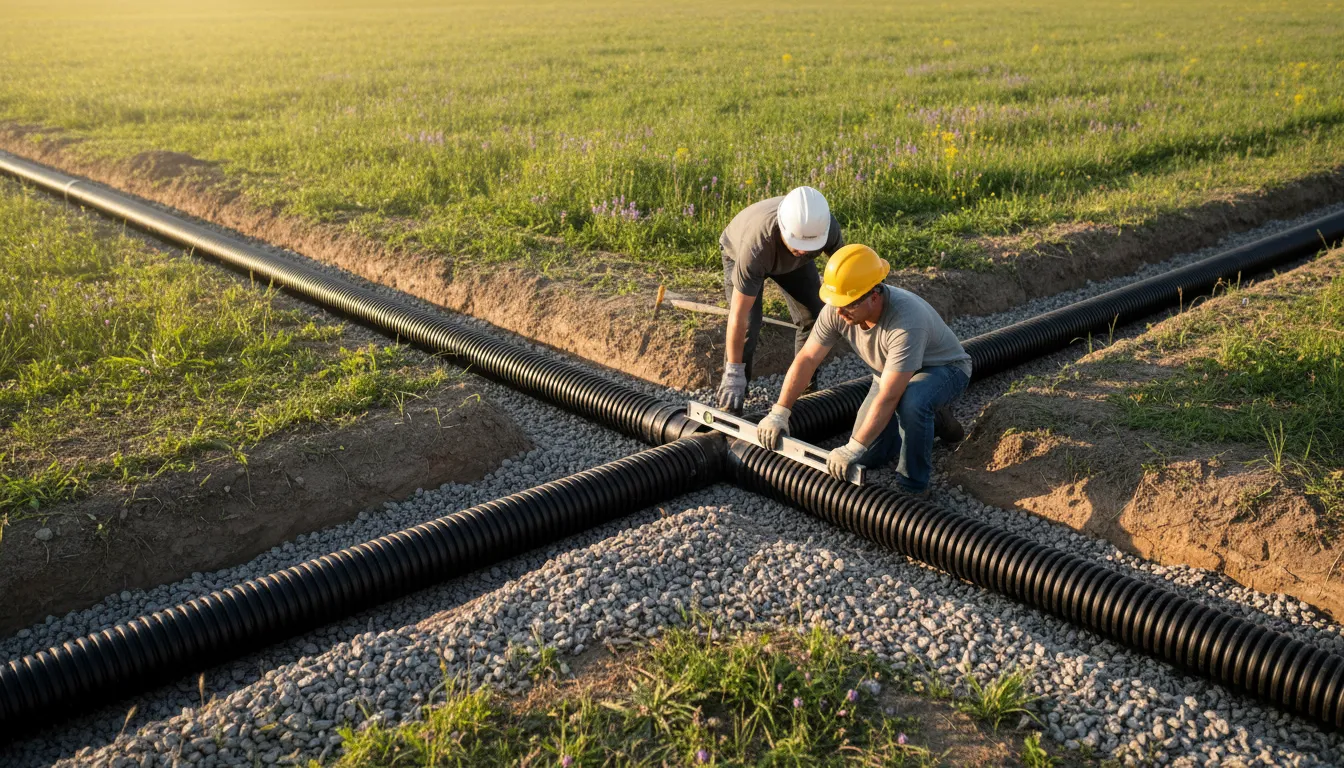
Often called a leach field or absorption field, the drain field is the final stage of a septic system. After solids settle in the tank, liquid effluent flows into a network of perforated pipes buried in trenches filled with gravel. This effluent slowly seeps into the surrounding soil, where natural processes provide final treatment. A system fails when the soil can no longer absorb the water, causing backups or surface pooling. In Greenwood and across Johnson County, these systems are regulated to protect public health and groundwater.
Common Signs of Drain Field Failure
It's crucial to recognize the warning signs early to prevent more extensive damage or health hazards.
- Soggy Ground or Standing Water: Persistent wet spots or lush, green grass over the drain field area, especially when it hasn't rained.
- Slow Drains and Sewage Backups: Gurgling pipes, slow-flushing toilets, or backups in household drains.
- Foul Odors: Unpleasant sewage smells emanating from the yard or near the tank.
- Nitrate Contamination: High levels of nitrates in well water, which require professional testing to detect.
The Greenwood and Indiana Regulatory Landscape
All septic system work in Indiana, including drain field repairs and full replacements, is governed by state code 410 IAC 6-8.3 and enforced by local county health departments 1 2. For Greenwood residents, this means the Johnson County Health Department is your primary regulatory contact. You cannot begin any excavation or construction without first obtaining the proper permit.
Key Regulatory Requirements
- Permit Mandatory: A septic permit is required before any repair, replacement, or new installation 3. The application process ensures your plans meet all health and environmental standards.
- Registered Installers: All septic system installers must be registered with the local health department or hold appropriate state qualifications 4. Hiring a registered professional is not just a recommendation-it's a requirement for obtaining a permit and passing inspection.
- Pre-Construction Soil Evaluation: A critical first step. A certified professional soil scientist must perform a detailed evaluation of your property, including at least three soil borings, to determine the soil's absorption capacity and identify the seasonal high water table 5. This report dictates the design and sizing of your replacement system.
Step-by-Step: The Drain Field Replacement Process
Replacing a drain field is a multi-stage project that involves professionals from several fields. Here's what you can expect.
1. Professional Site and Soil Evaluation
This is the non-negotiable foundation. A certified soil scientist will visit your property to map the area, dig test pits, and classify the soil. They are looking for texture, structure, and percolation rate. This evaluation identifies limitations, such as high clay content or a high water table, which may require a specialized system like a raised sand mound 6 7.
2. System Design and Permit Application
Using the soil scientist's report, a septic system designer or installer will create a plan for your replacement drain field. This plan must comply with all state and county regulations, including proper sizing. For reference, tank sizing in Indiana is often based on bedroom count (e.g., 1,000 gallons for a 3-bedroom home) 8. The complete design plans are then submitted to the Johnson County Health Department for permit review and approval 9 10.
3. Construction and Critical Inspection
Once the permit is issued, registered installers can begin construction. This involves excavating the old field (if necessary) and installing new trenches, distribution pipes, and gravel. A crucial step occurs before the new field is backfilled: a construction inspection by the health department is mandatory 11 12. The inspector must verify that the installation matches the approved plans and meets code before the system can be covered with soil.
Find the perfect drain field repair companies for your needs
Get personalized recommendations and expert advice
Understanding the Costs of Drain Field Work
The cost for drain field repair or replacement in Greenwood varies significantly based on the scope of work, soil conditions, and system type. While minor repairs may be less expensive, a full drain field replacement is a major investment.
- Full Drain Field Replacement: This is typically the most costly scenario, with common ranges between $5,000 and $12,000, and complex jobs or those requiring alternative systems like mounds potentially exceeding $15,000 13.
- Influencing Factors: The final price depends on the size of the system needed, soil type (clay is more challenging than sandy loam), site accessibility for heavy machinery, and whether an entirely new system design is required.
- Additional Required Expenses: Remember to budget for upfront costs that are separate from installation labor and materials. A professional soil evaluation typically costs $400 to $900, and local permit fees will also apply 14.
Choosing the Right System for Your Property
Not all drain fields are created equal. The soil evaluation will determine the most appropriate and legally compliant type for your Greenwood home.
- Conventional Trenches: The most common type, used in soils with good permeability and depth to groundwater.
- Raised Sand Mounds: Used when soil permeability is too slow, the water table is high, or there is shallow bedrock. An elevated bed of sand is constructed to provide adequate treatment 15.
- Alternative/Advanced Treatment Systems: These systems include additional mechanical or biological components to treat effluent to a higher standard before dispersal. They may be required on sites with severe limitations and often have higher installation and maintenance costs.
Maintaining Your New Drain Field
Protecting your investment is key. Proper maintenance can extend the life of your new drain field for decades.
- Practice Water Conservation: Spread out laundry loads, fix leaky faucets, and consider water-efficient fixtures to avoid hydraulically overloading the system.
- Mind What You Flush: Only human waste and toilet paper should go down the drain. Avoid chemicals, grease, wipes (even "flushable" ones), and feminine hygiene products.
- Protect the Area: Never drive or park vehicles over the drain field. Keep root systems from large trees and shrubs away from the area.
- Pump the Tank Regularly: Have the septic tank pumped every 3-5 years by a licensed professional to prevent solids from escaping into and clogging the new drain field.
Frequently asked questions
Sources
Footnotes
-
Onsite Sewage Systems Program - IN.gov - https://www.in.gov/health/eph/onsite-sewage-systems-program/ ↩
-
Onsite Sewage (Septic) Systems Program - https://marionhealth.org/onsite-sewage-septic-systems-program/ ↩
-
Septic Systems - Greene County, Indiana - https://www.co.greene.in.us/topic/index.php?topicid=48&structureid=23 ↩
-
CHAPTER 51. - SEWAGE AND SEPTIC SYSTEMS REGULATIONS | ... - https://library.municode.com/in/st._joseph_county/codes/code_of_ordinances?nodeId=TITVPUWO_CH51SESESYRE ↩
-
County On-site Sewage Systems Ordinance This ... - IN.gov - https://www.in.gov/health/eph/files/Recommended-Ordinance-Sections-DRAFT-24-01-12-TRP.pdf ↩
-
Indiana Soils:Evaluation and Conservation Online Manual - https://www.agry.purdue.edu/soils_judging/new_manual/ch4-homesite-onsite.html ↩
-
Florida Septic System Requirements & Drainfield Regulations (2025 Guide) - https://www.acesepticandwaste.com/ace-guide-to-floridas-onsite-septic-system-regulations/ ↩
-
Indiana Septic Tank Requirements | On-Site Sewage Systems - https://www.ntotank.com/blog/indiana-septic-tank-requirements ↩
-
Indiana Septic System Installation and Permit Procedure Guide - https://www.septicdesign.com/homeowners/the-septic-system-installation-processs-for-indiana/ ↩
-
Septic System Permit Procedure - https://www.in.gov/localhealth/claycounty/files/Septic-procedure.pdf ↩
-
CHAPTER 51: SEWAGE AND SEPTIC SYSTEMS REGULATIONS - https://www.in.gov/localhealth/stjosephcounty/files/County-Code-Septic-Ordinance.pdf ↩
-
Indiana Septic Tank Requirements | On-Site Sewage Systems - https://www.ntotank.com/blog/indiana-septic-tank-requirements ↩
-
How To Replace A Septic Drain Field Without Costly Mistakes - https://millersepticfl.com/how-to-replace-a-septic-drain-field-without-costly-mistakes/ ↩
-
Cost to Install a Septic System in Indianapolis [2026 Data] - https://www.angi.com/articles/what-does-it-cost-install-septic-system/in/indianapolis ↩
-
Septic System Cost Guide: Prices, Factors & Savings - https://landperc.com/septic-system-cost-estimate/ ↩