Find the Best Drain Field Repair Companies for Your Business
No obligation • Fast responses • Nationwide coverage

Why you can trust Septic Spot
Septic Spot is a leading United States resource for understanding and comparing septic services. Our editors review providers using consistent criteria and verify key business details. Listings and scores are independent, and companies cannot pay to influence our content.
Search providers near you
Top Drain Field Repair Companies in Mishawaka, Indiana Ranked
A failing drain field, also known as a leach field or soil absorption field, is a serious issue for any Mishawaka homeowner with a septic system. This critical component is responsible for safely dispersing and filtering treated wastewater into the ground. When it fails, you may notice soggy ground, sewage odors, or slow-draining fixtures. Understanding the local regulations, process, and costs for drain field repair or replacement is essential for protecting your property, your health, and the local environment. This guide provides the key information you need to navigate this complex project, from permits to final inspection, and helps you connect with qualified local professionals.
Understanding Your Drain Field's Role
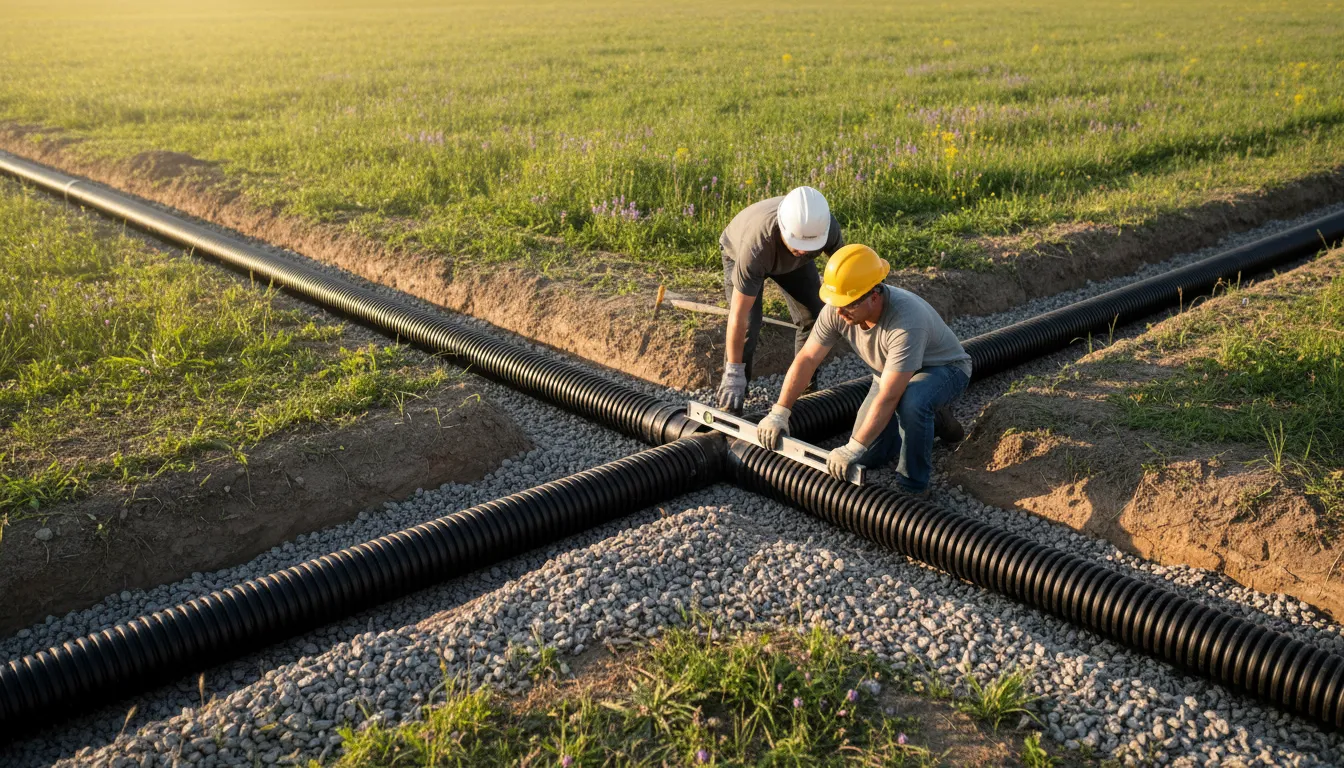
The drain field is the final stage of your on-site sewage system. After solids settle in the septic tank, the liquid effluent flows through pipes into a network of perforated tubes buried in trenches filled with gravel. This effluent slowly percolates into the soil, where natural processes provide the final treatment. A properly functioning leach field is vital for preventing groundwater contamination and ensuring the entire system operates without backups or odors.
In Mishawaka and surrounding St. Joseph County, the soil composition, water table levels, and local geology all play a direct role in determining what type of absorption field is suitable for your property. Common issues leading to failure include soil compaction from driving or parking over the field, clogging from excessive solids (often due to a lack of regular tank pumping), and invasive tree roots damaging the distribution pipes 1.
St. Joseph County Regulations and Permit Requirements
All repair, replacement, or modification of a residential septic system in Mishawaka is governed by the St. Joseph County Department of Health. You must obtain a permit from their office before any work begins 2. The department prioritizes permits for failed systems to address public health concerns promptly.
Key regulatory steps include:
- Site Evaluation: A certified soil scientist (a registered IRSS in Indiana) must perform a soil profile analysis. This typically involves at least three soil borings in the proposed area of the new soil absorption field (SAF) to determine texture, structure, and permeability 3.
- Registered Installer: All installations and major repairs must be conducted by a state-registered septic system installer. This installer must be on-site at all times during the work, including during backfilling.
- Setbacks and Prohibitions: Systems must maintain minimum distances from homes, wells, property lines, and bodies of water. Building, driving, or parking over the drain field is strictly prohibited. Furthermore, if a public sanitary sewer is available within a "reasonable distance," connection is required, and repair of your on-site system may not be permitted 4 5.
- Final Inspection: The Department of Health must inspect and approve the installation before it is covered with soil. You must contact them at least one business day in advance to schedule this critical inspection.
The Step-by-Step Process for Repair or Replacement
Navigating a drain field project involves a series of coordinated steps with professionals and the health department.
- Initial Diagnosis and Contact: At the first sign of trouble (e.g., pooling water, odors), contact a licensed septic professional. They will investigate for blockages, perform a flow test, and determine if the issue is a minor repair or a full system failure 6 7.
- Locate System Components: Identify the exact location of your septic tank, current drain field, and any designated alternate fields. This is often part of the professional's site evaluation.
- Soil Scientist Evaluation: If replacement is likely, you will need to hire a certified soil scientist to conduct the mandatory site evaluation and provide a soil report, which will dictate the design of the new system 8.
- Permit Application: With your soil report and a plan from a registered installer, you can apply for the permit from the St. Joseph County Department of Health. Permit fees are non-refundable.
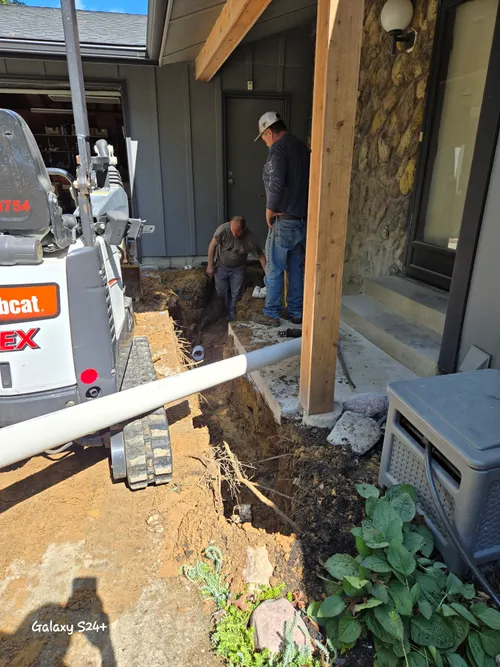
- Installation/Repair: The registered installer executes the work according to the approved plan. For a full replacement, this involves excavating the old field (if necessary) and constructing the new trenches, distribution pipes, and gravel bed.
- Final Health Department Inspection: Once installation is complete but before backfilling, the installer must notify the health department for the final inspection. Only after they grant approval can the system be covered and put into use 9.
Find the perfect drain field repair companies for your needs
Get personalized recommendations and expert advice
Cost Factors for Drain Field Projects in Mishawaka
The cost for drain field repair or replacement in the Mishawaka area varies widely based on the scope of work, soil conditions, and system type. Most homeowners can expect the following ranges 10:
- Minor Repairs: Fixing a damaged distribution box, clearing a root blockage, or repairing a section of pipe may cost significantly less, often in the hundreds to low thousands of dollars.
- Complete Drain Field Replacement: This is a major project. For a conventional trench system, costs typically range from $5,000 to $20,000 11 12.
- Advanced System Replacement: If your soil evaluation requires an engineered system-like a raised sand mound, drip irrigation, or aerobic treatment unit-costs can easily exceed $20,000 due to the additional materials, pumps, and complexity involved 13.
Additional required costs include:
- Permit Fees: Paid to the St. Joseph County Department of Health (check their current fee schedule) 14.
- Soil Analysis: Conducted by a certified soil scientist, usually costing a few hundred to a thousand dollars 15.
- Septic Tank Pumping: The tank should be pumped prior to any major work, which is an additional service cost.
Maintaining Your New Drain Field
Protecting your investment is crucial. Proper maintenance can extend the life of your new leach field for decades.
- Pump Regularly: Have your septic tank pumped every 3-5 years by a licensed professional to prevent solids from washing out and clogging the field.
- Mind What You Flush: Only human waste and toilet paper should go down the drain. Avoid chemicals, grease, wipes (even "flushable" ones), and excessive food waste.
- Protect the Area: Never drive, park, or build over the drain field. Avoid planting trees or shrubs nearby, as roots will seek out the moisture and can infiltrate and damage pipes 16 17.
- Divert Water: Ensure roof drains, sump pumps, and surface runoff are directed away from the absorption field to prevent saturation.
Frequently asked questions
Sources
Footnotes
-
Indiana Septic Tank Requirements | On-Site Sewage Systems - https://www.ntotank.com/blog/indiana-septic-tank-requirements?srsltid=AfmBOopPFVZtIw73Ywn9AuC1JrbK7OXVk1Wk6tkUUnAY1PrOgNyHbwzX ↩
-
St. Joseph County: Septic Systems - IN.gov - https://www.in.gov/localhealth/stjosephcounty/environmental-health/septic-systems/ ↩
-
Probably will need to replace the drain field. How much is this going ... - https://www.reddit.com/r/HomeImprovement/comments/dh15ha/probably_will_need_to_replace_the_drain_field_how/ ↩
-
Indiana Septic Tank Requirements | On-Site Sewage Systems - https://www.ntotank.com/blog/indiana-septic-tank-requirements?srsltid=AfmBOorNmpMVTcfKgp2tq8AxareDMXlp3EyqR9lwKn2hzLOaOP8ki9uT ↩
-
jater & sewer - St. Joseph County, IN - https://www.sjcindiana.gov/DocumentCenter/View/37200/Carriage-HIlls-Connection-Information---May-2020?bidId= ↩
-
Rule 410 IAC 6-8 Residential Sewage Disposal Systems - IN.gov - https://www.in.gov/health/eph/onsite-sewage-systems-program/historic-bulletins-and-rules/410-IAC-6-8-Residential-Sewage-Disposal-Systems,-1978-05-26.pdf ↩
-
Septic Systems | Indiana State Department of Health - IN.gov - https://www.in.gov/localhealth/miamicounty/files/In-Your-Own-Backyard-Septic-Systems-ADunn.pdf ↩
-
NEW HOME CONSTRUCTION OR SYSTEM REPLACEMENT - IN.gov - https://www.in.gov/localhealth/marshallcounty/files/guidance-residential-onsite-sewage-procedures.pdf ↩
-
St. Joseph County: Septic Systems - IN.gov - https://www.in.gov/localhealth/stjosephcounty/environmental-health/septic-systems/ ↩
-
CHAPTER 51. - SEWAGE AND SEPTIC SYSTEMS REGULATIONS | ... - https://library.municode.com/in/st._joseph_county/codes/code_of_ordinances?nodeId=TITVPUWO_CH51SESESYRE ↩
-
Septic Drain Field Replacement Cost - https://dillonseptic.com/septic-drain-field-replacement-cost/ ↩
-
Understanding Your Septic System: What Homeowners Should Know - https://www.justindorseyplumbing.com/understanding-your-septic-system/ ↩
-
Will Leach Field Replacement Costs Drain Your Wallet? Plan ... - https://www.homeserve.com/en-us/blog/cost-guide/leach-field-replacement/ ↩
-
Residential - St. Joseph County Department of Health - https://www.in.gov/localhealth/stjosephcounty/files/Residential-Permit-Procedures-and-Costs.pdf ↩
-
CHAPTER 51: SEWAGE AND SEPTIC SYSTEMS REGULATIONS - https://www.in.gov/localhealth/stjosephcounty/files/County-Code-Septic-Ordinance.pdf ↩
-
Septic Basics - St. Joseph County - IN.gov - https://www.in.gov/localhealth/stjosephcounty/environmental-health/septic-systems/septic-basics/ ↩
-
Septic Maintenance FAQs - Indiana Clear Choices Clean Water - https://indiana.clearchoicescleanwater.org/pledges/septic/septic-maintenance-faqs/ ↩