Find the Best Drain Field Repair Companies for Your Business
No obligation • Fast responses • Nationwide coverage

Why you can trust Septic Spot
Septic Spot is a leading United States resource for understanding and comparing septic services. Our editors review providers using consistent criteria and verify key business details. Listings and scores are independent, and companies cannot pay to influence our content.
Search providers near you
Top Drain Field Repair Companies in South Bend, Indiana Ranked
A failing drain field, also known as a leach field or absorption field, is a serious issue for any home with a septic system. This critical component is responsible for safely dispersing and filtering treated wastewater into the soil. When it fails, it can lead to soggy yards, foul odors, and environmental contamination. For homeowners in South Bend and St. Joseph County, navigating the repair or replacement of a septic system drain field involves specific local regulations, professional assessments, and a formal permitting process. This guide outlines the essential steps, costs, and local requirements to help you understand the process of restoring your onsite wastewater system.
Understanding Drain Field Failure
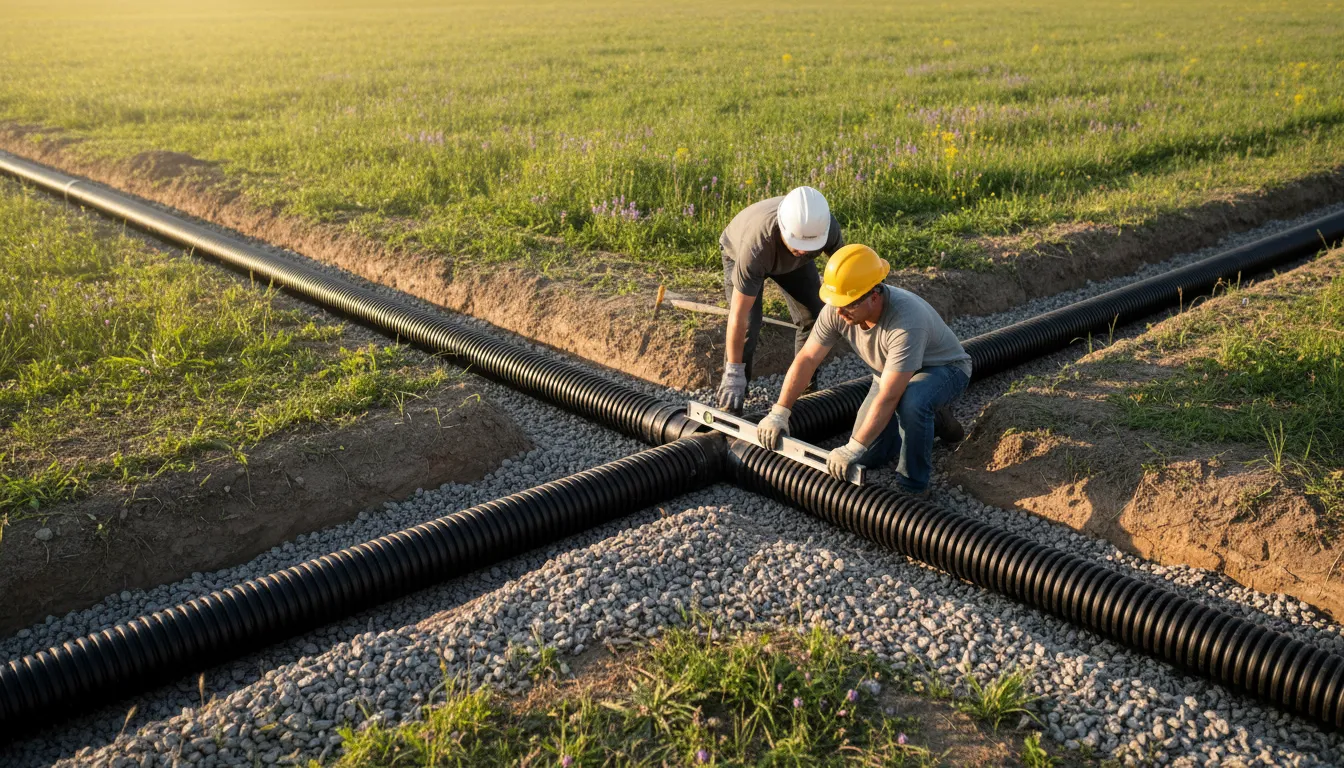
The drain field is the final stage of your septic system. After solids settle in the tank, liquid effluent flows into a network of perforated pipes buried in trenches filled with gravel. This effluent slowly seeps into the surrounding soil, where natural processes provide final treatment. A system fails when the soil can no longer absorb the liquid. Common signs include:
- Sewage odors in the yard or home.
- Soggy, spongy, or standing water over the drain field area.
- Lush, green grass over the field while the rest of the lawn is dry.
- Slow-draining or backing-up household drains.
Failure can be caused by soil compaction, hydraulic overloading, root intrusion, or the natural aging and clogging of the soil over many years. Once a drain field fails, repair or full replacement is necessary to protect your property and public health.
St. Joseph County Regulations and Permit Requirements
All work on septic systems in South Bend and St. Joseph County is regulated by the St. Joseph County Department of Health. A permit from this department is mandatory for any new installation, repair, or replacement of a septic system, including the drain field. The process is designed to ensure systems are built correctly and protect groundwater quality.
Key regulatory points include:
- Licensed Professionals: Only state-licensed septic system contractors are authorized to install or repair systems.
- System Design: A detailed, scaled design of the proposed system must be submitted to the Health Department for review and approval.
- Site Protection: Once an area is approved for a new leach field, it must be clearly staked and protected from vehicle traffic or compaction, which can ruin the soil's absorption capacity.
The Critical Role of Soil Evaluation
Before any design can be created, a professional evaluation of your property's soil is required. This is not a simple dig test; Indiana law requires a certified Professional Soil Scientist to conduct a formal soil profile analysis 1. For a typical residential site, this involves taking at least three soil borings to examine the soil layers, texture, and structure down to the required depth.
The results of this soil report determine everything about your system:
- Soil Quality: The soil's percolation rate (how fast water moves through it) dictates the size and type of drain field needed.
- Depth to Groundwater: There must be a sufficient separation between the bottom of the drain field and the seasonal high water table.
- Setbacks: The system must be located specific minimum distances from property lines, wells, streams, and buildings.
Properties with failing systems are often given priority in the permit review process, but they still require this comprehensive soil study.
Step-by-Step Process for Repair or Replacement
Navigating a drain field project involves a multi-step sequence. Understanding this flow can help you manage the timeline and responsibilities.
- Initial Assessment & Soil Study: Contact a licensed septic contractor. They will inspect your system and likely recommend a certified soil scientist to perform the mandatory soil evaluation on your property 2.
- System Design: Using the soil scientist's report, your licensed contractor will design a system that meets St. Joseph County and Indiana state codes. This design includes the type of system, tank size (e.g., a minimum of 1,000 gallons for a 3-bedroom home 3), and the precise layout and dimensions of the new absorption field.
- Permit Application & Review: Your contractor will submit the detailed system design, the soil report, and the permit application to the St. Joseph County Health Department for review.
- Permit Issuance: Once the design is approved and all fees are paid, the Health Department will issue the construction permit.
- Construction & Inspection: The licensed contractor installs the new tank and drain field. Crucially, a representative from the Health Department must inspect the installed system before it is covered with soil 4. This final inspection is mandatory to receive approval.
Find the perfect drain field repair companies for your needs
Get personalized recommendations and expert advice
Understanding Costs and Timelines
The total investment for a septic system drain field replacement is significant and varies based on your property's conditions.
- Project Costs: For a full septic system replacement-including a new tank and leach field-total costs in the South Bend region typically range from $5,000 to $12,000 or more 5. The final price depends heavily on the soil complexity, the size and type of system required, and local labor rates. A simpler repair of a portion of the field will cost less but may not be a permanent solution.
- Permit Fees: These are separate from construction costs and are paid to the county. Fees can vary; for reference, neighboring Marshall County lists fees in the range of $30 to $60 for replacement permits 6. The exact fee schedule for St. Joseph County should be verified with their Health Department.
- Timeline: The process from initial assessment to completed installation can take several weeks to months. The timeline is influenced by the availability of soil scientists and contractors, the Health Department's review schedule, and weather conditions suitable for excavation.
Choosing a Licensed Septic Contractor in South Bend
Selecting the right professional is the most important decision you'll make. Always verify that a contractor holds a current Subsurface Sewage Disposal System Installer license from the state of Indiana. A reputable local contractor will:
- Be familiar with St. Joseph County Health Department staff and procedures.
- Have established relationships with certified soil scientists in the area.
- Provide clear, detailed written estimates and contracts.
- Pull all necessary permits and schedule the required inspections.
- Offer guidance on maintaining your new system to maximize its lifespan.
You can find a list of licensed professionals, permit applications, and detailed requirement documents directly through the St. Joseph County Department of Health website 7 8.
Maintaining Your New Drain Field
Protect your investment after replacement. Proper maintenance includes:
- Water Conservation: Spread out laundry and dishwasher use to avoid overwhelming the system.
- No Compaction: Never drive or park vehicles, or build structures like sheds or patios, over the drain field.
- Mindful Landscaping: Plant only grass over the field. Keep trees and shrubs with deep roots far away.
- Regular Pumping: Have the septic tank pumped every 3-5 years by a professional to prevent solids from escaping into and clogging the new drain field.
A well-maintained system can function effectively for decades, providing safe and reliable wastewater treatment for your home.
Frequently asked questions
Sources
Footnotes
-
design criteria for sewage works - chapter contents page - https://cdmscwn.squarespace.com/s/C-EngineeringSewerAssessmentPrograms.pdf ↩
-
County On-site Sewage Systems Ordinance This ... - IN.gov - https://www.in.gov/health/eph/files/Recommended-Ordinance-Sections-2024-05-28.pdf ↩
-
Indiana Septic Tank Requirements | On-Site Sewage Systems - https://www.ntotank.com/blog/indiana-septic-tank-requirements ↩
-
RESIDENTIAL ONSITE SEPTIC PERMIT PROCESS - https://rushcounty.in.gov/wp-content/uploads/2021/07/RESIDENTIAL-ONSITE-SEPTIC-PERMIT-PROCESS-1.pdf ↩
-
Cost to Replace Septic Tank and Drain Field [2026 Data] | Angi - https://www.angi.com/articles/how-much-new-drain-fields-foot.htm ↩
-
NEW HOME CONSTRUCTION OR SYSTEM REPLACEMENT - IN.gov - https://www.in.gov/localhealth/marshallcounty/files/guidance-residential-onsite-sewage-procedures.pdf ↩
-
Residential - St. Joseph County Department of Health - https://www.in.gov/localhealth/stjosephcounty/files/Residential-Permit-Procedures-and-Costs.pdf ↩
-
St. Joseph County: Septic Systems - https://www.in.gov/localhealth/stjosephcounty/environmental-health/septic-systems/ ↩