Find the Best Drain Field Repair Companies for Your Business
No obligation • Fast responses • Nationwide coverage

Why you can trust Septic Spot
Septic Spot is a leading United States resource for understanding and comparing septic services. Our editors review providers using consistent criteria and verify key business details. Listings and scores are independent, and companies cannot pay to influence our content.
Search providers near you
Best Drain Field Repair Companies in New York Ranked
A failing drain field is a serious issue for any New York homeowner with a septic system. This critical component, also known as a leach field or absorption area, is responsible for safely dispersing treated wastewater into the soil. When it malfunctions, it can lead to sewage backups, soggy yards, and environmental contamination. Understanding the regulatory requirements, typical processes, and costs for drain field work in New York is essential. This guide provides clear, practical information to help you navigate the repair or replacement of your septic system's absorption area and connect with qualified local professionals.
Bianca Excavating
1548 Winterberry Ct, Walworth, NY 14568
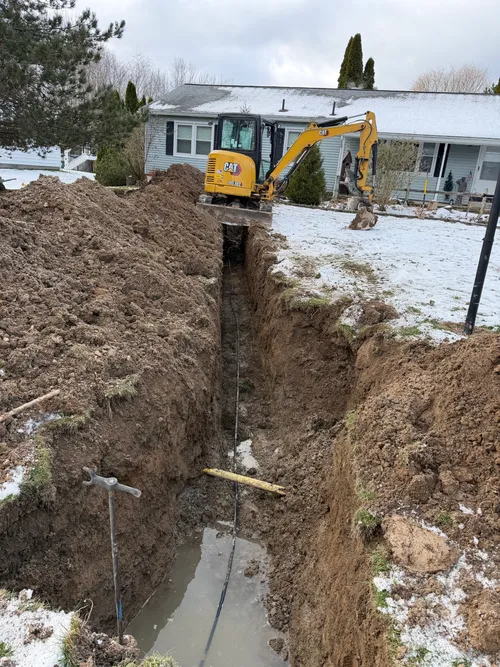
Bianca Excavating is a licensed and insured septic service provider based in Rochester, NY. The company offers a range of services including septic tank pumping, inspections, repairs, new system installations, and drain field replacements. Using advanced inspection tools and modern excavation equipment, Bianca Excavating works to diagnose and resolve septic system issues efficiently while minimizing disruption to properties. The business has a long-standing family-owned history serving Ontario and surrounding areas, providing reliable septic solutions tailored to residential and commercial needs. They also offer emergency services when needed.

All Pro Rooter Inc.
New York, NY
All Pro Rooter Inc. is a septic system repair and installation company serving New York, NY, with over 36 years of experience. They provide a range of services including septic tank installation, septic system repair, drain field repair and replacement, land clearing, real estate septic inspections, and general excavation. The company is known for its expertise in septic tank placement and maintenance, and it maintains strong relationships with local health and environmental departments in Westchester County. Their services cover septic tank and drain field maintenance to help ensure proper system function.
Macken Services, Inc.
Buffalo, NY
Macken Services, Inc. is a family-owned septic service provider based in Buffalo, NY, offering a full range of septic system solutions for residential and commercial customers. Since 1968, they have specialized in septic tank pumping, inspections, repairs, installations, and maintenance, including grease trap services. Their expertise includes leach field repair and sand filtration installation to maintain system efficiency and prevent costly issues. Macken Services serves Buffalo and surrounding areas, including Lancaster and Erie County, with decades of experience in septic system care.
Syracuse Septic Service
Syracuse, NY
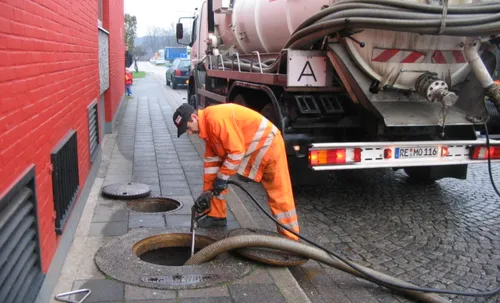
Syracuse Septic Service provides comprehensive septic system services in Syracuse, NY, and Central New York. They handle septic tank pumping, cleaning, inspections, repairs, and installations for both residential and commercial clients. Their capabilities include thorough septic tank cleaning using vacuums, water jetting, and electric snaking, as well as video inspections to diagnose issues accurately. The company also offers grease trap maintenance and repair for restaurants and similar businesses.
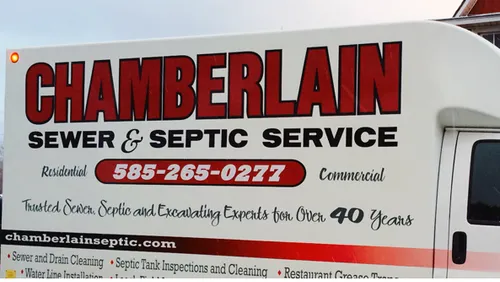
Chamberlain Septic & Sewer
1835 Ridge Rd Jct, Webster, NY 14580
Chamberlain Septic & Sewer is a family-owned company serving Rochester, NY, and surrounding counties including Monroe, Wayne, and Ontario. With over 57 years of experience, they provide residential and commercial septic system services such as septic tank pumping, inspections, installations, and repairs. Their capabilities include hydro-flushing, power-snaking, and excavation work to address septic and sewer system needs. Founded in the 1960s from a dairy farm drainage operation, the company has grown into a full-service septic and sewer contractor.
Understanding Your Drain Field and Signs of Failure
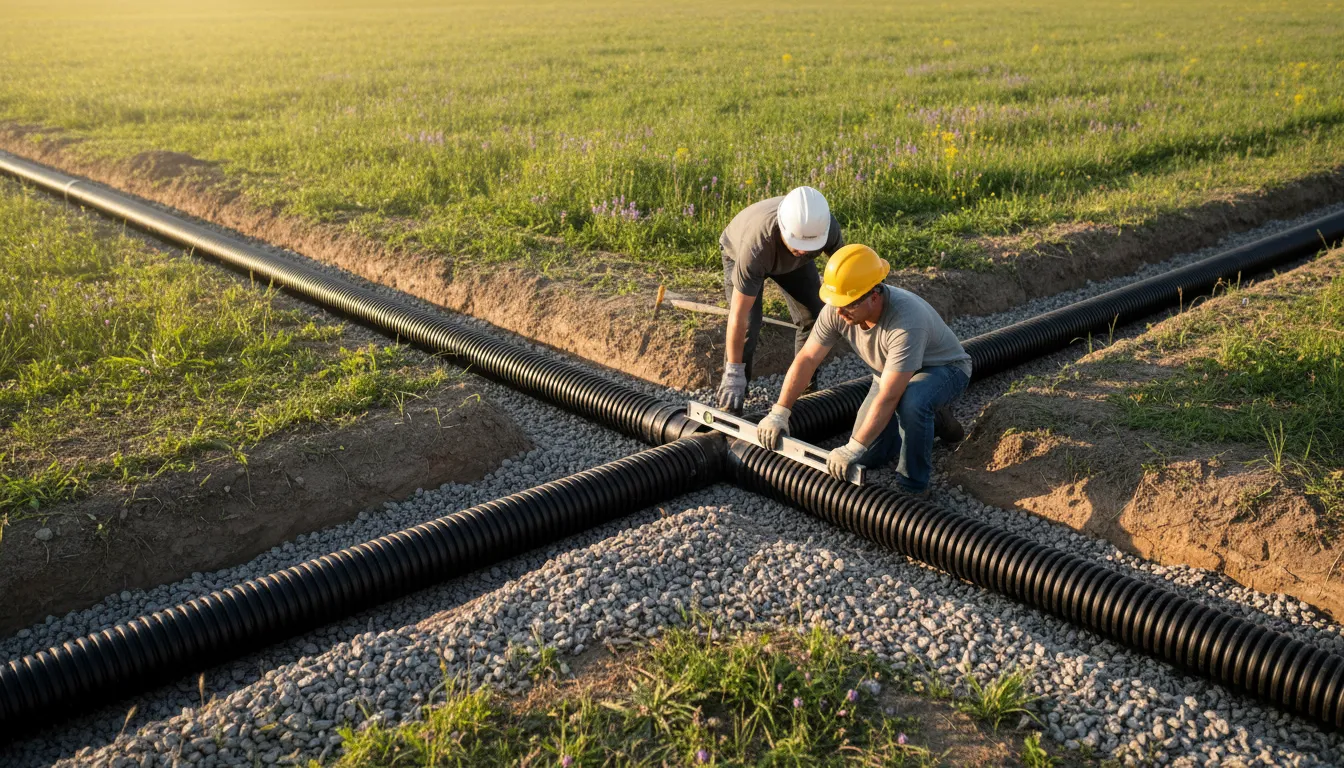
The drain field is the final stage of a conventional septic system. After solids settle in the tank, liquid effluent flows through pipes into a network of perforated tubes buried in trenches filled with gravel or other aggregate. This effluent slowly percolates into the soil, where natural processes provide final treatment.
Recognizing early warning signs can prevent a complete system failure and more expensive repairs. Common indicators of a failing leach field in New York include:
- Sewage odors in the yard or home, especially near the drain field area.
- Slow drains and gurgling plumbing fixtures throughout the house.
- Soggy, spongy, or saturated soil over the absorption field, even during dry weather.
- Standing water or surfacing sewage in the yard.
- Unusually lush, green grass over the drain field compared to the rest of the lawn.
- Backups into household drains or the septic tank itself.
If you notice any of these signs, it's crucial to act quickly. Continuing to use a failing system can pose health risks, violate New York State and local health codes, and lead to property damage.
New York State Regulations and Permit Requirements
All work involving the repair or replacement of a septic system component in New York is strictly regulated. The primary governing standard is the New York State Department of Health (NYSDOH) Appendix 75-A, "Wastewater Treatment Standards - Individual Household Systems". However, enforcement and permitting are handled at the county level by local health departments.
A construction permit is mandatory before beginning any work on a new system or a substantial repair or alteration to an existing one 1. This is not a mere formality; starting work without a permit can result in stop-work orders, fines, and complications when selling your property.
The permit process typically involves:
- Site Evaluation and Design: A licensed professional (often a Professional Engineer or a Registered Architect) must evaluate your property and design a system that complies with Appendix 75-A standards. This design accounts for soil conditions, slope, groundwater levels, and proximity to wells or water bodies.
- Application Submission: The design, along with a permit application, is submitted to your local county health department (e.g., Erie County Department of Health, Putnam County Department of Health).
- Review and Approval: The health department reviews the plans for compliance. In many counties, this includes ensuring the system is not being expanded to serve more bedrooms than originally permitted without a full redesign.
- Installation and Inspection: Once permitted, a licensed installer can proceed. The work must be inspected and approved by the health department before the trenches are backfilled.
Find the perfect drain field repair companies for your needs
Get personalized recommendations and expert advice
The Repair and Replacement Process
The course of action depends on the extent of the failure. A professional assessment is the critical first step.
Potential Repairs: Not all problems require a full replacement. Issues like a clogged pipe or minor compaction might be remedied through techniques like jetting or adding additional distribution boxes. However, these are often temporary fixes if the underlying soil is saturated or the field has reached the end of its lifespan.
Full Replacement: This is often necessary when the soil absorption capacity is exhausted. The process is intensive:
- System Abandonment: The old drain field must be properly abandoned, which may involve pumping out any residual sewage and crushing or removing the old pipes.
- New Field Installation: A new absorption area is constructed based on the approved design. This involves heavy machinery to excavate trenches, place gravel and new perforated pipe, and cover with soil and a protective barrier.
- Site Restoration: The area is graded and seeded to blend with your landscape.
A key regulation in New York is that a Professional Engineer is generally required for the design of repairs involving system expansion, relocation, or an increase in the number of bedrooms served 2. Even for a like-for-like replacement, engineering oversight is common to ensure it meets current standards.
Cost Factors for New York Homeowners
Drain field replacement is a significant investment. In New York, typical costs for a full septic system replacement, including the drain field, often range from $10,000 to $25,000 or more 3 4 5. Several factors influence the final price:
- System Size and Design: The number of bedrooms in your home dictates the required size. More complex designs, like pressure-dosed or mound systems for difficult sites, cost more.
- Site Conditions: Easy, flat land with good soil percolation is most affordable. Steep slopes, high groundwater, poor soil, or limited space can dramatically increase costs due to the need for specialized engineering and materials 6.
- Local Regulations: Permit fees, inspection fees, and specific county requirements add to the cost.
- Access and Landscaping: Difficult site access for machinery or the need to remove trees, decks, or other structures adds labor and expense.
- Labor and Materials: Regional market rates for excavation and materials vary across New York State.
Financial Assistance: Some homeowners may qualify for help. A notable program is run by the Catskill Watershed Corporation (CWC), which offers reimbursement grants for septic system repair and replacement for eligible properties within the New York City watershed region 7. It's worth checking with your county health department or local government about any available programs.
Maintenance and Prevention
Proper care can extend the life of your new or repaired drain field for decades. As the system owner, maintenance is your responsibility 8.
- Regular Pumping: Have your septic tank pumped by a DEC-registered provider every 2-3 years, or as recommended based on usage. This prevents solids from washing out into the drain field and clogging it 9 10.
- Conserve Water: Spread out laundry loads and fix leaky fixtures to avoid hydraulically overloading the field.
- Protect the Area: Never drive or park vehicles, or place heavy structures like sheds or pools, over the absorption field. The weight can compact soil and crush pipes.
- Mind Your Planting: Avoid planting trees or deep-rooted shrubs near the drain field, as roots can infiltrate and damage pipes.
- Watch What You Flush: Only human waste and toilet paper should go down the drain. Never flush chemicals, solvents, oils, paints, medications, or disinfectant wipes, as these can kill the beneficial bacteria in your system and contaminate groundwater 11.
Common Mistakes to Avoid
- Ignoring Early Signs: Hoping a problem will go away on its own leads to complete failure and higher costs.
- Skipping the Permit: Unpermitted work is illegal and can create liability issues and problems during a real estate transaction 12 13.
- Using Unlicensed Contractors: Always hire professionals registered with the NYS Department of Environmental Conservation (DEC) for pumping and installation. They understand local codes.
- Diverting Water onto the Field: Ensure roof gutters, sump pumps, and driveway runoff are directed away from the absorption area. Excess water saturates the soil 14.
- Failing to Maintain Records: Keep all permits, design plans, inspection reports, and pumping receipts. These are vital for maintenance and are required when selling your home 15.
Frequently asked questions
Sources
Footnotes
-
NYS Health Code requires a construction permit to install and/or ... - https://www.facebook.com/clintonhealth/posts/nys-health-code-requires-a-construction-permit-to-install-andor-replace-a-septic/1275656230999367/ ↩
-
ON-SITE WASTEWATER TREATMENT SYSTEMS - NY.Gov - https://extapps.dec.ny.gov/docs/water_pdf/onsitewastewater.pdf ↩
-
Septic and Onsite Wastewater Systems | Environmental Health - https://www3.erie.gov/envhealth/septic-and-onsite-wastewater-systems ↩
-
New Directions for Local Septic System Management in New ... - https://efc.syr.edu/wp-content/uploads/2025/02/Public-Problem_Private-Property_PDF_2024_FINAL.pdf ↩
-
Septic Repair and Replacement - Catskill Watershed Corporation - https://cwconline.org/programs/septic-repair-and-replacement/ ↩
-
Sewage Disposal System Design - Peak Engineering - https://www.peakengineer.com/civil-engineering/sewage-disposal-system-design/ ↩
-
SEPTIC SYSTEM REHABILITATION AND REPLACEMENT PROGRAM RULES (ARTICLE 2-A) Revised February 1, 2022 - https://cwconline.org/wp-content/uploads/2022/02/Article-2A-Program-Rules-Rev.-2-1-22-1.pdf ↩
-
Environmental Health - Putnam County, New York - https://www.putnamcountyny.gov/health/environmental ↩
-
Septic System Operation and Maintenance - https://www.health.ny.gov/publications/3208/ ↩
-
EPA - NYC.gov - https://www.nyc.gov/assets/dep/downloads/pdf/watershed-protection/east-of-hudson-ms4/epa_guide_to_septic_systems_b.pdf ↩
-
Septic System - New York State Department of Health - https://www.health.ny.gov/publications/3208.pdf ↩
-
1 RCNY §8001-01 - NYC.gov - https://www.nyc.gov/assets/buildings/rules/1_RCNY_8001-01.pdf ↩
-
New York needs stronger laws to regulate septic systems - https://www.protectadks.org/new-york-needs-stronger-laws-to-regulate-septic-systems/ ↩
-
Your Septic System - Cornell University - https://www.css.cornell.edu/cwmi/waterquality/septic/CCEWQ-YourSepticSystem-Print.pdf ↩
-
What to Know When Buying a House with a Septic System - https://stewartbuildersnj.com/what-to-know-when-buying-a-house-with-a-septic-system/ ↩